 ProMapRanker
Retool Alternatives in 2026: 9 Tools Compared

Open-source internal tools with Git workflows · Pricing starts at: $15 per user per month
Key takeaways
- Appsmith, Budibase, and ToolJet are the closest open-source alternatives, with free self-hosted options and visual builders for internal tools.
- UI Bakery and Superblocks suit teams that want a polished builder with stronger governance and deployment options.
- Glide and Softr suit non-developers who start from spreadsheets or Airtable, rather than from a database.
- The right alternative depends on who builds: developers, ops staff, or a mix of both, plus how viewers and builders are billed.
Quick comparison
| Pick | Great for | Pricing starts at | Free tier | |
|---|---|---|---|---|
| Appsmith | Open-source internal tools with Git workflows | $15 per user per month | Yes | Visit |
 Budibase | Self-hosted data apps with a low entry price | $19 per month | Yes | Visit |
 ToolJet | Open-source builder with workflows | See website | Yes | Visit |
 UI Bakery | Polished apps for small and mid-size teams | $10 per developer per month | Yes | Visit |
 Superblocks | Enterprise governance for internal apps | See website | Yes | Visit |
 DronaHQ | Mobile and web internal apps | $10 per user per month | Yes | Visit |
 Glide | No-code apps from spreadsheet data | $25 per month | Yes | Visit |
 Softr | Client portals on Airtable or Google Sheets | $19 per month | Yes | Visit |
 Jet Admin | Non-technical teams building admin panels | $25 per user per month | Yes | Visit |
The best Retool alternatives
Internal tools cover admin panels, dashboards, support tools, and approval workflows that sit on top of databases and APIs. The alternatives below replace that job in different ways, from open-source low-code builders to no-code tools for ops teams. We do not list the named product itself here, only alternatives to it.
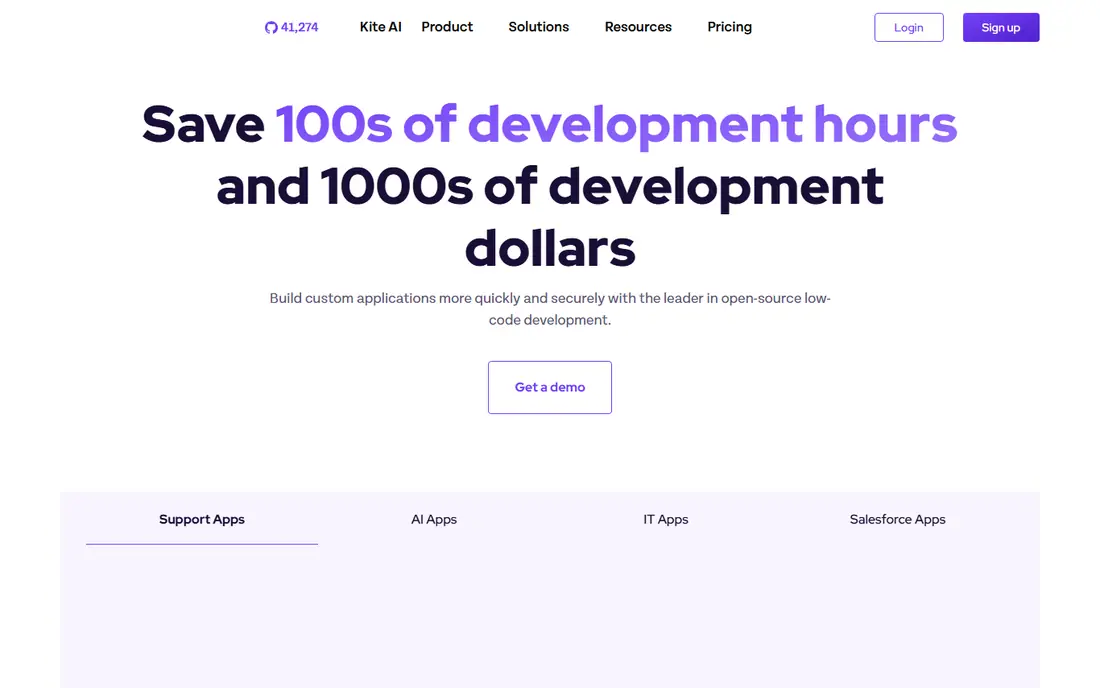
Appsmith is the closest open-source match for teams that build dashboards and admin panels on databases and APIs. You drag widgets onto a canvas, connect a database or REST or GraphQL source, and write JavaScript for logic and actions. Git workflows help teams review and deploy changes in a controlled way, which matters once more than one developer builds tools.
The trade-off is effort. Appsmith gives you control, but each table needs column setup, each form needs field mapping, and each button needs a binding, so a simple tool can take longer than in a no-code builder. The cloud free plan covers up to five users, while Business costs $15 per user per month. Pick Appsmith when open source and developer control matter most.
- Open-source with a free self-hosted Community edition
- Visual widgets plus JavaScript logic
- Git workflows for team development
- Every table and form needs configuration, so builds can feel code-heavy
- Self-hosting means you own maintenance and upgrades
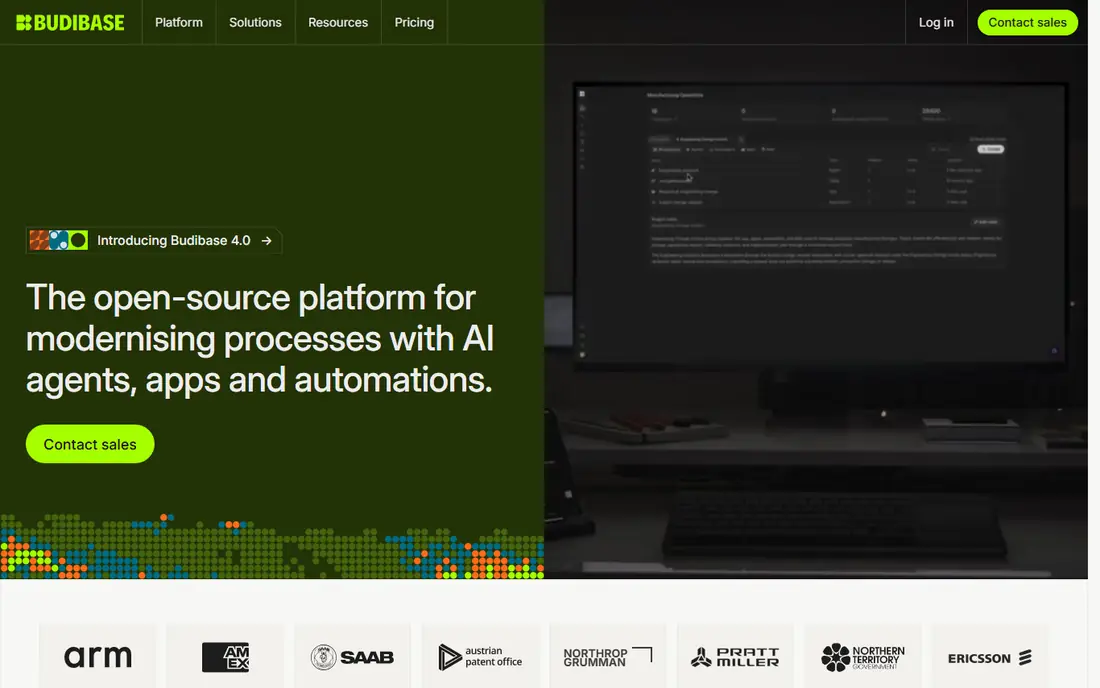
Budibase suits teams that must self-host or run on-premise, and want a simpler builder than a full developer platform. You can build data apps with forms, tables, and automations, using its internal database or external sources, and you can run it on your own infrastructure with no per-user limit on the self-hosted version. Cloud Pro starts at $19 per month, with Premium at $49 per month in published pricing.
Budibase is less polished for very complex enterprise apps than Superblocks, and some governance features need a higher tier. It is also more developer-friendly than a pure no-code tool, so ops-only teams may need help at setup. Pick Budibase when self-hosting and a low price matter most.
- Open-source with unlimited users and apps when self-hosted
- An internal database plus external data sources
- A low cloud entry price
- A smaller component set than some enterprise builders
- Advanced governance features sit on higher tiers
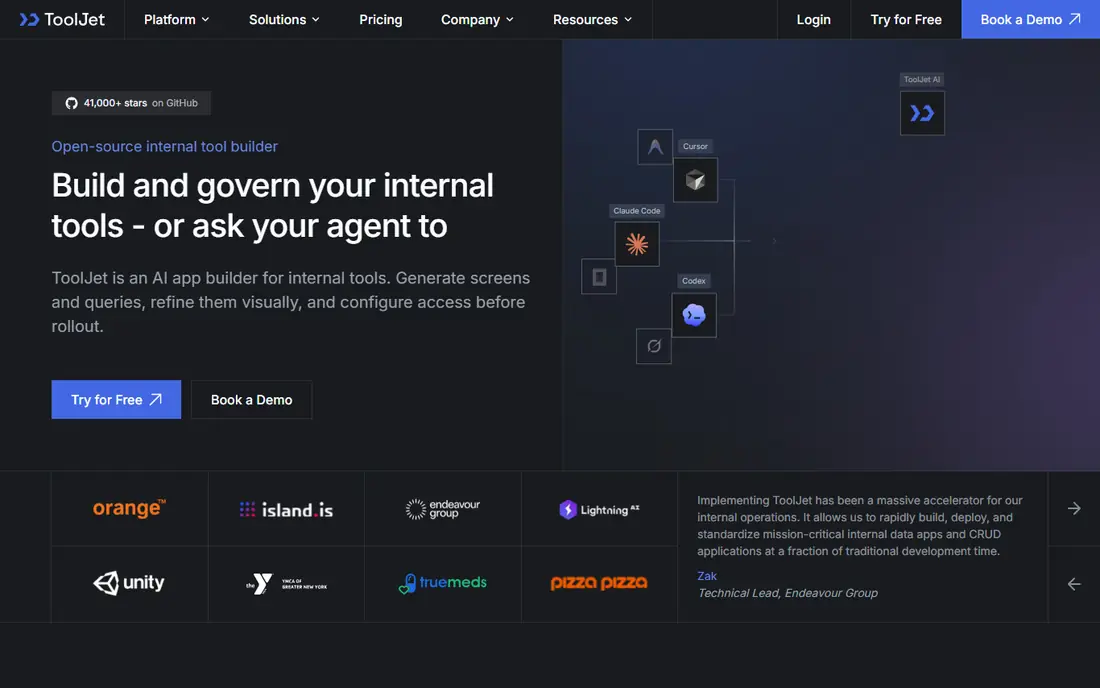
ToolJet is a developer-first internal tool builder with more than 70 pre-built components and more than 100 data source integrations. You can build apps visually, write JavaScript and Python queries, and add workflows for automation on self-hosted deployments. AI app generation can create a first app from a prompt, which you can then edit visually.
Pricing needs a direct check, since published figures for paid tiers have varied across sources, and the free plan covers two builders, up to 50 end users, and 10 apps in current comparisons. Some workflow and agent features are self-hosted only, so cloud buyers should confirm what they get. Pick ToolJet for open-source building with strong workflow support.
- Open-source with a large component and integration set
- JavaScript and Python queries alongside visual editing
- Workflows and AI app generation on self-hosted plans
- Paid pricing has changed across sources, so check the vendor page
- Workflows and some AI features are self-hosted only
UI Bakery is a strong pick for teams that want a clean, maintainable internal app without an enterprise price. It offers a visual builder, workflows, scheduled jobs, and multistep APIs for business logic, with a free plan for up to five users and unlimited apps. Paid Standard pricing starts at $10 per developer per month on annual billing, with end-user seats at $5 per user per month.
The limits sit at the top end. Single sign-on, Git version control, custom domains, and white-labeling need the custom Enterprise plan, so larger teams should budget for that step. Pick UI Bakery when you want a polished builder for a small or mid-size team at a clear price.
- A polished visual builder with workflows and scheduled jobs
- Separate developer and end-user pricing
- A free plan with up to five users
- SSO, Git sync, and custom domains need the Enterprise plan
- The builder suits small and mid-size teams more than very large enterprises
Superblocks targets engineering and IT teams that need internal apps with central control. It offers three building modes, AI generation, a visual editor, and an open code framework, plus governance features such as single sign-on, SCIM provisioning, role-based access, and audit logging. Hybrid deployment lets teams keep data access on-premise while building in the cloud.
Pricing is the main barrier for small teams, since enterprise features and larger deployments use custom quotes. A simple admin panel for a handful of users does not need this depth. Pick Superblocks when governance, security, and enterprise scale are the deciding factors.
- Strong governance with SSO, SCIM, RBAC, and audit logs
- AI, visual, and code-based building modes
- Hybrid deployment with an on-premise agent
- Pricing is custom for serious use
- More than a small team needs for a simple admin panel
DronaHQ suits teams that need internal tools on both web and mobile, such as field ops apps, approval apps, and dashboards for staff on the move. It offers a visual builder, database and API connectors, workflows, and custom code options, with a free tier for starting out and paid plans from $10 per user per month in published comparisons.
DronaHQ is more technical than Glide or Softr, so a non-developer team may need developer help for complex apps. Its mobile focus is a strength, but teams that only need a web admin panel may find a simpler tool enough. Pick DronaHQ when mobile internal apps are a core need.
- Builds web and mobile internal apps from one platform
- Connectors for databases and APIs
- A free tier to start with
- The builder leans toward technical users
- Pricing and plan details should be checked on the vendor site for larger teams
Glide is the best no-code alternative here for teams that start from a spreadsheet. You point Glide at a sheet, pick a layout, and publish an app that staff can use on a phone or computer, with forms, lists, and basic logic. That speed suits ops teams, small businesses, and internal tools that track inventory, requests, or field work.
The limit is depth. Glide does not give developers the same control over databases, APIs, and custom logic as Appsmith, ToolJet, or UI Bakery, and very large or complex apps can strain the model. The free plan covers building but not publishing, while Basic starts at $25 per month with published apps. Pick Glide when speed and no-code building matter more than custom logic.
- Builds apps from spreadsheet data with no code
- A gentle learning curve for ops teams
- Published apps for staff and customers
- Less control than a low-code builder for complex logic
- Data-heavy apps can outgrow the spreadsheet model
Softr suits teams that already run on Airtable or Google Sheets and want a portal on top of that data. You can build client portals, internal tools, and directories with logins, permissions, and pre-built blocks, without writing code. That makes it a good fit for agencies, membership groups, and ops teams that already manage data in Airtable.
The data tie is also the limit. Softr works best when Airtable or Sheets is the source of truth, and it is less suited to SQL databases or complex API-driven logic. Basic pricing starts at $19 per month in published comparisons, with higher tiers for more users and records. Pick Softr when your data already lives in Airtable or Sheets.
- Builds client portals and internal apps from Airtable or Google Sheets
- Logins and permissions for different user groups
- A free tier to start with
- Tied to Airtable or Sheets as the data source
- Less suited to apps on a SQL database or complex API logic
Jet Admin fits business teams that need an admin panel fast, without a developer building every screen by hand. It can auto-generate UI components from your data, connect to databases and APIs, and let non-technical users create workflows and business logic with custom code where needed. That balance suits support, ops, and admin teams that need to read and update records safely.
Jet Admin is less flexible than Appsmith or ToolJet for very custom apps, and per-user pricing at $25 per user per month in published comparisons can add up for a large team. Pick Jet Admin when a non-technical team needs a usable admin panel quickly, with developer help only for the hard parts.
- Auto-generated admin panels from your data
- A gentle builder for non-technical teams
- A free tier to start with
- Less custom than a developer builder for complex workflows
- Pricing rises per user as teams grow
How we picked these
We compared tools that build internal apps, admin panels, or dashboards in October 2026, with a live product and a clear builder model. We checked vendor pricing pages and current internal tool comparisons, and we favored tools with a free tier or open-source edition, plus a credible path to scale. We left out general website builders and customer-facing app platforms with no internal tool focus, and we wrote See website where paid pricing varied across sources.
How to choose a Retool alternative
Start with who builds. Developers should shortlist Appsmith, ToolJet, UI Bakery, and Superblocks, while ops staff and non-developers should shortlist Glide, Softr, and Jet Admin. A mixed team may need a tool that lets developers handle data and logic while ops staff edit screens, which points to UI Bakery, DronaHQ, or Jet Admin.
Next, check how billing works. Some tools charge per builder and per end user, some charge per app user allowance, and some charge per workspace plan. Model your real team size, including viewers who only read data, since viewer pricing can change the total fast.
Then test a real tool, not a demo template. Connect your own database or sheet, build one screen with a table, a form, and an action, and check permissions, audit logs, and deployment. If that one screen is painful, a full set of tools will be worse. Finally, check self-hosting and governance needs early, since SSO, audit logs, and on-premise deployment often sit on higher tiers.
Frequently asked questions
What are the best alternatives to Retool?
Appsmith, Budibase, and ToolJet are the best open-source alternatives to Retool, while UI Bakery is the best polished low-code alternative for small and mid-size teams. Glide and Softr are the best no-code alternatives for teams starting from spreadsheets or Airtable. The best choice depends on who builds, whether you need self-hosting, and how viewers are billed.
Is there a free alternative to Retool?
Yes. Appsmith, Budibase, ToolJet, UI Bakery, Superblocks, DronaHQ, Glide, Softr, and Jet Admin all offer a free tier or a free self-hosted edition in this list, though limits vary by users, apps, and features. Free tiers suit a small team or a pilot, while larger teams should expect a paid plan for seats, governance, or higher limits.
Which Retool alternative is open source?
Appsmith, Budibase, and ToolJet are open source and can be self-hosted, which gives teams control over data, hosting, and code. UI Bakery, Superblocks, DronaHQ, Glide, Softr, and Jet Admin are commercial products with free tiers, but they are not open source in the same way. Pick open source when data control and self-hosting are hard requirements.
Can non-developers build internal tools without Retool?
Yes. Glide and Softr let non-developers build apps from spreadsheets or Airtable with no code, and Jet Admin auto-generates admin panels that business teams can adapt. Low-code tools such as Appsmith and ToolJet still need developer help for complex logic, databases, and APIs. Match the tool to the builder, not just to the feature list.
How much do Retool alternatives cost?
Free tiers cover small teams on most tools in this list, while paid entry prices start at $10 per user per month for DronaHQ, $10 per developer per month for UI Bakery, $15 per user per month for Appsmith, $19 per month for Budibase and Softr, and $25 per month for Glide and Jet Admin per user. Enterprise tools such as Superblocks use custom pricing. Always model builder and viewer seats together before you compare.
Sources
- https://www.taskade.com/blog/internal-tools-dashboard
- https://kurums.com/best-internal-tools-software-2026-comparison/?v=653f5ac96a69
- https://blog.tooljet.com/appsmith-vs-budibase-vs-tooljet/
- https://www.superblocks.com/blog/uibakery-vs-retool
- https://www.weweb.io/blog/appsmith-alternatives-best-tools-guide
See where you really rank - block by block
ProMapRanker scans Google Maps across a grid of your service area. Simple monthly plans from $19, white-label on every plan.
Start freeKeep reading
 zscaler alternatives
Best Zscaler Alternatives in 2026
Looking for zscaler alternatives? We compare 9 SASE and zero trust platforms on architecture, data protection, pricing, and fit for your network and team.
Read → zapier alternatives free
Best Zapier Alternatives Free in 2026
Nine automation tools for zapier alternatives free in 2026, all with genuinely free tiers, plus free plan limits, starting prices and upgrade paths explained.
Read → which platform is best for online reputation
Which Platform Is Best for Online Reputation in 2026
Wondering which platform is best for online reputation? We compare 8 review, listing, and response tools for small and multi-location businesses and agencies.
Read →