 ProMapRanker
Best Rapid Index Checker Alternatives in 2026

Key takeaways
- Google Search Console is our pick for checking and requesting indexing on your own sites, because it is free and official.
- IndexCheckr suits teams that need bulk index checks with recheck schedules, while SpeedyIndex and IndexMeNow focus on pushing backlinks.
- Omega Indexer, IndexBolt, and Indexceptional offer different credit and refund models, so compare refund windows, not just entry prices.
- No third-party tool can guarantee Google indexing, since Google makes the final decision on every URL.
Quick comparison
| Pick | Great for | Pricing starts at | Free tier | |
|---|---|---|---|---|
 Google Search Console | Own-site index checks | Free | Yes | Visit |
 IndexCheckr | Bulk index checking and monitoring | See website | Free trial | Visit |
 SpeedyIndex | Pay-per-result backlink indexing | See website | Yes | Visit |
 IndexMeNow | High-value URL indexing | See website | No | Visit |
 Omega Indexer | Drip-feed backlink indexing | $19 per month | No | Visit |
 IndexBolt | Fast crawl-focused indexing | See website | Yes | Visit |
 Indexceptional | Detailed per-URL pipeline reporting | See website | No | Visit |
 GigaIndexer | Small high-value batches | See website | No | Visit |
 Bing Webmaster Tools | Bing and IndexNow discovery | Free | Yes | Visit |
The best Rapid Index Checker alternatives
Rapid Index Checker is a bulk index checking concept, so the best alternatives fall into two groups: tools that check if URLs are indexed, and tools that try to get URLs indexed. We cover both here, since most SEOs need checking first and submission second. We compared official feature pages, pricing models, and refund terms for each tool, and we note where a method is undisclosed.
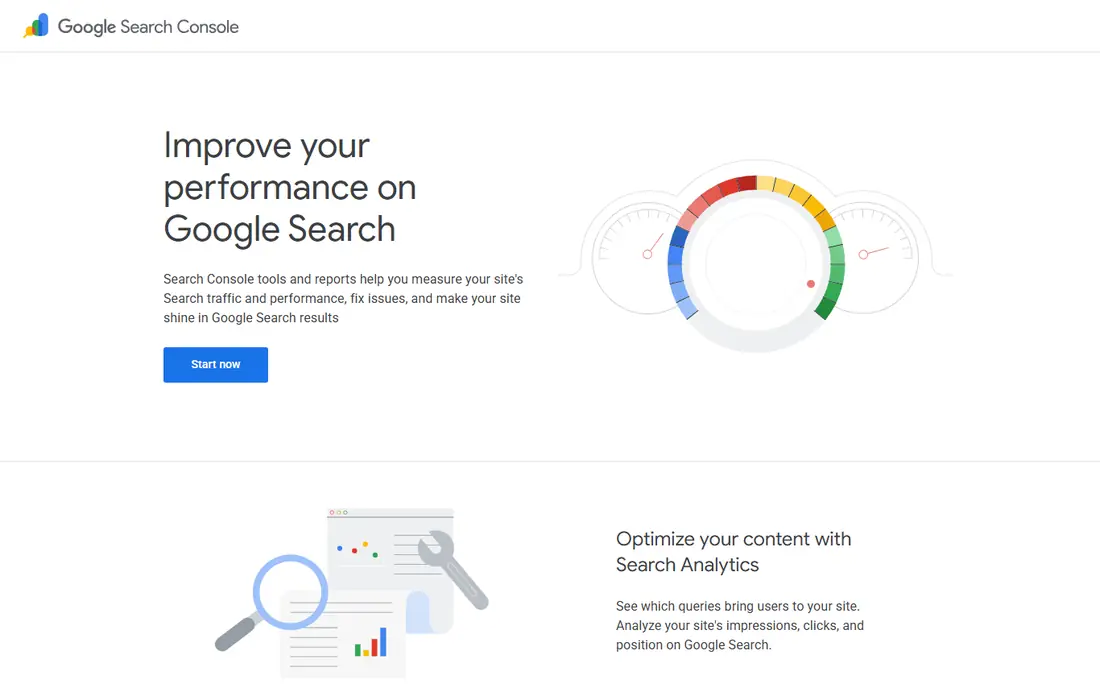
Google Search Console is the baseline every SEO should use before paying for another tool. It shows coverage, lets you inspect a single URL, and lets you request indexing for pages on sites you own and verify. The data comes from Google itself, so it avoids the guesswork of third-party checks.
It does not check backlinks on sites you do not own, and it does not offer bulk submission for thousands of third-party URLs. That limit is by design, since Google only lets owners request indexing for their own pages. Use Search Console first, then add a third-party tool only for the gaps it cannot cover.
- Official Google data
- Free URL inspection
- Request indexing for owned pages
- Only works for sites you verify
- No bulk backlink indexing
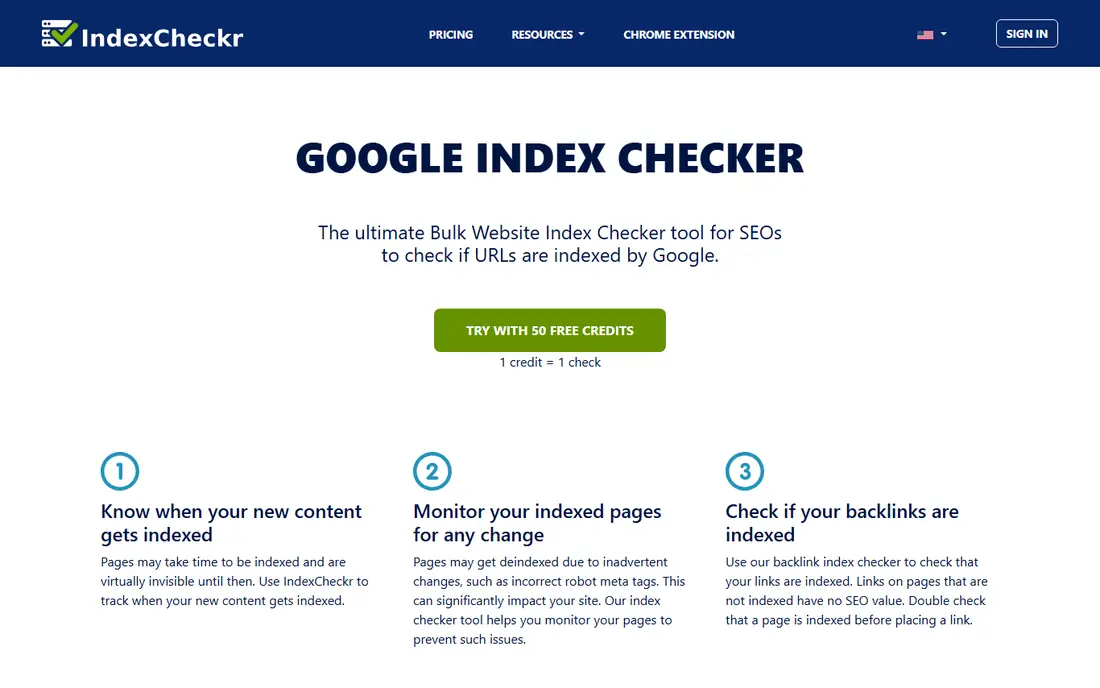
IndexCheckr is the closest like-for-like alternative for bulk checking, since it is built to test large URL lists and monitor them over time. Recheck schedules let an agency watch backlinks and see if they stay indexed, rather than running a one-off test. It can also hand non-indexed URLs to partner link indexers, which links checking to action.
Checking alone will not get a page indexed, so teams that need submission must pair it with an indexer or with Search Console. Pricing also varies, so confirm the current plan before budgeting a large list. For monitoring at scale, IndexCheckr is a strong, focused choice.
- Bulk index checks
- Recheck schedules from daily to monthly
- Hands off non-indexed URLs to link indexers
- Checking is not the same as indexing
- Pricing needs a current check
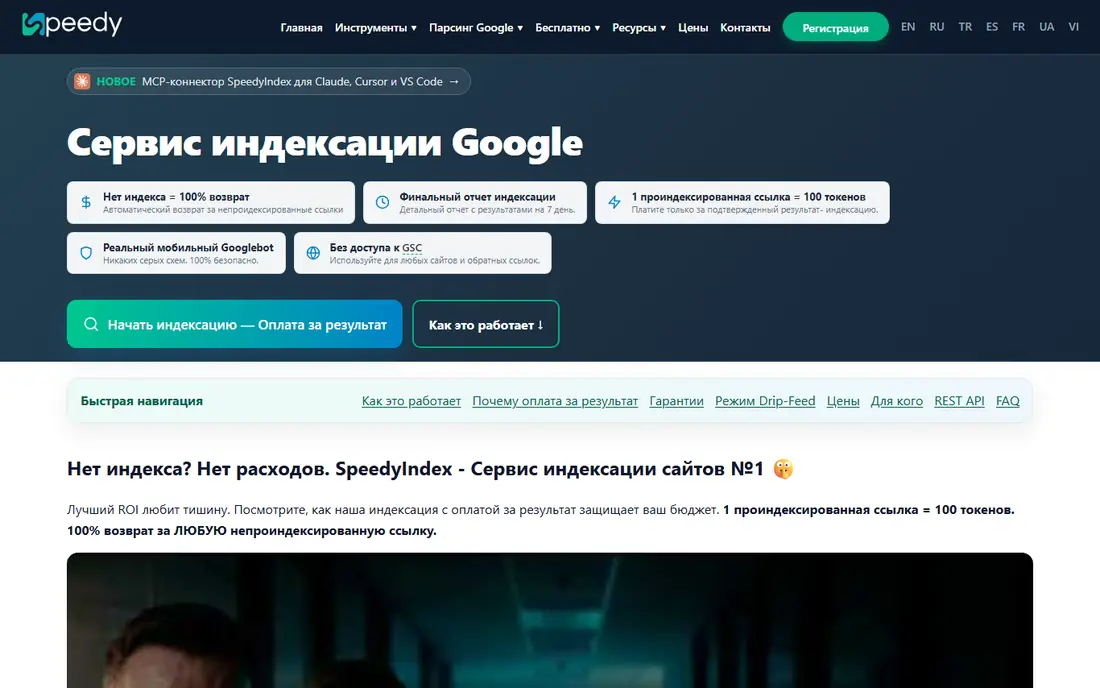
SpeedyIndex uses a token model where you pay for results rather than for every submission, with tokens returned for URLs that do not index within the reporting window. A low entry pack and a free token allowance make it easy to test on a small batch. That pay-per-result model suits bulk backlink work where many links may never index.
The method is undisclosed, which means you cannot audit exactly how submissions are made. Link quality also matters more than the tool, since low-quality pages may fail on any service. Test SpeedyIndex on a sample batch and compare its indexed rate with your baseline before scaling.
- Token model with refunds for unindexed URLs
- Final report on day seven
- Low entry pack
- Method is undisclosed
- Results depend heavily on link quality
IndexMeNow is a premium credit-based indexer, often used as a second pass for URLs that cheaper services failed to index. Credits are returned if a URL does not index within the check window, which limits waste on failed submissions. That model suits a small batch of high-value pages where the cost of a missed index is high.
Per-URL cost is much higher than budget tools, so it is a poor fit for thousands of low-value links. The submission method is also undisclosed, so buyers must judge it on results, not on a technical description. Use it for rescue batches, not as the default for every link.
- Credit model with re-credit after ten days
- Positioned for stubborn, high-value URLs
- Clear reporting
- Higher per-URL cost than budget indexers
- Method is undisclosed
Omega Indexer sells monthly credit packages and lets users drip-feed submissions over up to 30 days, which can look more natural than submitting thousands of URLs at once. Credits are returned for links that do not index within the refund window, and the service offers dashboard, API, and automation options for agencies.
A monthly subscription is less flexible than a pay-per-result pack for a one-off job. Results also vary with link quality, as with every indexer here. Omega Indexer suits agencies with steady backlink volume that want drip-feed control and a predictable monthly plan.
- Monthly credit packages
- Drip-feed over up to 30 days
- Credits back for missed links in the refund window
- Subscription model suits agencies more than one-off users
- Results vary by link quality
IndexBolt focuses on getting URLs crawled quickly, with a standard mode and a faster instant mode. Free credits let new users test the service, and paid credits do not expire, which suits irregular campaigns. That flexibility is useful for SEOs who index in bursts rather than every month.
Crawl speed is not the same as indexing, and IndexBolt itself notes that Google makes the final indexing decision. Instant mode also costs far more per URL than standard mode, so it should be reserved for priority pages. For fast crawl requests with flexible credits, IndexBolt is worth testing.
- Free credits to start
- Standard and instant crawl modes
- Credits do not expire
- No indexing guarantee, since Google decides
- Instant mode costs far more per URL
Indexceptional stands out for reporting, showing a live pipeline for each URL from queue to crawl, including evidence of crawler visits where available. It routes URLs through several submission channels in parallel, which its vendor presents as a reason for higher success rates. That visibility helps agencies explain results to clients.
It is a newer vendor than some rivals, with fewer independent reviews, so results should be judged on your own test batch. Credit pricing also needs a current check before budgeting. For teams that value proof of crawling over a low headline price, Indexceptional is a compelling test.
- Live per-URL pipeline from queue to crawl
- Multiple submission channels
- Detailed reporting
- Credit-based pricing needs a current check
- Newer vendor with fewer independent reviews
GigaIndexer suits small batches of high-value links where a budget indexer has already failed or where speed matters less than a careful submission. Its credit model includes a refund window for unindexed links, which limits downside on a test batch. The submission flow is simple, which helps for a one-off campaign.
Per-URL cost is higher than budget options, so it is not the right default for thousands of links. Public details are also thinner than for larger rivals, so a test batch is essential. Use GigaIndexer as a second-pass tool for priority URLs, not as a bulk default.
- Credit model with a refund window
- Suited to small batches
- Simple submission flow
- Higher per-URL cost than budget tools
- Fewer public details than larger rivals
Bing Webmaster Tools is the official counterpart to Search Console for Bing, and it supports IndexNow, a protocol that notifies participating search engines of new or updated URLs. That makes it useful for fast discovery on Bing and other IndexNow engines, at no cost for verified sites. It also offers URL inspection and submission for your own pages.
It does not index pages on Google, so it cannot replace Search Console or a Google-focused indexer. It also only works for sites you verify. Use it alongside Search Console to cover both major search ecosystems, especially if Bing traffic matters to your site.
- Free and official for Bing
- IndexNow for fast discovery
- URL submission for owned sites
- Covers Bing and participating engines, not Google
- Only for sites you verify
How we picked these
We compared official feature pages, pricing models, and refund terms for index checking and URL indexing tools that are live in October 2026, and we kept both checkers and indexers because the keyword covers both jobs. We favored tools with clear reporting and refund terms, and we flagged undisclosed methods honestly. We did not claim hands-on testing, and we used See website where pricing is credit-based or varies by pack.
How to choose an index tool without wasting money
Check first, submit second
Start with Google Search Console for your own pages and IndexCheckr for bulk backlink checks. Only submit URLs that are actually unindexed and worth indexing, since paying to submit pages that already rank is wasted spend. A check-first workflow also gives you a baseline to judge any indexer.
Compare refund windows, not entry prices
A low entry pack means little if credits expire fast or refunds are slow. Compare the refund window, the re-credit rule, and if credits expire, then run the same batch size on two tools. A tool that refunds misses can cost less in practice than a cheaper tool that keeps every credit.
Treat guarantees with care
No third-party tool can force Google to index a page, since Google decides based on quality, crawl budget, and many other factors. Be wary of any vendor that promises a fixed indexing rate for every link type. This article is not a guarantee of results, and your own test batch is the only reliable evidence.
Frequently asked questions
What is the difference between an index checker and an indexer?
An index checker tests if a URL is already indexed, while an indexer tries to get an unindexed URL crawled and indexed. IndexCheckr and Search Console are checkers, while SpeedyIndex, IndexMeNow, and Omega Indexer are indexers. Most SEO workflows need both, starting with a check.
Can a tool guarantee Google indexing?
No. Google makes the final indexing decision, and no third-party service can force it. Tools can improve discovery and crawling, but page quality, site authority, and crawl budget also matter. Treat any fixed-rate guarantee as marketing, and judge a tool on your own test results.
Which tool should I use for my own website?
Google Search Console is the right first tool for your own site, since it is free, official, and lets you request indexing for verified pages. Add Bing Webmaster Tools for Bing discovery, and fix technical issues such as noindex tags, thin content, and crawl blocks before paying for a third-party indexer.
How long does indexing take?
It varies widely, from same-day for a strong page on a well-crawled site to weeks or never for a low-quality page. Indexers often report initial crawl within hours or days, with final results after a week or more. Allow at least a full refund window before judging a batch.
Are backlink indexers safe for my money site?
Use them mainly for backlinks and tiered links, not as a shortcut for a money site with quality problems. Undisclosed submission methods carry risk, and Google guidance favors natural discovery through links, sitemaps, and quality content. For a money site, fix content and technical issues first, and use Search Console for priority pages.
Sources
See where you really rank - block by block
ProMapRanker scans Google Maps across a grid of your service area. Simple monthly plans from $19, white-label on every plan.
Start freeKeep reading
 zoro.to alternatives
Best Zoro.to Alternatives in 2026
We compare the best zoro.to alternatives in 2026, listing only legal licensed anime streaming services, from Crunchyroll to free options for fans today.
Read → zip alternatives
Best Zip Alternatives in 2026
We compare the best zip alternatives for buy now, pay later in 2026, covering pay-in-4 plans, fees, spending limits, and credit reporting options today.
Read → yesware alternatives
Best Yesware Alternatives in 2026
Compare the best yesware alternatives for sales email tracking, templates, and sequences, with current pricing and honest tradeoffs for small sales teams.
Read →