 ProMapRanker
Best quizlet alternatives in 2026

Key takeaways
- Knowt is the closest free replacement for Quizlet, with a free learn mode, practice tests and a Quizlet import route.
- Anki gives the strongest long-term spaced repetition, but its interface and setup take more time to learn.
- Brainscape suits short, confidence-rated review sessions, while RemNote suits students who want notes and flashcards in one place.
- Cram, Memrise, Quizizz, Kahoot and StudySmarter cover different needs, from public decks to language learning and live classroom games.
Quick comparison
| Pick | Great for | Pricing starts at | Free tier | |
|---|---|---|---|---|
 Knowt | Closest free Quizlet replacement | Free | Yes | Visit |
 Anki | Long-term spaced repetition | Free | Yes | Visit |
 Brainscape | Confidence-rated review | Free | Yes | Visit |
 RemNote | Notes plus flashcards | See website | Yes | Visit |
 Cram | Quick public deck practice | Free | Yes | Visit |
 Memrise | Language learning | Free | Yes | Visit |
 Quizgecko | Turning notes into quizzes | $16 per month | Yes | Visit |
 Quizizz | Classroom quizzes and practice | See website | Yes | Visit |
 StudySmarter | Notes, cards and study plans | Free | Yes | Visit |
The best quizlet alternatives
We compared study apps on learn mode, spaced repetition, practice tests, import options, free tiers and pricing. The best alternatives to Quizlet are not all flashcards alone, so this list includes note-linked study, language learning and classroom quiz tools as well.
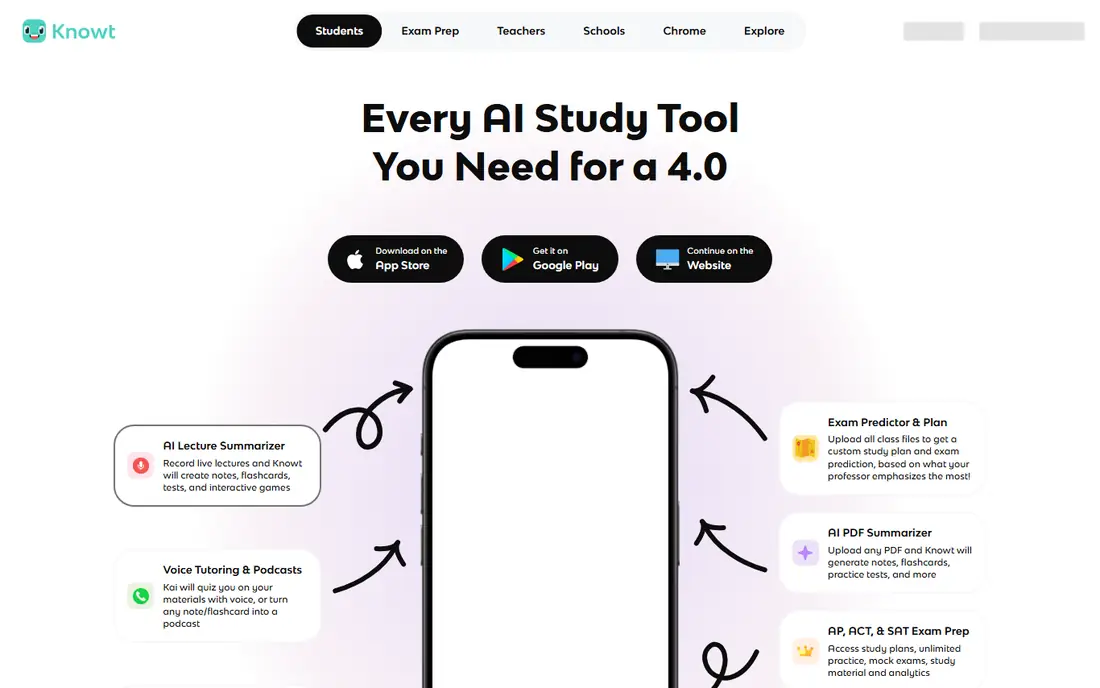
Knowt is the first app to try if you are leaving Quizlet because learn mode and practice tests moved behind a paywall. Its free Basic plan offers learn mode, practice tests and flashcard creation, and it can import Quizlet sets, which makes the move far less painful than rebuilding decks by hand. The interface will feel familiar to Quizlet users, with sets, study modes and shared decks in a similar layout. The trade-off is ads on the free plan and a paid Ultra plan that adds ad-free studying and extra AI tools for PDFs, video and lectures. Ultra costs $24.99 per month or $149.99 per year, which is more than some rivals, so most students will stay on Basic. For free quizlet alternatives with learn mode, Knowt is the most direct match, provided you accept ads in return for free modes.
- Free learn mode and practice tests
- Quizlet import
- Unlimited sets on the free plan with ads
- Free plan includes ads
- Ultra costs $24.99 per month or $149.99 per year
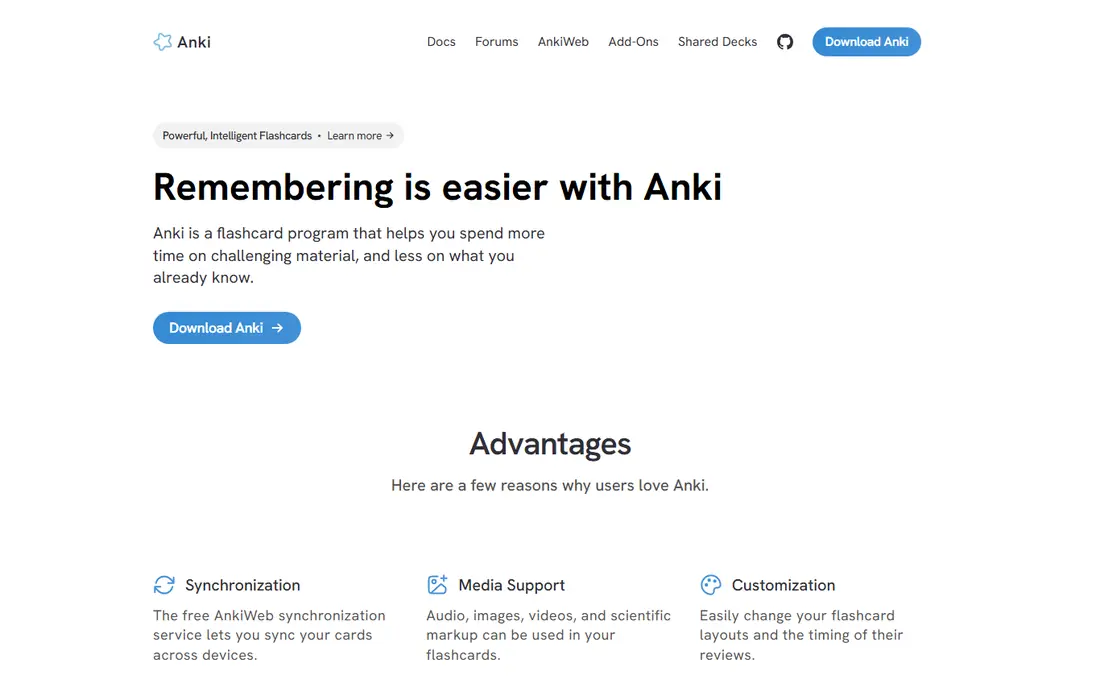
Anki is the standard for students who study over months rather than days. Its spaced repetition scheduling, now built around the FSRS algorithm, spaces reviews so that cards return just before you are likely to forget them. That approach suits medical, law and language students with large decks, and the shared deck library on AnkiWeb includes well-known decks for many exams. The catch is setup. Anki looks plain, its settings take time to understand, and building good cards matters more than the algorithm itself. The desktop app, AnkiWeb sync and Android app are free, while the official iOS app, AnkiMobile, costs $24.99 as a one-time purchase. If you will study daily for months, Anki rewards the learning curve. If you need a quick cram tool for one test, Knowt or Brainscape will feel faster.
- Free on desktop, Android and web
- Strong spaced repetition with FSRS
- Large shared deck library
- Steep learning curve
- Official iOS app costs $24.99 one-time
- Interface looks plain
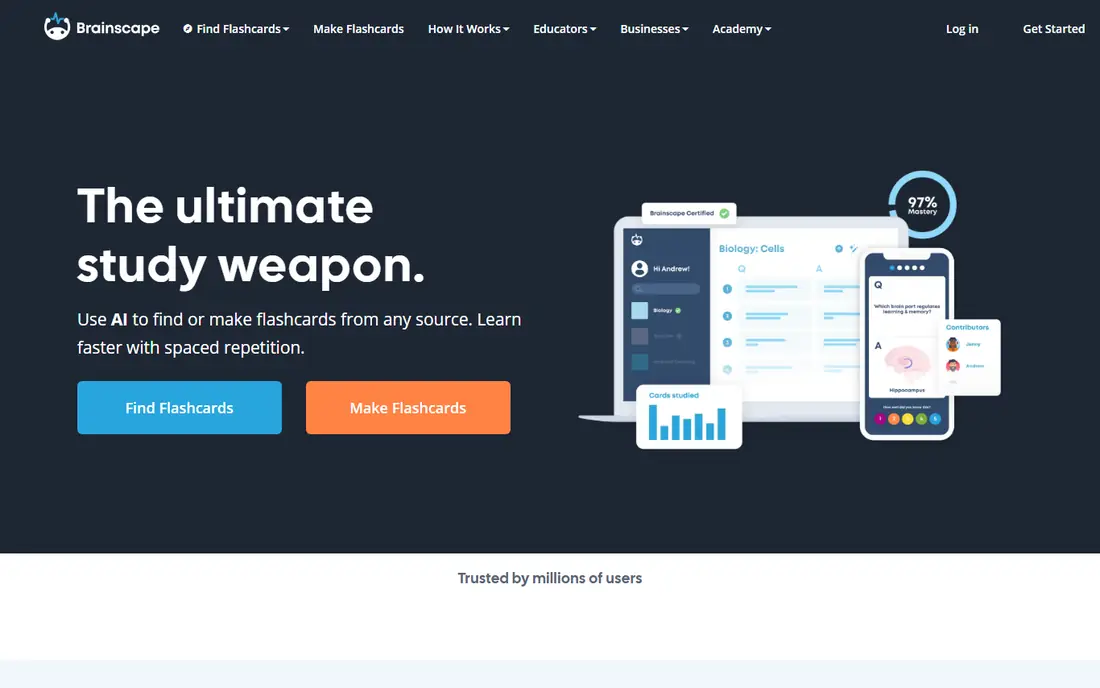
Brainscape asks you to rate how well you knew each card on a scale from 1 to 5, and it uses that rating to schedule the next review. That small step makes each session feel more active than simple flipping, and it gives a clearer picture of mastery over time. The Basic plan is free for creating and studying your own cards, with a library of pre-made decks to browse. Pro costs $7.99 per month on annual billing and adds unlimited AI-generated cards, unlimited certified content, images and sounds on cards, and private content controls. Free users can study unlimited cards they made, but premium decks and some features sit behind Pro. Brainscape is a good pick for exam prep where a curated deck already covers your subject and you want short, focused sessions.
- Free Basic plan for your own cards
- Confidence rating from 1 to 5
- Curated decks for exams
- Pro costs $7.99 per month on annual billing
- Much premium content needs Pro
RemNote suits students who do not want to split notes and flashcards across two apps. You write structured notes, turn key points into flashcards inside the same document, and review those cards with spaced repetition. That link between a note and its card helps when a fact needs context, since you can open the surrounding notes during review. The free tier covers notes and card study, with AI credits included, while the paid plan adds more AI allowances and features. Heavy AI use will need a paid plan, so check the current credit limits before you rely on AI generation for a large course. For students who already take detailed notes, RemNote removes the step of copying notes into a separate flashcard app.
- Notes and flashcards in one system
- Spaced repetition linked to notes
- Good for structured subjects
- Paid plan needed for heavy AI use
- Learning curve for the note structure
Cram is the low-friction option for a quick revision session. You can search millions of public decks, open a set, and start flipping cards or using memorise mode without building an account workflow first. That makes it useful for a last-minute review or for checking whether a public deck covers your topic before you commit to another app. Cram lacks the depth of Anki scheduling, the learn mode polish of Knowt, and the note tools of RemNote. Ads appear on the free plan, and account features vary, so treat Cram as a fast public-deck tool rather than a full study system. For a student who wants a free, no-setup cram session, that simplicity is exactly the point.
- Free access to public decks
- Simple flashcard and memorise modes
- No setup for casual use
- Free plan includes ads
- Fewer study modes and less spaced repetition depth than Anki
Memrise is the language-learning pick in this list, rather than a general Quizlet clone. It pairs vocabulary flashcards with short video clips of native speakers, which helps with pronunciation and listening in a way that text cards alone do not. The free tier covers core learning, while Pro adds more courses and features, with regional offers varying. Memrise will not replace Anki or Knowt for biology, history or law revision, since its course structure is built for languages. For a language learner who wants daily, bite-sized practice with real speech, it is a stronger choice than a generic flashcard app. Check the current Pro price in your region, since Memrise pricing and offers vary by market.
- Free tier for core learning
- Native-speaker video clips
- Language courses with spaced review
- Less suited to general subjects than flashcard apps
- Full Pro features need a paid plan
Quizgecko suits students who start with notes rather than with blank cards. Upload a PDF, slide deck or set of notes, and it generates quizzes, flashcards and study notes from that material, with several question formats beyond simple recall. That workflow saves time when a lecture or textbook chapter is long and you need practice questions quickly. The free tier is limited, with a small monthly allowance for AI courses and audio summaries, so heavy users will need Plus at $16 per month or $108 per year, or Ultra at $29 per month. Generated questions still need checking, since AI can misread a source or invent a detail. Use Quizgecko to draft practice material fast, then edit the questions before you rely on them for an exam.
- Turns notes, PDFs and slides into quizzes
- Six quiz formats
- Audio review and study notes
- Plus costs $16 per month or $108 per year
- Free tier allows limited AI generation per month
Quizizz is best known in classrooms, where teachers run live quizzes and assign practice that students complete at their own pace. The library of teacher-made quizzes covers many school subjects, and the game-like format keeps group review lively. Solo learners can also use assigned or public quizzes for multiple-choice practice, which tests recognition in a different way from flashcards. Quizizz is not a direct flashcard replacement. It lacks the deep spaced repetition of Anki and the card-first workflow of Knowt, and its pricing for schools and districts is quoted rather than a single public student price. For a teacher, a tutor, or a student whose class already uses Quizizz, it is a strong practice tool. For daily solo flashcard study, pair it with Knowt or Anki instead.
- Large library of teacher-made quizzes
- Multiple-choice and interactive practice
- Classroom and solo modes
- Built for classrooms, so solo flashcard study is thinner
- School and district pricing varies
StudySmarter, formerly known as Vaia, combines notes, flashcards, study plans and community sets in one workspace. That combination suits students who want a single place to organise a course, rather than juggling a notes app, a flashcard app and a planner. The free tier covers core study tools, with Premium adding more capacity and features. The main limit is pricing clarity, since the Premium price is shown inside an account and can vary, so check it before you upgrade. Subject coverage and community sets also vary, so search for your course before you commit to moving decks. For students who want a free, all-in-one study workspace with flashcards at its centre, StudySmarter is a practical alternative to Quizlet.
- Free tier with notes, flashcards and study plans
- Community sets
- Combined study workspace
- Premium price is shown in account, not a single public list price
- Feature depth varies by subject
How we picked these
We compared official feature pages, pricing pages and app store listings, and we read public reviews to check learn mode, spaced repetition, practice tests, import options and free tiers. We favoured apps that are actively maintained, that offer a real free tier or a clear trial, and that cover a distinct study need, from long-term retention to language learning to classroom quizzes. We did not claim hands-on testing, and pricing can change, so confirm the current plan on the vendor site before you pay.
How to choose a Quizlet alternative that you will actually use
Start with how you study. If you want Quizlet-style learn mode for free, Knowt is the closest match, with import to move your sets. If you study over months for a high-stakes exam, Anki is worth its learning curve, since its scheduling is built for retention. If you rate your confidence and want short sessions, Brainscape fits better than a plain card flipper. Next, check import and creation time. Moving a large Quizlet library by hand is slow, so favour an app with a clear import route, and test it with one set before you move everything. Finally, check the free tier limits separately from AI generation, since many apps limit AI cards or summaries while keeping basic study free. The best app is the one you will open daily, so pick the workflow that fits your habit, not only the longest feature list.
Frequently asked questions
What are the best quizlet alternatives with learn mode?
Knowt offers a free learn mode, and several other apps offer a similar guided study mode under different names. Knowt is the closest free quizlet alternative for learn mode, since its Basic plan includes learn rounds and practice tests without a paid upgrade. Brainscape and Anki offer structured review instead of a Quizlet-style learn mode, so try each mode with your own cards before you choose.
Are there free quizlet alternatives?
Yes, Knowt, Anki on desktop and Android, Brainscape Basic, Cram and StudySmarter all offer free tiers that cover core flashcard study. Free tiers differ in ads, AI limits and premium content, so check what stays free for your own cards versus shared or certified decks. For most students, a free tier plus a shared deck library is enough without paying.
What is the best alternative to Quizlet for spaced repetition?
Anki is the best alternative to Quizlet for spaced repetition, thanks to its FSRS scheduling and detailed review statistics. Brainscape offers a simpler confidence-based schedule, and RemNote links spaced repetition to notes. If you want the strongest retention over months, Anki is the pick, provided you accept its plain interface and setup time.
Can I import my Quizlet sets into another app?
Knowt offers a Quizlet import route, and Anki can import card data exported as text from Quizlet, though the steps take more care. Other apps support import from files or from existing flashcard formats, but the exact route varies, so check the import help page for the app you choose. Test the import with one small set first, since formatting and images do not always transfer cleanly.
Is Anki better than Quizlet?
Anki is better than Quizlet for long-term retention, custom scheduling and large decks, while Quizlet is easier to start with and has a larger shared set library. The right choice depends on your exam timeline. For a test in a few days, Quizlet-style learn mode may feel faster, while for an exam months away, Anki scheduling usually gives better retention if you study daily.
What is the best Quizlet alternative for language learning?
Memrise is the best Quizlet alternative for language learning, because it pairs vocabulary with native-speaker video and listening practice. Anki also works well for languages if you build your own decks or use a shared language deck, since its scheduling suits vocabulary retention. Choose Memrise for guided courses, and Anki for a custom vocabulary deck you control fully.
Sources
See where you really rank - block by block
ProMapRanker scans Google Maps across a grid of your service area. Simple monthly plans from $19, white-label on every plan.
Start freeKeep reading
 youtube alternatives
Best YouTube Alternatives in 2026
Looking for youtube alternatives in 2026? We compare Vimeo, Dailymotion, Twitch, Rumble, and more on price, audience, monetization, control and privacy.
Read → what's the best ai tool for photo editing
What Is the Best AI Tool for Photo Editing in 2026
What is the best AI tool for photo editing? We compare ten tools for 2026, from Photoshop and Lightroom to Luminar, Topaz, Canva and mobile editors today.
Read → twitter alternatives
Best Twitter Alternatives in 2026
Compare the best twitter alternatives for 2026, from Bluesky, Threads, and Mastodon to Reddit, Tumblr, and Micro.blog, with free plans and audience notes.
Read →