 ProMapRanker
Best QuickBooks Enterprise Alternatives in 2026


Mid-market multi-entity accounting · Pricing starts at: See website
Key takeaways
- Sage Intacct and Oracle NetSuite are the graduation picks for multi-entity firms that have outgrown desktop accounting.
- Microsoft Dynamics 365 Business Central suits Microsoft-centred teams that want finance, sales and inventory in one cloud system.
- Xero, Zoho Books and FreshBooks suit smaller firms that want lower cost and faster setup, with less depth than a full ERP.
- Acumatica and Odoo offer flexible ERP models, with Acumatica charging by resources rather than per user and Odoo offering a free Community edition.
- Sage 50 is the closest desktop-style step for firms that want to stay close to traditional accounting software.
Quick comparison
| Pick | Great for | Pricing starts at | Free tier | |
|---|---|---|---|---|
| Sage Intacct | Mid-market multi-entity accounting | See website | No | Visit |
 Oracle NetSuite | Full ERP for scaling firms | See website | Free trial | Visit |
 Xero | Growing teams, unlimited users | $25 per month | Free trial | Visit |
 Zoho Books | Value with automation | Free | Yes | Visit |
 FreshBooks | Service firms and invoicing | $23 per month | Free trial | Visit |
 Microsoft Dynamics 365 Business Central | Microsoft-centred ERP | $80 per user per month | Free trial | Visit |
 Acumatica | Flexible ERP without per-user pricing | See website | Free trial | Visit |
 Sage 50 | Desktop-style accounting | See website | Free trial | Visit |
 Odoo | Modular open-source ERP | $24.90 per user per month | Yes | Visit |
The best quickbooks enterprise alternatives
We compared vendor pricing pages, accounting depth, inventory and multi-entity support for systems live in October 2026. QuickBooks Enterprise itself is not listed here, since this article covers replacements for it, and each system below is judged on the company size and complexity it serves best, not on matching QuickBooks feature for feature.

Sage Intacct is the finance-first graduation pick for companies that run several entities, locations or departments. It handles consolidations, inter-entity transactions and dimensional reporting, so finance teams can slice results by department, project or location without exporting to spreadsheets. Approval workflows, audit trails and role-based access also suit firms that need cleaner controls as they grow. For a company moving from a single-company desktop file to a multi-entity cloud system, Intacct is a natural step.
Pricing is quote based, and published guides describe annual subscriptions that vary by entity count, users and modules, so budget planning needs a sales conversation. Implementation also takes time, since chart of accounts, dimensions and approval rules need to be set up well. Smaller firms with one entity will likely find Xero or Zoho Books faster and cheaper. For mid-market finance teams, Intacct offers depth that smaller tools cannot match.
- Strong multi-entity and consolidation tools
- Dimensional reporting
- Audit-ready workflows
- Quote-based pricing
- Implementation needs planning
- Smaller firms may find it heavy
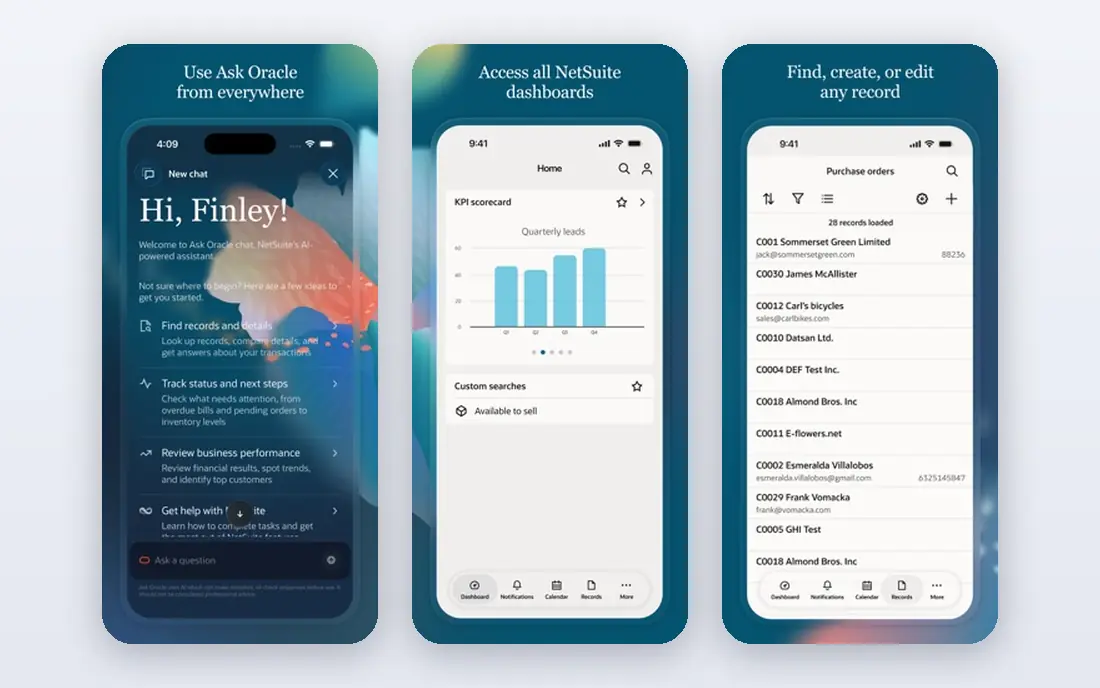
Oracle NetSuite suits companies that need more than accounting: inventory, order management, CRM, procurement and financials in a single cloud system. Multi-subsidiary support, multi-currency handling and revenue recognition tools make it a strong fit for firms selling across regions or running several subsidiaries. Real-time dashboards give leaders a shared view of sales, stock and cash, which is hard to build from separate accounting and inventory tools. For a scaling firm that has outgrown QuickBooks Enterprise, NetSuite is the full ERP answer.
Cost and implementation are the honest catches. NetSuite uses custom pricing, with published comparisons describing a base licence plus per-user charges and implementation costs that can exceed the first year licence. Rollout often takes months and needs a partner for configuration and training. Firms that only need accounting should look at Sage Intacct or Xero instead. Firms that need a full operating system for the business will find NetSuite worth the investment.
- Finance, CRM, inventory and supply chain in one system
- Multi-subsidiary support
- Global accounting depth
- High total cost
- Long implementation
- Learning curve for finance and operations teams
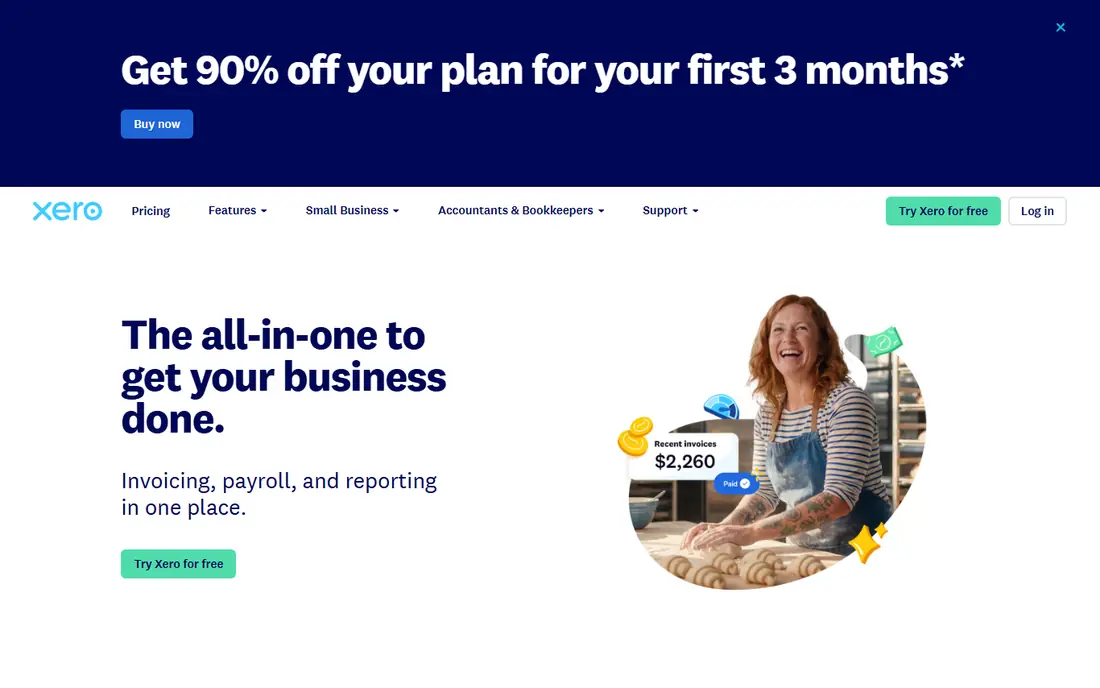
Xero is the best all-round accounting pick for growing small firms that are not ready for an ERP. Every plan includes unlimited users, which helps when accountants, managers and bookkeepers all need access without per-seat charges. Bank reconciliation is strong, invoicing and expense tools are clear, and the app marketplace covers payroll, inventory, reporting and industry tools. Published entry pricing in recent guides is 25 dollars per month for the Early plan, with a free trial for testing.
Limits appear at scale. Inventory management is lighter than NetSuite or Business Central, US payroll is an add-on rather than a core feature, and multi-entity reporting needs workarounds or separate organisation files. Companies with complex manufacturing, warehousing or multi-subsidiary consolidation will outgrow Xero. For a service or product firm with straightforward accounting and a growing team, Xero offers a clean and affordable step up from desktop software.
- Unlimited users on every plan
- Strong bank reconciliation
- Large app marketplace
- Inventory is lighter than ERP systems
- Payroll is an add-on in the US
- Multi-entity work needs separate files
Zoho Books is the value pick in this list, with a free plan for businesses under 50,000 dollars in annual revenue in published guides, and paid plans starting around 20 dollars per month. It covers invoicing, expenses, bank reconciliation, inventory, projects and client portals, with automation for recurring invoices, payment reminders and approval workflows. Firms already using Zoho CRM, Zoho Inventory or Zoho One get a tighter fit, since data flows between Zoho apps without extra connectors.
The free plan has limits on invoices and revenue, so growing firms will move to a paid plan, and US payroll is not a core strength on lower tiers. The accountant network in the US is also smaller than Xero or QuickBooks, which can matter if your accountant prefers a specific platform. For a cost-conscious firm that wants solid accounting plus inventory and automation, Zoho Books is hard to beat on price.
- Free plan for small firms
- Strong automation and inventory
- Works well inside Zoho apps
- Free plan has revenue and invoice limits
- US payroll needs a higher plan or integration
- Smaller accountant network than Xero
FreshBooks suits service businesses that live on invoicing, proposals and billable time. It makes it easy to create a polished invoice, track time against a project, accept online payments and follow up on overdue bills, with a client portal that keeps communication tidy. Published entry pricing in recent guides is around 23 dollars per month for the Lite plan, with a free trial. For freelancers, agencies, consultants and trades firms, that workflow focus matters more than full ERP depth.
Accounting depth is the limit. Lower plans have been described as lacking full double-entry accounting and bank reconciliation depth compared with Xero or Zoho Books, and inventory support is limited. Firms with stock, manufacturing or multi-entity needs should look elsewhere. For a service firm that wants invoices paid faster and time tracked cleanly, FreshBooks is a strong and simple choice.
- Clear invoicing and time tracking
- Client-friendly payment flow
- Simple setup for service firms
- No double-entry accounting on lower plans in some guides
- Bank reconciliation is lighter
- Inventory is limited
Business Central is the ERP pick for teams already working in Microsoft 365. It covers finance, sales, purchasing, inventory, warehousing and project management, with Copilot features and Excel and Power BI links that finance teams use daily. Published pricing is clear: 80 dollars per user per month for Essentials and 110 dollars for Premium on annual billing in vendor guides. That transparency helps budgeting, since many ERP vendors in this list do not publish a list price at all.
Per-user pricing means a large team pays a large monthly total, and complex setups still benefit from a Microsoft partner for configuration, migration and training. Manufacturing features sit mainly on the Premium tier, so firms with production needs should price that tier from the start. For a Microsoft-centred company with 10 to 250 staff that needs a real ERP, Business Central is a practical and well-supported choice.
- Finance, sales, inventory and projects in one cloud system
- Strong Microsoft 365 and Excel links
- Published pricing
- Per-user cost adds up
- Implementation needs a partner for complex setups
- Premium tier needed for manufacturing
Acumatica suits growing firms that want ERP depth without paying per user for every occasional user. Its pricing is based on resources used, such as processing and storage, rather than a per-seat charge, so a company with many occasional users can keep licence costs steadier as headcount grows. Editions cover financial management, distribution, manufacturing, construction and field service, with cloud access and mobile apps for teams on site or on the road. For distributors and manufacturers, that breadth matters.
The vendor does not publish a simple list price, so expect a quote and a partner-led implementation, with costs that vary by edition, resources and project scope. Published third-party estimates should be treated as guides only, not as a quoted price. Firms that want a published per-user price may prefer Business Central or Odoo. Firms that want ERP flexibility and unlimited users should put Acumatica on the shortlist.
- Unlimited users on resource-based pricing
- Finance, distribution and manufacturing editions
- Cloud and mobile access
- Quote-based pricing
- Implementation needs a partner
- Edition choice needs care
Sage 50 is the closest step for firms that like desktop accounting and do not want a full cloud ERP yet. It covers general ledger, accounts payable and receivable, inventory, payroll add-ons and job costing, with a workflow that feels familiar to QuickBooks Desktop users. Published comparisons list Pro pricing around 69 dollars per month for one user in some guides, with higher tiers for more users and features, and a trial for testing. For a single-entity firm with stock and job work, Sage 50 covers the core job well.
It is desktop first, so remote access and cloud collaboration are more limited than Xero, Zoho Books or Business Central, and multi-entity reporting is not its strength. Annual subscription costs also add up as users and tiers grow. Choose Sage 50 when your team works mainly in one office, values a desktop workflow, and does not need multi-entity consolidation or a full ERP suite.
- Familiar desktop accounting workflow
- Inventory and job costing tools
- Single-entity focus done well
- Desktop first with limited cloud access
- Per-user and annual subscription costs
- Multi-entity support is limited
Odoo suits firms that want to start small and add ERP modules as they grow. The Community edition is open source and free to self-host, while Enterprise pricing in vendor guides is 24.90 dollars per user per month for Standard and 49 dollars for Custom on annual billing. Modules cover accounting, sales, inventory, manufacturing, CRM, HR and e-commerce, so a firm can start with accounting and add warehousing or production later without changing platforms. That modular path is attractive for companies that know they will grow but do not want to buy a full ERP on day one.
The catch is implementation. Customisation, migration and hosting need technical skill or a partner, and the Community edition lacks some advanced accounting and multi-company features found in Enterprise. App quality also varies, since Odoo has a large module range. For a technically capable team or a firm with a good Odoo partner, Odoo offers unusual flexibility for its price. For a team that wants a guided setup, Xero or Business Central may be smoother.
- Free Community edition
- Modular apps you add as you grow
- Single per-user price for Enterprise apps
- Implementation and customisation need technical help
- Community edition lacks some advanced features
- App quality varies
How we picked these
We compared vendor pricing pages, accounting and ERP feature pages, and deployment options for systems live in October 2026. We kept systems that cover general ledger, invoicing and reporting at a level suitable for a firm leaving QuickBooks Enterprise, whether that means a strong accounting tool or a full ERP. Where a vendor does not publish a price, we say so rather than estimating, and we note free editions and trial terms from vendor and comparison guides.
How to choose without overbuying
Start with entity count, inventory complexity and user count, not with a feature list. A single-entity service firm, a stock-holding distributor and a multi-entity manufacturer each need a different system, and buying a full ERP for simple accounting wastes money and training time. Next, list your must-have integrations: payroll, banking, e-commerce, CRM and reporting tools all affect the real cost. Then test migration with a sample chart of accounts and a month of real transactions during a trial, and ask the vendor for a written total that includes implementation, training and add-ons.
Also plan for the switch itself. Export your QuickBooks data cleanly, check open invoices, inventory values and payroll balances before migration, and run the old and new systems in parallel for at least one close if you can. That parallel month catches mapping errors early and gives your team time to learn the new workflow. A careful migration matters more than a slightly lower monthly price, since a bad switch costs far more than a good one saves.
Frequently asked questions
What is the best alternative to QuickBooks Enterprise?
Sage Intacct is the best finance-first pick, Oracle NetSuite is the best full ERP pick, and Xero is the best lower-cost accounting pick. The right choice depends on entity count, inventory needs, user count and whether you need a full ERP or only stronger accounting.
Are QuickBooks Enterprise alternatives cheaper?
Some are, and some are not. Xero, Zoho Books and FreshBooks cost less per month than a typical Enterprise subscription, while NetSuite, Intacct and Acumatica can cost more once implementation and modules are included. Compare the total first-year cost, not only the monthly licence, before you decide.
Can I migrate data from QuickBooks Enterprise?
Yes, in most cases, through vendor migration tools, partner services or CSV imports for customers, vendors, items and balances. Check open invoices, inventory values and payroll data carefully, and run a parallel close where possible, since mapping errors are common when charts of accounts differ.
Is Sage 50 a good replacement for QuickBooks Enterprise?
Sage 50 suits single-entity firms that want a desktop workflow with inventory and job costing, but it is not a cloud ERP and it lacks strong multi-entity support. Firms with several entities, remote teams or complex warehousing should look at Sage Intacct, Business Central or NetSuite instead.
Do these systems handle inventory?
Yes, with different depth. Zoho Books and Xero handle basic inventory, Sage 50 handles job-linked stock, and NetSuite, Business Central, Acumatica and Odoo handle warehousing, multi-location stock and manufacturing in far more depth. Match the inventory depth to your actual stock complexity, not to a feature list alone.
Sources
See where you really rank - block by block
ProMapRanker scans Google Maps across a grid of your service area. Simple monthly plans from $19, white-label on every plan.
Start freeKeep reading
 zoro.to alternatives
Best Zoro.to Alternatives in 2026
We compare the best zoro.to alternatives in 2026, listing only legal licensed anime streaming services, from Crunchyroll to free options for fans today.
Read → zip alternatives
Best Zip Alternatives in 2026
We compare the best zip alternatives for buy now, pay later in 2026, covering pay-in-4 plans, fees, spending limits, and credit reporting options today.
Read → yesware alternatives
Best Yesware Alternatives in 2026
Compare the best yesware alternatives for sales email tracking, templates, and sequences, with current pricing and honest tradeoffs for small sales teams.
Read →