 ProMapRanker
Best Quartzy Alternatives in 2026


Biotech teams doing sequence and experiment work · Pricing starts at: See website
Key takeaways
- Quartzy leads on lab purchasing and inventory, so the closest replacements depend on whether you need ordering, notebooks, or sample tracking most.
- Benchling suits biotech research, SciNote suits regulated labs on a budget, and LabArchives offers the clearest published pricing here.
- Labguru, LabCollector, and SciSure bundle notebook, inventory, and sample tools in one system, which suits labs that want one vendor.
- Free and academic tiers exist at Benchling, SciNote, RSpace, and eLabFTW, but commercial pricing is often quote-only.
- Labs handling regulated work should confirm audit trails, signatures, and export options during a trial, not after signing.
Quick comparison
| Pick | Great for | Pricing starts at | Free tier | |
|---|---|---|---|---|
| Benchling | Biotech teams doing sequence and experiment work | See website | Yes | Visit |
 SciNote | Regulated labs moving from paper to digital records | See website | Yes | Visit |
 Labguru | Labs that want notebook, LIMS, and inventory together | See website | No | Visit |
 LabArchives | Labs that want clear published pricing | $575 per user per year | Yes | Visit |
 RSpace | Universities and open-science labs | See website | Yes | Visit |
 SciSure | Labs that need notebook, LIMS, and safety tools together | See website | No | Visit |
 LabCollector | Modular labs that buy only the modules they need | See website | Yes | Visit |
 Freezerworks | Labs whose main problem is sample storage | See website | No | Visit |
 Scispot | Growing labs that want a cloud operating system | See website | No | Visit |
The best quartzy alternatives
Quartzy is lab management software centred on inventory, ordering, and requests, with a shop for lab supplies built around that purchasing loop. The tools below replace different parts of that job. Some lean toward electronic notebooks, some toward sample tracking, and some bundle notebook, inventory, and sample tools together. We kept only tools that are live and sold in October 2026.
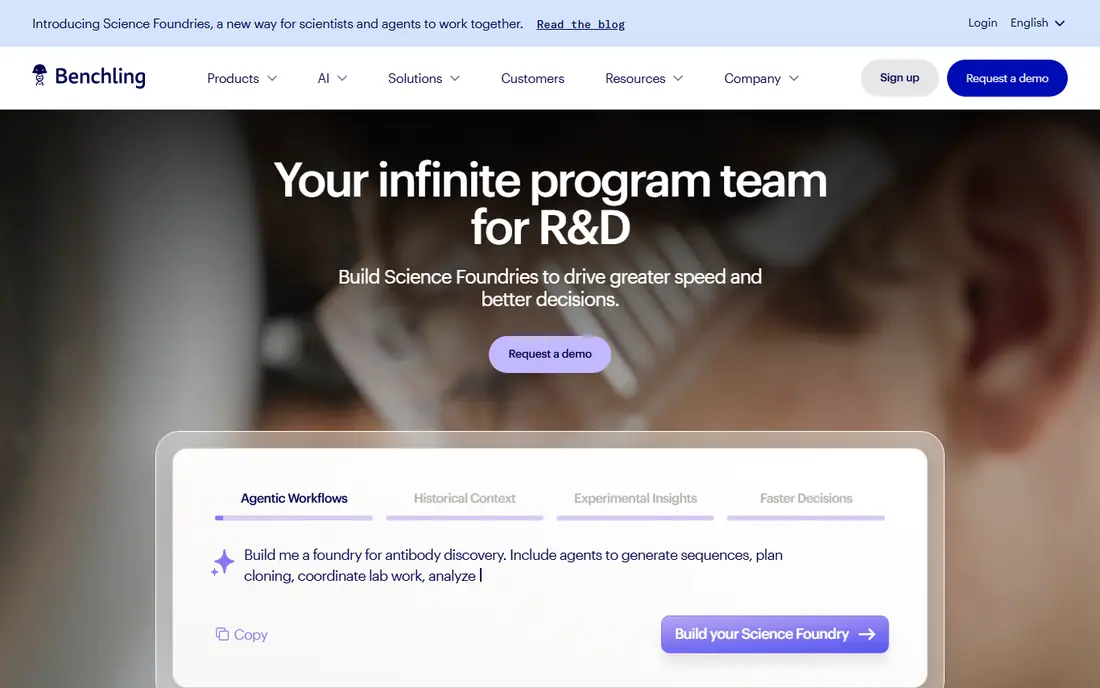
Benchling is the research-first pick in this list. It grew out of molecular biology work, so sequence design, plasmid maps, and experiment records sit at the centre, not as an afterthought. Collaboration, structured experiment templates, and registry tools help biotech teams keep research data organised as projects grow.
The catch is commercial cost and complexity. Academic use is free, but commercial plans are quoted and reported in the thousands per user per year, which puts Benchling out of reach for many small labs. Smaller teams should test whether they need sequence depth, or whether a simpler notebook plus inventory tool covers the same work for less.
- Molecular biology tools for sequences and plasmids
- Strong collaboration for research teams
- Free academic plan
- Commercial pricing is quote-only and can be high
- Setup can be heavy for small labs
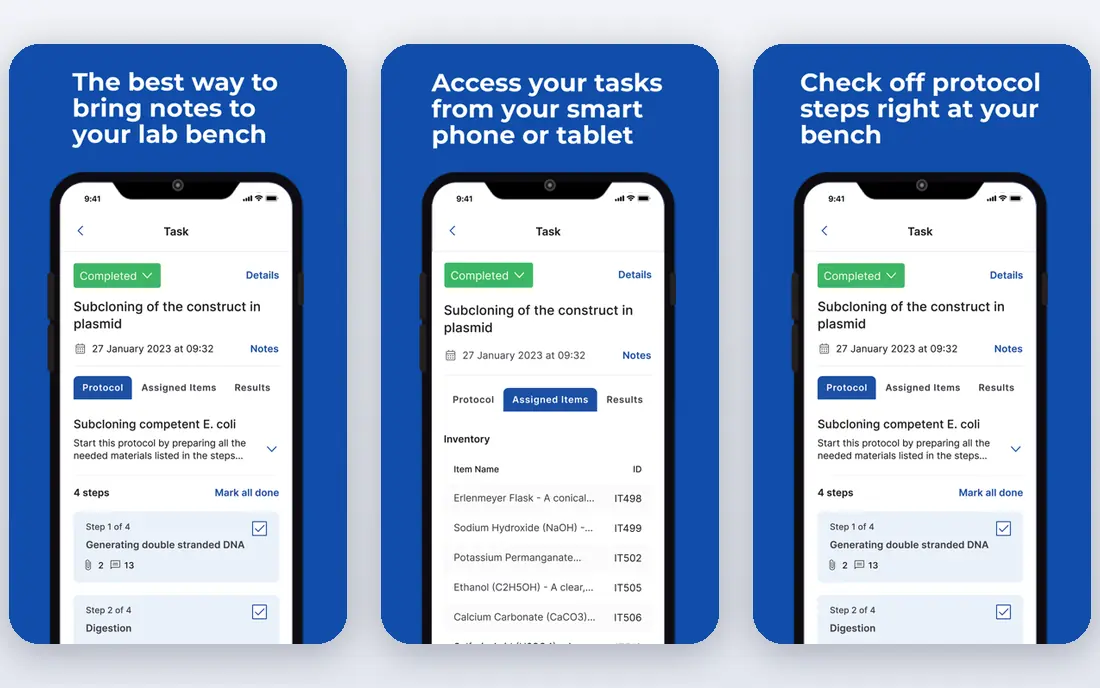
SciNote is an electronic lab notebook first, with lab inventory attached. Experiments are organised as projects, experiments, and tasks, with protocol templates, version control, electronic signatures, and audit trails for regulated work. That compliance story matters for labs working under GLP or GMP habits, and the free tier lets a small team start without a sales call.
The honest limit is pricing opacity and scope. Paid and regulated plans are priced on request, so budgeting needs a quote, and sample throughput tools are lighter than on a LIMS-first platform. For a research lab whose main problem is documentation and reproducibility, SciNote is a strong pick. For a testing lab, look at LabCollector or Freezerworks.
- Electronic notebook with inventory attached
- Protocol templates, version control, and audit trails
- Free tier for individual users
- Paid plans are quote-only
- LIMS depth is lighter than sample-first tools

Labguru is the closest all-in-one replacement for a lab that wants Quartzy-style inventory plus a real notebook. Experiments, samples, stocks, and equipment sit in one system, so a result can be traced back to the sample and the stock that produced it. That linkage is the main reason labs move from separate spreadsheets to Labguru.
The trade-off is that breadth brings weight. Pricing is quoted, and a lab that only needs purchasing and stock counts may find Labguru more than it needs. Test the inventory and ordering flow first, because that is the part most likely to decide whether Labguru replaces Quartzy in daily use.
- Integrated ELN, LIMS, and inventory in one platform
- Sample and stock tracking tied to experiments
- Workflow tools for lab operations
- Quote-only pricing
- Breadth can feel heavy for a lab that only needs ordering
LabArchives earns its place through pricing clarity, which is rare in this category. The corporate Professional plan costs 575 dollars per user per year, with an academic rate of 330 dollars, and a free edition is available. Inventory use is tied to notebook entries, so stock consumption can be linked to the experiment that used it.
The limit is purchasing. LabArchives does not own the procure-to-pay loop the way Quartzy does, so labs that rely on request approvals and supplier ordering will still need a purchasing step outside the tool. For a lab that values notebook depth and a price it can budget, LabArchives is the most transparent pick here.
- Published corporate Professional price of $575 per user per year
- Free edition available
- Inventory tied to notebook entries
- Purchasing and ordering depth trails Quartzy
- Enterprise pricing is custom
RSpace suits academic and open-science labs that want a research data hub rather than a single notebook. The community edition is free, and the platform combines notebooks, inventory, and file management with integrations for research workflows. Universities with existing IT support often find RSpace a natural fit.
The catch is commercial pricing structure. Published minimum annual subscriptions have been reported from 6,000 dollars for academic teams and 12,000 dollars for commercial teams, so small commercial labs should get a quote early. Self-hosting the open-source edition avoids licence cost but adds IT work, so weigh staff time against subscription cost.
- Community edition and open-source roots
- Notebook, inventory, and file tools in one research hub
- Strong fit for academic teams
- Published team minimums are high for commercial use
- Self-hosting needs IT effort
SciSure, built from eLabJournal and Labfolder, bundles an electronic notebook with LIMS, inventory, equipment scheduling, and safety tools. That breadth suits labs that want one vendor for experiment records, sample tracking, and lab safety, rather than stitching three tools together. Regulated and European labs often shortlist it for that combined scope.
Pricing is quoted, and the breadth means migration needs planning. A lab moving from Quartzy plus paper notebooks should map inventory, ordering, and experiment templates before signing, because the notebook and LIMS parts will change daily habits more than the inventory part alone.
- ELN plus LIMS plus safety and equipment tools
- Formerly eLabJournal and Labfolder
- Suits European and regulated labs
- Quote-only pricing
- Migration from separate tools takes planning
LabCollector takes a modular path that suits labs with mixed needs. A lab can start with inventory and sample modules, add an ELN pack, and grow from there, with a free startup pack for small teams. That flexibility helps labs that do not fit a single template, from testing labs to research groups.
The downside is choice overload. Pack pricing and module combinations can be confusing, and a lab needs to decide its module mix before the total becomes clear. Ask for a written quote for your exact modules, and test the inventory flow against Quartzy before committing to a wide bundle.
- Modular packs for ELN, inventory, and sample tools
- Free startup pack
- Flexible setup for varied lab types
- Quote and pack pricing can be confusing
- Full setup needs module choices up front
Freezerworks is the sample specialist in this list. It tracks samples by freezer, rack, box, and position, with audit trails and search that suit biobanks, clinical labs, and testing labs where finding a sample fast matters more than writing a notebook entry. That depth is hard to match in a general notebook tool.
The limit is scope. Notebook depth and purchasing workflows trail Benchling, SciNote, and Quartzy, so Freezerworks works best as a sample system alongside a notebook, or as the main tool for a storage-heavy lab. Price is quote-led, so get a figure for your sample volume and user count.
- Deep sample and freezer location tracking
- Audit trails for stored samples
- Suits biobanks and testing labs
- Quote-led pricing
- Notebook and purchasing depth trails other tools here
Scispot positions itself as a cloud lab operating system, combining notebook, LIMS, and inventory tools with automation and integrations. Growing labs that have outgrown spreadsheets often like the modern interface and the single-system approach, because experiment, sample, and stock data stay connected without manual transfers.
The honest catch is maturity and price transparency. Scispot is quoted rather than published, and its track record is shorter than Benchling or LabArchives. Run a pilot with real samples and real inventory before signing, and check export options so lab data stays portable if the firm later changes tools.
- Cloud ELN plus LIMS plus inventory in one platform
- Automation and integration focus
- Modern interface for growing teams
- Quote-only pricing
- Smaller track record than Benchling or LabArchives
How we picked these
We compared official feature and pricing pages, lab software comparisons, and public reviews for tools that cover lab inventory, notebooks, or sample management and are live in October 2026. We kept only products that truly fit lab work, not generic project tools. Where pricing was not published, we wrote See website, and we flagged free and academic tiers where they give a real starting point.
How to choose a Quartzy replacement
Start with the job Quartzy does for you today. If ordering and stock counts dominate, shortlist Labguru, LabCollector, and SciSure, and test their request and approval flows. If experiment records dominate, shortlist Benchling, SciNote, and LabArchives, and test protocol templates and audit trails. If sample location dominates, shortlist Freezerworks.
Next, test data portability. Export a sample inventory list, a notebook entry, and an audit trail during the trial, and confirm the formats your lab can actually reuse. A lab tool that locks data behind a custom export will cost more to leave later than any subscription saving today.
Compliance questions worth asking
Ask how electronic signatures, version history, and audit trails work, and whether the tool supports 21 CFR Part 11 habits where relevant. Ask who owns the data, how backups work, and what happens to access if the subscription ends. Regulated labs should get these answers in writing before rollout.
Frequently asked questions
What is the closest alternative to Quartzy?
Labguru is the closest all-in-one pick, because it combines notebook, LIMS, and inventory in one platform. LabCollector is close for modular labs, while SciNote and LabArchives suit labs that care more about notebooks than purchasing.
Is there a free alternative to Quartzy?
SciNote, RSpace, and LabCollector offer free tiers or editions, and Benchling is free for academics. Free tiers usually limit users or features, so check whether inventory, audit trails, and exports sit in the free tier or a paid plan.
Which tool is best for a small academic lab?
SciNote and RSpace are the most practical small academic picks, because both offer free starting points and compliance-friendly notebooks. LabArchives is worth a look if published pricing and a clear academic rate matter more than a free tier.
Do these tools handle lab purchasing like Quartzy?
None matches Quartzy purchasing depth exactly, because Quartzy is built around ordering and requests. Labguru and LabCollector cover inventory and requests well, but labs that rely on supplier ordering should test that flow closely before switching.
How do I migrate inventory from Quartzy?
Most tools here support CSV import for inventory lists, and vendors often help with onboarding. Clean item names, barcodes, locations, and stock levels before import, and run a small pilot with one storage area before moving the full inventory.
Sources
See where you really rank - block by block
ProMapRanker scans Google Maps across a grid of your service area. Simple monthly plans from $19, white-label on every plan.
Start freeKeep reading
 zyte alternatives
Best Zyte Alternatives in 2026
These zyte alternatives cover managed scraping APIs, proxy networks and no code tools for lawful collection from your own or consented sources only in 2026.
Read → zerto alternatives
Best Zerto Alternatives in 2026
Compare the best zerto alternatives for disaster recovery and replication, with recovery targets, cloud options and honest trade-offs for teams in 2026.
Read → zerofox alternatives
Best ZeroFox Alternatives in 2026
We compared 9 zerofox alternatives for brand protection, phishing takedowns, dark web monitoring, and social impersonation, with clear coverage notes.
Read →