 ProMapRanker
Best QR Code Alternatives in 2026
Key takeaways
- NFC cards and tags suit one-to-one sharing, such as a contact or a payment page, where a tap feels more direct than aiming a camera.
- Bluetooth beacons suit places, not people, because they can greet phones in a shop, museum, or venue without anyone scanning anything.
- Short links still beat hardware when the job is simply to share a tidy link online or in print at very low cost.
- AR and image recognition suit product packaging and posters where the picture itself can become the trigger.
Quick comparison
| Pick | Great for | Pricing starts at | Free tier | |
|---|---|---|---|---|
 Popl | NFC digital business cards | See website | Free trial | Visit |
 Tapni | NFC cards with a link fallback | See website | Free trial | Visit |
 Estimote | Bluetooth beacons for venues | See website | No | Visit |
 Kontakt.io | Beacon fleets for business sites | See website | No | Visit |
 GoToTags | Blank and printed NFC tags | See website | No | Visit |
 Beaconstac | NFC and beacon campaigns | See website | Free trial | Visit |
 Blippar | AR experiences from images | See website | Free trial | Visit |
 Bitly | Short links with tracking | $29 per month | Yes | Visit |
 Rebrandly | Branded short links for teams | See website | Yes | Visit |
The best qr code alternatives
We put this list together plainly as alternatives to QR codes as a technology, not as a product called QR Code. A printed code works well when a phone camera and good light are enough, but it fails when you want a tap, a passive greeting, or a link you can change without reprinting. The options below cover those gaps, from a tap on a card to a beacon that greets a phone from across a room. We compared official product pages and pricing, and we kept the focus on what each option replaces and what it asks of the person using it.
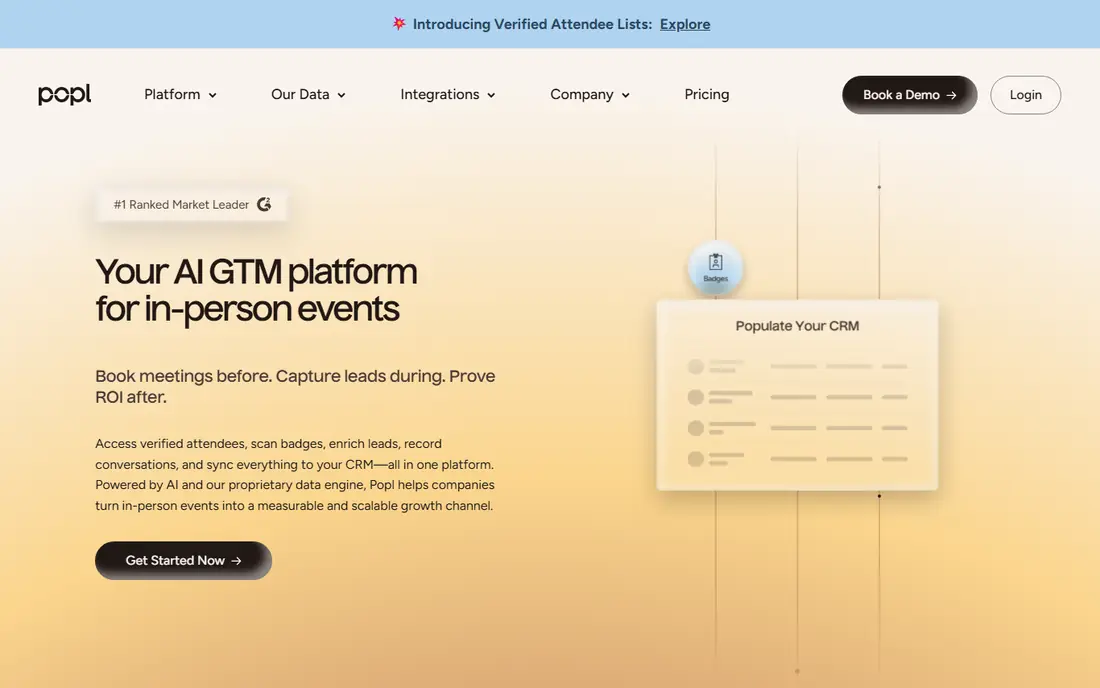
Popl fits sales teams and event staff who meet people face to face and want a tap to hand over contact details, a link page, or a lead form. Popl cards and accessories carry an NFC chip, so a tap opens a profile in the recipient phone browser, and team accounts add shared branding and lead capture for follow-up.
Popl is a poor fit if you only need a link on a flyer, since buying and carrying cards adds cost and effort that a printed code avoids. Check the team plan terms before ordering for a large group, because per-person hardware and admin features change the total cost quickly.
- Tap sharing without an app for the recipient
- Team cards and lead capture
- CRM connections
- Published pricing is limited
- Cards are an added cost per person
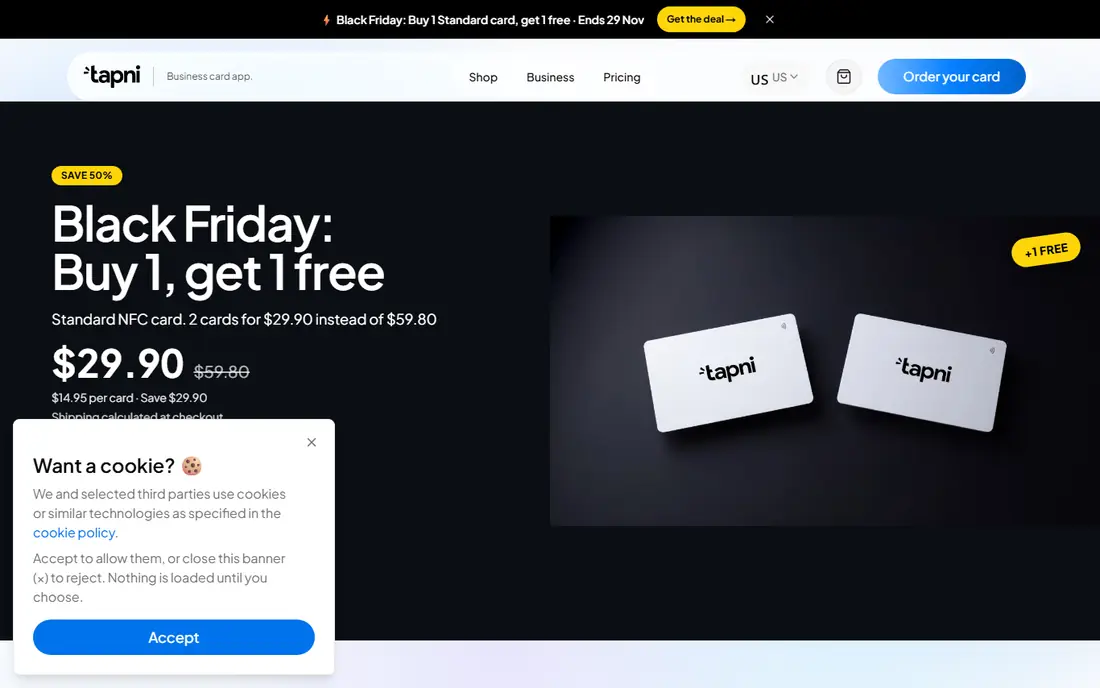
Tapni fits small teams that want a physical card but do not want to depend on NFC alone, since the card can also carry a printed code as a fallback. The Tapni profile acts as a single page for links, contact details, and booking, and managers can issue and track cards for staff from one dashboard.
The catch is the same as with any card system: lost cards need replacing, and the value drops if staff forget to carry them. Confirm shipping, card materials, and team pricing for your country before ordering, because those details affect the real cost.
- Cards in several materials, including bamboo
- Team management and analytics
- QR fallback on the card
- Hardware cost per card
- Smaller brand presence in the United States
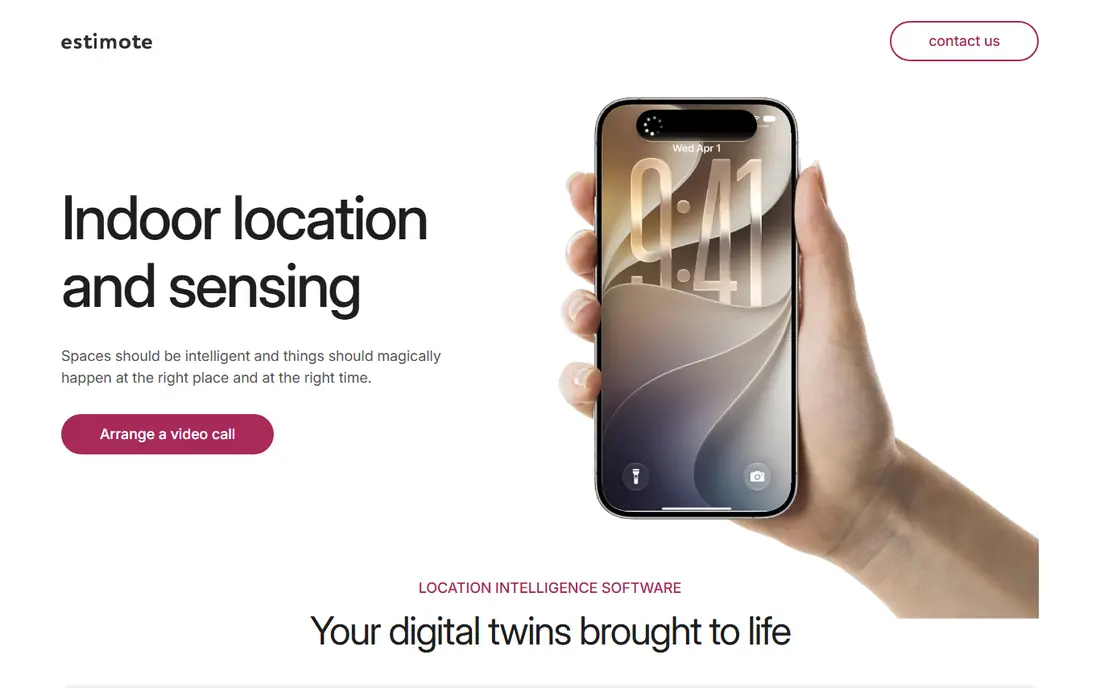
Estimote fits museums, shops, and venues that want phones to receive a welcome message, a tour prompt, or an offer when visitors arrive in a defined area. Its beacons broadcast over Bluetooth, so an app or a compatible system can react without the visitor aiming a camera at anything, and fleet tools help track battery and placement.
Estimote is not a casual purchase for one poster or one card. You need an app or integration to act on the signal, and signal range varies with walls, crowds, and phone settings, so test in the real space before buying in bulk.
- Beacons for proximity and indoor location
- Cloud tools for managing fleets
- Long battery life on many models
- Hardware plus platform costs
- Setup needs planning and testing
Kontakt.io fits hospitals, warehouses, and large venues that need many beacons managed as one fleet, with location data feeding into their own systems. The platform pairs beacon hardware with cloud management, so teams can watch devices, update settings, and use location signals for wayfinding or asset tracking.
The honest catch is complexity. This is a system to plan and maintain, not a single item to hand out, and costs rise with fleet size and support needs. It only makes sense when passive location data is worth that ongoing work.
- Beacon hardware and cloud management
- Options for asset and staff location
- Enterprise controls
- Quote-based pricing for larger fleets
- Setup is more involved than a printed code
GoToTags fits makers, retailers, and teams that want plain NFC tags to encode themselves, for a product page, a review link, or a Wi-Fi join prompt. You choose the tag shape and chip, encode it with a phone or a writer, and stick it on packaging, a shelf, or a display, where a tap opens whatever destination you set.
The catch is that GoToTags sells the tag, not the finished experience. If you want analytics, a hosted profile, or team controls, you need another tool on top, and you should test the chip with the phones your customers actually use.
- Wide choice of NFC tag shapes and chips
- Bulk ordering
- Tools for encoding tags
- No hosted profile included
- You must supply the destination and encoding
Beaconstac fits marketers who want one place to run NFC tags, beacons, and dynamic codes, with pages they can update without reprinting or replacing hardware. Its dashboard links a tap or a nearby beacon to a landing page, collects basic engagement data, and lets staff change the destination when a campaign changes.
The catch is cost discipline. A small one-off use may not justify a platform fee, and beacon features still need a compatible phone setup on the visitor side. Price it against a simple short link before committing to a hardware campaign.
- NFC tags and beacons with campaign pages
- Analytics on taps and scans
- No-code setup
- Hardware and platform fees add up
- Best value comes with a campaign plan
Blippar fits brands that want a poster, a pack, or a label to open a 3D model, a video, or an interactive scene when a phone camera looks at it. Instead of scanning a code, the user points a camera at the artwork itself, and Blippar can serve web-based AR so the visitor does not always need to install an app first.
The catch is production effort. A good AR scene takes design and testing, and a plain code remains faster for a simple link. Use Blippar when the visual experience itself is the point, not when you only need to share a web address.
- Image recognition and AR scenes from packaging or print
- Web AR without a separate app in many cases
- Analytics
- AR build time is higher than a code
- Results depend on lighting and camera quality
Bitly fits anyone who shares links online, in email, or in print and wants to know how often they were clicked without buying hardware. You shorten a long address, add a custom back-half or a branded domain on paid plans, and edit the destination later if a page moves, which a static printed code cannot do.
The catch is that a short link still needs to be typed or tapped, so it is weaker than NFC for face-to-face sharing and weaker than a beacon for passive greetings. It wins on cost and speed, and it pairs well with NFC or print when you want a readable fallback.
- Short, branded links
- Click analytics
- Link editing after sharing
- Free plan limits are tight
- Branded domains and deeper analytics sit on paid plans
Rebrandly fits teams that send many links and want every link to carry their own domain, so recipients see a trusted brand instead of a generic shortener. Links can be created and managed by team members, tracked by clicks and device, and updated when a campaign page changes, which keeps printed and shared material useful for longer.
The catch is that branded domains take a little setup, and the free plan is best for testing rather than heavy daily use. For a single link, Bitly or a plain code is simpler, but for a brand that lives on links, Rebrandly earns its place.
- Custom branded domains
- Team link management
- Click and device reporting
- Paid plans are needed for higher limits and full team controls
- Setup needs a domain
How we picked these
We compared official feature pages, pricing pages, and app store listings, and we checked public documentation for each product before including it. We kept only products that exist and work now, that fit the topic directly, and that a reader could sign up for or buy without guessing at the cost. Where a price was not published clearly, we wrote See website instead of filling in a number we could not confirm.
We also weighed the trade-offs that show up after signup, such as limits on the free plan, per-user or per-location billing, and how hard it is to move data out later. A product that looked cheap at first glance did not stay on the list if its limits made it a poor fit for ordinary use. We did not claim hands-on testing that did not happen, and we left out the named product itself from its own alternatives list.
How to choose a QR code replacement
Start with the action you want. If the person is standing in front of you, NFC wins on speed and intent. If the person is walking through a space, a beacon wins on passivity. If the person is online, a short link wins on cost. If the artwork is the attraction, AR wins on experience.
Then check the phone in the other hand. NFC needs a compatible phone and a tap within a few centimetres. Beacons need Bluetooth and permission settings that vary by phone. AR needs a decent camera and light. A printed code, for all its limits, works on almost any modern phone camera, so any replacement should be tested with real devices before you print or order hardware.
Finally, price the whole job, not just the tag. NFC cards, beacons, and AR builds carry hardware, platform, or design costs, while short links carry a small subscription or nothing at all. Keep a plain link as a fallback wherever you can, so a failed tap or a weak signal does not leave the visitor with nothing.
Frequently asked questions
What are the best alternatives to QR codes?
NFC tags suit tap-to-share moments, Bluetooth beacons suit venues, AR suits packaging and posters, and short links suit online sharing. The best choice depends on whether the person is in front of you, walking past, or reading online, and on what action you want them to take next.
Are NFC tags better than QR codes?
NFC is faster and more deliberate for one-to-one sharing, since a tap needs no camera aiming, but it costs more per item and needs a compatible phone. QR codes are cheaper and more universal for print. Many teams use both, with NFC for cards and a printed code as a fallback.
Do Bluetooth beacons work without an app?
A beacon can broadcast on its own, but something must listen for it, usually an app or a system integration with the right permissions. That is why beacons suit venues with their own app or platform, rather than a one-off poster for strangers.
Can I change the destination after printing?
A static printed code cannot change, but a short link, a dynamic code, an NFC tag you can rewrite, and a Beaconstac campaign page can all point somewhere new. If your page will move, pick a method that lets you edit the destination.
What is the cheapest QR code alternative?
A short link is usually cheapest, with free plans from Bitly and Rebrandly for light use. NFC tags are cheap in bulk but still cost more than print, and beacons and AR cost more again once hardware, platform, and design time are counted.
Sources
See where you really rank - block by block
ProMapRanker scans Google Maps across a grid of your service area. Simple monthly plans from $19, white-label on every plan.
Start freeKeep reading
 zscaler alternatives
Best Zscaler Alternatives in 2026
Looking for zscaler alternatives? We compare 9 SASE and zero trust platforms on architecture, data protection, pricing, and fit for your network and team.
Read → zapier alternatives free
Best Zapier Alternatives Free in 2026
Nine automation tools for zapier alternatives free in 2026, all with genuinely free tiers, plus free plan limits, starting prices and upgrade paths explained.
Read → which platform is best for online reputation
Which Platform Is Best for Online Reputation in 2026
Wondering which platform is best for online reputation? We compare 8 review, listing, and response tools for small and multi-location businesses and agencies.
Read →