 ProMapRanker
Procore Alternatives in 2026


Design and build workflows · Pricing starts at: See website
Key takeaways
- Autodesk Construction Cloud suits design-led teams, while Fieldwire suits field teams that need a simple mobile app.
- Buildertrend and JobTread suit residential builders and remodelers better than a general enterprise platform.
- Contractor Foreman and RedTeam Flex suit smaller contractors that need project and financial tools in one place.
- Oracle Aconex and Kahua suit large, multi-party programs with strict document control.
- Pricing is often quote-based, so request a demo with your real project types before you judge total cost.
Quick comparison
| Pick | Great for | Pricing starts at | Free tier | |
|---|---|---|---|---|
| Autodesk Construction Cloud | Design and build workflows | See website | Free trial | Visit |
 Fieldwire | Field management on mobile | See website | Yes | Visit |
 Buildertrend | Residential builders and remodelers | See website | Free trial | Visit |
 Contractor Foreman | Small contractors | See website | Free trial | Visit |
 JobTread | Remodelers and custom builders | See website | Free trial | Visit |
 Oracle Aconex | Large multi-party projects | See website | No | Visit |
 Kahua | Owners and program managers | See website | Free trial | Visit |
 RedTeam Flex | Contractors needing project and finance tools | See website | Free trial | Visit |
The best Procore alternatives
These tools cover project management, field reporting, documents, budgets, and client communication, but each one leans toward a different kind of builder. The right choice depends on project size, trade focus, and how much of the work happens in the field.
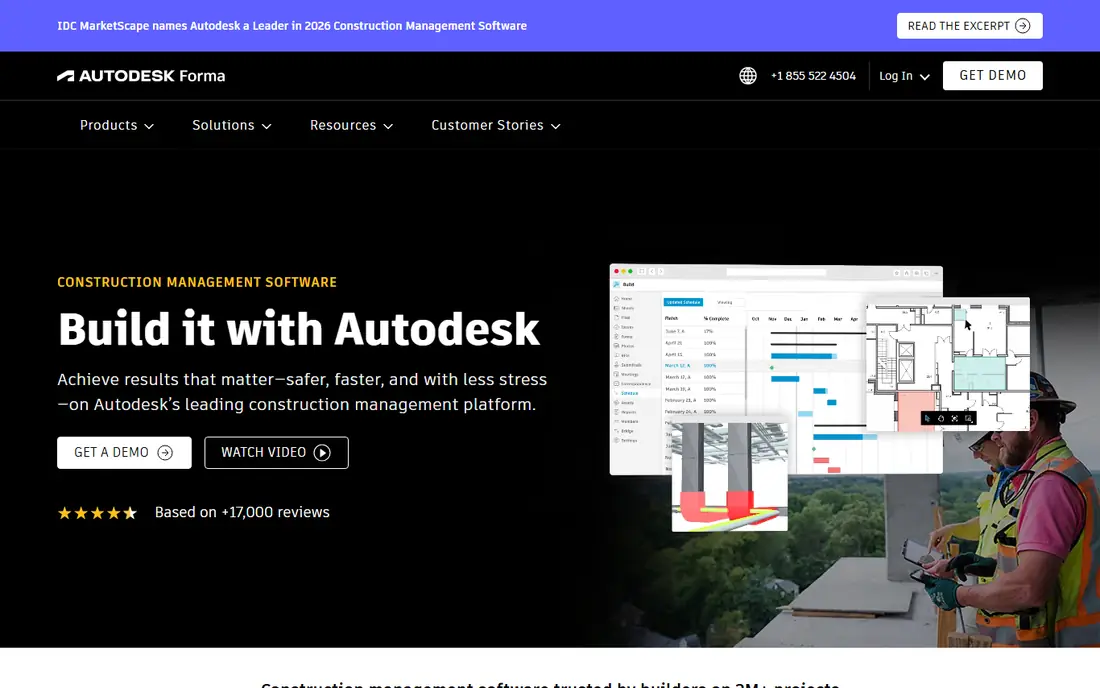
Autodesk Construction Cloud is the closest enterprise alternative for teams that work from models and drawings every day. Its Docs and Build tools keep drawings, RFIs, submittals, and field issues in one place, which reduces the risk of working from an outdated plan. For design-build firms and general contractors, that coordination is often the main reason to switch.
Smaller contractors may find the platform broad and the setup longer than they need. It fits best when design coordination, document control, and field reporting all matter, and when the team is large enough to assign an administrator.
- Strong design coordination and document tools
- Build and Docs modules for field and office
- Widely used in commercial construction
- Enterprise pricing and setup can be heavy
- Smaller teams may use only part of the platform
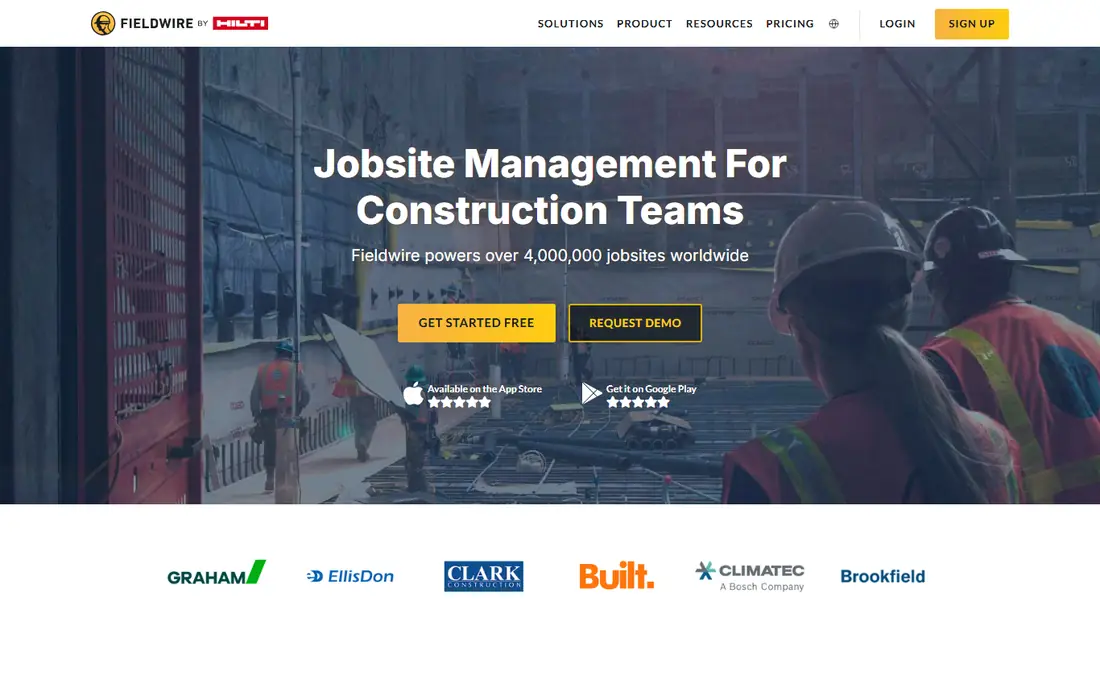
Fieldwire wins on adoption, because site teams can learn it quickly on a phone. Tasks, checklists, plans, and punch lists are easy to create and update in the field, and office staff can see progress without chasing paper reports. A free plan makes it easy to test with one crew before rolling it out wider.
The limit is scope. Fieldwire is not a full financial platform, so teams that need deep budgeting, invoicing, and accounting will need another system alongside it. Use Fieldwire when field execution is the main gap, not when finance is the main problem.
- Simple mobile-first task and plan tools
- Free plan for basic use
- Fast adoption for site teams
- Financial and estimating tools are limited
- Larger program controls need other tools
Buildertrend is built around the way residential builders actually work. Scheduling, selections, change orders, client messages, and payments sit in one system, and homeowners get a portal that cuts down on update calls. That residential focus means fewer unused enterprise features and a faster setup for small and mid-size builders.
Commercial contractors with complex document control or multi-party programs may outgrow it. For custom home builders and remodelers, though, Buildertrend is often a better daily fit than a general platform.
- Residential-focused scheduling, selections, and client portal
- Budgeting and invoicing tools
- Strong fit for home builders
- Less suited to large commercial programs
- Pricing is quote-based
Contractor Foreman appeals to small contractors who want one system for estimates, scheduling, time tracking, invoices, and project files. That breadth helps a small office avoid paying for several separate tools. Many trades can use the same platform, from general contractors to specialty firms.
The trade-off is polish and depth. The interface packs in many features, and larger firms may want stronger program controls or integrations. For a small team that needs value and coverage, Contractor Foreman is a strong alternative to consider.
- Broad feature set for the price
- Scheduling, estimates, invoices, and field tools
- Suitable for many trades
- Interface can feel busy
- Advanced enterprise controls are limited
JobTread stands out for job costing, which is where many remodelers lose money. Budgets, estimates, change orders, and actual costs stay connected to the job, so a project manager can see margin pressure before it becomes a loss. Sales and estimating tools feed the same job record, which reduces double entry.
Teams focused on large commercial or infrastructure work may need a different platform. For remodelers and custom builders who live by job cost, JobTread offers a focused and practical alternative.
- Clear job costing and budgeting
- Sales, estimating, and project tools in one flow
- Good fit for remodelers
- Less known for large commercial work
- Pricing is not published on the main site in a simple tier list
Oracle Aconex is designed for projects where document control is a legal and contractual necessity. Many organizations can share drawings, correspondence, and approvals with a clear audit trail, which matters on infrastructure, healthcare, and other large programs. Workflows help teams track who approved what and when.
That strength comes with enterprise complexity. Small contractors will find Aconex heavy and expensive for everyday jobs. It belongs on the shortlist for owners, program managers, and large contractors running multi-party programs.
- Strong document control for many parties
- Audit trails and workflows
- Proven on large capital projects
- Enterprise cost and setup
- Overkill for small contractors
Kahua suits owners and program managers who need to shape the platform around their own processes. Workflows, forms, and document controls can be configured for capital programs, which helps when each owner or agency has different approval rules. That flexibility is valuable on long programs with many stakeholders.
Flexibility also means setup work. Teams should budget time for configuration and training, and test workflows with a real project before full rollout. For owner-led programs, that effort pays off in control and consistency.
- Customizable workflows and document control
- Owner and program focus
- Configurable without heavy coding in many cases
- Configuration takes time
- Pricing is quote-based
RedTeam Flex combines project management with financial controls that many contractors otherwise keep in separate accounting software. Estimating, budgets, change orders, and job costing connect to field progress, which gives owners and project managers a clearer view of cost. That combination suits commercial contractors who want fewer disconnected systems.
The financial depth also means training matters. Teams should plan onboarding for accounting and project staff together, so both sides use the same job records. For contractors ready to unify project and finance, RedTeam Flex is a credible alternative.
- Combined project management and financial tools
- Estimating and job costing
- Built for commercial contractors
- Learning curve for full financial features
- Pricing is quote-based
How we picked these
We compared official product pages and recent alternative guides for construction platforms that were operating in 2026. We favored tools with a clear construction focus, a working official site, and a distinct fit, from field-first apps to owner platforms. We excluded general task tools with no construction workflows, and we did not include the product named in the keyword itself in the list.
How to choose among Procore alternatives
Start with your project type, not with a feature list. Residential builders need selections, client portals, and simple budgets, while large programs need document control, audit trails, and multi-party workflows. Field teams need a mobile app they will actually open on site, while office teams need costing and reporting they can trust.
Run a trial on a real job, not a demo project. Test drawing updates, RFI flow, change orders, daily reports, and invoicing with your own documents and your own subcontractors. Check mobile performance on site, where signal is weak, and confirm how the tool handles offline work. Finally, compare total cost over a year, including setup, training, and any accounting integration, not just the monthly fee.
Questions to ask every vendor
Ask who owns your project data if you leave, how drawings and history export, and what support hours cover your working hours. Ask for references from a contractor of your size and trade, and for a clear answer on implementation time. A vendor that cannot answer those questions clearly is unlikely to improve on your current setup.
Frequently asked questions
What are the top alternatives to Procore?
Autodesk Construction Cloud, Fieldwire, Buildertrend, Contractor Foreman, JobTread, Oracle Aconex, Kahua, and RedTeam Flex are among the top alternatives. The best choice depends on project type, for residential builders, field teams, owners, or large contractors.
Which Procore alternative is best for small contractors?
Contractor Foreman and Fieldwire suit many small contractors, because they are easier to adopt and less expensive to run than an enterprise platform. Buildertrend and JobTread are also strong for small residential builders.
Is there a free Procore alternative?
Fieldwire offers a free plan for basic field use, which is useful for testing with one crew. Most full construction platforms offer a free trial rather than a permanent free plan, so check what the free tier actually includes.
What is the best alternative to Procore for field teams?
Fieldwire is our pick for field-first teams, thanks to its mobile tasks, plans, and punch lists. Autodesk Build also suits field teams on larger commercial projects where drawing control matters more.
Can I migrate project history from Procore to an alternative?
Migration depends on the tool and on your data. Ask each vendor how drawings, RFIs, daily logs, and financial history export and import, and test migration with one completed project before you move active jobs.
Do these alternatives include estimating and invoicing?
Some do, notably Buildertrend, Contractor Foreman, JobTread, and RedTeam Flex, while field-first tools such as Fieldwire focus more on execution. If estimating and invoicing are central, shortlist tools that include them natively rather than through add-ons.
Sources
See where you really rank - block by block
ProMapRanker scans Google Maps across a grid of your service area. Simple monthly plans from $19, white-label on every plan.
Start freeKeep reading
 zoho inventory alternatives
6 Alternatives to Zoho Inventory, Compared on Price and Fit
Zoho Inventory alternatives: 6 tools compared on price, free plans and fit. Katana leads the list for manufacturers. Fit and flaws are laid out for each entry.
Read → zoho crm alternatives
Best Zoho CRM Alternatives (2026)
Need Zoho CRM alternatives? We compare 7 tools on cost, free access and who each suits. Every pick gets a straight assessment. Built for quick decisions.
Read → zelle alternatives
Best Zelle Alternatives in 2026
Compare the best Zelle alternatives for sending money to friends, paying sellers and moving funds abroad, with honest notes on fees, speed and safety in 2026.
Read →