 ProMapRanker
Best Privy Alternatives in 2026

Key takeaways
- OptiMonk and Poptin are the strongest budget starting points, thanks to free plans and low entry prices.
- Klaviyo and Omnisend suit stores that want signup forms and email in one tool rather than a separate popup app.
- Justuno and Sleeknote suit larger stores with a marketing team and a bigger monthly budget.
- Tools count usage differently, by pageviews, visitors, contacts or impressions, so compare plans at your real traffic.
- Trial targeting and mobile display before paying, since an annoying popup costs more in lost sales than it gains in signups.
Quick comparison
| Pick | Great for | Pricing starts at | Free tier | |
|---|---|---|---|---|
 OptiMonk | AI-designed popups for stores | $19 per month | Yes | Visit |
 Klaviyo | Signup forms inside Klaviyo email | $20 per month | Yes | Visit |
 Omnisend | Email and forms in one tool | $16 per month | Yes | Visit |
 Justuno | Personalised popups for larger stores | $59 per month | Free trial | Visit |
 Poptin | Budget popups for small stores | $25 per month | Yes | Visit |
 Sleeknote | Popups for mid-size stores | €49 per month | Free trial | Visit |
 Wisepops | Multiple onsite formats | See website | Free trial | Visit |
 OptinMonster | Lead capture for WordPress sites | $9 per month | No | Visit |
 Claspo | Gamified popups for marketers | $29 per month | Yes | Visit |
The best Privy alternatives
Privy, the Shopify app for popups, email and SMS capture, suits small Shopify stores that want one tool. The alternatives below cover the same job with different pricing models, targeting depth and platform fit. Note that usage is counted differently across tools, so a cheaper headline price can still cost more at your traffic level.
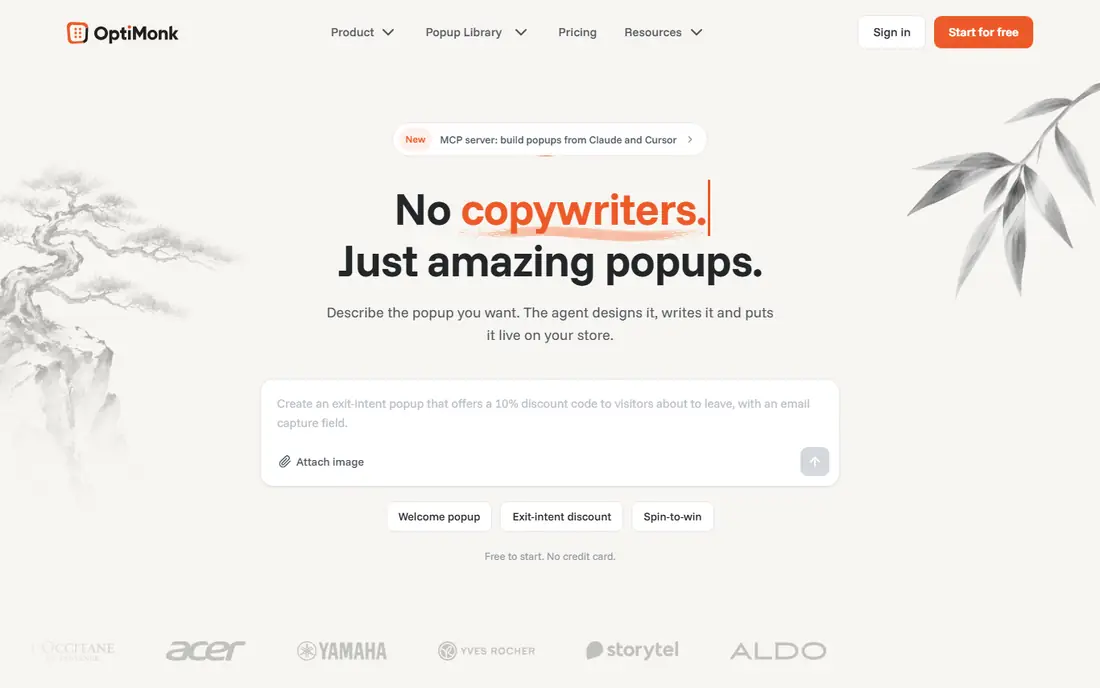
OptiMonk is the closest budget rival to Privy for stores that mainly need popups. Its free plan covers a monthly pageview allowance with full features, and paid plans from $19 per month billed yearly add more pageviews and AI credits. An AI agent can design and test popup variants, which helps teams without a designer.
The limit is scope. OptiMonk captures emails and connects to email tools, but it does not send email campaigns itself, so stores that want email in the same app should look at Klaviyo or Omnisend. For popup quality per dollar, OptiMonk leads this list.
- Free plan with full features up to a pageview limit
- AI-assisted popup design
- Strong ecommerce targeting
- Paid plans scale with pageviews and AI credits
- Email sending needs a separate tool
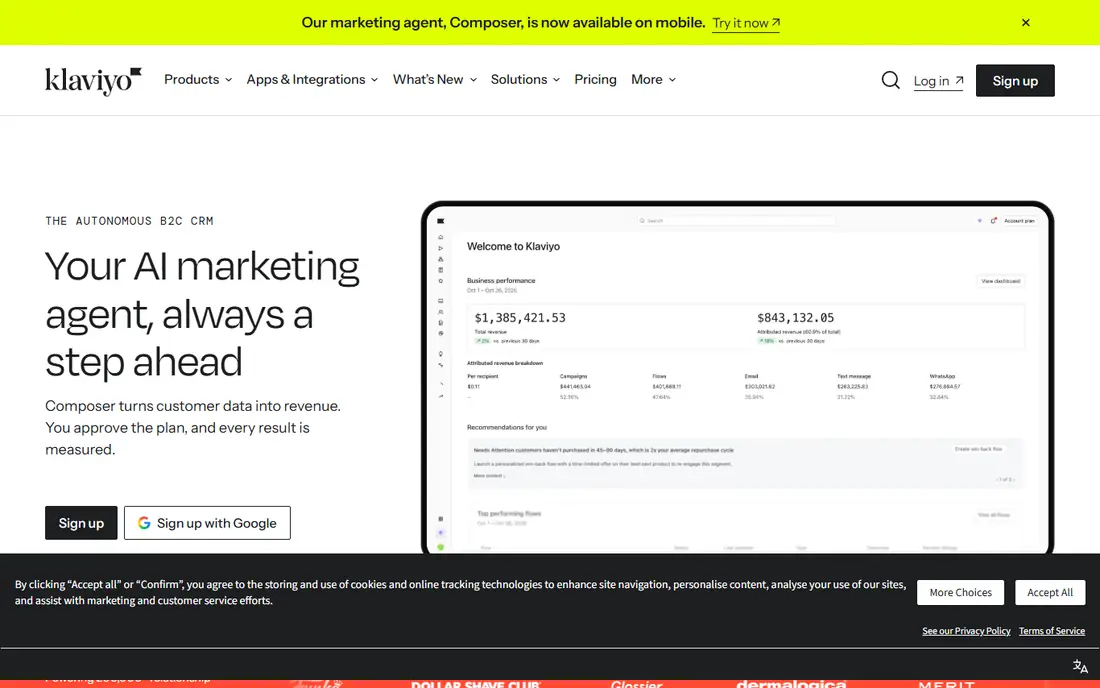
Klaviyo suits stores already sending email with Klaviyo, since its signup forms cost nothing extra on top of the email plan. The free plan covers up to 250 profiles and 500 emails a month, and paid plans from $20 per month cover up to 500 active profiles. Captured contacts flow straight into welcome flows, segments and SMS campaigns.
The forms themselves are basic compared with OptiMonk or Justuno, with less targeting and no gamified formats. If all Privy did for your store was collect emails into Klaviyo, though, its forms may remove a subscription entirely, which is a saving worth checking first.
- Forms feed directly into email and SMS flows
- Free plan for small lists
- Strong segmentation
- Forms are simpler than a dedicated popup tool
- No gamification or advanced onsite campaigns
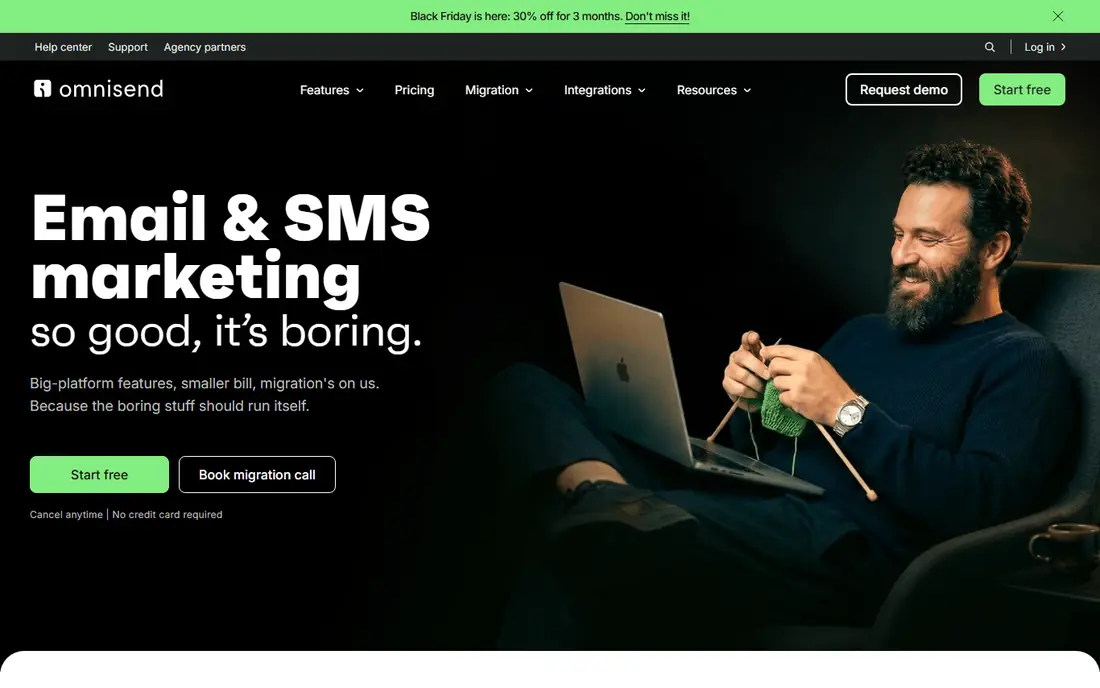
Omnisend gives small stores email and signup forms in one subscription, with a free plan covering 250 contacts and 500 emails a month and a Standard plan from $16 per month. Forms feed into welcome automation, cart recovery and other ecommerce flows without extra integrations. That single-tool simplicity is its main advantage over Privy for stores that want fewer apps.
Popup design and targeting are less advanced than OptiMonk or Sleeknote, and free-plan forms carry a badge. For a small store that wants email plus capture in one bill, Omnisend is still a strong, low-cost pick.
- Email, SMS and forms in one platform
- Free plan for small stores
- Ecommerce automation included
- Forms carry a badge on the free plan
- Popup targeting is less deep than specialist tools
Justuno targets mid-market and larger stores that want personalisation rather than simple popups. Its platform offers AI-driven targeting, A/B testing and many rules based on behaviour, cart and visit history, plus onboarding help for teams that want a guided setup. A Lite plan from $59 per month covers 10,000 visitors.
The price puts it out of reach for a new store, and there is no free plan beyond a trial. For a store with real traffic and a team that can act on personalisation data, Justuno's depth justifies the higher bill.
- AI-driven personalisation
- Many targeting rules
- Onboarding help and done-for-you services
- Higher entry price
- No free plan, only a trial
Poptin suits small stores on a tight budget. Its free plan covers 1,000 visitors a month, and a Basic plan from $25 per month billed yearly adds more visitors and features. The builder is simple, popups cover common formats, and basic email features reduce the need for a second tool at the smallest scale.
Larger stores will outgrow Poptin faster than OptiMonk or Justuno, since targeting and analytics depth are lighter. For a new store testing whether popups work at all, the free plan makes Poptin a low-risk trial.
- Free plan for low traffic
- Simple builder
- Popups plus basic email features
- Smaller feature set than larger rivals
- Visitor limits scale costs as traffic grows
Sleeknote fits mid-size stores with a marketing team that wants design control. Its Core plan from €49 per month billed yearly covers monthly visitors, with unlimited campaigns and domains, which helps teams running many offers across sites. Design options are strong, and the platform suits content-led as well as commerce-led campaigns.
There is no free plan, only a trial, and the entry price is steep for a small store. For a team that runs popups as a real channel rather than an occasional signup box, Sleeknote's campaign freedom is worth the cost.
- Unlimited campaigns and domains on plans
- Strong design options
- Suits teams with a marketing owner
- No free plan
- Entry price is high for small stores
Wisepops suits growth teams that want more than popups alone. It covers popups, web push and other onsite formats, with A/B testing and segmentation on every plan, so teams are not forced onto a top tier for testing. That all-features approach simplifies planning for teams that experiment often.
Pricing is not published as a simple tier and requires a demo and quote, which makes budgeting harder than with OptiMonk or Poptin. For a larger store that wants one onsite optimisation tool, Wisepops is still a credible shortlist entry.
- Popups plus web push and other onsite formats
- All features on every plan
- Experiment-led optimisation
- Pricing is quote-based after a demo
- Higher cost than budget tools
OptinMonster is the WordPress-first choice in this list, with a plugin used on a very large number of sites. Its Exit Intent technology targets visitors about to leave, and plans from $9 per month billed yearly cover a set number of campaign impressions. For content sites and WooCommerce stores on WordPress, it is a natural Privy replacement.
The catches matter for stores. There is no free plan or trial, only a money-back guarantee, and Shopify and WooCommerce integrations sit on higher tiers, with A/B testing and exit intent also tiered. Impression limits can also run out fast on a busy store, so check your traffic before choosing a tier.
- Exit-intent technology
- Huge WordPress install base
- Campaign impression-based plans
- No free plan or trial, only a money-back guarantee
- Ecommerce integrations sit on higher tiers
Claspo appeals to marketers who want gamified popups, such as spin-to-win formats, without a large budget. Its free plan is generous for small stores, paid plans from $29 per month add more visitors and features, and behaviour-based targeting covers common triggers like exit intent and scroll depth. Design options are strong for a budget tool.
Claspo is less established than OptinMonster or Justuno, so teams should check integrations and support during a trial. It also does not replace a full email platform, so stores that need campaigns should pair it with Klaviyo, Omnisend or a similar tool.
- Feature-rich free plan
- Gamification formats
- Behaviour-based targeting
- Less known than larger rivals
- Email sending is limited compared with full ESPs
How we picked these
We compared official pricing pages, free plans, targeting options, platform fit and public October 2026 comparison material for each tool. We favoured tools that are actively sold in 2026 and cover popup or form-based email capture for ecommerce, not general email platforms without onsite capture. Where pricing is quote-based, we say so rather than guessing.
How to choose a popup tool without annoying visitors
Start with one goal per campaign, such as email signup, cart recovery or a first-order discount, and show the popup only to visitors who match that goal. Use exit intent or a timed delay rather than an instant popup, limit how often a visitor sees it, and always test on mobile, where most store traffic now arrives. A popup that blocks content on a small screen will cost sales.
Measure honestly. Track signup rate, but also watch bounce rate and checkout completion for visitors who saw the popup, and run A/B tests on offer and timing rather than guessing. If a campaign gains emails but loses orders, change the trigger or the offer before adding more campaigns.
Frequently asked questions
Is Privy only for Shopify?
Privy is built mainly for Shopify, with support for WooCommerce and Wix as well. Stores on other platforms, especially WordPress, usually find OptinMonster or Claspo a better fit.
Which Privy alternative has a free plan?
OptiMonk, Klaviyo, Omnisend, Poptin and Claspo all offer free plans, with different limits on pageviews, visitors, contacts or emails. Check the limit that matches your traffic, since a free plan can run out fast on a busy store.
Do I need a popup tool if I already use Klaviyo?
Not always. If Klaviyo forms already collect the emails you need, a separate popup tool may duplicate that job. A dedicated tool earns its cost only when you need advanced targeting, gamification or A/B testing that Klaviyo forms do not offer.
Are popups bad for SEO or sales?
Popups can hurt both when they block content, especially on mobile, or appear too fast. Use delayed or exit-intent triggers, keep mobile design clean, and test conversion and bounce together rather than signup rate alone.
How much should a small store pay for a popup tool?
Small stores can start free with OptiMonk, Poptin or Claspo, then move to a paid plan from about $16 to $25 per month as traffic grows. Larger stores should budget $49 to $59 per month or more for Justuno or Sleeknote-level targeting.
Sources
See where you really rank - block by block
ProMapRanker scans Google Maps across a grid of your service area. Simple monthly plans from $19, white-label on every plan.
Start freeKeep reading
 zyte alternatives
Best Zyte Alternatives in 2026
These zyte alternatives cover managed scraping APIs, proxy networks and no code tools for lawful collection from your own or consented sources only in 2026.
Read → zerto alternatives
Best Zerto Alternatives in 2026
Compare the best zerto alternatives for disaster recovery and replication, with recovery targets, cloud options and honest trade-offs for teams in 2026.
Read → zerofox alternatives
Best ZeroFox Alternatives in 2026
We compared 9 zerofox alternatives for brand protection, phishing takedowns, dark web monitoring, and social impersonation, with clear coverage notes.
Read →