 ProMapRanker
Pluralsight Flow Alternatives in 2026

Key takeaways
- LinearB suits teams that want pull request automation and governance alongside delivery metrics.
- Jellyfish suits leaders who need allocation, forecasting, and finance-ready reporting in one platform.
- Swarmia and Haystack suit smaller teams that want team-level metrics without a heavy enterprise rollout.
- Waydev and Allstacks suit teams that need code-level depth or delivery forecasting, while DX suits survey-led developer experience work.
Quick comparison
| Pick | Great for | Pricing starts at | Free tier | |
|---|---|---|---|---|
 LinearB | PR automation and metrics | See website | Free trial | Visit |
 Jellyfish | Allocation and forecasting | See website | No | Visit |
 Swarmia | Team-level delivery metrics | See website | Yes | Visit |
 Waydev | Code-level delivery analytics | See website | Free trial | Visit |
 Allstacks | Delivery forecasting | See website | Free trial | Visit |
 DX | Developer experience measurement | See website | Free trial | Visit |
 Haystack | Lightweight delivery metrics | See website | Free trial | Visit |
 Axify | AI impact and decision support | See website | Free trial | Visit |
 Faros AI | Engineering data platform | See website | Free trial | Visit |
The best pluralsight flow alternatives
Pluralsight Flow, formerly GitPrime and now operating as Appfire Flow, turns Git, ticket, and pull request data into engineering delivery metrics. The tools below replace that job in different ways: some automate pull requests, some report allocation to finance, and some forecast delivery dates. We compared official product pages, pricing pages, and public comparisons for the tools below, and we favored tools that are actively sold and maintained in 2026. Flow itself is not listed, since this is an alternatives list.
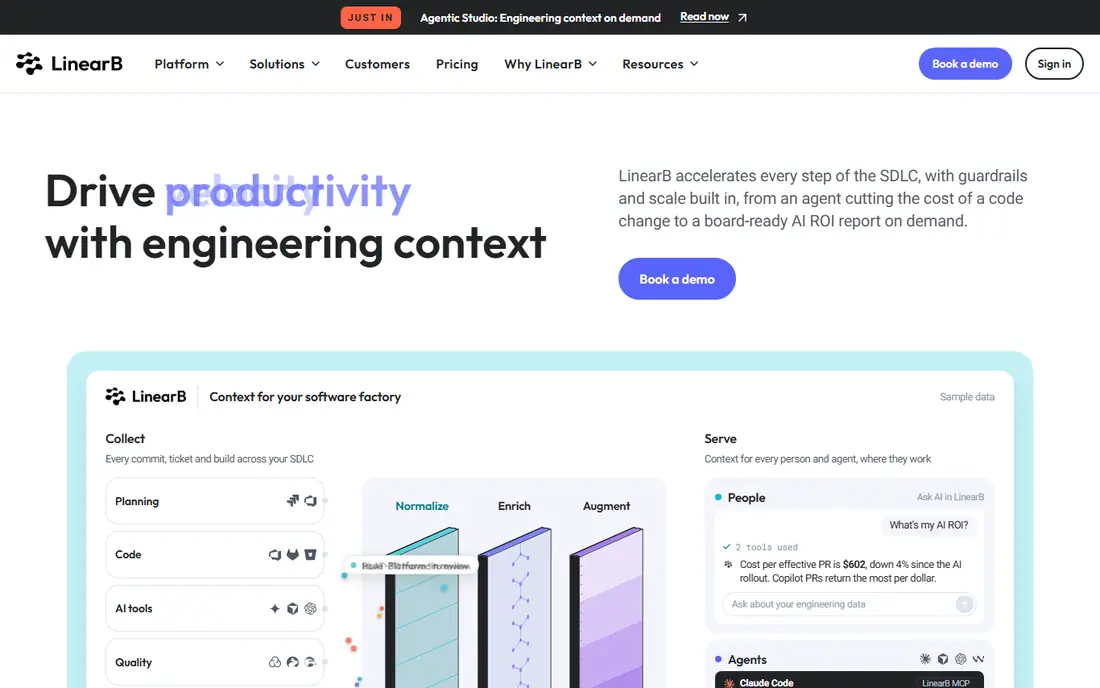
LinearB goes beyond measurement by acting on pull requests, with workflow automation, review policies, and AI code review tracking alongside delivery metrics. That combination suits teams that want bottlenecks fixed, not just reported, since rules can route reviews, enforce checks, and flag stalled work. DORA metrics and team dashboards give leaders a familiar view of delivery speed and stability.
The catch is setup and pricing. Automation rules need careful design so they help rather than block developers, and pricing varies by tier and team size. Teams that only need reporting may find LinearB more platform than they need, while teams that want governance will value the automation most.
- Pull request automation and governance
- DORA metrics
- AI code review tracking
- Pricing is tiered and sales-led at scale
- Automation rules need careful setup

Jellyfish is built for engineering leaders who must answer finance and strategy questions, not just delivery questions. It connects Git and project data to allocation models, showing how engineering effort maps to products, initiatives, and capitalized work. Forecasting and developer experience data sit on the same model, which helps leaders defend plans and budgets in one report.
The weakness is enterprise weight. Pricing is quote-based, and a full rollout needs executive sponsorship and clean project data to be useful. Smaller teams should compare Swarmia or Haystack first, while larger organizations with finance reporting needs will get the most from Jellyfish.
- Allocation and R and D reporting
- Forecasting
- Developer experience data in one model
- Quote-based enterprise pricing
- Rollout needs executive sponsorship
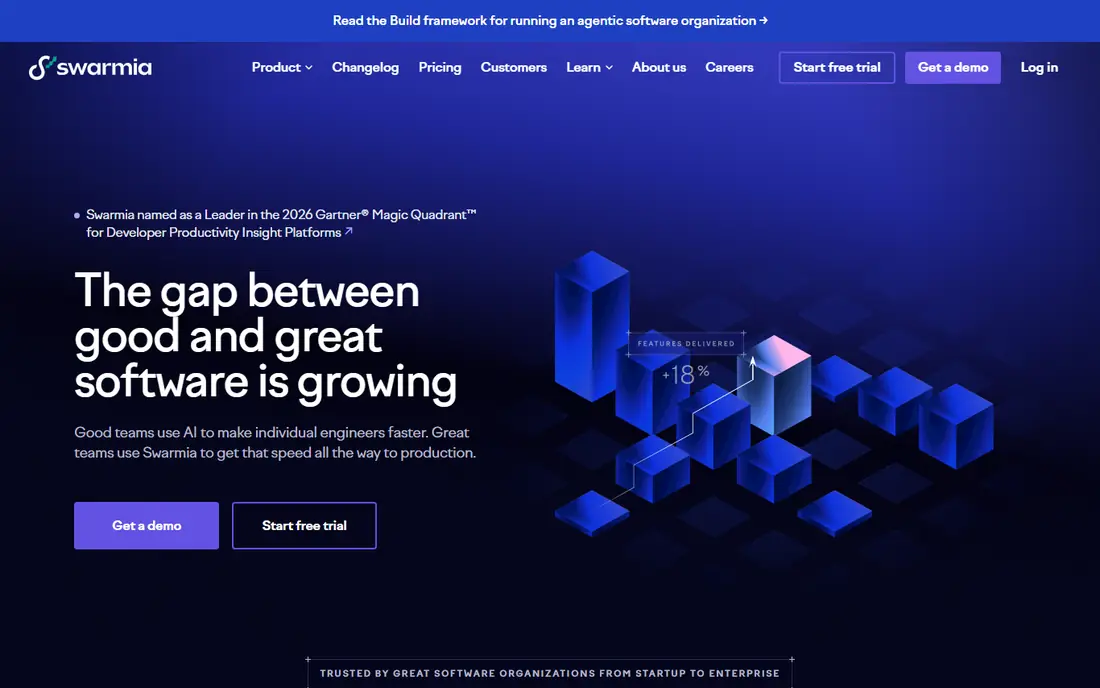
Swarmia focuses on team-level transparency, with delivery metrics, working agreements, and investment views that engineers can actually use day to day. Its free tier for small teams makes it easy to trial with a real team before paying, and its modular pricing lets teams add features as they grow. That developer-friendly approach builds trust, since metrics are framed as team improvement rather than individual surveillance.
The limit is executive depth. Finance reporting, capitalization, and board-level portfolio views are lighter than Jellyfish or Allstacks, so large organizations may need a second tool for those questions. Swarmia fits best when team adoption and trust matter more than executive reporting.
- Team-level metrics and working agreements
- Free tier for small teams
- Developer-friendly transparency
- Lighter on finance and board reporting
- Enterprise features need higher tiers
Waydev offers deep Git and code-level analytics, with DORA, SPACE, and developer experience reporting plus resource planning and project costs. Its code-level granularity suits leaders who want to see how work flows from commit to release, not just ticket counts. A self-hosted deployment option also helps teams with strict data requirements.
The honest weakness is sensitivity. Contributor-level detail can feel like surveillance if leaders use it to rank individuals rather than improve team flow, so teams need clear norms before rollout. Pricing is also quote-based, so buyers should confirm what is included for their team size and repo count.
- Code-level Git analytics
- DORA and SPACE reporting
- Self-hosted option
- Quote-based pricing
- Contributor-level detail needs careful team handling
Allstacks stands out for forecasting, using delivery history to predict whether initiatives will land on time and to flag risk early. That forward view suits product and engineering leaders who are tired of status reports that only describe the past. Portfolio views help teams compare initiatives and spot which ones need help before a deadline slips.
The drawback is pricing transparency. Prices are not published, so every evaluation is sales-led, and buyers should ask for a written quote early. Forecast quality also depends on clean, consistent history, so teams with messy ticket data should fix data hygiene before judging the forecasts.
- Machine learning delivery forecasts
- Risk alerts
- Portfolio and initiative views
- Pricing not published
- Forecasting value depends on history quality
DX combines developer surveys with delivery telemetry, measuring how developers experience their tools, processes, and codebase alongside hard delivery metrics. Its Developer Experience Index gives leaders a single, research-backed way to track experience over time and compare teams. Organizations that believe developer experience drives delivery will find this combination more useful than Git metrics alone.
The limit is participation. Survey data needs regular, honest responses, and low response rates weaken the results. Pricing runs through sales, so smaller teams should check minimums, and teams that only need Git metrics should prefer a lighter tool.
- Developer surveys plus telemetry
- Developer Experience Index
- Research-backed approach
- Survey-led model needs ongoing participation
- Pricing through sales
Haystack suits small teams that want delivery metrics without a heavy enterprise rollout. Setup from Git and Jira is fast, dashboards cover core delivery visibility, and pricing sits below the enterprise platforms on this list. For a team that just needs to see cycle time, throughput, and bottlenecks, Haystack covers the essentials well.
The trade-off is depth. Enterprise reporting, forecasting, and automation are lighter than Jellyfish, Allstacks, or LinearB, so larger organizations may outgrow it. Treat Haystack as a strong starting point, and upgrade when finance reporting or workflow automation becomes the main need.
- Fast setup from Git and Jira
- Delivery visibility without heavy rollout
- Lower price point
- Lighter enterprise reporting
- Smaller feature set than Jellyfish or LinearB
Axify focuses on a current leadership question: what impact are AI coding tools actually having on delivery, cost, and quality. It tracks AI adoption and impact alongside DORA and value stream metrics, with explanations and recommended actions rather than raw charts alone. That decision layer suits leaders who need to justify AI tool spend or adjust rollout plans.
The caution is youth and pricing. Axify is newer than Jellyfish and LinearB, so long-term track record is shorter, and pricing varies by contributor count. Teams evaluating AI impact should trial Axify with real AI usage data, since its value depends on how much AI coding the team already does.
- AI coding impact tracking
- Decision explanations
- DORA and value stream views
- Newer platform
- Pricing varies by contributor count
Faros AI takes a platform approach, unifying engineering data from Git, tickets, CI, and AI tools into one governed model for reporting and analysis. That flexibility suits organizations that want to build custom views, track AI agent activity and token spend, and govern engineering data centrally. Teams with data skills can answer questions that fixed dashboards cannot.
The weakness is effort. A platform needs data setup, modeling, and maintenance, which is more work than a ready-made dashboard tool. Smaller teams should prefer Swarmia or Haystack, while data-mature organizations will value Faros AI flexibility most.
- Engineering data platform with governance
- AI and token tracking
- Flexible reporting
- Platform approach needs data setup
- Pricing through sales
How we picked these
We compared official product pages, pricing pages, and public comparisons from 2026, and we favored tools that actively measure engineering delivery from Git, ticket, and pull request data. We excluded Flow itself, since this is an alternatives list, and we excluded Code Climate Velocity, which was replaced by a different Code Climate platform in 2025 and is no longer sold as Velocity. Where pricing was quote-based or varied by contributor count, we wrote "See website" rather than guessing a figure.
What to check before you pick
Start by deciding which question you need answered. Delivery speed and bottlenecks point to Swarmia, Haystack, or Waydev. Allocation and finance reporting point to Jellyfish. Forecasting points to Allstacks. Pull request automation points to LinearB. Developer experience points to DX, and AI impact points to Axify or Faros AI. Picking the question first prevents buying a broad platform for a narrow need.
Next, agree on team norms before rollout. Engineering metrics fail when they are used to rank individuals, so state plainly that metrics measure team flow, not individual worth, and involve engineers in choosing which metrics to show. Finally, trial with real data for at least a few weeks, since demo data hides the data hygiene problems that determine whether any of these tools will work for you.
Frequently asked questions
What is the best Pluralsight Flow alternative overall?
It depends on the job. LinearB is the best all-round pick for metrics plus automation, Jellyfish is best for allocation and finance reporting, and Swarmia is best for smaller teams that want team-level metrics without enterprise weight.
Is Pluralsight Flow still available?
Pluralsight Flow, formerly GitPrime, now operates as Appfire Flow, and public comparisons in 2026 note a retirement date of 31 December 2027, with renewals not extending beyond June 2026. Teams on Flow should plan a migration to a tool on this list.
Can these tools measure individual developer productivity?
They can show contributor-level data, but using it to rank individuals usually harms trust and quality. The tools on this list work best when metrics are used to improve team flow, remove bottlenecks, and support developers.
Which alternative is cheapest for a small team?
Swarmia offers a free tier for small teams, and Haystack offers a lower price point with a trial. Compare contributor limits and included features, since free tiers often cap team size or history.
Do I need DORA metrics, SPACE metrics, or both?
DORA metrics cover delivery speed and stability, while SPACE adds satisfaction, performance, activity, communication, and efficiency. Most teams start with DORA, then add SPACE or developer experience surveys when culture and experience become the focus.
How long does it take to get value from an engineering analytics tool?
Basic Git and ticket dashboards can show value in weeks, but forecasting and allocation reporting need clean history over months. Fix ticket hygiene and agree on team norms early, since both affect results more than tool choice alone.
Sources
See where you really rank - block by block
ProMapRanker scans Google Maps across a grid of your service area. Simple monthly plans from $19, white-label on every plan.
Start freeKeep reading
 zyte alternatives
Best Zyte Alternatives in 2026
These zyte alternatives cover managed scraping APIs, proxy networks and no code tools for lawful collection from your own or consented sources only in 2026.
Read → zerto alternatives
Best Zerto Alternatives in 2026
Compare the best zerto alternatives for disaster recovery and replication, with recovery targets, cloud options and honest trade-offs for teams in 2026.
Read → zerofox alternatives
Best ZeroFox Alternatives in 2026
We compared 9 zerofox alternatives for brand protection, phishing takedowns, dark web monitoring, and social impersonation, with clear coverage notes.
Read →