 ProMapRanker
Best Payment Alternatives in 2026


Online businesses and developers · Pricing starts at: 2.9% + 30 cents per online transaction
Key takeaways
- This article covers payment processing and payment method options for businesses and shoppers, not a single named product.
- Flat-rate pricing is simple to predict, while interchange-plus pricing can cost less once volume grows.
- In-person sales, online checkout, subscriptions, and international sales often point to different providers.
- Fees and availability vary by plan, country, and account type, so check the provider page before you commit.
Quick comparison
| Pick | Great for | Pricing starts at | Free tier | |
|---|---|---|---|---|
| Stripe | Online businesses and developers | 2.9% + 30 cents per online transaction | No | Visit |
 PayPal | Shoppers who trust a familiar checkout | 2.99% + 49 cents per online transaction | No | Visit |
 Square | Selling in person and online together | 2.6% + 15 cents per in-person transaction | Yes | Visit |
 Shopify Payments | Stores already built on Shopify | 2.9% + 30 cents per online transaction | No | Visit |
 Adyen | Larger businesses selling across borders | See website | No | Visit |
 Helcim | Businesses that want clearer interchange-plus pricing | Interchange plus markup, no monthly fee | No | Visit |
 Authorize.net | Businesses that want a classic payment gateway | See website | No | Visit |
 Checkout.com | Online businesses focused on payment performance | See website | No | Visit |
The best payment alternatives
These eight options cover the main ways a business can take money and the main ways a shopper can pay. We compared published pricing, checkout options, and the kind of seller each service fits best.
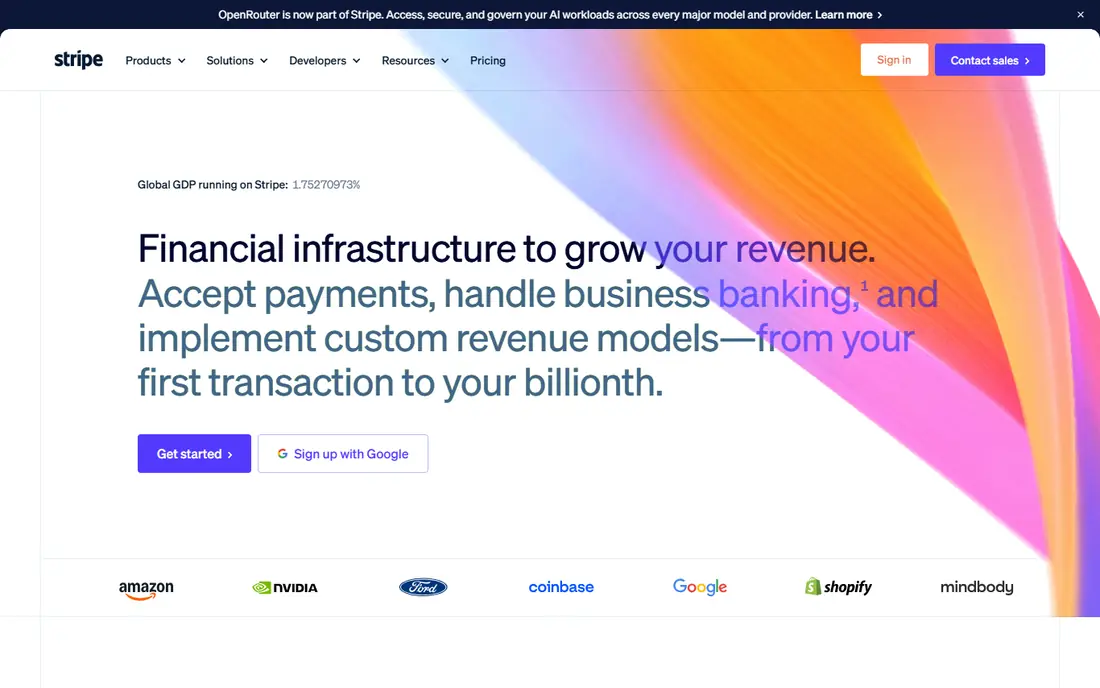
Stripe is our pick for most online-first businesses that need a checkout they can shape to their own site. Its hosted checkout, payment links, and billing tools cover one-off sales, subscriptions, and invoices without a separate gateway. That breadth matters for a small team that wants to start simple and add features later.
The catch is cost at scale. A flat rate of 2.9% plus 30 cents is easy to forecast, but it is not the cheapest route once monthly volume is large. Stripe does offer custom pricing for larger accounts, so a growing business should ask for a quote rather than assume the published rate is final.
- Strong developer tools
- Wide payment method support
- No monthly fee on the standard plan
- Flat-rate pricing can grow costly at high volume
- Payout holds can occur during risk reviews
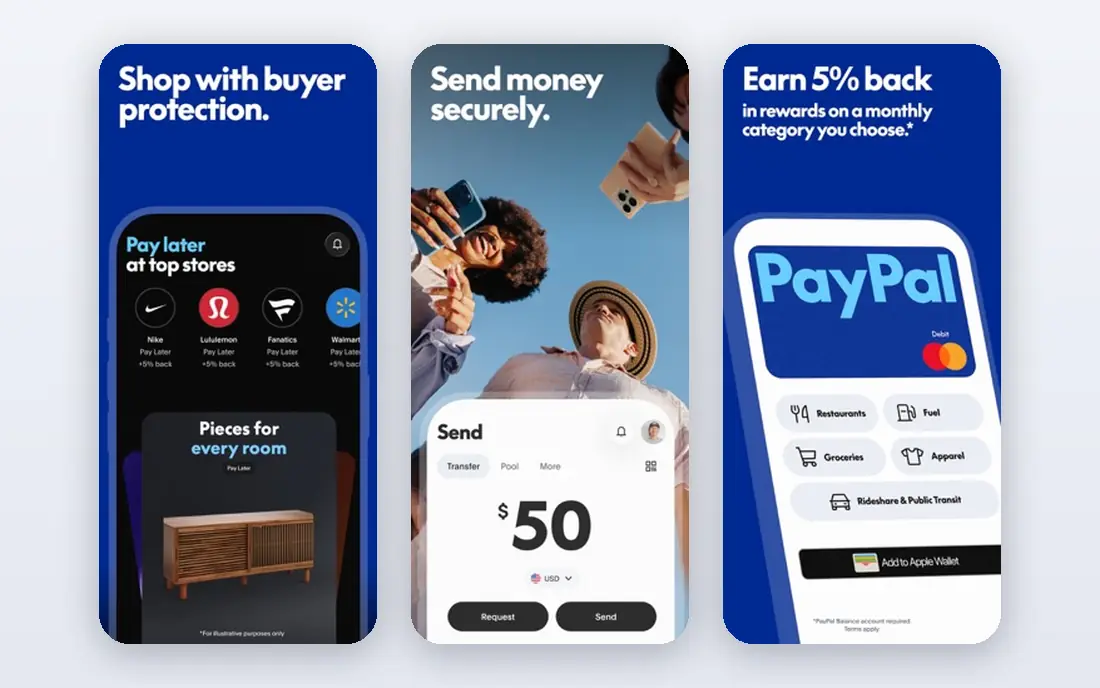
PayPal fits sellers who want shoppers to finish checkout without typing card details. Many buyers already have an account, and that familiarity can help conversion, especially for smaller stores that lack a well-known brand. PayPal also covers Venmo in the United States on eligible checkouts, which adds another familiar option.
The trade-off is the fee structure. The fixed fee of 49 cents weighs more on small orders than the percentage does, so sellers of low-priced items should run the numbers carefully. PayPal also charges extra for some cross-border payments and currency conversion, which matters if a large share of buyers sits outside the United States.
- High shopper recognition
- Buyer and seller protections
- Wallet and card payments in one checkout
- Higher fixed fee than some rivals
- Account holds and disputes can be slow to resolve

Square is the clearest choice for a shop, cafe, market stall, or service business that takes most payments face to face. Its free plan covers card acceptance, and its readers and registers keep the setup simple for staff who just need to ring up a sale. The same account can also run an online store, invoices, and appointments.
Online sellers should look more closely. Square charges 3.3% plus 30 cents for online transactions on its free plan, which is above Stripe for a standard online card payment. That gap may still be worth it if in-person sales dominate, but a mostly online store should compare the two on its own order mix.
- Simple point-of-sale hardware and software
- Free starting plan
- Online store tools included
- Online rate is higher than its in-person rate
- Some advanced features sit behind paid plans
Shopify Payments makes sense only if the store already runs on Shopify, and inside that setting it is hard to beat for simplicity. Checkout, payouts, and order records live in one dashboard, and Shop Pay gives returning buyers a fast one-tap option. There is no separate gateway account to connect or reconcile.
The limit is lock-in. A business that later moves off Shopify will need a new payment setup, and a business that wants a third-party gateway on Shopify may pay extra transaction fees on top of that gateway's own charges. Still, for a store committed to Shopify, the built-in route removes a whole layer of setup and support calls.
- Built into Shopify checkout
- No separate gateway setup
- Supports Shop Pay and local payment methods
- Only useful inside Shopify
- Rates depend on the Shopify plan
- Third-party gateways add extra fees
Adyen is built for companies that sell in many countries and need local payment methods, currencies, and acquiring in one place. That matters because shoppers in different markets expect different ways to pay, and a single checkout that adapts to each market can lift completion rates. Its fraud and risk tools are also aimed at larger operations.
Smaller sellers will find Adyen harder to judge up front. Pricing depends on volume, methods, and markets, so the site does not give one headline rate to compare with Stripe or Square. A small store with only domestic sales will usually get a simpler deal elsewhere, while a business with real cross-border volume should request a quote and compare total cost, not just the headline percentage.
- Broad global payment method coverage
- Single platform for online, in-person, and in-app payments
- Strong fraud tools
- Pricing is not published as a simple flat rate
- Setup suits larger teams more than solo sellers
Helcim suits a business that has outgrown flat-rate pricing but does not want to haggle over a merchant account. Interchange-plus means the card network cost is passed through and Helcim adds its own markup on top, which makes the bill easier to audit than a blended rate. Its markup also falls as monthly volume rises, which rewards growth.
The main drawback is recognition and reach. Shoppers will not see a Helcim wallet at checkout in the way they see PayPal, so the benefit is on the seller side, in cost and clarity, rather than in buyer trust. A business that values a known consumer brand at checkout may still want PayPal alongside Helcim, even if Helcim handles most card volume.
- Interchange-plus pricing with no monthly fee
- Transparent markup that falls with volume
- In-person and online tools
- Less familiar to shoppers than PayPal
- Smaller ecosystem than Stripe or Square
Authorize.net is a gateway rather than a full payment processor on its own, which is an important distinction. It connects a merchant account to a website, handles the transaction securely, and adds tools such as a virtual terminal for phone orders and recurring billing for subscriptions. Businesses with an existing merchant account often keep it for that reason.
Newer sellers may find the setup heavier than Stripe or Square, where processor and gateway arrive together. Pricing also depends on whether the business takes the all-in-one option or pairs the gateway with its own merchant account. That flexibility is a strength for established businesses, but a solo seller starting from zero will usually prefer an all-in-one checkout.
- Long-running gateway with broad processor support
- Virtual terminal and recurring billing
- Fraud screening tools
- Pricing varies by plan and processor
- Interface feels dated beside newer checkouts
Checkout.com fits online businesses where a small change in acceptance rate is worth real money. Its tools focus on routing payments, retrying failed attempts, and giving payment teams clear data on why transactions fail. For a high-volume store, that kind of tuning can matter more than a small difference in headline rate.
The catch is access and fit. Pricing is not published as a simple plan, and the platform is aimed at businesses with a payment team or a clear growth plan rather than a first-time seller. A small store will get faster value from Stripe, Square, or PayPal, while a larger online business should compare Checkout.com on acceptance and total cost after a proper trial.
- Focus on acceptance rates and routing
- Broad global coverage
- Detailed reporting for payment teams
- Pricing is quote-based
- Aimed at larger online businesses rather than small shops
How we picked these
We compared official pricing pages, feature pages, and app store listings for payment processors and gateways that serve United States businesses and shoppers in October 2026. We kept only services that exist and work today, and we left out any option where we could not confirm a real checkout or gateway product. Where a price was not published, we wrote See website rather than guessing a figure.
We also weighed fit, not just fees. A low rate means little if the checkout does not support the way a business sells, whether that is in person, online, by subscription, or across borders. That is why this list mixes simple flat-rate options with interchange-plus and quote-based platforms, so readers can match the model to their own sales mix.
What to check before you choose a payment option
Start with where the money comes from. Count how much of your revenue is in person, online, recurring, and international, because each channel has a different cheapest option. A cafe that takes mostly tap payments will not choose on the same numbers as a subscription site, and a store with many small orders must watch the fixed fee, not just the percentage.
Next, check what shoppers actually see at checkout. A familiar wallet can help a new store convert, while a clean card form may be enough for a repeat buyer. Ask whether the provider supports the payment methods your buyers use, including wallets, buy now pay later where relevant, and local methods for overseas buyers. Also confirm payout timing, chargeback handling, and whether holds apply during risk reviews, since those details affect cash flow more than a tenth of a percent on fees.
Finally, read the full fee page, not just the headline rate. Look for monthly fees, cross-border surcharges, currency conversion charges, chargeback fees, and fees for extra features such as invoicing or advanced fraud tools. Fees and availability vary, and this article is general information only, not financial advice. If the choice affects a large share of revenue, compare two finalists on a month of real transactions before switching.
Frequently asked questions
What is the cheapest payment alternative for a small business?
There is no single cheapest option, because the answer depends on average order value and sales channel. Square is often cheapest in person, Stripe is often cheapest for a standard online card payment, and Helcim can win once volume grows. Run your own last month of sales through each fee structure before deciding.
Do shoppers need an account to pay with these options?
No, not in most cases. Stripe, Square, Shopify Payments, Adyen, Helcim, Authorize.net, and Checkout.com all support guest card checkout. PayPal also supports guest card checkout in many cases, but its main advantage is that many shoppers already have an account and can pay without entering card details.
Can I use more than one payment provider at once?
Yes, and many businesses do. A store might use Square in person, Stripe online, and PayPal as an extra checkout button. Using more than one adds reconciliation work, so keep the mix small and make sure each provider earns its place by serving a distinct channel or buyer group.
What is interchange-plus pricing?
Interchange-plus passes through the fee charged by the card network and the issuing bank, then adds a fixed markup from the processor. That makes the bill easier to audit than a blended flat rate, and the markup can fall with volume. The downside is that the total varies by card type, so monthly costs are less predictable than a flat rate.
Do these providers work for subscriptions?
Yes, most of them support recurring billing, though the tools differ. Stripe and Authorize.net have well-established subscription features, Square and Shopify Payments support subscriptions through their own tools, and PayPal supports recurring payments as well. Check retry rules for failed payments, since those rules decide how much subscription revenue is recovered.
Are payment fees tax deductible for a business?
Payment processing fees are generally treated as a business expense, but tax rules depend on business type and location. This article is general information only, not financial advice, so check with a qualified tax professional for your own situation.
Sources
See where you really rank - block by block
ProMapRanker scans Google Maps across a grid of your service area. Simple monthly plans from $19, white-label on every plan.
Start freeKeep reading
 zoro.to alternatives
Best Zoro.to Alternatives in 2026
We compare the best zoro.to alternatives in 2026, listing only legal licensed anime streaming services, from Crunchyroll to free options for fans today.
Read → zip alternatives
Best Zip Alternatives in 2026
We compare the best zip alternatives for buy now, pay later in 2026, covering pay-in-4 plans, fees, spending limits, and credit reporting options today.
Read → yesware alternatives
Best Yesware Alternatives in 2026
Compare the best yesware alternatives for sales email tracking, templates, and sequences, with current pricing and honest tradeoffs for small sales teams.
Read →