 ProMapRanker
Best Patreon Alternatives for Writers in 2026

Key takeaways
- Substack is the fastest start for a paid newsletter, while Ghost gives writers full ownership of their site and mailing list.
- Ko-fi and Buy Me a Coffee suit writers who earn mainly from tips, one-off sales and simple memberships.
- Memberful and Podia work better once a writer already has a site or a catalogue of work to sell.
- Percentage fees look cheap at low income and costly at scale, so check the math at your current monthly revenue.
- Writers who sell books or courses should weigh Gumroad, Payhip and Podia against a pure membership tool.
Quick comparison
| Pick | Great for | Pricing starts at | Free tier | |
|---|---|---|---|---|
 Substack | Paid newsletters | Free | Yes | Visit |
 Ghost | Owning your publication | $9 per month | No | Visit |
 Ko-fi | Tips and simple memberships | Free | Yes | Visit |
 Buy Me a Coffee | Simple supporter pages | Free | Yes | Visit |
 Memberful | Memberships on your own site | $49 per month | Free trial | Visit |
 Gumroad | Selling books and digital work | Free | Yes | Visit |
 Podia | Courses, memberships and sales | $39 per month | Free trial | Visit |
 Payhip | Selling ebooks and memberships | Free | Yes | Visit |
 WordPress.com | A writer site with memberships | Free | Yes | Visit |
The best Patreon alternatives for writers
These nine options cover newsletters, memberships, tips and direct sales. We compared official pricing pages, fee structures and the features each platform lists for writers.
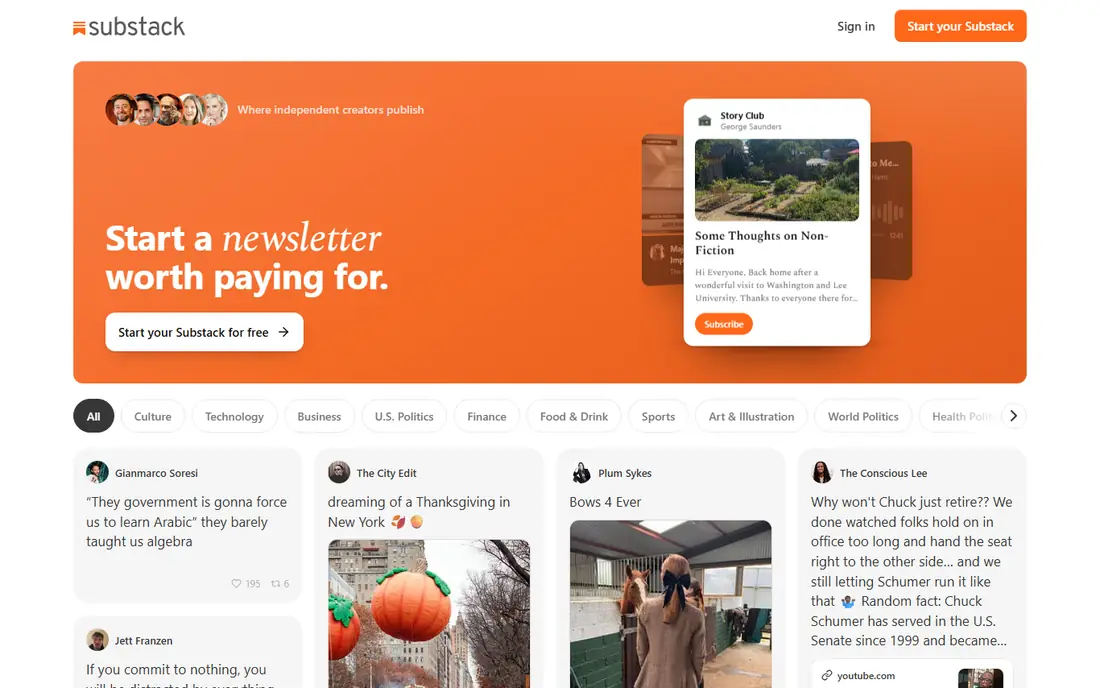
Substack is the closest like-for-like switch for a writer who mainly publishes essays, serials or reporting by email. You write in the editor, send to subscribers, and turn on paid tiers without adding plugins or payment code. Readers can find your work through Substack recommendations, which helps a new writer more than a standalone site usually does in the first months.
The catch is the long-term cost and control. Substack takes 10 percent of paid subscription revenue, plus payment processing, so a growing list pays a growing fee forever. Design options are narrower than a self-hosted site, and moving a large paid audience later takes planning. For writers who value speed over ownership, that trade is often worth it at the start.
- Simple setup for writing and email
- Built-in paid subscriptions
- Reader discovery on the platform
- 10 percent platform fee on paid subscriptions
- Limited site design control
- Your publication lives on Substack

Ghost is the strongest choice for writers who want to own the relationship with readers. You run your publication on your own domain, set membership tiers, and keep the full subscription amount apart from payment processing. The editor handles posts, newsletters and member-only content in one place, which keeps a small team from juggling several tools.
The downside is that Ghost is a commitment, not a free trial of an idea. You pay a monthly plan even before income arrives, and discovery is your job, since there is no large built-in reader network like Substack. Writers with an existing audience, or a clear plan to build one, tend to get the most from Ghost.
- No platform fee on membership revenue
- Full control of site and mailing list
- Clean writing and newsletter tools
- Monthly plan cost from the start
- Setup takes more work than Substack
- Some features need paid add-ons or themes

Ko-fi works well for writers whose income is mixed: a tip here, a short story collection there, and a small monthly tier for regular supporters. The page is easy to share in a bio or at the end of a post, and readers do not need a subscription to support a single piece of work. That low friction matters for poets, essayists and short-form writers whose readers may not want a monthly commitment.
Gold, at $12 per month, removes the platform fee on sales and memberships and adds more page options. Without Gold, the 5 percent fee still beats many percentage platforms at low volume, but it adds up as sales grow. Ko-fi is best as a friendly front door, not as a full replacement for a large membership business.
- Free to start
- Tips carry no platform fee on the free plan
- Shop, memberships and commissions in one page
- 5 percent fee on shop sales and memberships without Gold
- Fewer deep membership tools than Memberful
- Tax handling stays with the writer
Buy Me a Coffee is similar to Ko-fi in spirit, with a simpler pitch: a page where readers can support you, join a membership, or buy a digital item. Writers who want the least setup possible, and who mainly need a tip jar plus a basic membership tier, will find it fast to launch. It also suits writers who publish irregularly, since there is no monthly platform bill when income is quiet.
The trade is depth. Membership tools are basic compared with Memberful or Ghost, and the 5 percent fee applies to tips, memberships and sales alike. For a writer earning a few hundred dollars a month, that simplicity is a fair deal. For a writer with a large paid list, a flat-fee platform usually wins on cost.
- Free to start
- Memberships, tips and a shop in one place
- Very simple setup
- 5 percent platform fee on earnings
- Limited design and membership depth
- Payment processing adds to the cost
Memberful fits writers who already have a website and want to add paid memberships without moving their content. You keep your domain, your design and your email list, and Memberful handles checkout, member accounts and access control. It connects with WordPress, Discord and common email tools, so a writer can gate posts, downloads or a private feed.
The cost needs honest math. The monthly plan plus 4.9 percent, plus Stripe processing, only beats a 10 percent platform once revenue is high enough. Writers starting from zero may pay $49 a month before they have members to cover it. For an established writer with a site and an audience, Memberful gives control that a hosted platform cannot match.
- Memberships on your own domain and brand
- Payments through your own Stripe account
- Group plans and private podcast feeds
- $49 per month plus a 4.9 percent transaction fee
- Best for writers with existing traffic
- Setup takes more care
Gumroad is a sales tool first and a membership tool second, which makes it a strong pick for fiction writers, poets and nonfiction authors selling ebooks, bundles and serial instalments. You upload a file, set a price, and share a link. Gumroad acts as merchant of record on many sales, which takes some tax work off the writer, a real benefit for international sales.
The fee is the catch. At 10 percent plus processing, Gumroad is costly for high-volume sales, and its membership features are thinner than those on Substack or Memberful. Use Gumroad for selling finished work, and pair it with a newsletter tool for ongoing reader contact, rather than asking it to do both jobs alone.
- Very simple product pages for ebooks and downloads
- Handles sales tax on many sales
- No monthly fee to start
- 10 percent fee plus processing on sales
- Membership tools are basic
- Discovery is limited
Podia suits writers who also teach, run workshops or sell courses alongside their writing. A novelist who offers a writing course, or a journalist who runs paid workshops, can host the course, the membership and the email list in one account. That single home reduces the tool sprawl that eats time for solo writers.
Pure newsletter writers may find Podia heavier than they need, and the entry plan still takes 5 percent on sales. The value shows when a writer sells more than one kind of product. If your income is only paid essays, Substack or Ghost is usually a cleaner fit.
- Website, email, memberships and digital sales in one place
- No transaction fee on higher plans
- Simple course builder
- Monthly cost from the start
- 5 percent fee on the entry plan
- Less suited to pure newsletter writers
Payhip is a practical choice for writers selling ebooks, short collections and memberships without a monthly bill to start. The free plan takes 5 percent, while paid plans from $29 per month remove that fee, which gives a clear upgrade path as sales grow. It also handles some tax matters for digital sales, which helps writers selling to readers in several countries.
Payhip will not bring readers to you the way Substack can, and its membership tools are not as deep as a dedicated membership platform. It works best as a shop and membership home for a writer who already drives traffic from a newsletter, social posts or a site. Pair it with a free newsletter tool and the combination covers most needs.
- Free plan with a 5 percent fee
- Paid plans remove the platform fee
- Built-in storefront and email tools
- Smaller community and discovery than larger platforms
- Membership features are simpler than Memberful
- Design options are limited
WordPress.com fits writers who want a real website, not just a profile page. You can publish essays, build an archive, add pages for books and events, and, on paid plans, offer memberships and accept payments. The free plan is enough to test an idea, and the platform scales from a simple blog to a multi-author magazine.
The catch is complexity and cost creep. The most useful membership and commerce features sit behind paid plans, and plugins or themes can add further cost. Writers who only need a newsletter should not start here. Writers who want a long-term home for their whole body of work, with memberships as one part of it, will find WordPress.com hard to beat.
- Full website plus blogging in one place
- Paid plans add membership and payment tools
- Huge theme and plugin range
- Membership features need a paid plan
- Costs rise with add-ons
- Setup takes more time than a hosted page
How we picked these
We compared official pricing pages, fee pages and feature lists for platforms writers actually use for newsletters, memberships, tips and book sales. We kept only tools that are live in October 2026 and that fit a writer audience, and we left out general website builders with no real membership or payment path for writers. Fees are shown as listed by each vendor, with payment processing noted separately where it applies, since that cost sits on top of the platform fee on most tools.
What to check before you move your readers
Start with how you earn now, not with the tool that looks best in a demo. A tip-led writer, a newsletter writer and a course-selling writer need different homes, and a platform that serves all three will serve none of them perfectly. List your income sources for the last three months, then match the platform to the largest one first.
Next, run the fee math at two levels: your current monthly revenue and double that amount. Percentage platforms are cheap at the start and costly at scale, while flat monthly plans cost more early and less later. Add payment processing to every estimate, since a small tip loses a larger share to a fixed processing charge than a larger payment does.
Then check ownership and exit. Can you export your email list, your member list and your content? Can readers keep access if you move? A platform that locks your list in is a risk, even if its first-year price looks good. Finally, test the reader experience on a phone. Most readers will find you on mobile, and a checkout that feels awkward there will cost sales no matter how good the desktop page looks.
Fees, taxes and reader trust
Read the fee page in full before you promise tiers. Some platforms charge on tips, some only on memberships, and some charge differently for shop sales. Taxes also differ: some platforms act as merchant of record and handle tax on sales, while others leave that work to you. If you sell internationally, that difference can matter more than a small fee gap.
Be clear with readers about what each tier includes and how often you publish. A membership that promises weekly posts and delivers monthly will lose trust fast. Set a schedule you can keep, list it on the tier page, and keep a free sample so new readers can judge your work before they pay.
Frequently asked questions
What is the best Patreon alternative for a newsletter writer?
Substack is the fastest start for a paid newsletter, and Ghost is the stronger long-term pick for writers who want to own their site and list. Pick Substack if you want discovery and speed, and Ghost if you already have readers and want lower fees at scale.
Can I move my existing supporters from Patreon?
Most platforms let you import an email list, but moving paid members usually needs readers to re-subscribe on the new platform. Tell supporters early, give them a clear link, and offer a short overlap period so no one loses access during the move.
Which option is cheapest for a writer earning under $200 a month?
Ko-fi, Buy Me a Coffee, Gumroad and Payhip all start free and take a percentage only when money moves. That makes them cheaper than a $39 or $49 monthly plan until revenue grows enough for a flat fee to win.
Do I need a website to use these platforms?
No. Substack, Ko-fi and Buy Me a Coffee work without a separate site. Memberful and WordPress.com make more sense if you already have a site or want one as your long-term home.
Can I sell books as well as memberships?
Yes. Gumroad and Payhip are built for ebook and download sales, and Podia adds courses and memberships to the same account. A newsletter tool plus a sales tool is often a stronger pair than one tool trying to do both jobs.
Sources
See where you really rank - block by block
ProMapRanker scans Google Maps across a grid of your service area. Simple monthly plans from $19, white-label on every plan.
Start freeKeep reading
 zscaler alternatives
Best Zscaler Alternatives in 2026
Looking for zscaler alternatives? We compare 9 SASE and zero trust platforms on architecture, data protection, pricing, and fit for your network and team.
Read → zapier alternatives free
Best Zapier Alternatives Free in 2026
Nine automation tools for zapier alternatives free in 2026, all with genuinely free tiers, plus free plan limits, starting prices and upgrade paths explained.
Read → which platform is best for online reputation
Which Platform Is Best for Online Reputation in 2026
Wondering which platform is best for online reputation? We compare 8 review, listing, and response tools for small and multi-location businesses and agencies.
Read →