 ProMapRanker
Best Opsgenie Alternatives in 2026


Complex on-call at scale · Pricing starts at: $21 per user per month
Key takeaways
- Opsgenie ended new sales in 2025, with shutdown planned for 5 April 2027, so new buyers should choose an independent tool, not Opsgenie itself.
- Jira Service Management is the official migration path for Atlassian customers, while PagerDuty remains the default for complex on-call at scale.
- PagerDuty and xMatters suit larger teams, while incident.io, Grafana IRM, and ilert give smaller teams strong free or low-cost starting points.
- Compare paging, rotations, escalation, and integrations together, since a cheap alerting tool can cost more once response workflows are added.
Quick comparison
| Pick | Great for | Pricing starts at | Free tier | |
|---|---|---|---|---|
| PagerDuty | Complex on-call at scale | $21 per user per month | Yes | Visit |
 Jira Service Management | Atlassian shops and ITSM depth | $20 per agent per month | Yes | Visit |
 xMatters | Regulated enterprises and communication-driven response | See website | Yes | Visit |
 Splunk On-Call | Teams already invested in Splunk monitoring | See website | No | Visit |
 Zenduty | Teams wanting alerting plus response workflows | See website | No | Visit |
 ilert | Privacy-focused teams wanting simple on-call | $19 per user per month | Yes | Visit |
 AlertOps | Small teams wanting low-cost alerting | See website | Yes | Visit |
 Grafana IRM | Grafana-native teams wanting on-call in one stack | $20 per active IRM user per month | Yes | Visit |
 incident.io | Slack-native teams wanting modern response | $15 per user per month | Yes | Visit |
The best opsgenie alternatives
Opsgenie was Atlassian alerting and on-call software, but Atlassian ended new sales in 2025 and plans shutdown on 5 April 2027. Existing customers need a migration plan, and new buyers need an independent tool. The tools below cover on-call rotations, paging, escalation, and incident response, with Jira Service Management included as the official migration path. Opsgenie itself is not listed as a buy option.
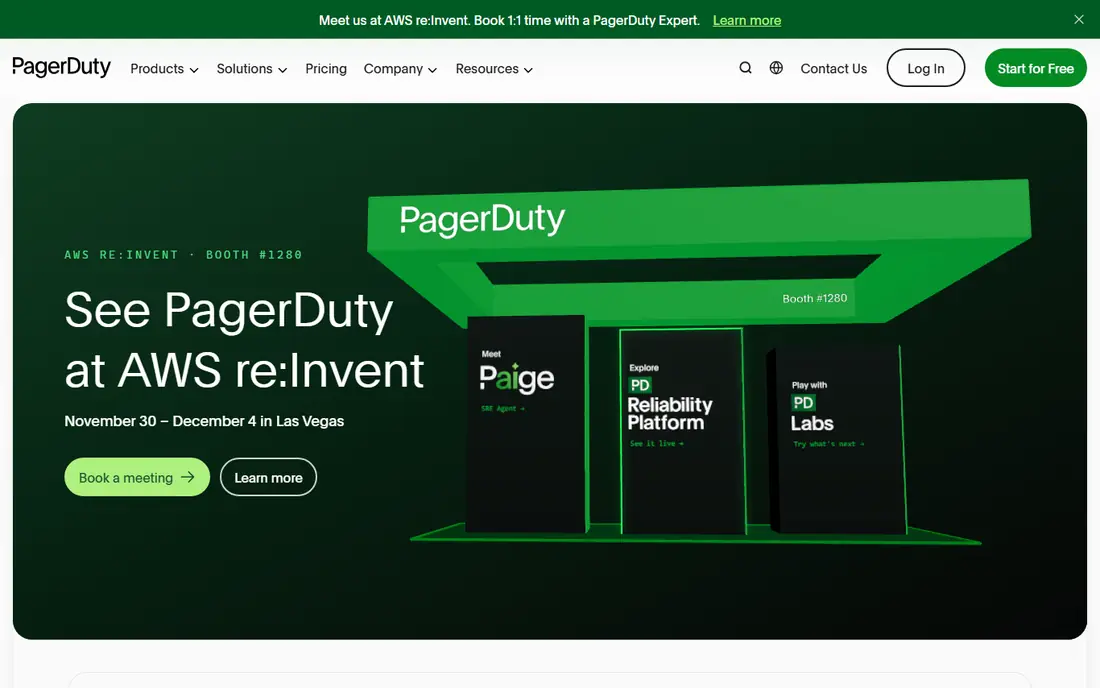
PagerDuty remains the default choice for teams with complex on-call needs. Rotations, schedules, escalation policies, and alert grouping are mature, and integrations cover most monitoring, cloud, and ticketing tools. A free plan for up to 5 users lets small teams start without a purchase, while Professional pricing near 21 dollars per user per month billed annually gives a clear entry point for larger teams.
The catch is total cost. Add-ons for automation, analytics, and advanced incident workflows can raise the bill well above the entry tier, so price the features you actually need rather than the headline plan. For a team that lives on-call and needs dependable paging at scale, PagerDuty still sets the standard other tools are compared against.
- Deep on-call rotations and escalation
- Broad integrations
- Free plan for up to 5 users
- Professional pricing is only a starting point
- Add-ons raise total cost
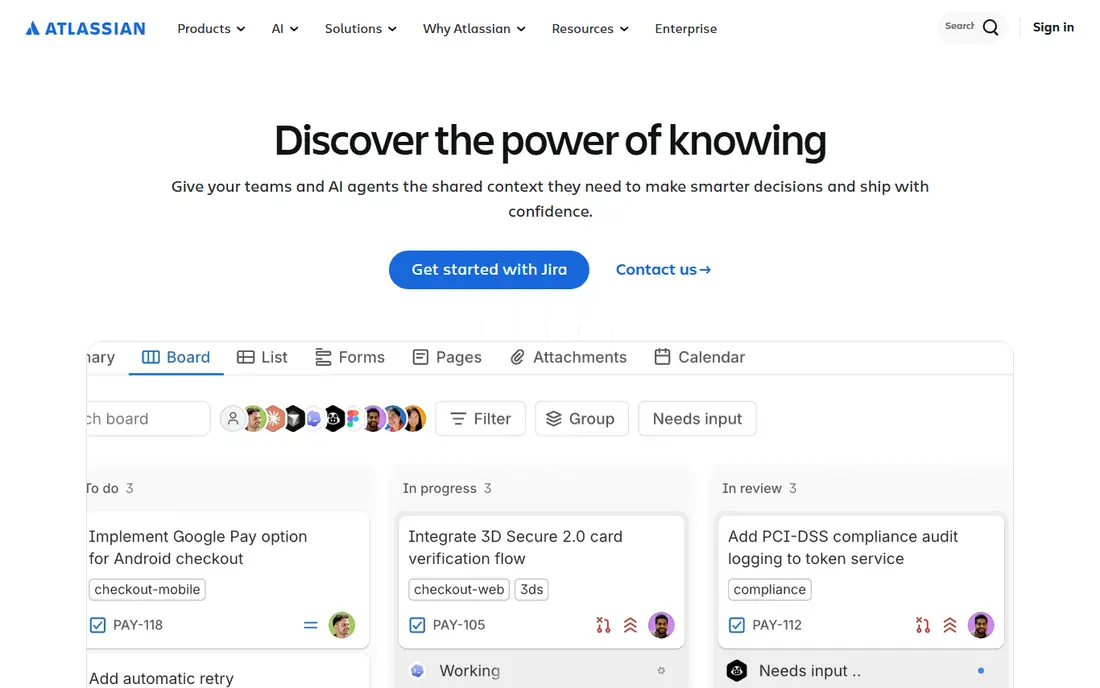
Jira Service Management is the migration path Atlassian points Opsgenie customers toward, and it makes sense for teams already using Jira and Confluence. It combines service desk, incident management, change, and on-call alerting, so an Opsgenie team can keep much of its Atlassian workflow while moving alerting into the same platform. A free tier for up to 3 agents helps small teams trial the migration.
Jira Service Management on-call features are solid but may feel thinner than PagerDuty for teams with very complex rotations or automation needs. Agent pricing near 20 dollars per agent per month also needs careful counting, since agents and end users are priced differently. For Atlassian shops, the integration benefit usually outweighs those limits.
- Official Opsgenie migration path
- ITSM, service desk, and on-call in one place
- Free tier for up to 3 agents
- On-call depth is thinner than PagerDuty for some teams
- Agent pricing needs care
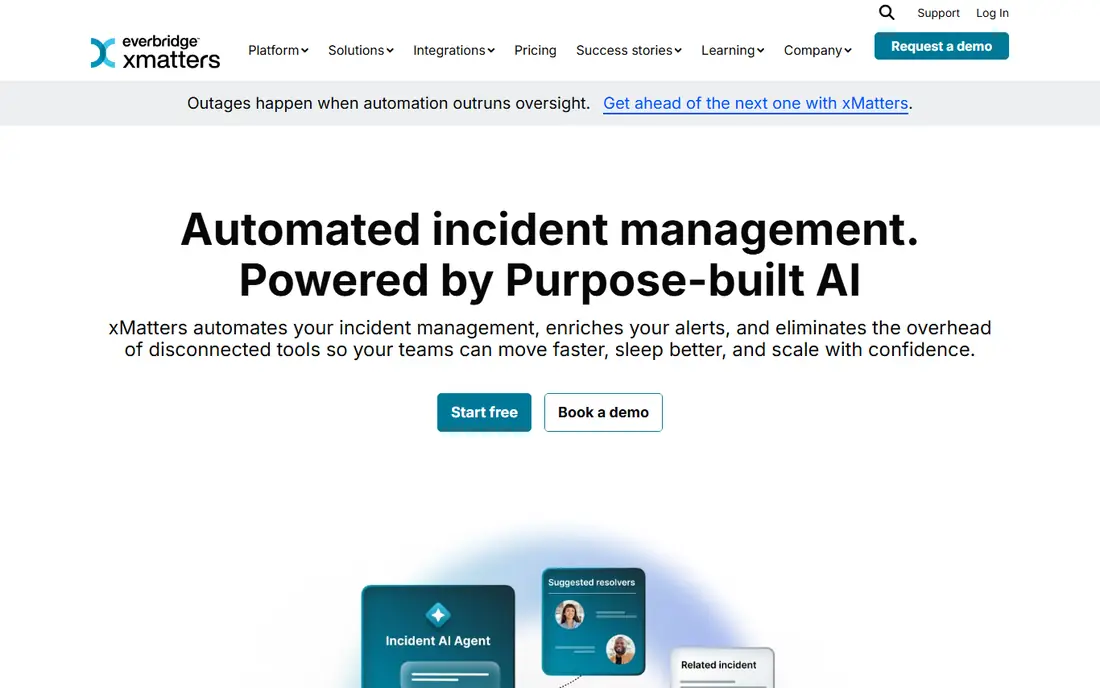
xMatters focuses on communication during incidents, with targeted alerts, escalation, and response tracking across phone, SMS, email, and chat tools. That communication strength suits regulated enterprises and IT teams that must prove who was contacted, when, and how they responded. A free tier for up to 10 users gives a useful trial for small teams, while Starter pricing near 16 dollars per user per month has been reported in recent comparisons.
Paid pricing is quoted in many listings, so confirm the tier that includes the integrations and automation you need. Setup can also be heavier than a simple paging tool, since communication workflows need to be designed, not just switched on. For teams where incident communication is audited or regulated, xMatters earns its extra setup time.
- Strong communication and escalation
- Free tier for up to 10 users
- Suited to regulated teams
- Quote-based paid pricing
- Setup can be heavier than simpler tools
Splunk On-Call, formerly VictorOps, fits teams that already monitor with Splunk. Alerts flow into on-call rotations with timelines, grouping, and collaboration tools, and the integration with Splunk observability data helps responders see context without switching tools. For a Splunk shop, that closeness can cut triage time during an outage.
Outside Splunk, the case is weaker. Pricing is quoted, with a free trial available, and teams using other monitoring stacks may get better value from a vendor-neutral tool like PagerDuty or Grafana IRM. Choose Splunk On-Call when Splunk is already your monitoring home, not as a standalone paging purchase.
- Deep Splunk integration
- Alert grouping and timelines
- Suited to Splunk observability stacks
- Quote-based pricing
- Less compelling outside Splunk
Zenduty combines on-call scheduling, alerting, and incident response workflows, with integrations for monitoring and chat tools. It suits mid-size engineering teams that want more than basic paging, including incident timelines, post-incident reviews, and automation, without paying enterprise prices. The interface is modern and focused on getting responders to the right alert quickly.
Zenduty pricing is not always published on the same terms across listings, so request a current quote for your responder count. It also has a smaller brand presence than PagerDuty, which can matter for reference customers in regulated sectors. For a team that wants a full response workflow at a mid-market price, Zenduty is a strong shortlist pick.
- On-call, alerting, and incident response in one tool
- Broad integrations
- Clear incident timelines
- Pricing varies by plan
- Smaller brand than PagerDuty
ilert appeals to teams that want straightforward on-call without a heavy platform. It covers alerting, rotations, escalation, and status pages, with a privacy-focused approach that suits European teams and data-conscious organisations. A free plan and trial let small teams test paging before paying, while paid pricing near 19 dollars per user per month gives a clear entry point.
The integration catalogue is smaller than PagerDuty, so check your monitoring and chat tools before committing. ilert also costs more at entry than some budget alerting tools, though the simplicity may save time for a small team. If privacy and simplicity matter more than the widest integration list, ilert is a good fit.
- Simple on-call and alerting
- Privacy-focused positioning
- Free plan and trial
- Smaller integration catalogue than PagerDuty
- Higher entry price than some rivals
AlertOps suits small teams that need dependable real-time alerts without enterprise cost. It covers on-call, escalation, and alert routing, with a free plan and entry pricing near 5 to 8 dollars per user per month in recent comparisons. That price point makes it easy for a startup or small DevOps team to replace Opsgenie without a large budget jump.
AlertOps does not match PagerDuty or incident.io on full incident lifecycle depth, including runbooks, retrospectives, and automation. Teams that need those workflows should shortlist a larger platform alongside AlertOps. For pure paging and escalation at low cost, AlertOps is one of the best value picks here.
- Low entry pricing in comparisons
- Real-time alerts
- Free plan available
- Less response workflow depth than larger platforms
- Pricing varies by listing
Grafana IRM, part of Grafana Cloud, gives Grafana users on-call rotations, alerting, and incident response without leaving their observability stack. Alerts from Grafana, Prometheus, and related tools flow into rotations and incident channels, which cuts context switching during outages. A free tier for 3 active IRM users per month lets small Grafana teams start at no cost.
Grafana IRM pricing above the free tier is near 20 dollars per active IRM user per month, so count only active responders, not every Grafana viewer. It is also most compelling inside Grafana Cloud, so teams on other observability stacks may prefer a neutral tool. For Grafana shops, IRM is the most natural Opsgenie replacement.
- Native Grafana integration
- Free tier for 3 active IRM users
- On-call plus incident response
- Best inside Grafana Cloud
- Pricing above free tier needs care
incident.io is built for teams that run incidents in Slack, with incident channels, roles, timelines, and retrospectives created from chat. That Slack-native design suits modern engineering teams that already coordinate in Slack and want incident process without leaving it. A free Basic tier for up to 5 users and entry pricing near 15 dollars per user per month billed annually make it easy to trial.
The Slack focus is also its main limit. Teams that do not use Slack, or that need deep paging and rotation features first, may prefer PagerDuty or Grafana IRM. Some AI-assisted features are also gated to higher tiers. For Slack teams that want modern incident response alongside paging, incident.io is a strong pick.
- Slack-native incident response
- Free Basic tier for up to 5 users
- Strong lifecycle automation
- Slack-centred workflow
- AI features gated to higher tiers in some comparisons
How we picked these
We compared official pricing pages, product documentation, and incident management comparisons published in 2026. We kept only tools that offer on-call rotations, paging, or incident response, and that are actively sold today. We left out Opsgenie itself as a buy option, since new sales ended in 2025 and shutdown is planned for 5 April 2027, and we left out general ticketing tools without on-call alerting.
What to check before you migrate from Opsgenie
Start with your rotations and integrations. Export your current schedules, escalation policies, alert rules, and integrations, then rebuild them in a trial of your top two choices before the shutdown date. Test paging by phone, SMS, and push, since a tool that looks good on screen can still fail on a real 3 a.m. alert. Also check how alert grouping, suppression, and maintenance windows behave, since those settings control alert fatigue.
Next, plan the cutover. Run the new tool alongside Opsgenie for at least one on-call cycle if you can, train responders on the new workflow, and update runbooks and status page links. Atlassian customers should test Jira Service Management migration tooling early, while other teams should confirm data export for incident history. Do not leave migration to the final month before shutdown, since on-call changes need time to settle.
Frequently asked questions
Is Opsgenie still available to buy?
No, Atlassian ended new sales in 2025, with shutdown planned for 5 April 2027. Existing customers should migrate, and new buyers should choose one of the independent tools in this list.
What is the official Opsgenie migration path?
Jira Service Management is the migration path Atlassian points Opsgenie customers toward, since it combines service desk, incident management, and on-call alerting in the Atlassian platform.
Which Opsgenie alternative is cheapest?
AlertOps and incident.io offer low-cost starting points, with AlertOps entry pricing near 5 to 8 dollars per user per month in recent comparisons, and incident.io offering a free Basic tier for up to 5 users. Compare total cost for your responder count, not just the entry tier.
Which tool is best for complex on-call rotations?
PagerDuty remains the strongest pick for complex rotations, escalation, and large-scale paging, thanks to mature scheduling and broad integrations. xMatters is also strong for communication-driven and regulated response.
Can I keep my Opsgenie incident history?
Export options vary by migration tool and target platform, so check export and import support early. Jira Service Management migration tooling covers Atlassian customers, while other tools may need manual export of history before shutdown.
Sources
See where you really rank - block by block
ProMapRanker scans Google Maps across a grid of your service area. Simple monthly plans from $19, white-label on every plan.
Start freeKeep reading
 zyte alternatives
Best Zyte Alternatives in 2026
These zyte alternatives cover managed scraping APIs, proxy networks and no code tools for lawful collection from your own or consented sources only in 2026.
Read → zerto alternatives
Best Zerto Alternatives in 2026
Compare the best zerto alternatives for disaster recovery and replication, with recovery targets, cloud options and honest trade-offs for teams in 2026.
Read → zerofox alternatives
Best ZeroFox Alternatives in 2026
We compared 9 zerofox alternatives for brand protection, phishing takedowns, dark web monitoring, and social impersonation, with clear coverage notes.
Read →