 ProMapRanker
NeuronWriter Alternatives in 2026

Key takeaways
- Surfer and Frase are the closest direct swaps, with live scoring plus briefs and research in one editor.
- Clearscope and MarketMuse suit larger teams, with Clearscope focused on single pages and MarketMuse on site-wide planning.
- Scalenut, Dashword and Page Optimizer Pro give smaller teams cheaper routes to scored drafts and briefs.
- Price alone is a weak guide, because credit limits, seats and included drafts differ a lot between tools.
- We did not list NeuronWriter itself here, and we checked each tool below as a live alternative in October 2026.
Quick comparison
| Pick | Great for | Pricing starts at | Free tier | |
|---|---|---|---|---|
 Surfer | Live content scoring for teams | $49 per month | No | Visit |
 Frase | Research, briefs and scoring in one place | $39 per month | No | Visit |
 Clearscope | Clean editorial scoring for shared teams | $129 per month | No | Visit |
 MarketMuse | Topic planning across a whole site | See website | Yes | Visit |
 Scalenut | AI drafting with SEO scoring | See website | Free trial | Visit |
 Dashword | Simple briefs and scoring | See website | Free trial | Visit |
 Page Optimizer Pro | Focused on-page reports | See website | No | Visit |
 WriterZen | Keyword research and content workflow | See website | Free trial | Visit |
 Content Harmony | Detailed briefs for writer teams | See website | Free trial | Visit |
The best neuronwriter alternatives
These tools all help you shape a draft around what already ranks, with scores, term suggestions and briefs. The right one depends on how much strategy, drafting and team sharing you need.
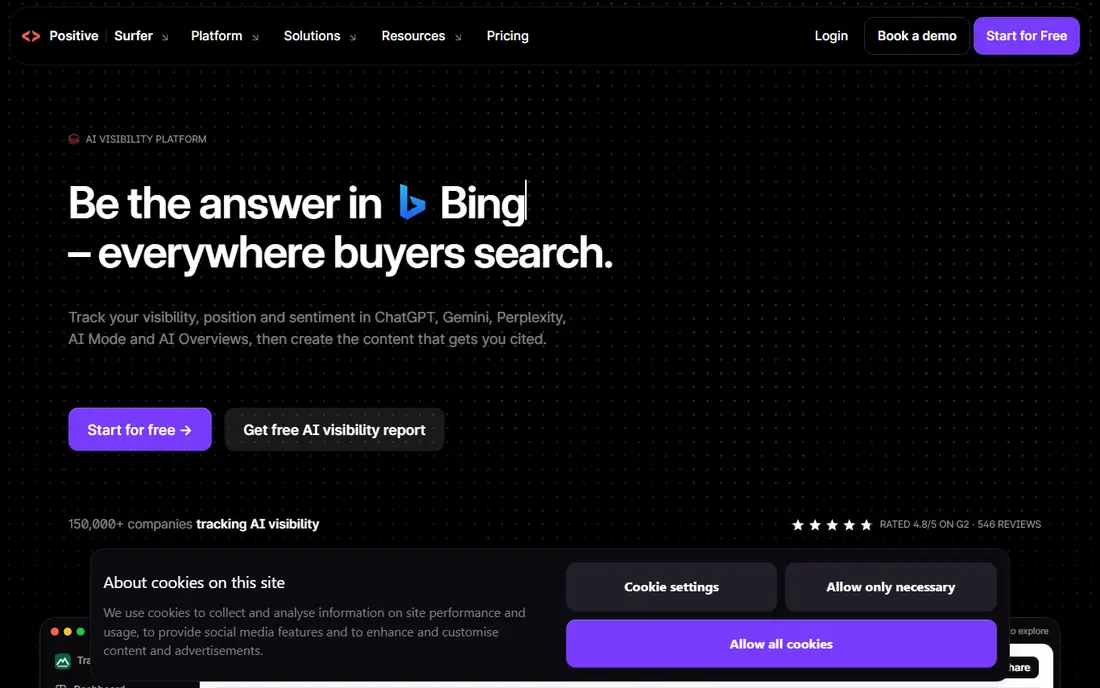
Surfer is our pick for most teams moving away from NeuronWriter, because its editor is the part writers touch every day. You paste in a keyword, see the pages that rank, and watch a score move as you add terms, headings and length. That feedback loop is clear for freelancers and in-house writers alike, and it keeps the work grounded in real search results rather than guesswork.
The catch is the billing model. Entry pricing is quoted on annual billing, and document credits on some plans reset yearly rather than monthly, so a team that writes in bursts needs to read the limits before paying. Surfer is also thinner on site-wide strategy than MarketMuse, so pair it with a separate planning step if you manage many topics at once.
- Live score as you write
- Strong brief and audit tools
- Integrations with Google Docs and WordPress
- Annual billing changes the effective monthly cost
- Credits are counted per year on some plans
- Can push writers toward chasing a score

Frase fits teams whose main pain is the brief, not the final polish. It pulls headings, questions and subtopics from ranking pages, then turns that material into an outline a writer can follow. That saves the back-and-forth that often slows a content queue, and its editor keeps scoring visible while the draft takes shape.
Where Frase falls short is depth on its own. It is not a replacement for a full rank tracker or backlink tool, and its AI drafts read as starting points rather than finished copy. If your team already writes well and mainly needs structure and checks, that trade is easy to accept.
- Fast SERP research and question mining
- Briefs built from ranking pages
- Scoring for search and AI answers
- Drafting quality still needs human editing
- Entry plan caps articles and seats
- Smaller data set than full SEO suites
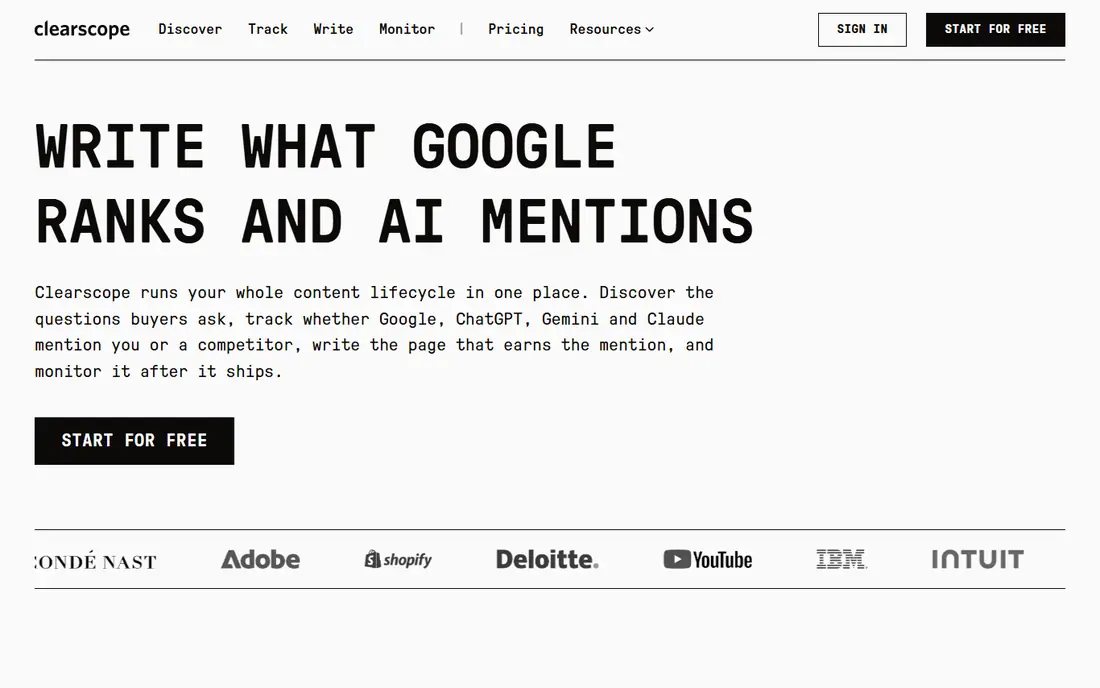
Clearscope is the calmest editor on this list. It gives writers a term list, a grade and a clean writing space, without the extra panels that can distract a freelancer on deadline. For publishers with several editors sharing one account, unlimited users on listed plans soften the headline price, since the cost is not multiplied per seat.
Solo writers will feel the price more sharply. The entry plan still caps drafts and tracked pages, so a lone blogger publishing a few posts a month may get better value from Frase or Dashword. Clearscope earns its place for teams that want one shared standard and fewer arguments about what good looks like.
- Clear, simple editor
- Unlimited users on listed plans
- Consistent grading for editorial standards
- High entry price for solo writers
- Draft and page limits still apply
- Focused on single pages, not strategy
MarketMuse answers a different question from the rest of this list. Instead of asking how to improve one page, it asks which topics your site should cover, where your coverage is thin, and which pages deserve updates first. That makes it a planning tool first and an editor second, and it suits agencies and larger content teams.
The trade is complexity. New users face more concepts and reports than a simple scoring editor requires, and paid tiers are often quoted after a demo rather than on a public page. Start with the free plan to test whether topic-level planning changes your decisions before committing.
- Topic authority and gap analysis
- Content inventory across a site
- Free plan for small queries
- Steeper learning curve
- Paid pricing is not always listed plainly
- More than a solo writer needs
Scalenut tries to cover the full run from keyword clusters to a finished draft, which appeals to small teams that cannot afford three separate tools. Its cluster view helps you group related topics, and its drafting mode can produce a long first draft quickly when a deadline is tight.
That breadth is also its weakness. A fast draft is not a verified draft, and claims, quotes and product details still need a human check before publication. Treat Scalenut as a production aid for teams that already edit carefully, not as a hands-off publishing machine.
- Keyword clusters and topic planning
- Cruise Mode for fast drafts
- Scoring tied to search results
- AI drafts need fact checking and editing
- Pricing has varied between monthly and annual quotes
- Can feel broad rather than deep
Dashword is for writers who found larger tools noisy. Its brief builder is short and direct, and its scoring editor keeps the focus on the draft rather than on dashboards. Small teams and solo creators often prefer that shape, because there is less setup before the first useful brief.
The price of simplicity is scope. Dashword does not try to plan a whole site or generate long drafts, so teams that need those jobs will still need another tool. If your main need is a solid brief and a score, that narrow focus is a strength, not a gap.
- Clean brief builder
- Real-time scoring without clutter
- Quick competitor research
- Fewer drafting and strategy features
- Smaller feature set than Surfer or Frase
- Pricing is best confirmed on its site
Page Optimizer Pro stands apart because it leans toward testing and fixing pages you already have. Its reports spell out which terms, headings and structure changes are most likely to matter, which helps when a page has stalled and a rewrite feels like guesswork.
Daily writers may find the report workflow slower than a live editor, since you run a report, apply changes and recheck, rather than watching a score move as you type. For audit work and refreshes, though, that methodical style is exactly what you want.
- Detailed on-page testing guidance
- Clear change lists for existing pages
- Useful for audits
- Less of a full drafting editor
- Report-based workflow suits audits more than daily writing
- Pricing varies by report volume
WriterZen bundles keyword research, topic discovery and brief building in a way that suits a solo creator or small agency. You can move from finding a topic cluster to building a brief without switching tools, which keeps small projects moving and costs down.
It does not match the polish of the top editors, and its scores should be read as guidance rather than a verdict. Writers who are comfortable checking search results themselves will get the most from it, while teams that want a single shared grade may prefer Clearscope.
- Topic discovery and keyword clusters
- Content workflow from research to brief
- Good value for solo creators
- Interface is less polished than Surfer or Clearscope
- Scoring depth varies by topic
- Some features need time to learn
Content Harmony is built for the handoff between strategist and writer. Its briefs carry intent, structure, questions and competitor notes in one document, so a freelancer can start without a long call. That detail pays off when several writers work on one site and consistency matters.
Smaller teams may find the volume pricing and setup heavier than they need for a handful of posts. It earns its place here for publishers who treat the brief as the main quality control step and want that step done properly.
- Thorough briefs with search intent and structure
- Unlimited users on some plans
- Good for handing work to freelancers
- Brief pricing is volume based
- Less of a live drafting editor
- Setup takes longer than simpler brief tools
How we picked these
We compared official feature pages, pricing pages and public reviews for tools that do the same core job as NeuronWriter: scoring drafts against ranking pages, building briefs from search results, or planning topics from search data. We left out general AI writers with no search scoring, and we left out full SEO suites where content scoring is only a side feature. Prices shown are starting paid prices where we could confirm them in October 2026, and we wrote See website where quotes conflicted between sources or were not listed plainly.
What to check before you switch
Start with your real workflow, not the feature list. If writers draft in Google Docs, check the integration. If editors share accounts, check seat rules and draft caps. If you publish in bursts, check whether credits reset monthly or yearly, because that single detail can change the true cost more than the headline price.
Run a trial on two or three of your own topics, not the demo keyword. Compare the brief quality, the term suggestions and how much editing the draft still needs. A tool that scores well on a simple topic may be less helpful on a technical one, and only your own content will show that gap. Also confirm export and publishing options, so finished work moves into your site without manual reformatting.
Watch the limits that hide behind the price
Entry plans often cap articles, drafts, tracked pages or seats. Write down your monthly volume before you buy, then match it to the cap, not the price. A cheaper plan that forces an upgrade in week three is not cheaper.
Also check whether AI drafting, AI search tracking and audits are included or sold separately. Some tools bundle them, others gate them behind higher tiers, and that split matters if you plan to track how your content appears in AI answers as well as in classic search results.
Frequently asked questions
What are the best alternatives to NeuronWriter?
Surfer and Frase are the closest direct swaps for most teams, with live scoring and briefs in one editor. Clearscope suits shared editorial teams, MarketMuse suits site-wide planning, and Scalenut or Dashword suit smaller budgets. The best pick depends on whether you need scoring, briefs, strategy or all three.
Is there a free alternative to NeuronWriter?
MarketMuse offers a limited free plan, and several tools here offer free trials rather than free plans. A free tier is useful for testing the workflow, but most teams will need a paid plan for regular publishing volume, more drafts and team seats.
Which NeuronWriter alternative is cheapest for solo writers?
Frase and Surfer have the lowest clearly listed entry prices among the leading editors here, while Dashword and WriterZen can be cheaper depending on current pricing and plan limits. Confirm the current price and caps on the vendor site before buying, since annual billing changes the monthly figure.
Do these tools write the article for me?
Some offer AI drafting, but every draft still needs human editing, fact checking and a check against your own sources. A high content score does not prove a claim is true, and AI text can sound confident while getting details wrong.
Can I migrate my briefs and projects from NeuronWriter?
Migration depends on the tool, since there is no single standard export for briefs and scores. In practice, most teams start fresh briefs in the new tool and keep old projects for reference, so run a trial alongside your current setup before cancelling.
Which alternative is best for agencies?
Surfer and Frase scale well for agency volume, Clearscope works well when many editors share one standard, and MarketMuse helps agencies plan topics across client sites. Agencies should compare draft caps, seat rules and reporting features, not just the starting price.
Sources
- https://www.surferseo.com
- https://www.frase.io
- https://www.clearscope.io
- https://www.marketmuse.com
- https://www.scalenut.com
- https://www.dashword.com
- https://www.pageoptimizerpro.com
- https://www.writerzen.net
- https://www.contentharmony.com
- https://www.rankability.com/blog/best-seo-content-optimization-tools/
- https://coursiv.io/blog/surfer-seo-alternatives
- https://okara.ai/blog/surfer-seo-alternatives
See where you really rank - block by block
ProMapRanker scans Google Maps across a grid of your service area. Simple monthly plans from $19, white-label on every plan.
Start freeKeep reading
 zscaler alternatives
Best Zscaler Alternatives in 2026
Looking for zscaler alternatives? We compare 9 SASE and zero trust platforms on architecture, data protection, pricing, and fit for your network and team.
Read → zapier alternatives free
Best Zapier Alternatives Free in 2026
Nine automation tools for zapier alternatives free in 2026, all with genuinely free tiers, plus free plan limits, starting prices and upgrade paths explained.
Read → which platform is best for online reputation
Which Platform Is Best for Online Reputation in 2026
Wondering which platform is best for online reputation? We compare 8 review, listing, and response tools for small and multi-location businesses and agencies.
Read →