 ProMapRanker
Best Neo4j Alternatives in 2026

Key takeaways
- ArangoDB suits teams that want graph, document, and search work in one database instead of running three systems.
- Amazon Neptune fits teams already on AWS, while self-hosted options such as JanusGraph and Kuzu keep costs and control in your hands.
- Memgraph and FalkorDB are the picks to test first when query speed on a live, changing graph matters most.
- Query language matters as much as price: Gremlin, Cypher-style, and AQL skills do not transfer without retraining.
Quick comparison
| Pick | Great for | Pricing starts at | Free tier | |
|---|---|---|---|---|
 ArangoDB | Multi-model projects | See website | Yes | Visit |
 Amazon Neptune | AWS-based graph workloads | See website | No | Visit |
 TigerGraph | Large-scale analytics | See website | Free trial | Visit |
 Dgraph | Distributed graph apps | $39.99 per month | Yes | Visit |
 Memgraph | Fast in-memory queries | Free | Yes | Visit |
 JanusGraph | Very large self-hosted graphs | Free | Yes | Visit |
 OrientDB | Multi-model with SQL-style queries | Free | Yes | Visit |
 Kuzu | Embedded analytics | Free | Yes | Visit |
 SurrealDB | Modern multi-model apps | See website | Yes | Visit |
The best neo4j alternatives
We compared these graph databases on query language, deployment choice, scale, and price. Each one below is a real alternative to Neo4j, not a renamed copy of it.

ArangoDB is our pick for teams that keep hitting the limits of a single-model database. A product catalog, a recommendation graph, and a search index can live in the same system, and AQL lets you query across those models without stitching together separate tools. That consolidation is the main reason to choose it over a graph-only database.
The catch is complexity. ArangoDB gives you a lot of choice, and that choice shows up in configuration, tuning, and learning AQL. Small teams with a simple graph may find a lighter engine faster to ship. Teams with mixed data, though, often save more time here than they spend learning it.
- Graph, document, key-value, and search in one engine
- One query language across models
- Open source core
- Pricing for managed service is not fully public
- Setup can feel heavy for small projects
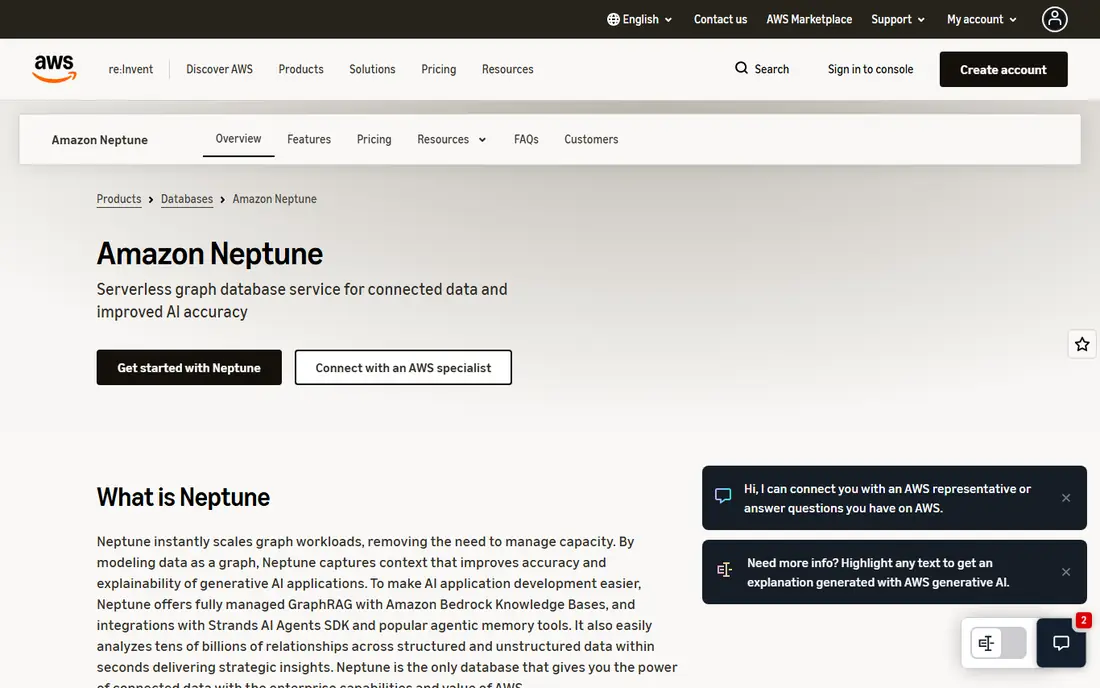
Neptune makes sense when your data, identity controls, and monitoring already live in AWS. You do not manage servers or patching, and you can pick property graph or RDF work depending on the job. The serverless option also helps when traffic rises and falls sharply rather than staying flat.
The trade-off is that Neptune is not a casual side-project database. Usage-based billing can climb with heavy queries, and moving away later means rethinking hosting and tooling. If your team is committed to AWS and wants a managed graph service, it is a strong, practical choice.
- Fully managed on AWS
- Supports Gremlin, openCypher, and SPARQL
- Serverless option for variable work
- Costs depend on instance, storage, and queries, so budgeting takes care
- Tied to AWS
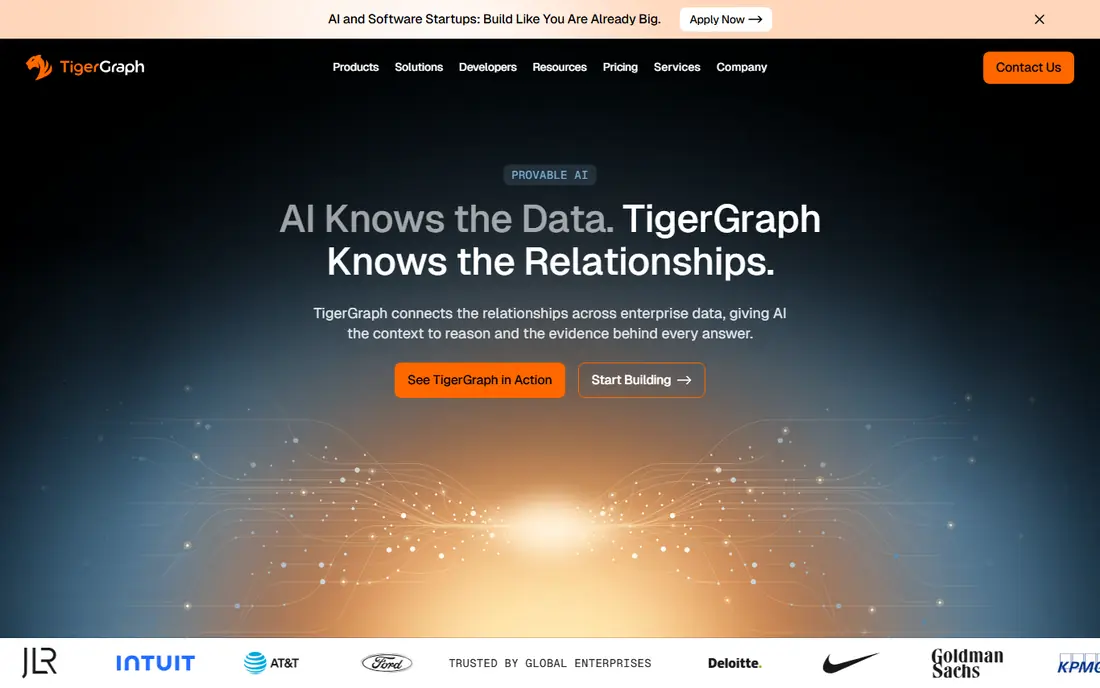
TigerGraph targets teams that run deep traversals across very large graphs and need answers while data is still changing. Its parallel execution model is designed for multi-hop questions that slow down simpler engines, such as fraud rings or layered supply chains. If your queries regularly cross many steps, this is worth a serious test.
That strength comes with enterprise pricing and a learning curve. GSQL is not a language most developers already know, and smaller teams may find the sales process heavier than a self-serve signup. For large analytics workloads, the performance case can still justify the effort.
- Built for deep, real-time analytics
- Parallel query execution
- Strong fraud and recommendation use cases
- Enterprise pricing is quote-based
- GSQL takes time to learn
Dgraph suits application teams building social, knowledge, or SaaS products where graph data grows fast and queries must stay quick. Its native GraphQL support shortens the path from database to API, which helps front-end teams move without a separate translation layer. Distributed design also means scale is part of the plan from the start.
The honest catch is ecosystem size. You will find fewer ready-made guides and integrations than for long-established graph databases. Check the connectors and client libraries your stack needs before you commit, and test a realistic query load on the paid tier you plan to use.
- Distributed by design
- GraphQL support
- Fast for real-time workloads
- Cloud pricing varies by tier
- Smaller ecosystem than older graph databases
Memgraph is the closest feel to Neo4j for many teams, because it supports Cypher-style queries and keeps data in memory for quick responses. That makes it a good test bed for teams moving away from Neo4j who do not want to rewrite every query at once. Real-time use cases, such as live network checks or streaming recommendations, play to its strengths.
In-memory design is also its limit. Very large graphs need careful memory planning, and the free edition will not cover every enterprise need. For mid-size, speed-sensitive graphs, Memgraph gives a clear and low-cost starting point.
- In-memory speed
- Cypher-style queries ease migration
- Visual exploration tools
- Memory limits shape how large a graph can grow
- Enterprise features are paid
JanusGraph is built for teams that want to run a huge graph themselves, on storage they already trust. It pairs with backends such as Cassandra or HBase and uses Gremlin, a widely known graph traversal language. That flexibility suits research, telecom, and platform teams with strong operations skills.
It is not a quick-start product. You own deployment, scaling, backups, and tuning, and the documentation assumes you are comfortable with distributed systems. If your team has that skill and wants full control without license fees, JanusGraph is hard to beat on price.
- Open source and distributed
- Works with common storage backends
- Gremlin support
- Setup and operations need real expertise
- No vendor-hosted managed service
OrientDB appeals to teams that like SQL and want graph features without learning a wholly new query language. You can model documents and relationships in one store, which helps for catalogs, asset records, and content systems where links matter but are not the only story. Its long history also means the core concepts are stable and well documented.
The downside is momentum. OrientDB does not have the same volume of current guides, cloud services, or hiring pool as the leaders. If your team values a SQL-like path and can self-support, it remains a solid, low-cost option.
- Graph plus document and object models
- SQL-style queries lower the learning curve
- Open source
- Community is smaller than leading graph databases
- Enterprise support is separate
Kuzu is an embedded graph database, which means it runs inside your application rather than as a separate server. That design suits analytics tools, notebooks, and desktop apps where you want graph queries without operating infrastructure. Cypher-style queries keep the learning curve modest for Neo4j users.
Because Kuzu is newer, expect fewer integrations and managed options than older products. It is best for analytical and embedded work, not for a shared, always-on service with many writers. For that narrower job, its simplicity is a genuine advantage.
- Lightweight embedded database
- Cypher-style queries
- Good for analytical workloads
- Newer ecosystem
- Not a managed cloud database service
SurrealDB targets developers building modern apps that mix tables, documents, and graph links. SurrealQL covers several models in one language, and the team offers both self-hosting and a cloud service. That mix is attractive for startups that want one database early and do not want to migrate soon.
Youth is the risk to weigh. Features and pricing details have changed as the product has grown, so confirm the current docs against your exact needs before building on it. If you like its model and can accept a newer ecosystem, SurrealDB is a flexible alternative worth testing.
- Multi-model database with graph, document, and relational features
- SurrealQL
- Cloud and self-hosted options
- Younger product with changing features
- Managed pricing needs checking before budgeting
How we picked these
We compared official feature pages, pricing pages, query languages, and deployment options, and we left out products that are no longer maintained or that only handle graph-like queries as a side feature. We favored databases that are live in October 2026, support real graph workloads, and offer a clear path to try them, whether open source, free, or trial based.
What to check before you switch
Start with your query pattern, not the feature list. Count how many hops your hardest queries make, how often data changes, and how much data must stay in memory or on disk. A database that shines on deep analytics may be slow for simple lookups, and an embedded engine may not suit a shared service.
Next, test migration cost on a small slice of real data. Rewrite your most common queries, load a realistic sample, and measure both speed and effort. Check client libraries, backup tools, and access controls early, because a missing connector can cost more than a price difference. Finally, model total cost with your own volume, including managed hosting, storage, and support, rather than trusting a starting price alone.
Frequently asked questions
What is the best alternative to Neo4j?
ArangoDB is the best general alternative for teams that want several data models in one place, while Memgraph is the easiest move for Cypher-style users. The right pick still depends on scale, hosting, and query style, so test two options on your own data before deciding.
Are there free alternatives to Neo4j?
Yes. Memgraph, JanusGraph, OrientDB, and Kuzu all offer free or open source editions, and Dgraph and SurrealDB offer free tiers or free self-hosting. Managed cloud services usually add a separate charge, so free software does not always mean free hosting.
Which alternative to Neo4j is best for large graphs?
TigerGraph and JanusGraph are built for very large graphs, with TigerGraph focused on managed analytics and JanusGraph on self-hosted distributed setups. Amazon Neptune is also a strong choice when the workload already runs on AWS.
Do I need to learn a new query language?
Often, yes, but not always. Memgraph and Kuzu use Cypher-style queries, Amazon Neptune supports openCypher and Gremlin, and JanusGraph uses Gremlin. ArangoDB uses AQL, TigerGraph uses GSQL, and SurrealDB uses SurrealQL, so budget learning time for those.
Can I self-host a Neo4j alternative?
Yes. JanusGraph, OrientDB, Kuzu, Memgraph, ArangoDB, Dgraph, and SurrealDB all offer self-hosted options. Managed services trade control for less operational work, so choose based on your team's operations capacity.
Sources
See where you really rank - block by block
ProMapRanker scans Google Maps across a grid of your service area. Simple monthly plans from $19, white-label on every plan.
Start freeKeep reading
 zscaler alternatives
Best Zscaler Alternatives in 2026
Looking for zscaler alternatives? We compare 9 SASE and zero trust platforms on architecture, data protection, pricing, and fit for your network and team.
Read → zapier alternatives free
Best Zapier Alternatives Free in 2026
Nine automation tools for zapier alternatives free in 2026, all with genuinely free tiers, plus free plan limits, starting prices and upgrade paths explained.
Read → which platform is best for online reputation
Which Platform Is Best for Online Reputation in 2026
Wondering which platform is best for online reputation? We compare 8 review, listing, and response tools for small and multi-location businesses and agencies.
Read →