 ProMapRanker
Best Naverisk Alternatives in 2026

Key takeaways
- NinjaOne, Datto RMM and N-able N-central suit larger MSPs that need deep monitoring, patching and automation at scale.
- Atera, Syncro and SuperOps suit smaller MSPs that want RMM plus ticketing or PSA features in one account.
- Action1 suits patch focused teams, with a free tier for the first 200 endpoints.
- Pulseway suits mobile first technicians who need alerts and remote control from a phone.
- ConnectWise RMM suits teams already using ConnectWise tools, since it shares workflows and integrations.
Quick comparison
| Pick | Great for | Pricing starts at | Free tier | |
|---|---|---|---|---|
 NinjaOne | Large MSP monitoring | See website | Free trial | Visit |
 Datto RMM | Mature MSP platform | See website | Free trial | Visit |
 N-able N-central | Enterprise MSP scale | See website | Free trial | Visit |
 Atera | Small MSP all in one | See website | Free trial | Visit |
 Syncro | RMM plus PSA for small MSPs | $129 per user per month | Free trial | Visit |
 SuperOps | Modern MSP platform | $79 per month | Free trial | Visit |
 Action1 | Patch management | Free | Yes | Visit |
 Pulseway | Mobile first RMM | $67 per month | Free trial | Visit |
 ConnectWise RMM | ConnectWise ecosystem teams | See website | Free trial | Visit |
The best Naverisk alternatives
Naverisk combines remote monitoring and management with PSA features for MSPs and IT teams. The tools below cover the same job with different strengths: scale, all in one simplicity, patch focus, mobile use or ecosystem fit. We compared official feature and pricing pages where possible.

NinjaOne suits MSPs that want monitoring, patching and remote control without a cluttered interface. You can view device health, automate patching and scripts, manage software and respond to alerts from one dashboard. That clarity helps technicians handle many clients without losing track of which endpoint needs attention.
Pricing is quoted based on endpoint count and features, so you need a sales conversation to get a firm number. Teams that need a full PSA may also need an integration, since NinjaOne focuses on endpoint management rather than full business management. If endpoint scale and ease of use matter most, NinjaOne is a leading alternative to Naverisk.
- Clean interface for monitoring and patching
- Strong automation and scripting
- Scales well for many endpoints
- Pricing is quoted, not openly listed
- Some PSA features need integrations
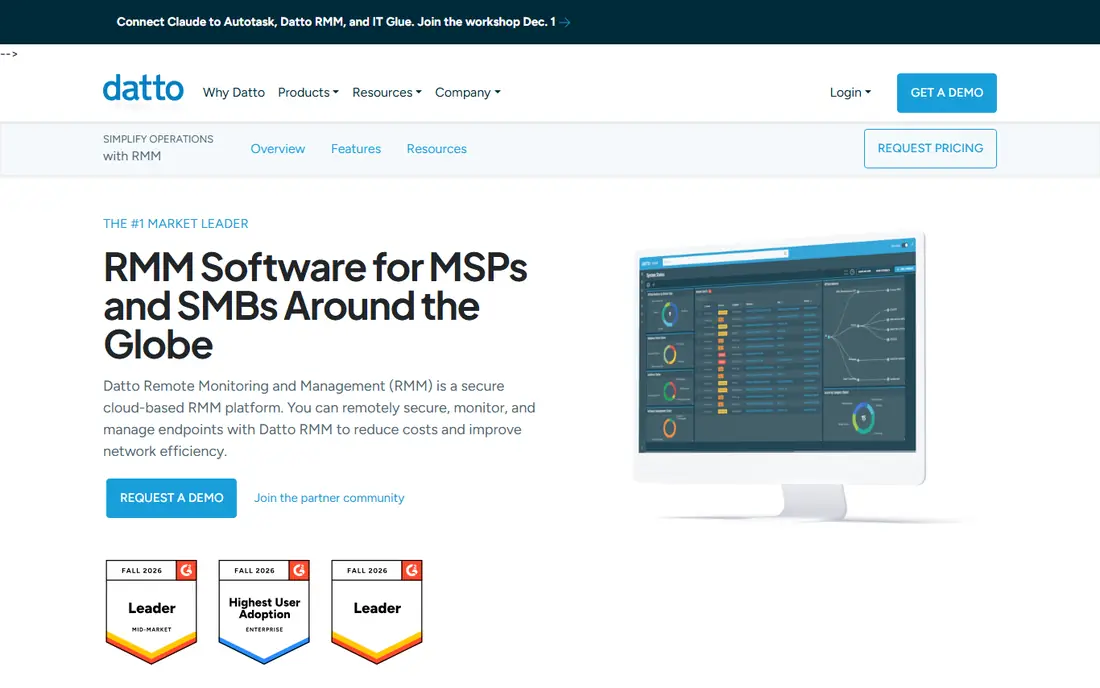
Datto RMM suits established MSPs that need a proven platform for many clients. It covers monitoring, patching, remote control, scripting and policy management, and it pairs with Datto backup, networking and security products for teams that standardise on Datto. That ecosystem can simplify procurement and support for a growing MSP.
The platform rewards teams that invest time in policies and automation, so smaller teams may find setup heavier than Atera or Syncro. Pricing is also quoted rather than listed as a simple monthly rate. If you run a mature MSP and want depth and ecosystem fit, Datto RMM belongs on your shortlist.
- Mature monitoring and automation for MSPs
- Strong policy and scripting tools
- Ties in with Datto backup and security tools
- Pricing is quoted
- Learning curve for full policy setup
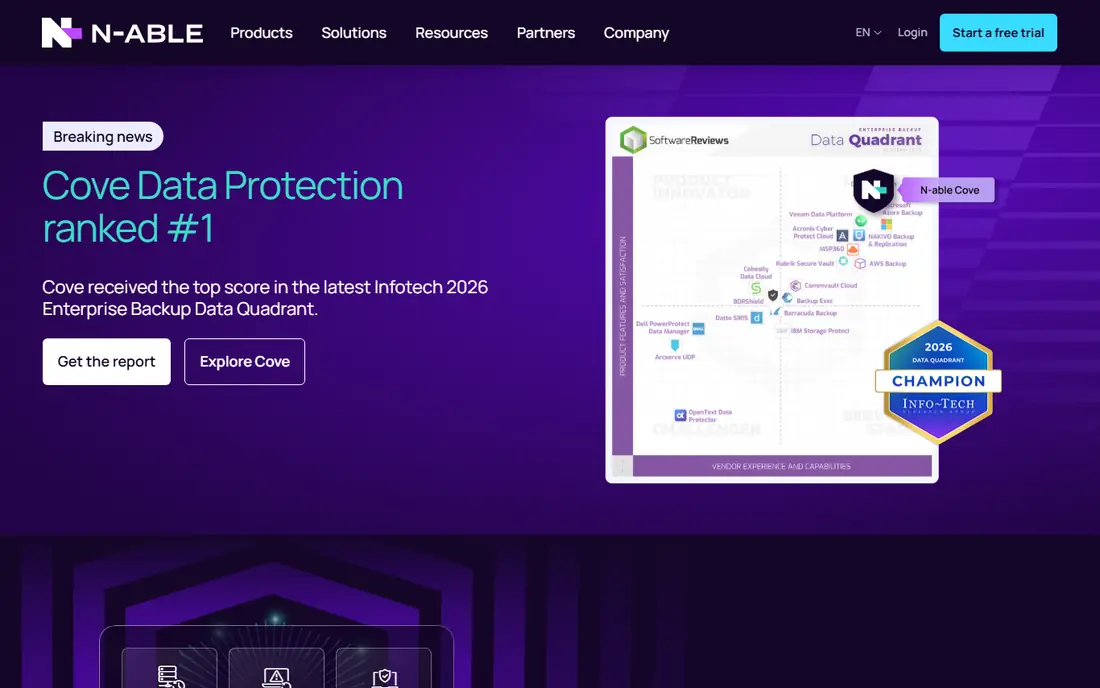
N-able N-central suits larger MSPs and enterprise IT teams that manage many devices across many clients. It offers deep monitoring, automation, patch management and remote control, with multi tenant controls that help keep client data and policies separate. That scale is its main strength.
Small teams may find N-central more complex and costly than they need, and setup benefits from proper onboarding. If you manage hundreds or thousands of endpoints and need granular control, N-central is a strong enterprise alternative. If you manage a handful of small clients, a simpler tool below will get you running faster.
- Deep monitoring for large estates
- Strong automation and patch tools
- Good for multi tenant MSP work
- Complex for small teams
- Pricing and setup need a sales and onboarding process
Atera suits small and mid sized MSPs that want one account for monitoring, helpdesk, patching and billing. Per technician pricing, rather than per endpoint pricing, helps MSPs with many devices but few technicians control costs. The interface is straightforward, which helps new technicians learn the system quickly.
Larger MSPs with complex automation needs may find Atera lighter than NinjaOne, Datto or N-central, and some advanced features need higher plans. For a growing MSP that needs an all in one start without per device fees, Atera is one of the most practical alternatives to Naverisk.
- RMM, ticketing and billing in one account
- Per technician pricing, not per endpoint
- Easy to start for small MSPs
- Very large estates may need deeper tools
- Some advanced features sit on higher tiers
Syncro suits small MSPs that want RMM and PSA together without buying two products. The core plan includes monitoring, scripting, patching and ticketing, with unlimited RMM agents for Windows and Mac devices, plus integrations for documentation, payments and remote access. That bundle helps a small team run operations from one place.
Pricing is per user per month, so a team with many technicians should map total seat costs before committing. The platform also grows busy as you add modules, so new users need time to learn the layout. If you want RMM plus PSA in one account, Syncro is a strong Naverisk alternative.
- Integrated RMM and PSA in one platform
- Unlimited endpoints on the core plan
- Many integrations for MSP workflows
- Price is per user, so large teams pay more
- Interface can feel busy as features grow
SuperOps suits MSPs that want a modern RMM and PSA platform without the feel of older enterprise tools. It covers monitoring, patching, ticketing, client management and automation in a clean interface, with an entry price that is lower than many established rivals. That mix appeals to newer MSPs and to teams refreshing an old stack.
Because SuperOps is younger than Datto or N-able, some deep enterprise features and integrations are still maturing, so check the specific tools your clients need. For small to mid sized MSPs that value a modern workflow and a clear price, SuperOps is a fresh and credible alternative.
- Modern interface for RMM and PSA
- Good automation and client management
- Lower entry price than many rivals
- Younger platform than Datto or N-able
- Some deep enterprise features are still maturing
Action1 suits IT teams whose main problem is patching, not full MSP business management. The first 200 endpoints are free with no feature limits, which makes it easy to test in a real environment. It covers third party patching, cross OS patching and vulnerability remediation, with a cloud setup that avoids on premises servers.
Action1 is not a full PSA, so MSPs that need ticketing, billing and client management will need another tool beside it. Paid pricing for larger estates is quoted, so map your endpoint count before you scale. If patching is your priority, Action1 offers the best free start in this list.
- First 200 endpoints free with full features
- Strong third party and cross OS patching
- Cloud native setup
- Focused on patching, not full PSA
- Larger estates need a quote for paid tiers
Pulseway suits technicians who work from a phone as much as from a desk. The mobile app lets you receive alerts, check device health, run scripts and start remote sessions away from the office, which helps field technicians and on call staff. Desktop tools cover monitoring, patching and automation for day to day MSP work.
Pulseway is less of a full PSA than Syncro or SuperOps, so teams that need deep ticketing and billing may pair it with another system. Check the current plan limits, since endpoint and feature counts vary by tier. If mobile response matters to your team, Pulseway is a practical and well liked alternative.
- Strong mobile app for alerts and remote control
- Good patch and automation tools
- Popular with smaller MSPs
- Entry price is per month for a base tier
- Some PSA depth needs integrations
ConnectWise RMM suits MSPs already using ConnectWise PSA, Automate or other ConnectWise products. Shared workflows, ticketing and integrations reduce duplicate work, and the platform covers monitoring, patching, scripting and remote control for multi client estates. That ecosystem fit is the main reason to choose it over a standalone RMM.
Standalone teams that do not use ConnectWise elsewhere may find setup heavier and value lower than with Atera or Syncro. Pricing is also quoted, so request a quote for your endpoint and technician count. If ConnectWise is already your stack, ConnectWise RMM is the lowest friction Naverisk alternative here.
- Fits ConnectWise PSA, ticketing and security workflows
- Strong automation for MSPs
- Large integration range
- Best value inside the ConnectWise ecosystem
- Setup can be complex for a standalone user
How we picked these
We compared official feature pages, pricing pages and trial terms for each tool, and kept only tools that are live and usable in October 2026. We looked for monitoring, patching, remote control and automation, and we noted where a tool is patch focused, PSA focused or ecosystem focused. We did not claim hands-on testing we did not do, and we left out Naverisk itself, since this list is for alternatives. Where a price could not be verified from the vendor page at the time of writing, we wrote See website rather than guessing.
What to check before you switch
Start with endpoint count, operating systems and technician count, since those three numbers drive most RMM pricing. Trial the tool with a small group of real endpoints, including a mix of Windows and Mac devices if you support both, and test patching, alerts and remote control under real conditions.
Test automation and alerts with real tickets
A demo dashboard always looks clean. Create a real alert, assign it, run a patch job and check the audit trail, and see how long each step takes for a new technician. Also check script libraries, policy templates and reporting, since those save hours once you scale to many clients.
Check security, data and exit options
Ask about role based access, audit logs, data residency, backup of settings and how you export device and ticket data if you leave. RMM tools hold deep access to client devices, so security reviews, least privilege roles and clear offboarding steps matter as much as feature lists.
Frequently asked questions
What is the best free Naverisk alternative?
Action1 is the best free start, with the first 200 endpoints free and full patching features. Other tools here offer free trials, not permanent free tiers. For a full RMM plus PSA free tier, there is no direct match in this list, so use trials to compare before paying.
Which Naverisk alternative is best for small MSPs?
Atera and Syncro suit small MSPs, since both bundle RMM with ticketing or PSA features. SuperOps also suits small MSPs that want a modern platform. Choose Atera for per technician pricing, Syncro for integrated PSA, or SuperOps for a modern interface at a lower entry price.
Is NinjaOne better than Naverisk?
NinjaOne suits MSPs that want a clean, scalable endpoint platform with strong automation. Naverisk suits teams that value its combined RMM and PSA model and support. Compare endpoint pricing, PSA needs and onboarding support for your client mix before you decide.
Do these RMM tools support Mac and Linux?
Support varies by tool and feature. Most tools here support Windows and Mac for core monitoring, while Linux support is more limited and varies by agent and feature. Check the supported operating systems page for each vendor for patching, scripting and remote control on each platform.
How much does RMM software cost?
Costs vary by model: per user, per endpoint, per month, or quoted. In this list, Syncro starts at $129 per user per month, SuperOps starts at $79 per month, Pulseway starts at $67 per month, and Action1 is free for the first 200 endpoints. Other tools are quoted, so request a quote for your exact endpoint and technician count.
Sources
See where you really rank - block by block
ProMapRanker scans Google Maps across a grid of your service area. Simple monthly plans from $19, white-label on every plan.
Start freeKeep reading
 zscaler alternatives
Best Zscaler Alternatives in 2026
Looking for zscaler alternatives? We compare 9 SASE and zero trust platforms on architecture, data protection, pricing, and fit for your network and team.
Read → zapier alternatives free
Best Zapier Alternatives Free in 2026
Nine automation tools for zapier alternatives free in 2026, all with genuinely free tiers, plus free plan limits, starting prices and upgrade paths explained.
Read → which platform is best for online reputation
Which Platform Is Best for Online Reputation in 2026
Wondering which platform is best for online reputation? We compare 8 review, listing, and response tools for small and multi-location businesses and agencies.
Read →