 ProMapRanker
Best MuleSoft ESB Alternatives in 2026

Key takeaways
- Boomi, Workato, SnapLogic and Informatica are the closest enterprise replacements for MuleSoft ESB work.
- Azure Logic Apps, Oracle Integration and SAP Integration Suite suit teams already committed to those vendor estates.
- Jitterbit and Celigo suit mid-market teams that need strong app connectors without a large enterprise contract.
- Integration pricing follows volume, endpoints and connectors, so count those three before asking any vendor for a quote.
Quick comparison
| Pick | Great for | Pricing starts at | Free tier | |
|---|---|---|---|---|
 Boomi | Broad enterprise iPaaS | $99 per month | Free trial | Visit |
 Workato | Business-led automation | See website | Free trial | Visit |
 SnapLogic | Data and app pipelines | See website | Free trial | Visit |
 Informatica | Data-heavy integration | See website | Free trial | Visit |
 Azure Logic Apps | Azure estates | See website | Free trial | Visit |
 Oracle Integration | Oracle estates | See website | Free trial | Visit |
 SAP Integration Suite | SAP estates | See website | Free trial | Visit |
 Jitterbit | Mid-market integration | See website | Free trial | Visit |
The best MuleSoft ESB alternatives
MuleSoft ESB work usually means connecting apps, APIs and data across a business, with governance and reliability. These eight cover that job for enterprise, mid-market and vendor-specific estates.
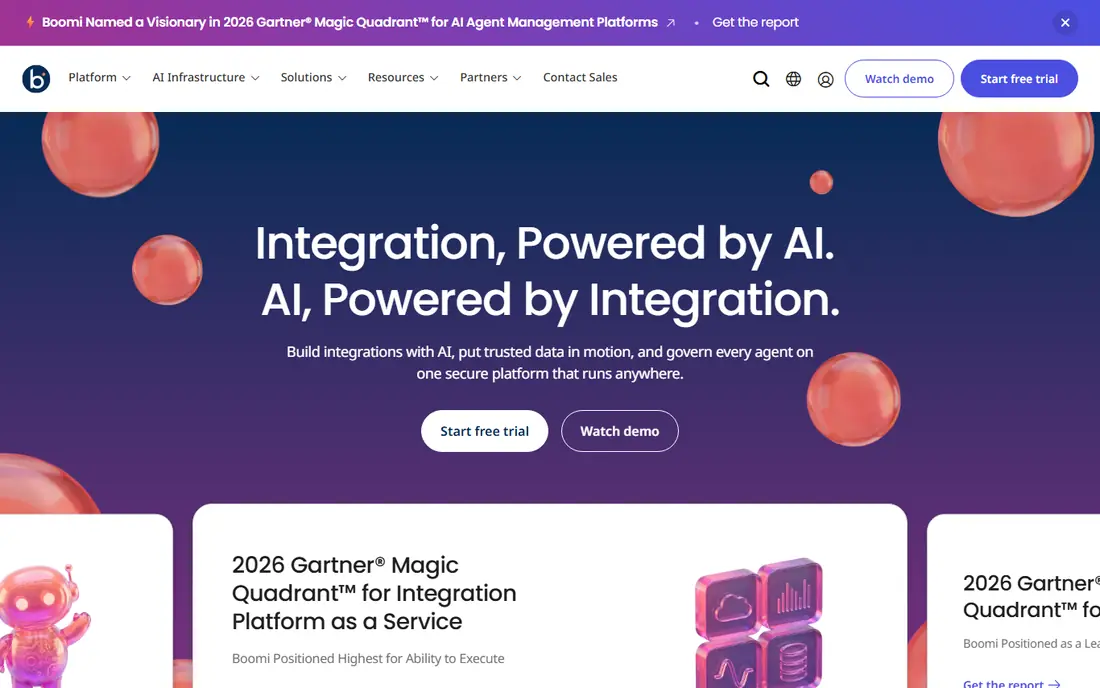
Boomi is the broadest direct replacement for MuleSoft in many enterprises. It connects cloud apps, on-prem systems and databases, manages APIs, and runs flows through lightweight runtimes that can sit in the cloud or on site. That hybrid reach matters for businesses with older systems beside new cloud apps.
The catch is total cost. A low pay-as-you-go entry price covers small use, but enterprise volumes, connectors and environments move pricing to a negotiated contract. Complex flows also need trained builders, so teams should budget for skills as well as licences.
We would pick Boomi first for a broad enterprise estate that needs many connectors and hybrid deployment. Smaller teams should check whether its entry tier covers their real volume before committing.
- Wide connector library
- Hybrid cloud and on-prem runtimes
- API management built in
- Full enterprise pricing is quote-based
- Learning curve for complex flows

Workato suits organisations where business teams build many of their own integrations. Recipes connect apps through a visual builder, with triggers, actions and logic that non-developers can follow. An on-prem agent extends that reach to private systems behind a firewall.
The trade-off is scale economics. Each recipe and its executions consume credits or capacity, so a large recipe library can become costly. API lifecycle governance is also less deep than MuleSoft's, which matters for a large API programme with strict versioning.
We would pick Workato for departmental automation and app-to-app flows where speed matters. A central API programme with heavy governance should compare Boomi and Informatica as well.
- Recipe builder usable by business teams
- Strong app connectors
- On-prem agent for private systems
- Recipe and credit costs add up at scale
- API governance is thinner than MuleSoft

SnapLogic builds integration as visual pipelines, called Snaps, that move data between apps, databases and cloud platforms. It suits teams that need both app integration and data pipelines in one tool, rather than buying separate products for each job. AI assistance for pipeline building is also part of its current pitch.
The limit is pricing clarity. There is no simple public list price for enterprise use, so budgeting needs a vendor quote based on package, endpoints and add-ons. Teams should also scope app and data workloads separately, since they price and scale differently.
We would pick SnapLogic for a team that mixes app flows and data pipelines. Get a written quote for your exact endpoints and volumes before comparing it with Boomi or Workato.
- Visual pipelines for apps and data
- Many prebuilt connectors
- Scales for data workloads
- Pricing is quote-only
- Data and app use cases need separate scoping
Informatica is the data-first choice in this list. Beyond app integration, it offers data quality, catalog and governance tools that matter when the same data feeds analytics, reporting and operations. That breadth suits large estates where data trust is as important as moving records.
The trade-off is complexity and pricing. Consumption units depend on which services and volumes you use, and the full suite needs careful planning to avoid paying for services you do not need. Smaller teams may find the platform larger than their integration job requires.
We would pick Informatica for a data-heavy enterprise where quality and governance sit beside integration. App-only teams will usually find Boomi or Workato simpler.
- Strong data integration and quality tools
- Broad enterprise connectors
- Cloud data management suite
- Pricing is consumption-based and quote-led
- Platform breadth needs skilled planning
Azure Logic Apps fits teams already running on Azure. Workflows connect Microsoft services, databases and third-party apps, with a consumption model that charges per action rather than a large fixed licence. That model suits variable workloads and Azure-native architectures.
The limit is portability. Logic Apps is at its best inside Azure, and teams that need a neutral, multi-cloud integration layer may prefer Boomi or SnapLogic. Very large or complex workflows also need careful design to stay readable and testable.
We would pick Azure Logic Apps for an Azure-first team that wants integration without a separate iPaaS contract. Multi-cloud teams should weigh portability against that convenience.
- Native Azure integration
- Pay per action model
- Many Microsoft and third-party connectors
- Best value inside Azure
- Complex workflows can become hard to manage
Oracle Integration is the natural replacement for teams running Oracle applications and databases. Prebuilt adapters and recipes cover common Oracle flows, and hybrid agents reach on-prem Oracle systems from the cloud. That fit can shorten a migration from MuleSoft for Oracle-heavy estates.
The catch is scope. Pricing is based on hourly message capacity, and the value drops outside Oracle estates where connectors and recipes are less deep. Teams with a mixed estate should compare a neutral iPaaS before standardising here.
We would pick Oracle Integration for an Oracle-first business that wants cloud integration close to its Oracle apps. Mixed estates should test connector coverage for non-Oracle systems first.
- Strong Oracle app and database connectors
- Prebuilt recipes for Oracle apps
- Hybrid agents
- Pricing is hourly and usage-based
- Best fit is inside an Oracle estate
SAP Integration Suite is the SAP-native path for replacing ESB work. It offers prebuilt integration content for SAP apps, API management, event handling and data mapping in one suite. For a business already standardised on SAP, that content can save months of custom mapping.
The trade-off is cost and fit. Entry pricing is high for a small team, and the suite is most valuable inside an SAP estate. Non-SAP apps can connect, but they are not the centre of the product in the way they are for Boomi or Workato.
We would pick SAP Integration Suite for an SAP-first enterprise. Smaller or mixed teams should compare Boomi, Workato or Jitterbit on total cost and connector fit.
- Native SAP integration content
- API management and event tools
- Prebuilt SAP flows
- Entry pricing is high for small teams
- Best value inside an SAP estate
Jitterbit suits mid-market teams that need real integration without a large enterprise programme. It connects apps, databases and EDI partners, with editions priced by connections and agents. That scoping is easier to understand than a consumption model for many smaller IT teams.
The limit is enterprise depth. Very large API programmes with strict governance, or data-heavy estates needing catalog and quality tools, may outgrow Jitterbit. Pricing is also quote-based, so teams should get edition pricing for their exact endpoint count.
We would pick Jitterbit for a mid-market team moving off MuleSoft with a clear, bounded set of apps and partners. Large enterprises should compare Boomi and Informatica for governance and scale.
- Strong mid-market app connectors
- EDI and B2B options
- Simpler scoping than large suites
- Pricing is quote-based by edition
- Large enterprise API governance is thinner
How we picked these
We compared official product and pricing pages, plus current iPaaS roundups that describe pricing models and entry prices. We kept only platforms that are live in October 2026 and that handle enterprise app, API or data integration as a core job. We excluded Pipedream Workflows as a standalone enterprise pick, since it is in maintenance mode with no new signups and a planned shutdown, and we used See website where pricing is quote-based or consumption-based.
What to check before you choose
Start with your estate, not a feature list. Count the apps, databases and partners you must connect, the daily message volume, and which systems sit on premises. Those three numbers decide which pricing model is cheapest and which connector library matters most.
Next, check governance needs. A small set of app flows needs less API management than a large API programme with versioning, security policies and developer portals. Do not pay for governance depth you will not use, and do not skip it if your API programme will grow.
Finally, run a pilot on your hardest flow, not your easiest. Include an on-prem system, an error case and a retry, and measure build time, failure handling and support response. A pilot on a simple cloud-to-cloud flow hides the problems that decide a real migration.
Frequently asked questions
What is the best MuleSoft ESB alternative?
Boomi is the broadest enterprise replacement, Workato suits business-led automation, and SAP, Oracle or Azure tools suit their own vendor estates. The best choice depends on your apps, volume and governance needs, not on a single ranking.
Is there a free MuleSoft ESB alternative?
Enterprise iPaaS tools here offer trials rather than permanent free enterprise plans. Open source integration tools exist for smaller projects, but they need self-hosting and engineering time, so they suit a different budget model than a managed iPaaS.
How much does an enterprise integration platform cost?
Costs vary widely by endpoints, message volume, connectors and edition. Boomi lists a pay-as-you-go entry from $99 per month plus usage, while most enterprise editions are quote-based and run far higher for large estates.
Can I migrate MuleSoft flows to another platform?
Yes, but migration is not automatic. Map each flow, its error handling and its data transformations, rebuild in the new tool, and test with real data in staging. Allow extra time for on-prem connections, EDI partners and API governance rules.
Do I need an ESB or just an iPaaS?
Modern iPaaS tools cover most ESB use cases for cloud and hybrid estates, with API management and event handling included. A classic on-prem ESB still suits some legacy estates, but most new projects should compare iPaaS options first.
Which alternative is best for a mid-market company?
Jitterbit and Workato are strong mid-market options, with clearer scoping than large suites. Compare endpoint counts, recipe or credit costs, and support for your specific apps before choosing between them.
Sources
- https://boomi.com/platform/pricing/
- https://www.workato.com/pricing
- https://www.snaplogic.com
- https://www.informatica.com
- https://azure.microsoft.com/en-us/products/logic-apps/
- https://www.oracle.com/integration/
- https://www.sap.com/products/technology-platform/integration-suite.html
- https://www.jitterbit.com
See where you really rank - block by block
ProMapRanker scans Google Maps across a grid of your service area. Simple monthly plans from $19, white-label on every plan.
Start freeKeep reading
 zyte alternatives
Best Zyte Alternatives in 2026
These zyte alternatives cover managed scraping APIs, proxy networks and no code tools for lawful collection from your own or consented sources only in 2026.
Read → zerto alternatives
Best Zerto Alternatives in 2026
Compare the best zerto alternatives for disaster recovery and replication, with recovery targets, cloud options and honest trade-offs for teams in 2026.
Read → zerofox alternatives
Best ZeroFox Alternatives in 2026
We compared 9 zerofox alternatives for brand protection, phishing takedowns, dark web monitoring, and social impersonation, with clear coverage notes.
Read →