 ProMapRanker
MuleSoft Alternatives in 2026

Key takeaways
- Boomi is the only enterprise iPaaS here with a published pay as you go entry price, at $99 per month plus usage.
- Workato, Jitterbit, SnapLogic, Tray.ai, and Celigo mostly price by quote, so expect a sales cycle for enterprise use.
- Zapier and Make suit smaller automation needs, while n8n suits technical teams that want self hosting.
- API management, governance, and on premises access separate true MuleSoft replacements from simple workflow tools.
- Count endpoints, message volume, and integration complexity before you ask for a quote, because those drive the real price.
Quick comparison
| Pick | Great for | Pricing starts at | Free tier | |
|---|---|---|---|---|
 Boomi | Hybrid enterprise integration | $99 per month | Free trial | Visit |
 Workato | Business led enterprise automation | See website | Free trial | Visit |
 Zapier | Simple no code app automation | $19.99 per month | Yes | Visit |
 Make | Visual automation on a budget | $9 per month | Yes | Visit |
 Jitterbit | Mid market hybrid integration | See website | Free trial | Visit |
 SnapLogic | AI assisted data and app pipelines | See website | Free trial | Visit |
 Tray.ai | AI led enterprise automation | See website | Free trial | Visit |
 Celigo | NetSuite and e-commerce integration | See website | Free trial | Visit |
 n8n | Technical teams wanting self hosting | See website | Yes | Visit |
The best MuleSoft alternatives
We compared alternatives to MuleSoft on API management, connectors, governance, hybrid access, and pricing, and we kept only tools that are live in October 2026.
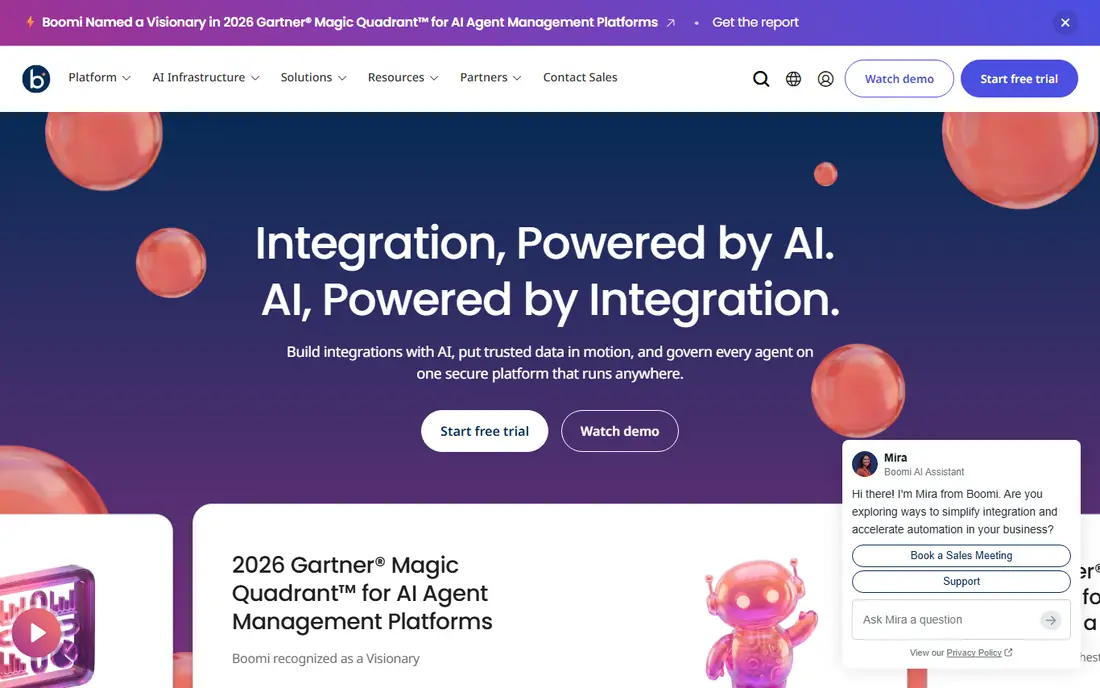
Boomi is the closest enterprise replacement for many MuleSoft users, because it covers cloud and on premises integration, API management, and data movement in one platform. Its Atom runtimes can run where your systems live, which matters when an ERP or database cannot move to the cloud. A broad connector library also shortens the time to link common business apps.
The published pay as you go price, $99 per month plus a per message fee, makes Boomi easier to test than most enterprise rivals. That entry price does not cover a large enterprise rollout, and larger tiers are quoted. For a team that needs hybrid integration with a clear starting price, Boomi is our first enterprise pick.
- Published pay as you go entry price
- Hybrid runtimes for cloud and on premises systems
- Broad connector library
- Usage fees add to the base price
- Enterprise tiers still need a quote
- Learning curve for complex integrations
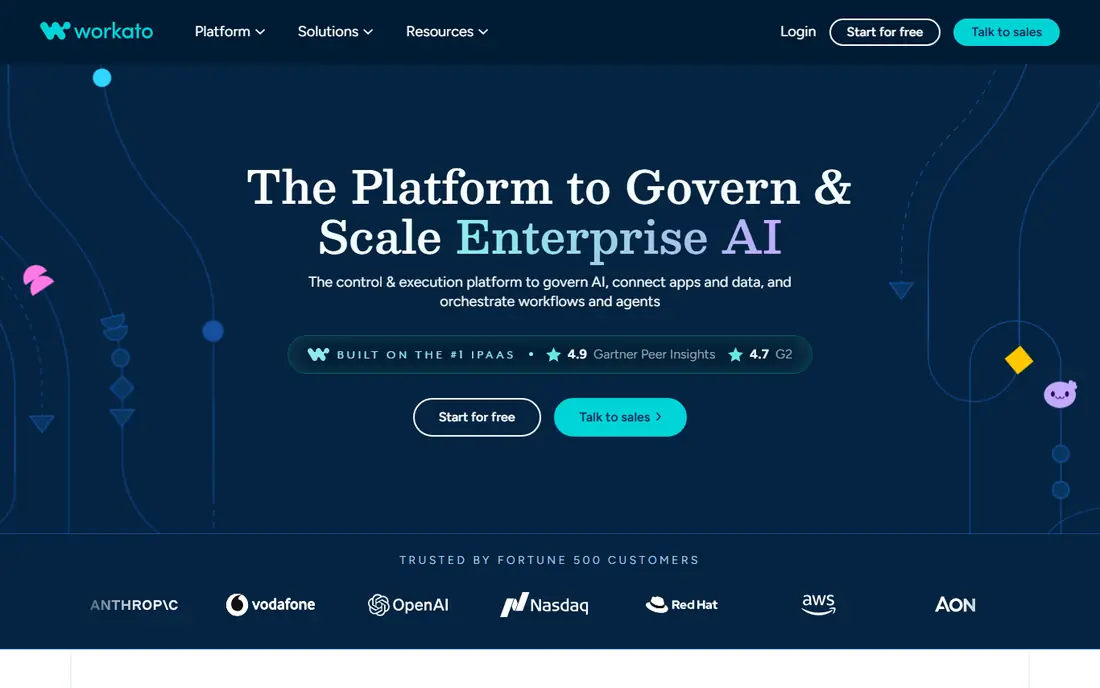
Workato suits organisations where business teams want to build automations, but IT still needs control over security, access, and change. Recipes link apps, data, and workflows, and governance tools let IT set who can build, publish, and change them. That mix is why Workato often replaces MuleSoft in firms where speed for business teams matters as much as central control.
Pricing is the main barrier to a quick comparison. Most enterprise use is quoted, and a small self service credit option does not reflect a full deployment. Workato is also more than a small team needs for a handful of simple flows. If your goal is business led automation at enterprise scale, it is a strong alternative, but budget for a sales and scoping process.
- Business users can build recipes with IT governance
- Strong app connector library
- Agent and automation tools for larger teams
- Pricing by quote for most enterprise use
- Smaller automation needs may be overkill
- Recipe complexity grows with scale
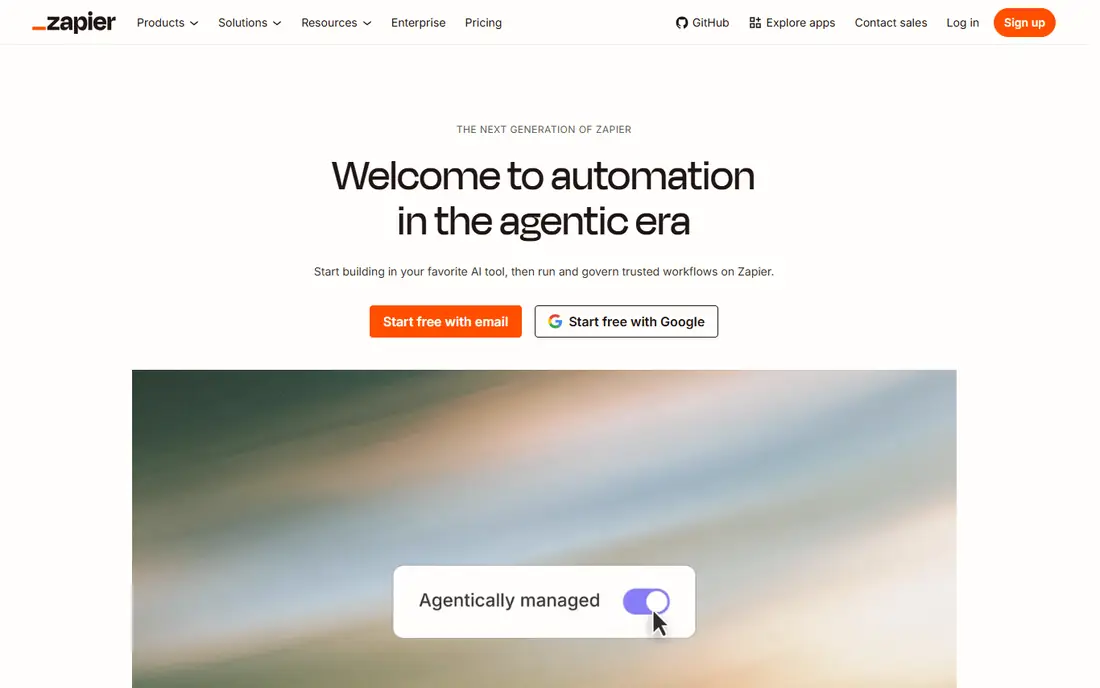
Zapier is not a like for like MuleSoft replacement, but it is the right alternative when the real need is simple app automation. A team can link a form to a CRM, a spreadsheet to a chat tool, or an order system to email in minutes, without code. The free plan covers basic flows, and paid plans start at $19.99 per month on annual billing.
The limits appear at scale. Task pricing climbs with volume, and a web of many small Zaps can be hard to govern compared with a central integration platform. Zapier also lacks the deep API management and hybrid runtime features that MuleSoft buyers often need. Use it when you need fast, simple automation, and look to Boomi or Workato when you need enterprise integration control.
- Widest app catalogue for simple automation
- Very easy to learn
- Free plan for basic flows
- Task based pricing rises with volume
- Not a full API management platform
- Complex integrations can become hard to manage
Make suits small and mid size teams that want more visual control than Zapier, at a lower price. Scenarios show data moving step by step, with functions, iterators, and HTTP modules for custom APIs. The free plan lets a team test real flows, and paid plans start at $9 per month on annual billing, which is low for this category.
Credit pricing is the watch point. A scenario that runs often, or that processes many records, can use credits faster than a simple task count suggests. Make also lacks the full governance, API management, and hybrid depth of Boomi or Workato. For visual automation on a budget, it is a strong pick. For a regulated enterprise estate, it is a complement, not a replacement.
- Visual scenario builder with clear data flow
- Low paid starting price
- Free plan for testing
- Credit based pricing needs care at volume
- Not a full enterprise iPaaS
- Support and governance are thinner than enterprise rivals
Jitterbit fits mid market firms that need hybrid integration without a full enterprise platform price, though pricing is still quoted. It covers app integration, API publishing, and data movement, with agents for on premises systems. Endpoint based pricing can also be easier to predict than message based pricing when you have a stable set of systems.
The trade off is effort. Jitterbit is a serious integration platform, not a simple automation app, so teams should expect training and implementation time. Smaller firms with only a few cloud flows may find Zapier or Make faster. For a mid market firm linking ERP, CRM, and e-commerce systems, Jitterbit is a credible MuleSoft alternative.
- Hybrid integration with API management
- Endpoint based pricing model
- Strong for mid market ERP and CRM links
- Pricing by quote
- Implementation can take time
- Interface depth needs training
SnapLogic suits teams that build many data and app pipelines and want AI help to build them faster. Its visual Snaps connect apps, databases, and files, and AI assistance can suggest mappings and pipeline steps. That speed matters when a data team must link many sources, not just two apps.
Pricing is quoted by package, with endpoints and add ons affecting cost, so a clear scope is needed before you can compare it with Boomi or Workato. SnapLogic is also enterprise focused, which may be heavy for a small team. For data heavy integration work, especially where pipeline volume is high, it is a strong alternative.
- Visual pipeline building with AI assistance
- Strong data and app integration
- Package model allows many pipelines
- Pricing by quote
- Enterprise focus may be heavy for small teams
- Some advanced features need higher packages
Tray.ai, formerly Tray.io, suits SaaS heavy teams that want automation plus AI agents in one platform. You can build workflows across many SaaS apps, add agent steps for tasks that need judgement, and build custom connectors where a standard one does not exist. That mix fits firms whose systems are mostly cloud based and whose processes change often.
Pricing is quoted, and agent use needs governance, because an agent that acts across systems needs clear limits and audit trails. Tray.ai is also more than a small team needs for simple flows. For an enterprise team that wants AI led automation across SaaS, it is a modern alternative to MuleSoft, with a different focus on agents rather than API led design alone.
- Automation plus AI agent tools
- Connector builder for custom apps
- Strong for SaaS heavy teams
- Pricing by quote
- Agent features need careful governance
- Smaller teams may not need its depth
Celigo is the specialist pick for NetSuite and e-commerce stacks. Prebuilt flows link NetSuite to Shopify, Salesforce, Amazon, and other common systems, which can shorten implementation compared with building each flow from scratch. Its flat rate model, based on endpoints and flows, also helps mid market buyers predict cost once scope is set.
Outside NetSuite and e-commerce, Celigo is less of a general replacement. Firms with a broad mix of ERP, HR, and custom systems may get more from Boomi or Workato. If NetSuite is your core system, though, Celigo often delivers faster value than a general platform, because its flows are built for that ecosystem.
- Strong prebuilt flows for NetSuite and e-commerce
- Flat rate model based on endpoints and flows
- Good mid market fit
- Pricing by quote
- Best value inside its core ecosystems
- Less general than Boomi or Workato for other stacks
n8n is the technical pick for teams that want control and low licence cost. The Community Edition is free to self host, and workflows can mix no code nodes with code, HTTP requests, and AI agent steps. That flexibility suits developers and technical operations teams that want to own their integration runtime and data flow.
Self hosting is also the catch. Your team owns updates, security, backups, and scaling, and cloud pricing is based on executions rather than a flat fee. For a team with engineering skill, n8n can replace many MuleSoft workflows at far lower licence cost. For a non technical team, a hosted platform with vendor support will be safer.
- Free self hosted Community Edition
- Code friendly nodes for JavaScript and Python
- AI agent nodes and HTTP tools
- Self hosting needs upkeep and security care
- Cloud pricing varies by executions
- Support is thinner on free self hosted use
How we picked these
We compared official product and pricing pages, and public iPaaS comparisons, and we kept only tools that are live in October 2026 and that handle app, API, or data integration at more than a simple one step level. We included enterprise iPaaS, specialist, and low cost options, because MuleSoft buyers range from large enterprises to small technical teams. Where pricing is quoted, we wrote See website rather than inventing a figure.
What to check before you switch
Map your current MuleSoft estate first. List APIs, integrations, endpoints, on premises systems, and message volumes, because those decide whether a simpler tool can replace it or whether you need a full iPaaS.
Check API management and governance
Ask how each tool publishes, secures, versions, and monitors APIs, and who can change a production flow. A workflow tool without API governance may work for automation but fail as a MuleSoft replacement.
Price by volume, not just by seat
Enterprise iPaaS pricing depends on messages, endpoints, executions, or credits, not just users. Model a month of real volume on each shortlisted tool before you compare headline prices.
Test hybrid and on premises access
If any system lives on premises, test that connection early. A cloud only tool that cannot reach a private ERP or database will not replace MuleSoft, no matter how good its cloud connectors look.
Frequently asked questions
What are the best MuleSoft alternatives?
Boomi and Workato are the leading enterprise alternatives, with Jitterbit, SnapLogic, Tray.ai, and Celigo strong for specific stacks. Zapier, Make, and n8n suit smaller or more technical needs, but they do not offer the same full API management depth as Boomi or Workato.
Is there a free alternative to MuleSoft?
Yes, in part. n8n Community Edition is free to self host, and Zapier and Make offer free plans for simple flows. A free plan will not replace a full enterprise MuleSoft estate, but it can cover small automation needs or a pilot.
Which alternative is cheapest for a small team?
Make, at $9 per month, and Zapier, with a free plan and paid plans from $19.99 per month, are the cheapest hosted options here. n8n self hosted can be cheaper still on licence cost, but it needs engineering time for hosting and upkeep.
Can these tools handle on premises systems?
Boomi, Jitterbit, and n8n, with self hosting or agents, can reach on premises systems, while cloud only workflow tools may need a gateway or a different approach. Test on premises access early, because it is a common reason a migration stalls.
Do I need API management if I only automate apps?
No, not always. If you only link cloud apps with simple flows, Zapier or Make may be enough. API management matters when you publish APIs for other teams or partners, need versioning and security controls, or must govern many integrations centrally.
How hard is it to migrate from MuleSoft?
It depends on integration count and complexity. Simple flows can move in days, while API led estates with many endpoints, transformations, and on premises links can take months. Start with one low risk integration, prove the new tool, then move in groups by system.
Sources
See where you really rank - block by block
ProMapRanker scans Google Maps across a grid of your service area. Simple monthly plans from $19, white-label on every plan.
Start freeKeep reading
 zscaler alternatives
Best Zscaler Alternatives in 2026
Looking for zscaler alternatives? We compare 9 SASE and zero trust platforms on architecture, data protection, pricing, and fit for your network and team.
Read → zapier alternatives free
Best Zapier Alternatives Free in 2026
Nine automation tools for zapier alternatives free in 2026, all with genuinely free tiers, plus free plan limits, starting prices and upgrade paths explained.
Read → which platform is best for online reputation
Which Platform Is Best for Online Reputation in 2026
Wondering which platform is best for online reputation? We compare 8 review, listing, and response tools for small and multi-location businesses and agencies.
Read →