 ProMapRanker
Best Moosend Alternatives in 2026

Key takeaways
- MailerLite and Brevo are the best value starting points for small lists, with generous free plans and low entry prices.
- Mailchimp suits teams that want the largest template and integration library, even if pricing rises with list size.
- Klaviyo and Omnisend suit online stores, because their ecommerce flows and segmentation tie email to revenue.
- ActiveCampaign suits teams that need deep automation and CRM features, not just newsletters.
- Price every tool at your real contact count, because list-size pricing changes the ranking quickly.
Quick comparison
| Pick | Great for | Pricing starts at | Free tier | |
|---|---|---|---|---|
 Mailchimp | Widest template library | $13 per month | Yes | Visit |
 Brevo | Low-cost email plus SMS | $9 per month | Yes | Visit |
 MailerLite | Simple small business email | $12 per month | Yes | Visit |
 Klaviyo | Ecommerce email and SMS | $20 per month | Yes | Visit |
 ActiveCampaign | Deep automation and CRM | $15 per month | Free trial | Visit |
 GetResponse | Email plus webinars and funnels | $19 per month | Yes | Visit |
 Constant Contact | Local businesses and events | $12 per month | Free trial | Visit |
 Omnisend | Ecommerce email and SMS | $16 per month | Yes | Visit |
 Kit | Creators and newsletters | $25 per month | Yes | Visit |
The best moosend alternatives
We compared these tools on pricing at small list sizes, free plans, automation, templates, ecommerce features, and deliverability basics. Our pick for most small businesses is MailerLite, and our pick for stores is Klaviyo or Omnisend.
Mailchimp remains the most familiar email tool for small businesses, and familiarity has practical value. Staff, freelancers, and agencies often already know it, and its template library and integration list cover most common needs without extra work. Automation, landing pages, and basic segmentation are solid for newsletters, announcements, and simple customer journeys. For a team that wants a safe, well-known choice, Mailchimp is easy to justify.
The catch is pricing at scale. Costs rise as your contact list grows, and billing rules around unsubscribed contacts have drawn criticism, so check your billable contact count before you compare headline prices. Advanced automation and testing also sit on higher tiers. If you value the largest ecosystem and do not mind paying more as you grow, Mailchimp fits. If budget is tight, MailerLite or Brevo may save money.
- Huge template and integration library
- Useful automation
- Familiar interface
- Price rises with contacts
- Unsubscribed contacts can count toward billing
- Advanced features need higher tiers
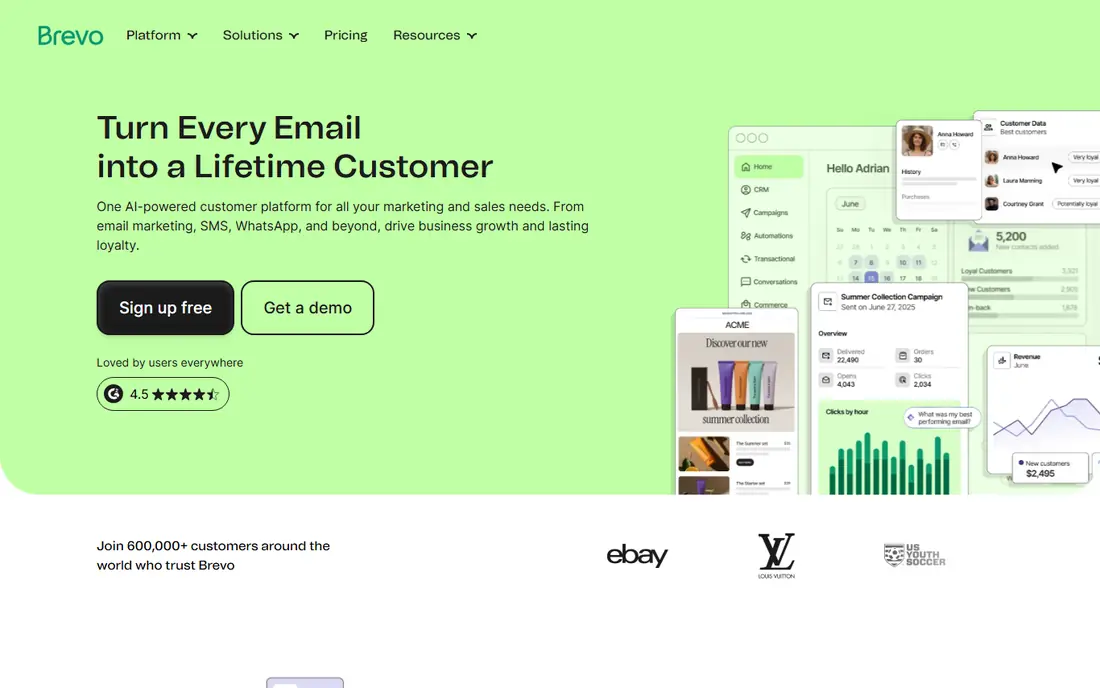
Brevo prices by email volume rather than by contact count, which changes the math for teams with large lists that send infrequently. The free plan allows unlimited contacts with a daily email limit, which is generous for a new list. Built-in CRM and SMS options also help small businesses run email, text, and contact management without buying three tools. For a budget-conscious team, Brevo is one of the best value picks on this list.
The tradeoff is volume and polish. If you send often to a large list, you will need a higher volume tier, and the design tools feel less refined than Mailchimp or MailerLite. Advanced automation also requires higher plans. Brevo fits teams that send a few campaigns per month and want SMS in the same account. High-frequency senders should model monthly email volume carefully before choosing it.
- Prices by email volume
- Unlimited contacts on free plan
- SMS and CRM included
- Email volume limits apply
- Design tools are less polished
- Advanced automation needs higher tiers
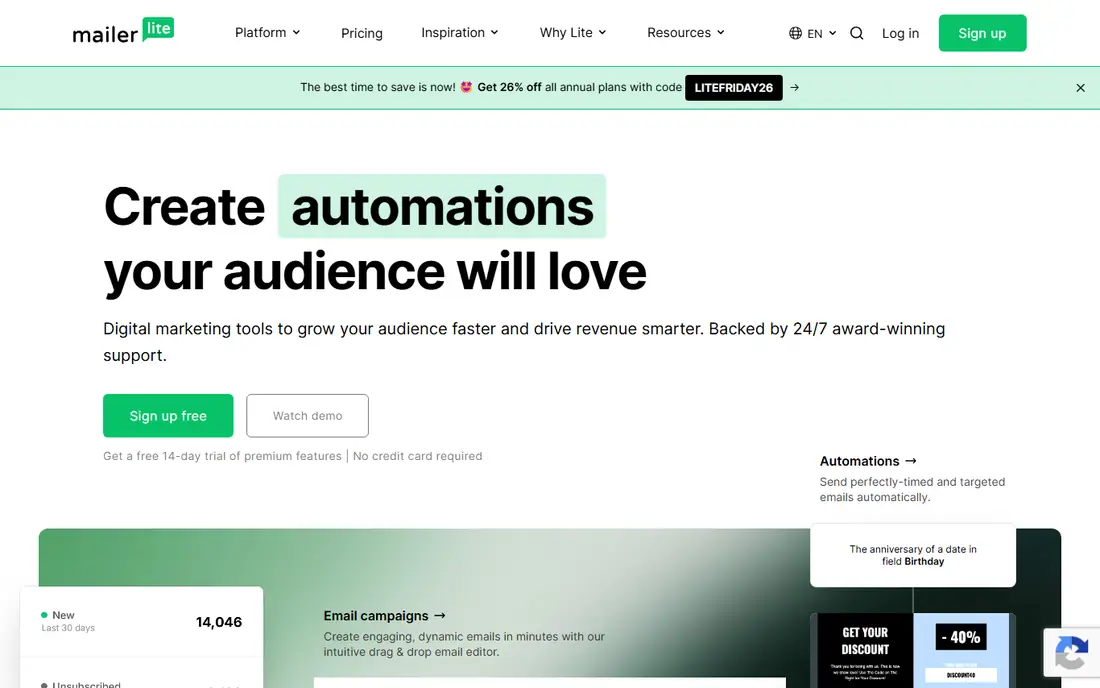
MailerLite is our pick for most small businesses because it balances price, simplicity, and features well. The editor is clean, landing pages and a simple site builder are included, and automation covers welcome series, basic triggers, and segmentation without a steep learning curve. At small list sizes, pricing is competitive, and the free plan lets you test real campaigns before paying. For newsletters, announcements, and simple funnels, MailerLite does the job with little fuss.
The catch is depth and limits. Automation is not as deep as ActiveCampaign, and the free plan caps contacts and monthly emails, so growing lists will need a paid plan sooner than with Brevo. New accounts also go through an approval process, which can delay a first send. If you want simple, affordable email that your team will actually use, MailerLite is a strong default. If you need complex branching logic, look at ActiveCampaign.
- Clean editor
- Landing pages and sites included
- Good value at small list sizes
- Free plan limits contacts
- Automation is less deep than ActiveCampaign
- Approval process can delay first sends
Klaviyo is built for online stores, and that focus shows in its flows and segmentation. Abandoned cart, post-purchase, winback, and browse abandonment flows are central, not add-ons, and segmentation can target purchase history, predicted value, and engagement. Shopify integration is deep, which helps stores sync products, orders, and customer data without manual exports. For a store that earns real revenue from email, Klaviyo often pays for itself through better-targeted flows.
The tradeoff is cost and complexity. Pricing rises with emailable profiles, and the platform can feel heavy for a team that only sends a monthly newsletter. New users may need time to set up flows and segments well, because a poorly built flow can annoy customers. If you run an online store, Klaviyo is a top pick. If you run a service business with a simple list, MailerLite or Brevo will be simpler and cheaper.
- Strong ecommerce segmentation
- Revenue-focused flows
- Deep Shopify integration
- Price rises with profiles
- Learning curve for new users
- Can feel heavy for simple newsletters
ActiveCampaign suits teams that think in journeys rather than in single campaigns. Its visual automation builder supports branching logic, scoring, tagging, and CRM actions in one flow, which helps sales and marketing teams work from the same customer view. Segmentation is deep, and the built-in CRM means small sales teams may not need a separate CRM at first. For a growing business with a real funnel, that depth is a genuine advantage.
The catch is complexity and cost. There is no permanent free plan, only a trial, and new users need time to learn the builder and set up automations well. Pricing also rises with contacts and with higher tiers. If your email program is a monthly newsletter, ActiveCampaign is more than you need. If your program involves lead scoring, multi-step nurture, and sales follow-up, ActiveCampaign earns its place.
- Powerful visual automation
- Built-in CRM
- Strong segmentation and scoring
- No free plan
- Learning curve is real
- Price rises with contacts and features
GetResponse stands out because it bundles webinars, funnels, and landing pages with email, which suits course creators, coaches, and businesses that sell through live sessions. You can run a webinar, capture leads, and follow up by email without stitching together separate tools. Automation templates help new users build welcome and nurture flows faster, and landing pages cover lead capture without a separate builder.
The tradeoff is price and clutter. The entry price is higher than MailerLite or Brevo, and the interface can feel busy because it covers so many tools. Webinar attendee limits also vary by plan, so check that detail if webinars are central to your model. If webinars and funnels matter to you, GetResponse is a strong all-in-one pick. If you only need email, a simpler tool will be cheaper.
- Webinars built in
- Funnels and landing pages
- Useful automation templates
- Entry price is higher than some rivals
- Interface can feel busy
- Webinar limits vary by plan
Constant Contact is a good fit for local businesses, nonprofits, and event organizers who want simple, reliable email without a learning curve. Templates are straightforward, event registration and promotion tools are built in, and support is geared toward non-technical users. For a restaurant, salon, church, or local shop that sends newsletters and event invites, Constant Contact covers the core job well.
The catch is automation depth. It is more basic than ActiveCampaign or Klaviyo, and there is no permanent free plan, only a trial. Pricing also rises with list size, so larger lists should compare it with Brevo or MailerLite. If simplicity and event tools matter most, Constant Contact is a sensible pick. If you need deep automation, choose ActiveCampaign instead.
- Simple templates
- Event tools
- Useful support for non-technical users
- No permanent free plan
- Automation is basic
- Price rises with contacts
Omnisend is built for online stores that want email, SMS, and push notifications in one place. Prebuilt flows for welcome, abandoned cart, and post-purchase help stores get started quickly, and the combination of email and SMS can lift recovery rates for carts and orders. Shopify and other ecommerce integrations keep product and order data in sync. For a store that wants multichannel messaging without a separate SMS tool, Omnisend is a strong alternative to Klaviyo.
The tradeoff is cost structure. The free plan caps contacts and emails, and SMS pricing adds to the monthly total, so model both channels before you commit. Non-ecommerce businesses will find many features less relevant. If you run a store and want email plus SMS in one account, Omnisend is worth a trial. If you run a store and need the deepest segmentation, Klaviyo may still lead.
- Email plus SMS and push
- Strong ecommerce flows
- Useful prebuilt automation
- Free plan limits contacts
- SMS costs add up
- Less suited to non-ecommerce lists
Kit, formerly ConvertKit, is built for creators, bloggers, and newsletter writers who sell products or memberships by email. Its workflows use tags and visual sequences that fit creator funnels, such as a free resource followed by a paid offer. The free plan covers a useful number of subscribers for a new creator, and the focus on deliverability helps newsletters reach inboxes. For a creator who lives by email, Kit feels purpose-built rather than adapted from a general marketing suite.
The catch is price and design. Paid plans start higher than MailerLite or Brevo, and design templates are fewer, because Kit favors simple text-style emails over heavily designed layouts. Ecommerce stores with complex product flows may prefer Klaviyo or Omnisend. If you are a creator building an audience and selling digital products, Kit is a strong pick. If you need low-cost general email, MailerLite may save money.
- Simple creator-focused workflows
- Visual automation
- Good deliverability focus
- Higher entry price for paid plans
- Fewer design templates
- Less suited to complex ecommerce
How we picked these
We compared official pricing pages, free plan terms, automation features, and public reviews for each tool, and we checked pricing at small list sizes rather than headline rates alone. We favored tools that still work in October 2026, that publish clear pricing, and that fit email marketing rather than cold outreach alone. We left out tools that were discontinued or that lacked a real email campaign and automation workflow.
How to choose an email marketing tool
Start with your list size and sending frequency, because those two numbers decide price more than any feature list. A large list that sends rarely favors Brevo, while a small list that sends often favors MailerLite or Mailchimp. Next, decide if you need ecommerce flows, deep automation, or just newsletters. Stores should shortlist Klaviyo and Omnisend, automation-heavy teams should shortlist ActiveCampaign, and simple newsletter teams should shortlist MailerLite and Constant Contact.
Then test deliverability and ease of use with a real campaign. Import a clean list, set up authentication, send to a small segment first, and check inbox placement and engagement. Ask how unsubscribed contacts are billed, what happens when you exceed a tier, and how easy it is to export your list if you leave. A tool that locks your data in or bills you for dead contacts is a poor long-term choice, even if the first month looks cheap.
Migration checklist
Export your list with tags and segments intact, map your key automations before you cancel the old tool, and warm up your sending domain if you change providers. Send a welcome or re-engagement message to active subscribers first, and suppress inactive contacts rather than mailing a stale list. Keep your old account active until the new flows are proven, so a failed migration does not stop your email program.
Frequently asked questions
What is the best Moosend alternative for small businesses?
MailerLite is our pick for most small businesses, because it is simple, affordable at small list sizes, and includes landing pages. Brevo is a close second for teams with large lists that send infrequently. Mailchimp is a good pick if you want the largest template library and do not mind higher pricing as you grow.
What is the cheapest Moosend alternative?
Brevo offers the lowest entry price here, with a free plan that allows unlimited contacts within a daily email limit. MailerLite and Mailchimp also offer free plans, but with contact caps. Compare price at your real contact count and sending volume, because the cheapest headline plan is not always the cheapest at your size.
Is Klaviyo better than Mailchimp for online stores?
Klaviyo is usually better for stores that rely on email revenue, because its segmentation and flows tie directly to purchase behavior. Mailchimp can work for stores with simple needs, but its ecommerce flows are less deep. If email drives a large share of store revenue, Klaviyo or Omnisend will likely earn back the higher price.
Do I need SMS as well as email?
SMS helps for time-sensitive messages such as order updates, flash sales, and cart reminders, but it costs more per message and needs explicit consent. Brevo, Klaviyo, and Omnisend include SMS, which is convenient for stores. If you only send newsletters, email alone is enough, and adding SMS may annoy subscribers.
How do I switch email tools without losing subscribers?
Export your full list with tags, segments, and consent status, then import it into the new tool and verify counts before you send. Rebuild your most important automations first, such as welcome and abandoned cart flows, and test them with a small segment. Keep your old tool active until the new setup is proven, and do not mail inactive contacts from a stale list.
Sources
See where you really rank - block by block
ProMapRanker scans Google Maps across a grid of your service area. Simple monthly plans from $19, white-label on every plan.
Start freeKeep reading
 zoro.to alternatives
Best Zoro.to Alternatives in 2026
We compare the best zoro.to alternatives in 2026, listing only legal licensed anime streaming services, from Crunchyroll to free options for fans today.
Read → zip alternatives
Best Zip Alternatives in 2026
We compare the best zip alternatives for buy now, pay later in 2026, covering pay-in-4 plans, fees, spending limits, and credit reporting options today.
Read → yesware alternatives
Best Yesware Alternatives in 2026
Compare the best yesware alternatives for sales email tracking, templates, and sequences, with current pricing and honest tradeoffs for small sales teams.
Read →