 ProMapRanker
Best Mighty Networks Alternatives in 2026

Key takeaways
- Circle is our pick for most creators who want a polished paid community with courses, events and a mobile app in one place.
- Skool is the simplest option for gamified coaching groups, with a low entry price and a flat main plan.
- Discourse and Discord cost little or nothing to start, but they suit discussion and chat first, not full course businesses.
- If you already run WordPress, BuddyBoss gives you more control over your site, your data and your checkout than a hosted platform does.
- Check transaction fees as well as the monthly price, because a low plan price can still cost more once members start paying.
Quick comparison
| Pick | Great for | Pricing starts at | Free tier | |
|---|---|---|---|---|
 Circle | Polished paid communities with courses | $89 per month | Free trial | Visit |
 Skool | Simple gamified coaching groups | $9 per month | Free trial | Visit |
 Discourse | Open discussion forums | Free | Yes | Visit |
 Discord | Free real-time chat communities | Free | Yes | Visit |
 Teachable | Course-first creators | See website | Free trial | Visit |
 Podia | Solo creators selling courses | See website | Free trial | Visit |
 Kajabi | All-in-one course businesses | See website | Free trial | Visit |
 Thinkific | Educators adding community | See website | Yes | Visit |
 BuddyBoss | WordPress community owners | See website | Yes | Visit |
The best Mighty Networks alternatives
These nine options cover the main reasons people move on from Mighty Networks: price, course tools, chat, control over data, or a simpler setup. We compared official feature pages, pricing pages and app listings, and we left out any tool that did not clearly fit a community, course or membership use case.
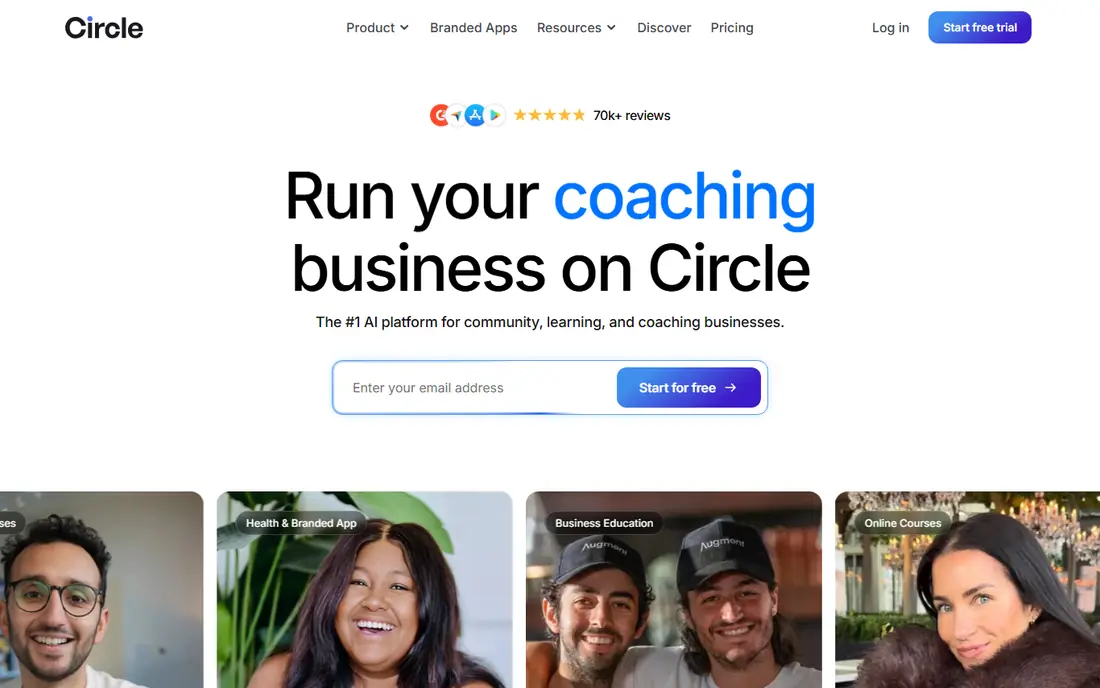
Circle feels closest to a complete replacement for Mighty Networks, and that is its main strength. You can run discussion spaces, courses, live events and paid memberships from one dashboard, and members get a familiar app experience instead of a patchwork of tools. For a creator who sells a membership and wants the community to feel like a real product, that polish matters from the first week.
The catch is cost control. The entry plan covers a lot, but custom profile fields, extra live capacity and branded email options can sit behind higher tiers or add-ons, so the headline price is not always the final price. We would still pick Circle for most paid communities, but we would map the features you actually need before you commit to a year.
- Clean member experience
- Built-in courses, events and live streams
- IOS and Android apps
- Branded apps cost extra on higher tiers
- Add-ons can raise the monthly bill
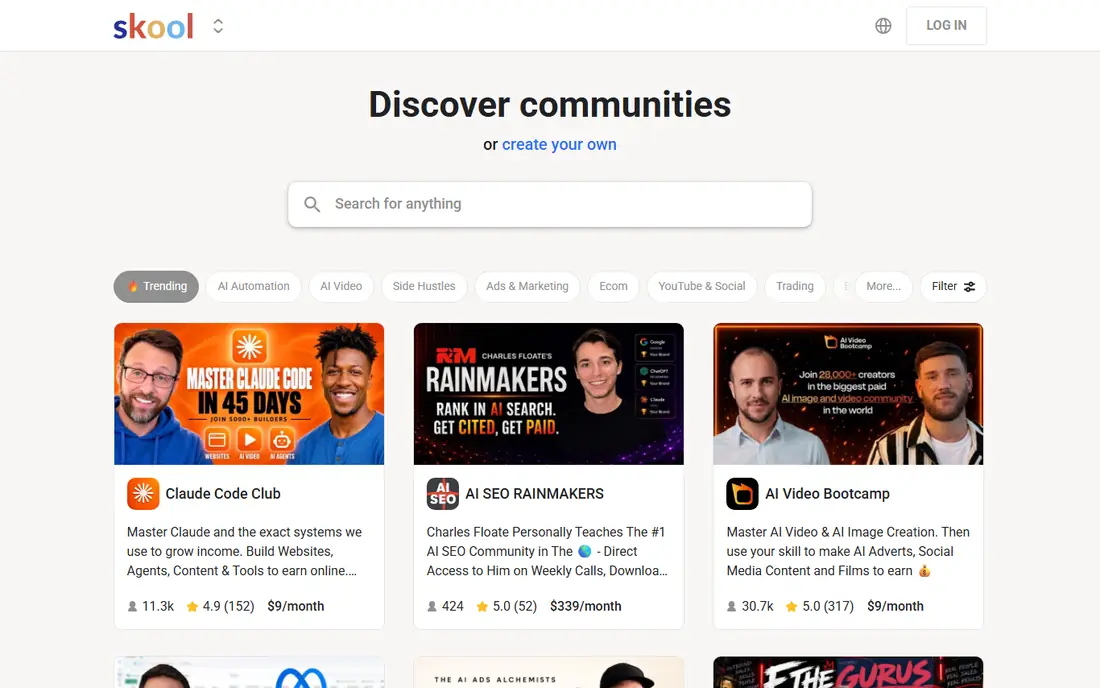
Skool wins by refusing to be complicated. A group gets a community feed, a classroom area, a calendar and a leaderboard, and members can see their progress at a glance. That game-like structure works well for coaching programs, challenges and accountability groups, where participation matters more than a fancy website.
The trade-off is depth. If you need quizzes, certificates, detailed lesson design or a fully branded site, Skool will feel thin next to Circle, Teachable or Kajabi. It is also a hosted platform, so you do not own the full stack in the way a WordPress setup allows. For a new paid group that needs momentum fast, though, few tools get you live this quickly.
- Very simple setup
- Leaderboards and levels built in
- Unlimited members on paid plans
- Limited design control
- Course tools are basic compared with dedicated course platforms
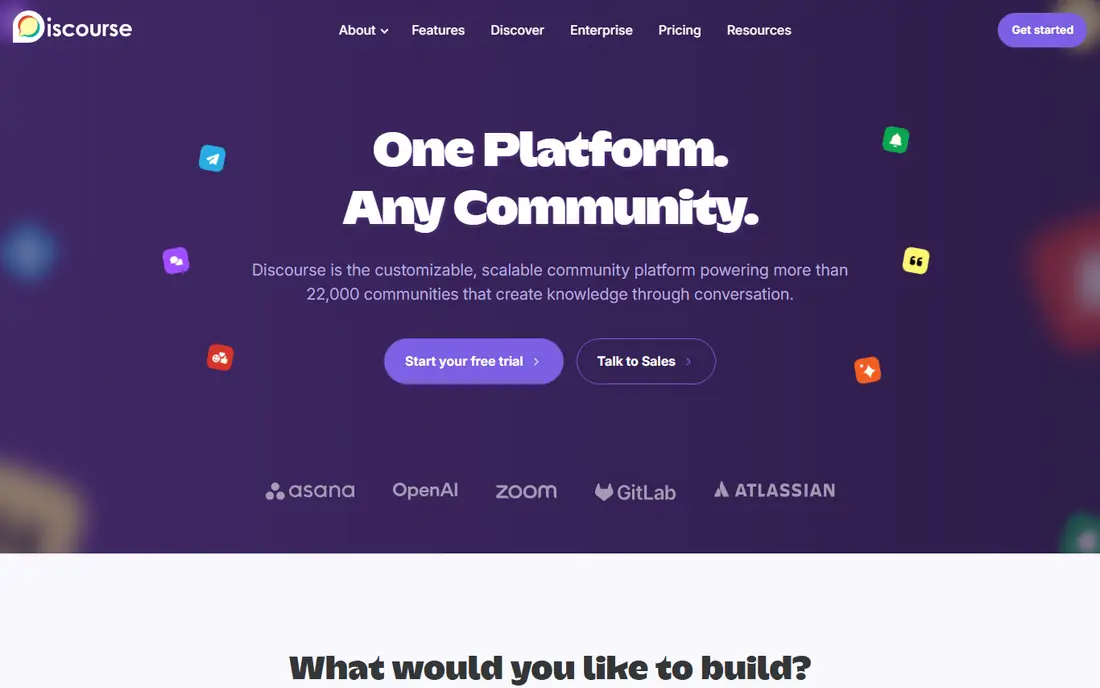
Discourse is the best choice when conversation itself is the product. Threads stay organized, search works well, and moderation tools help a team keep a large forum civil without constant manual work. Many technical and support communities use it for exactly that reason, and the open source version means you can host it yourself at no software cost.
It is not a drop-in course business. You will need separate tools for paid courses, checkout and video hosting if you want those features, and the look is more forum than modern social app. If your members mainly need to ask questions, share answers and find old discussions, Discourse is hard to beat, and it keeps your costs low while you grow.
- Open source and self-hostable
- Strong search and moderation tools
- Long-running threads stay easy to find
- Not a course platform on its own
- Hosted plans cost more than self-hosting
Discord is the lowest-friction way to gather people. Most members already have an account, voice channels make live sessions easy, and text channels keep different topics apart. For gaming groups, study groups, fan communities and casual creator chats, that familiarity is a real advantage over asking people to learn a new platform.
The weakness shows up when you try to sell structure. Long lessons, searchable course content and clean member onboarding are not Discord strengths, and you will usually pair it with a payment tool or a course site for paid access. If your community is mainly about hanging out and talking in real time, start here for free and add paid tools only when you need them.
- Free to start
- Voice, video and text in one place
- Members already know how to use it
- Chat moves fast and old posts get buried
- Paid memberships need outside tools
Teachable suits creators whose main product is a course and whose community exists to support that course. Lessons, quizzes, drip schedules and student progress are the core, and discussion spaces sit alongside the material rather than standing alone. That focus makes it a good fit if you already sell teaching and want a community as a bonus, not the other way around.
The honest catch is that a community-only business may feel boxed in. You are building inside Teachable's structure, and members join mainly through a course purchase. If your membership is the product and courses are secondary, Circle or Skool will usually give the community itself more room to breathe.
- Mature course builder
- Built-in checkout and student management
- Community features for course students
- Community tools are tied closely to courses
- Design options are limited compared with WordPress
Podia is a good middle ground for a solo creator who wants to sell a course, a download and a membership without hiring a developer. The storefront, checkout and email tools sit in the same place, which cuts down on the number of subscriptions you have to manage. For a one-person business, that simplicity is worth more than a long feature list.
Larger communities may outgrow it. Moderation, spaces and event tools are not as deep as the dedicated community platforms here, and teams that need complex permissions should test those limits early. If your plan is to stay small, focused and product-led, Podia keeps the admin work light.
- Simple all-in-one setup for courses, downloads and memberships
- No-code storefront
- Email tools included on some plans
- Fewer advanced community features than Circle
- Less flexibility for large teams
Kajabi is for creators who run a business, not just a group. Courses, landing pages, email campaigns, checkout and community live in one account, so you do not stitch five tools together or worry about whether they will keep working together. That single-system approach saves time once you are selling regularly and promoting launches.
The price is the obvious barrier, and the learning curve is real for a first-time user. A small free community does not need this much machinery, and paying for marketing tools you will not use is wasteful. For an established creator with courses, a list and a paid membership, Kajabi can replace several bills at once, which changes the math.
- Courses, marketing, email and community in one system
- Strong sales page and funnel tools
- Branded app option on higher plans
- Higher price than most options here
- More tool than a small free community needs
Thinkific is a sensible pick for teachers, trainers and small schools that want to add a community to an existing course catalog. You can start on a free plan, build lessons, and let students discuss the material without moving to a separate platform right away. That low starting cost makes it easy to test whether your students actually want a community at all.
As with Teachable, the community serves the course rather than leading the business. If you want a standalone paid membership with its own events, spaces and culture, a dedicated community platform will fit better. For education-led businesses, Thinkific keeps the focus where it belongs, on the teaching.
- Strong course builder with a free plan to start
- Communities tied to courses
- Good for schools and trainers
- Community features are less central than on Circle
- Advanced marketing tools cost more
BuddyBoss is the choice for people who want to own the whole setup. Built on WordPress, it gives you member profiles, groups, forums and activity feeds on your own site, and you can add course plugins, shops and membership tools as you need them. Your content can also help your site rank in search, which hosted communities rarely do in the same way.
That control comes with work. You need hosting, updates and backups, and the first setup takes longer than signing up for Circle or Skool. If you already run WordPress and you are comfortable with that upkeep, BuddyBoss is the most flexible option here, and it avoids per-member platform fees that grow with your audience.
- Full control over your site and data
- Works with WordPress plugins for courses and shops
- Member profiles and groups
- You arrange hosting and upkeep
- Setup takes longer than a hosted platform
How we picked these
We compared official pricing pages, feature pages and app store listings for community, course and membership platforms, and we kept only tools that are live and actively sold in October 2026. We gave weight to paid memberships, course support, mobile access, moderation and the true cost once transaction fees and add-ons are included. We did not claim hands-on testing, and we did not include tools that only offer chat or only offer courses without a real community element.
What to check before you move your community
Start with the job your community has to do. A coaching group that needs daily accountability has different needs from a support forum, a course school or a fan chat, and picking the wrong shape will cost you members even if the tool itself is good. Write down your must-have list before you look at prices, and keep it short: payments, courses, events, mobile app, moderation and data export are the items that usually decide the choice.
Price the whole year, not the first month
Add the monthly plan, the transaction fee on member payments, and any add-ons for branded apps, extra admins or email tools. A plan that looks cheap can cost more than a higher plan once your revenue grows, and annual billing only helps if you are sure you will stay. Run the numbers at your current member count and at double that count, then pick the plan that still makes sense at the larger number.
Test migration and member experience
Import a small test group, invite a few trusted members, and ask them to join, post, pay and find an old discussion. Watch where they get stuck, because those friction points will repeat at scale. Check how you export members and content if you ever leave, and keep a backup of your member list outside the platform from day one.
Match the tool to your growth plan
Free chat tools are fine for a new group, but a paid membership needs reliable checkout, clear member roles and a way to welcome new people without manual work every day. If you plan to sell courses later, choose a platform that already handles courses well, rather than rebuilding your community a year from now. The cheapest tool today is rarely the cheapest tool after a painful move.
Frequently asked questions
What is the best free alternative to Mighty Networks?
Discord and Discourse are the strongest free starting points, with Discord better for live chat and Discourse better for searchable discussion. Both need extra tools for paid courses or paid memberships, so they suit free or lightly monetized groups best. If you plan to charge soon, start with a paid platform trial instead of rebuilding later.
What are the best alternatives to Mighty Networks for courses?
Circle, Teachable, Thinkific, Podia and Kajabi all combine courses with community, but they lean in different directions. Teachable and Thinkific lead with courses, Kajabi leads with marketing and sales, and Circle leads with the community experience itself. Pick based on whether teaching, selling or discussion is your main product.
Are there best free online community platforms that work for paid groups?
A free platform can host the conversation, but paid access usually needs a separate checkout or membership tool. That split can work for a small group, yet it adds admin work and can confuse new members at signup. Most paid groups do better on a platform with built-in payments, even if the monthly plan costs more.
Is Circle better than Mighty Networks?
Circle is often a better fit for creators who want a cleaner member experience, stronger course and event tools, and a dedicated mobile app path. Mighty Networks may still suit networks that need its specific structure, so the answer depends on your feature list rather than brand alone. Compare the two on payments, courses, events and app options before you move.
Can I move my members from Mighty Networks to another platform?
In most cases you can export or manually move your member list, but posts, engagement history and course progress rarely move cleanly between platforms. Plan a welcome message, a simple joining guide and a cutover date, and keep the old community read-only for a short period. Tell members early what will change and what will stay the same.
Sources
See where you really rank - block by block
ProMapRanker scans Google Maps across a grid of your service area. Simple monthly plans from $19, white-label on every plan.
Start freeKeep reading
 zoho inventory alternatives
6 Alternatives to Zoho Inventory, Compared on Price and Fit
Zoho Inventory alternatives: 6 tools compared on price, free plans and fit. Katana leads the list for manufacturers. Fit and flaws are laid out for each entry.
Read → zoho crm alternatives
Best Zoho CRM Alternatives (2026)
Need Zoho CRM alternatives? We compare 7 tools on cost, free access and who each suits. Every pick gets a straight assessment. Built for quick decisions.
Read → zelle alternatives
Best Zelle Alternatives in 2026
Compare the best Zelle alternatives for sending money to friends, paying sellers and moving funds abroad, with honest notes on fees, speed and safety in 2026.
Read →