 ProMapRanker
Best MariaDB Alternatives in 2026

Key takeaways
- MariaDB is a MySQL compatible open source database, so the closest swaps are MySQL itself and other relational databases with similar SQL.
- PostgreSQL suits complex queries, JSON and extensions, while SQLite suits embedded and single file use with almost no operations.
- CockroachDB, TiDB and Amazon Aurora suit distributed or managed scale, at higher cost and complexity than a single server database.
- Check MySQL compatibility, licensing, managed options and migration tooling before you move, since SQL differences hide in edge cases.
Quick comparison
| Pick | Great for | Pricing starts at | Free tier | |
|---|---|---|---|---|
 PostgreSQL | Advanced open source relational | Free | Yes | Visit |
 MySQL | Closest MySQL compatibility | Free | Yes | Visit |
 SQLite | Embedded single file storage | Free | Yes | Visit |
 Microsoft SQL Server | Microsoft ecosystem databases | See website | Free trial | Visit |
 Oracle Database | Enterprise relational workloads | See website | Free trial | Visit |
 CockroachDB | Distributed SQL at scale | Free | Yes | Visit |
 Amazon Aurora | Managed MySQL and PostgreSQL | See website | Free trial | Visit |
 TiDB | Distributed MySQL compatible SQL | Free | Yes | Visit |
The best mariadb alternatives
We compared official documentation and pricing pages for databases that replace MariaDB for web apps, internal tools and data platforms. MariaDB itself is not listed, since this guide is about replacements.
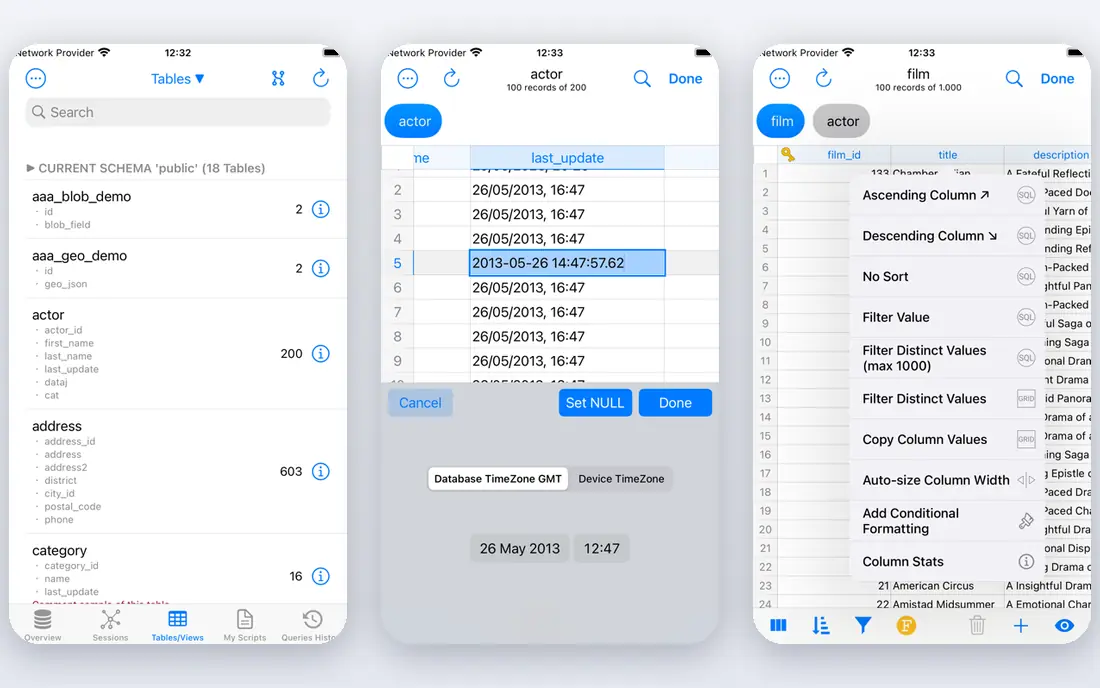
PostgreSQL is the first alternative most teams evaluate when they outgrow a simple MySQL style database. It offers advanced indexing, window functions, common table expressions, JSONB storage and a large extension ecosystem, including PostGIS for geospatial work and pgvector for vector search. That depth helps complex apps, analytics and data platforms that need more than basic CRUD queries.
The trade-off is migration and operations. MySQL specific SQL, tools and plugins may not move cleanly, and WordPress sites need compatibility work to run on PostgreSQL. Tuning also matters at scale. For teams that need advanced SQL and long term open source flexibility, PostgreSQL is our pick for most people.
- Strong standards compliance and advanced SQL
- Rich extension ecosystem including JSON and geospatial tools
- Broad managed cloud support
- WordPress does not support it out of the box
- Tuning for very large workloads needs expertise
MySQL is the obvious first check for a MariaDB user, because MariaDB began as a fork of MySQL and the two remain largely compatible for common web workloads. Hosting providers, ORMs, backup tools and WordPress all support MySQL widely, so migration risk is lower than moving to a different database family. Community Edition is free, with commercial editions for enterprise support and extra features.
The catch is divergence. At advanced levels, replication modes, storage engines and SQL extensions differ, so a direct swap still needs testing. Oracle ownership also matters to teams that prefer community governance. For a low risk MariaDB replacement, MySQL is the safest starting point.
- Closest drop in fit for MariaDB workloads
- Huge hosting and tool ecosystem
- Community Edition free for many uses
- Owned by Oracle, with some enterprise features paid
- MariaDB and MySQL have diverged in advanced features
SQLite is not a server database at all, which is exactly why it fits a different slice of MariaDB work. It stores a whole database in one file, needs no server process, and runs inside mobile apps, desktop apps, tests and edge devices. That simplicity removes deployment, user management and network configuration for local data.
The limit is concurrency and scale. SQLite handles many readers well, but concurrent writers and large multi user server workloads need a client server database. It is a poor fit for a busy web app with many simultaneous writes. For embedded, offline and prototype use, SQLite is unbeatable for simplicity.
- Single file, zero configuration database
- Public domain licence
- Excellent for mobile, desktop and prototypes
- Limited concurrent write performance
- Not a client server database for many users
SQL Server suits teams already built on Microsoft technology, with strong integration for .NET apps, Power BI, Azure services and Microsoft management tools. It offers enterprise features for security, availability and analytics, plus Azure managed options that reduce server care. Tooling such as SQL Server Management Studio is mature and widely used.
The weakness is cost and ecosystem fit. Licensing needs careful planning, especially for high core counts, and non Microsoft stacks may find PostgreSQL or MySQL cheaper and simpler. For Microsoft standardised companies, SQL Server is a natural enterprise replacement.
- Deep integration with Microsoft tools and .NET
- Strong enterprise features and tooling
- Managed Azure SQL options
- Licensing costs can be high
- Linux and cross platform use is possible but less central than Windows use
Oracle Database is aimed at large enterprises with demanding transactional, reporting and availability needs, and it has decades of tooling and support behind it. Features for partitioning, high availability, security and performance tuning suit regulated and high volume systems where downtime is costly. Cloud options through Oracle Cloud Infrastructure add managed deployment paths.
The catch is cost and complexity. Licensing, support and specialist admin skills make Oracle a poor fit for a small MariaDB site, and migration from MySQL SQL to Oracle SQL needs testing. For large enterprises already on Oracle or needing its enterprise features, it is a credible alternative.
- Long enterprise track record for large transactional workloads
- Advanced availability and security features
- Broad enterprise tool support
- Licensing is complex and expensive
- Overkill for small web apps
CockroachDB gives teams a distributed relational database that can span regions while keeping strong consistency, which single server MariaDB cannot do alone. It speaks the PostgreSQL wire protocol, so many PostgreSQL clients and tools work against it, and it handles node failure and scaling without manual sharding in many designs. That resilience suits global apps and services that must stay available across zones.
The trade-off is compatibility detail and operations. Not every PostgreSQL feature works identically, and distributed design needs care around latency, indexes and transactions. Smaller apps will not need this complexity. For global, always on relational workloads, CockroachDB is a strong distributed alternative.
- Distributed SQL with strong consistency across regions
- PostgreSQL wire compatibility
- Built in resilience and scaling
- Operational complexity at scale
- Some PostgreSQL features differ or are missing
Amazon Aurora is a managed database service on AWS that offers MySQL compatible and PostgreSQL compatible editions, so MariaDB users can move to a managed MySQL compatible engine with less code change. AWS handles backups, patching, failover and storage scaling, which removes much of the database operations burden. Read replicas and serverless options help variable workloads.
The limit is cloud lock in and cost modelling. Usage based pricing for storage, I/O and compute needs a real workload estimate, and the best experience stays inside AWS. Teams outside AWS should compare managed PostgreSQL or MySQL from their own cloud provider. For AWS teams that want a managed replacement, Aurora is a practical pick.
- Managed MySQL and PostgreSQL compatible engines
- Automated backups, scaling and failover
- Strong AWS integration
- Costs are usage based and can grow with storage and I/O
- Best value stays inside AWS
TiDB is a distributed SQL database that speaks the MySQL protocol, which helps MariaDB and MySQL teams migrate with less application change than moving to PostgreSQL. It separates compute and storage for scaling, and it aims to cover both transactional and analytical workloads in one system. The open source core can be self hosted, with managed cloud options from PingCAP.
The weakness is operational depth. A distributed cluster needs more planning, monitoring and tuning than a single MariaDB server, and the surrounding ecosystem is smaller than MySQL or PostgreSQL. For teams that need MySQL compatibility plus horizontal scale, TiDB is a credible distributed alternative.
- MySQL protocol compatibility for easier migration
- Distributed scaling for transactional and analytical work
- Open source core
- Distributed operations are more complex than a single server
- Ecosystem is smaller than MySQL or PostgreSQL
How we picked these
We compared official documentation, licensing and pricing pages, and we favoured databases still offered and maintained in October 2026. We looked for a mix of close MySQL compatible swaps, advanced open source options, embedded use and distributed or managed scale, so readers can match the database to workload rather than brand. We did not claim hands-on testing, and we used See website where pricing was usage based or quote based.
What to check before you switch
Test SQL compatibility on your real schema and queries, not only on a sample. Check data types, functions, collations, replication, backup and restore, and any MariaDB specific engines or features your app uses. Run a migration trial with production like data, measure query performance, and confirm that ORMs, drivers and backup tools work against the new database.
Price operations as well as licences. Open source software may be free, but managed hosting, support, storage, backups and admin time are not. Check licensing terms for commercial use, especially where a database offers both community and enterprise editions. A short pilot on a staging copy will reveal migration effort and performance gaps before a production cutover.
Frequently asked questions
Is MySQL or PostgreSQL the better MariaDB replacement?
MySQL is closer for a low risk swap, especially for WordPress and MySQL specific tools. PostgreSQL is better for advanced SQL, JSON, extensions and complex analytics. Choose MySQL for compatibility, and PostgreSQL for capability, after testing your workload.
Can SQLite replace MariaDB for a website?
For a small, low write site or a prototype, sometimes. For a busy multi user website with concurrent writes, a client server database such as MySQL, PostgreSQL or Aurora is a better fit. SQLite excels as an embedded database, not as a shared server database.
Is MariaDB really free?
MariaDB Community Server is open source and free to use, with commercial enterprise and cloud services available for support and extra features. The same split applies to MySQL Community Edition and PostgreSQL, where managed hosting and support are paid even though the core software is free.
How hard is it to migrate from MariaDB to PostgreSQL?
It varies by app. Simple schemas and standard SQL migrate well with tools such as pgloader, while MySQL specific functions, engines and plugins need manual work. Test the full app, including reports and background jobs, before cutover.
Should I use a managed database instead of self hosting?
Managed services remove patching, backups and failover work, but they add usage costs and cloud dependence. Self hosting gives control and lower licence cost, but needs admin time. Choose managed when operations time is scarce, and self hosted when control or cost matters more.
Sources
See where you really rank - block by block
ProMapRanker scans Google Maps across a grid of your service area. Simple monthly plans from $19, white-label on every plan.
Start freeKeep reading
 zyte alternatives
Best Zyte Alternatives in 2026
These zyte alternatives cover managed scraping APIs, proxy networks and no code tools for lawful collection from your own or consented sources only in 2026.
Read → zerto alternatives
Best Zerto Alternatives in 2026
Compare the best zerto alternatives for disaster recovery and replication, with recovery targets, cloud options and honest trade-offs for teams in 2026.
Read → zerofox alternatives
Best ZeroFox Alternatives in 2026
We compared 9 zerofox alternatives for brand protection, phishing takedowns, dark web monitoring, and social impersonation, with clear coverage notes.
Read →