 ProMapRanker
Mailchimp Alternatives Free in 2026

Key takeaways
- MailerLite is our pick for small lists that want a simple free plan and easy templates.
- Brevo suits large contact lists mailed in small daily batches, because it stores many contacts on its free plan.
- Mailjet suits transactional plus marketing email on one free plan, with a clear daily cap.
- Kit suits creators and paid newsletters, with a generous free subscriber limit but limited automations.
- EmailOctopus suits small lists that want a high free email allowance without a complex setup.
Quick comparison
| Pick | Great for | Pricing starts at | Free tier | |
|---|---|---|---|---|
 MailerLite | Simple small-list email | Free | Yes | Visit |
 Brevo | Large lists, small batches | Free | Yes | Visit |
 Mailjet | Marketing plus transactional | Free | Yes | Visit |
 Kit | Creators and newsletters | Free | Yes | Visit |
 EmailOctopus | High free email allowance | Free | Yes | Visit |
 Sender | Small business free email | Free | Yes | Visit |
 Omnisend | Small online stores | Free | Yes | Visit |
 HubSpot Marketing Hub | CRM plus free email | Free | Yes | Visit |
The best free Mailchimp alternatives
This list includes alternatives only, never Mailchimp itself, and every tool below offers a genuinely free plan or free tier, not only a trial. We compared official pricing pages and public guides, and we focused on free subscriber limits, free email allowances, daily caps, automation limits and branding on free emails.
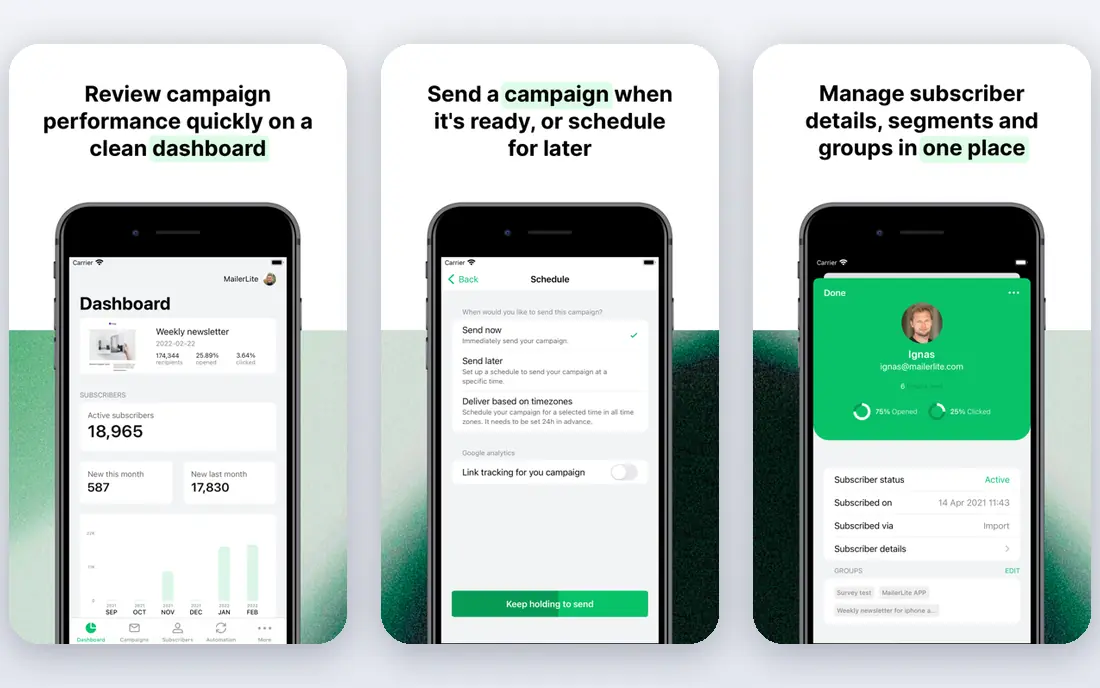
MailerLite is the easiest free alternative for a small list. You can build a newsletter with drag-and-drop templates, add a signup form or landing page, and send a regular campaign without learning a complex automation builder. That simplicity suits bloggers, clubs, small shops and new businesses that mail weekly or monthly.
The free limit is the main catch. Current guides put the free plan at 250 subscribers and 2,500 emails per month, which is enough for a new list but not for a growing audience. Paid plans start low and scale by subscriber count, so check the price at your next subscriber milestone before you commit to a template library.
- Simple editor and templates that beginners learn fast
- Free plan includes landing pages and forms
- Clean pricing as lists grow
- Free plan covers up to 250 subscribers in current guides
- Advanced automation needs paid plans
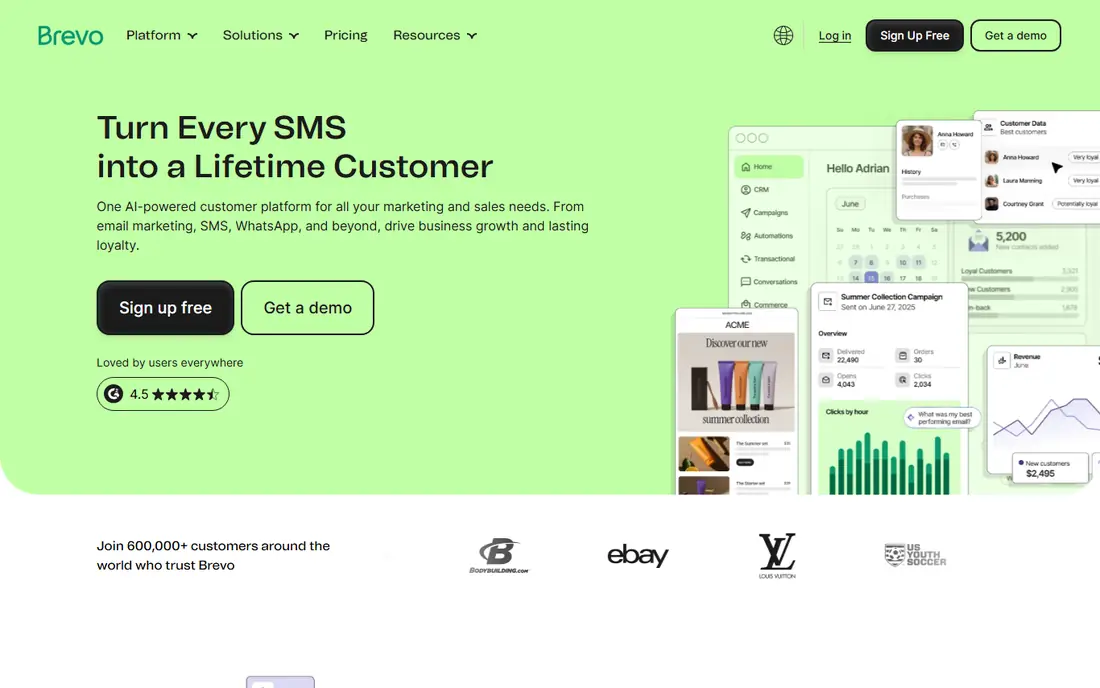
Brevo, formerly Sendinblue, suits a different free user: someone with a large contact list who mails infrequently. Its free plan stores up to 100,000 contacts in some guides and sends 300 emails per day, which is generous for storage but slow for a large single campaign. Basic automation, signup forms and a simple CRM are included.
If you mail a large list weekly, the daily cap will frustrate you. You will need to split campaigns across days or move to a paid plan starting at $9 per month for higher volume. For a business that mails monthly or holds a dormant list, Brevo free plan is one of the most useful free options available.
- Free plan stores many contacts and sends 300 emails per day
- Includes basic automation, forms and a CRM
- Good for infrequent mailers
- Daily cap means large campaigns must be sent in batches
- Branding and advanced features need paid plans
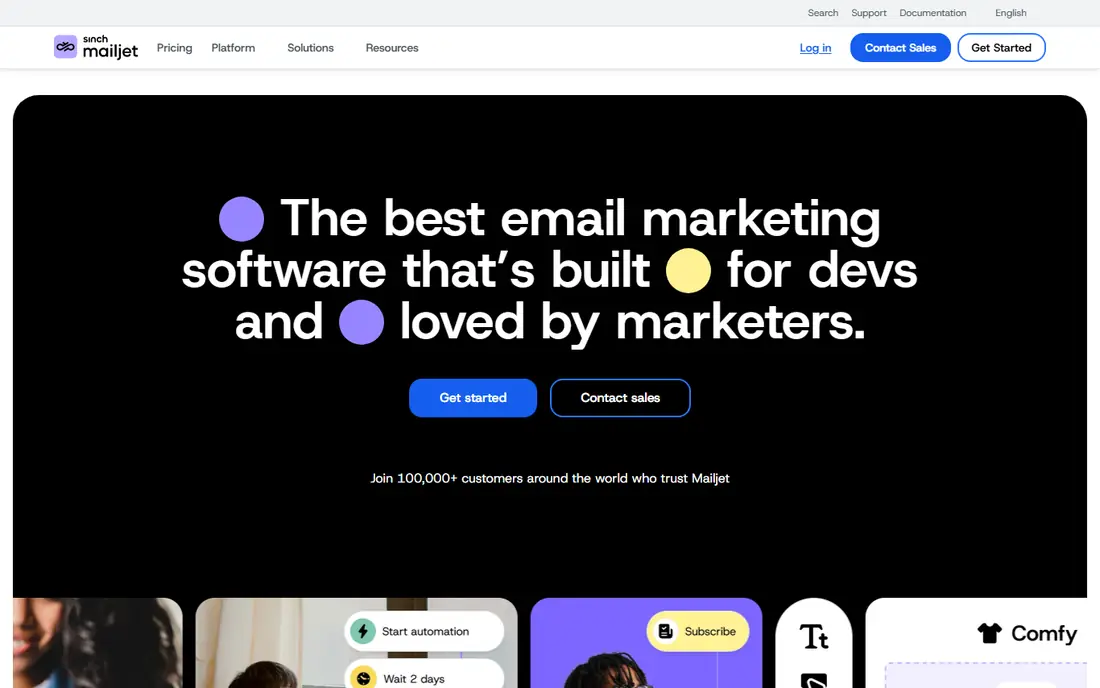
Mailjet is a strong free choice for teams that send both newsletters and transactional messages, such as order confirmations or password resets. Its free plan allows 6,000 emails per month, with a daily cap of 200, and includes an email editor and template tools. That split suits small shops that need both types of mail from one account.
The daily cap is the limit to plan around. A 200-per-day cap means a campaign to 1,000 subscribers takes five days on the free plan, unless you upgrade. Paid plans start at $9 per month for higher volume, so check your list size and send frequency before you rely on free sending alone.
- Free plan covers marketing and transactional email
- Clear editor and template tools
- Good deliverability tools for small senders
- Free plan caps sending at 6,000 emails per month and 200 per day
- Contact limit applies on free plan
Kit, formerly ConvertKit, is built for creators, writers and newsletter publishers. Its free plan supports up to 10,000 subscribers, which is far more generous than most free email plans, and it includes forms and landing pages for audience growth. Paid newsletters and creator tools make it a natural home for writers who monetize an audience.
The catch is automation. The free plan does not include automations, so welcome sequences and behaviour-based follow-ups need a paid plan. If you only send a regular newsletter, Kit free plan is excellent. If you need automation from day one, MailerLite or Brevo may suit you better.
- Free plan supports up to 10,000 subscribers in current guides
- Creator-focused forms, landing pages and paid newsletter tools
- Simple setup for writers
- Free plan has no automations
- Paid plans are higher than some rivals for small lists
EmailOctopus is a quiet favourite for small lists that send often. Its free plan covers 2,500 subscribers and 10,000 emails per month, which beats many rivals for send volume. The interface is simple, with templates, signup forms and basic reporting, so a small business can start quickly.
Advanced users will notice limits. Automation, ecommerce integrations and template depth are thinner than in Brevo, Omnisend or HubSpot. For a straightforward newsletter to a small list, EmailOctopus free plan gives more sending room than most alternatives at no cost.
- Free plan allows 10,000 emails per month for 2,500 subscribers
- Simple interface with templates and forms
- Low paid prices as lists grow
- Fewer advanced automation and ecommerce features than larger tools
- Template range is smaller than MailerLite
Sender suits small businesses that want a high free allowance plus some automation. Its free plan covers 2,500 subscribers and 15,000 emails per month, with Sender branding on messages. That combination is useful for a shop that sends weekly offers and wants a welcome email without paying yet.
Branding is the trade-off, and some automation features are limited compared with paid tools. If branding matters for your business, check the paid plan price before you build a large list. If you can live with branding while you grow, Sender gives strong free value.
- Free plan covers 2,500 subscribers and 15,000 emails per month
- Includes automation tools on free plan in many guides
- Simple pricing as lists grow
- Sender branding appears on free emails
- Automation depth is less than paid specialist tools
Omnisend is built for online stores, and its free plan reflects that focus. It connects with Shopify and other ecommerce platforms, and it supports automation for small lists, including welcome and cart recovery flows. For a new store with a small list, that ecommerce focus saves setup time.
The free limits are small: 250 contacts and 500 emails per month in current guides. That is enough to test the tool, but a growing store will need a paid plan starting at $16 per month for 500 contacts. Choose Omnisend free if you run a store and want ecommerce automation early, not if you need a large free send allowance.
- Ecommerce integrations with Shopify and other stores
- Free plan includes automation for small lists
- Good for product and abandoned cart emails
- Free plan covers 250 contacts and 500 emails per month
- Paid plans start higher than some rivals
HubSpot Marketing Hub suits small businesses that want email plus a CRM in one free account. The free plan includes contact management, forms and 2,000 emails per month with HubSpot branding, which helps a team track leads, deals and email engagement together. That CRM link is a real advantage over email-only tools.
The free plan is not a full marketing automation suite. Advanced workflows, A/B testing depth and reporting sit behind paid plans, and branding appears on free emails. If you want a CRM-led free start and plan to grow into paid HubSpot tools, this is a strong choice. If you only need email, MailerLite or EmailOctopus may be simpler.
- Free CRM plus 2,000 emails per month with HubSpot branding
- Good contact and deal tracking for small businesses
- Scales into paid marketing tools
- Free email branding applies
- Advanced marketing automation needs paid plans
How we picked these
We compared official pricing pages and public guides for email marketing tools that offer a genuinely free plan in October 2026. We kept only tools with a free tier, not only a trial, and we left out tools with no free plan. We did not claim hands-on testing, and we did not include Mailchimp itself, because this article covers alternatives. We judged each tool on free subscriber and email limits, daily caps, automation, branding and ease of use, and we marked paid starting prices where guides and vendor pages gave a clear figure.
How to choose a free Mailchimp alternative
Start with your list size and send frequency, not with features. A free plan that covers 10,000 subscribers but no automation suits a newsletter writer, while a plan that covers 250 subscribers but includes automation suits a small shop with a welcome sequence. Write down your subscriber count, your monthly email count and whether you send daily, weekly or monthly, then match those numbers to free limits.
Next, check the hidden limits. Daily caps, branding, automation limits and contact storage all affect whether a free plan works in practice. Brevo stores many contacts but caps daily sends, Kit stores many subscribers but limits automations on free, and Omnisend offers ecommerce automation but with small free limits. Test a real campaign to your own list size before you migrate a large audience.
Finally, check the paid price at your next growth step. Free plans are a starting point, not a permanent home for a growing list. Compare the paid price at 500, 1,000 and 5,000 subscribers, and check whether pricing follows subscribers, emails sent or seats. The cheapest free plan can become the most expensive paid plan as you grow.
Frequently asked questions
What are the best free Mailchimp alternatives?
MailerLite, Brevo, Mailjet, Kit and EmailOctopus are among the best free alternatives, each with a different strength. MailerLite suits simple small lists, Brevo suits large lists mailed in batches, Mailjet suits marketing plus transactional mail, Kit suits creators, and EmailOctopus suits high free send volume. Choose based on your list size and send frequency.
What is the best free alternative to Mailchimp for a small list?
MailerLite is our pick for a small list, because its free plan is simple, includes templates and forms, and scales clearly as you grow. EmailOctopus and Sender also suit small lists, with higher free email allowances. If your list is already large but you mail rarely, Brevo free plan may suit you better.
Are there free alternatives to Mailchimp with no branding?
Most free email plans include some branding or limits, so a truly brand-free free plan is rare. Paid plans usually remove branding, often for a small monthly fee. Check the branding terms on each vendor pricing page, and budget for a paid plan if clean branding matters for your business emails.
Can I migrate my Mailchimp list to a free alternative?
Yes, most alternatives let you import contacts by CSV file, and many offer import tools for lists and tags. Export your Mailchimp audience, clean unsubscribed and bounced contacts, and check that signup forms and automations are rebuilt in the new tool before you send. Test with a small segment first to protect deliverability.
Do free Mailchimp alternatives include automation?
Some do, with limits. Brevo free includes basic automation, Sender includes automation tools on its free plan in many guides, and Omnisend includes automation for small lists. Kit free has no automations, and MailerLite free limits automation depth. Check the automation limit on each pricing page before you rely on it for welcome or cart emails.
Sources
See where you really rank - block by block
ProMapRanker scans Google Maps across a grid of your service area. Simple monthly plans from $19, white-label on every plan.
Start freeKeep reading
 outreach alternatives
Outreach Alternatives in 2026
Compare outreach alternatives for 2026, from Salesloft and Apollo to HubSpot and Lemlist, with pricing, channels, features, limits, and honest trade-offs.
Read → best web conference tools
Best Web Conference Tools in 2026
Compare the best web conference tools for meetings, webinars and team calls, with current pricing, free plans and honest limits for each option here today.
Read → best voice cloning tools
Best Voice Cloning Tools in 2026
Compare the best voice cloning tools in 2026, from ElevenLabs and Descript to Resemble and Cartesia, with consent rules, pricing, licenses, and limits.
Read →