 ProMapRanker
Magento Alternatives in 2026

Key takeaways
- Shopify is the easiest hosted route for most stores, while WooCommerce offers the most control for WordPress users.
- BigCommerce suits growing brands that want strong built-in features without extra transaction fees.
- Open-source options such as PrestaShop and OpenCart cost less in licences but need technical care.
- Total cost matters more than the monthly plan price, because apps, hosting, and development add up.
Quick comparison
| Pick | Great for | Pricing starts at | Free tier | |
|---|---|---|---|---|
 Shopify | Easy hosted selling | $39 per month | Free trial | Visit |
 WooCommerce | WordPress stores with full control | Free | Yes | Visit |
 BigCommerce | Growing brands without extra fees | $39 per month | Free trial | Visit |
 PrestaShop | Open-source custom stores | Free | Yes | Visit |
 Shopware | Flexible European ecommerce | See website | Yes | Visit |
 Squarespace | Design-led small stores | See website | Free trial | Visit |
 Wix | Beginner stores with design freedom | See website | Free trial | Visit |
 OpenCart | Budget open-source selling | Free | Yes | Visit |
The best magento alternatives
Magento, now Adobe Commerce in its paid form, is powerful but demands developers, hosting care, and a large budget. We compared official pricing pages, feature documentation, and hosting models for ecommerce platforms live in October 2026, and we kept only platforms that can run a real online store, not just a landing page.

Shopify is the simplest switch for most Magento users who want less technical work. Hosting, security, updates, and payment basics are handled for you, and the app store covers shipping, marketing, and subscriptions. A small team can launch a polished store without hiring developers for routine tasks.
The trade-offs are cost and control. Apps add up, and using an outside payment provider can add transaction fees. Checkout customisation is also limited below higher plans. For most small and mid-sized stores, though, Shopify offers the best balance of speed and reliability.
- Fast setup
- Hosted security and updates
- Large app store
- Transaction fees without Shopify Payments
- Theme and checkout limits on lower plans
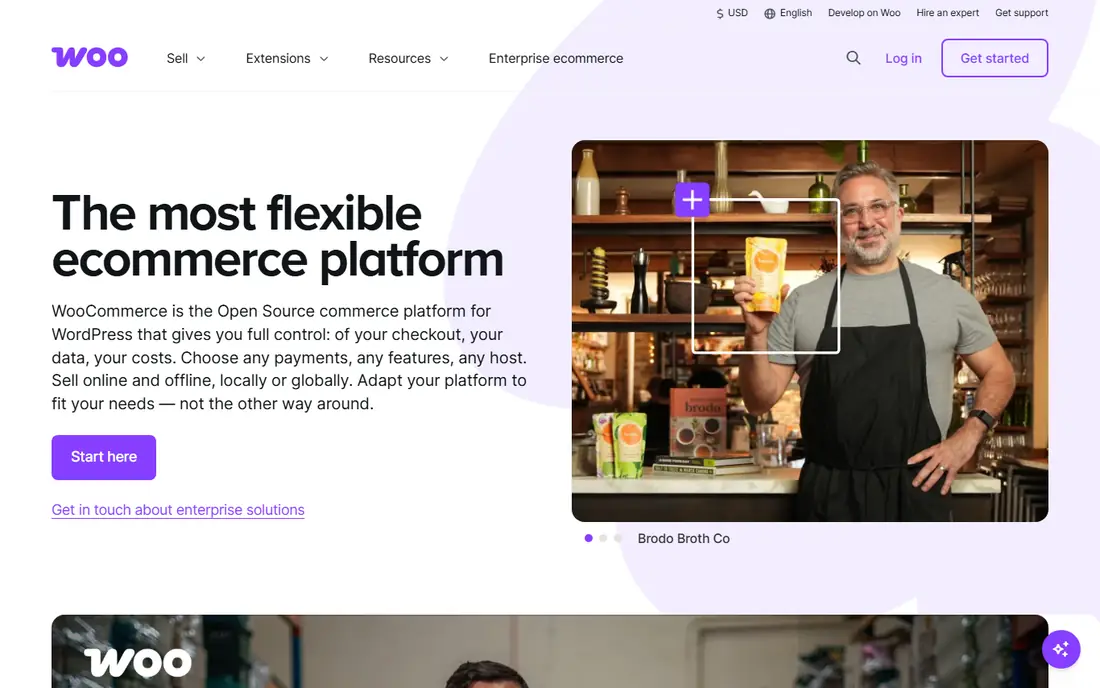
WooCommerce turns a WordPress site into a store, which suits content-led brands that already publish heavily. You control URLs, content, design, and checkout, and the plugin ecosystem covers almost every selling need. For SEO and blogging, WordPress gives WooCommerce a clear edge over hosted rivals.
The cost is responsibility. Hosting, security, backups, and plugin updates fall to you or your developer. A lean store can stay cheap, but a busy store needs good hosting and care. Choose WooCommerce when control and content matter more than hands-off hosting.
- Free core plugin
- Full code control
- Strong SEO and content tools
- Hosting and updates are your job
- Plugin costs add up

BigCommerce suits brands that have outgrown a simple store but do not want Magento complexity. Built-in features for SEO, promotions, and multi-channel selling reduce the need for paid apps, and it charges no extra transaction fees on top of payment provider fees. B2B features also help firms selling to both consumers and trade buyers.
Plan pricing follows annual sales volume, so fast growth can push you to a higher tier. Theme options are fewer than Shopify, though custom design is still possible. For scaling brands, BigCommerce is a strong, less app-dependent alternative.
- Strong built-in features
- No extra transaction fees
- B2B tools
- Plan tiers follow sales volume
- Theme choice is smaller than Shopify
PrestaShop is a long-running open-source platform with strong catalogue, order, and customer management. It suits developers and agencies that want full control without licence fees, and its module marketplace covers payments, shipping, and marketing. European sellers in particular will find local payment and tax support useful.
Like other open-source tools, it needs hosting, updates, and security care. Module costs can also add up, so budget beyond the free core. PrestaShop is best when you have technical help and want a custom store without a large licence bill.
- Free open-source core
- Strong product management
- Many modules
- Hosting and maintenance are your job
- Modules can cost extra
Shopware is a modern open-source and cloud platform with a strong base in Europe. It combines content, shopping, and B2B selling in a flexible system, and its architecture suits brands that need custom workflows. For firms with European customers, local payment and compliance support is a plus.
The US ecosystem is smaller than Shopify or WooCommerce, so finding local agencies and apps may take more effort. Larger builds still benefit from developer help. Shopware is worth shortlisting if you want Magento-style flexibility with a more modern codebase.
- Flexible architecture
- Strong B2B features
- Good content and shopping mix
- Smaller US ecosystem
- Agency help often needed for larger builds
Squarespace suits small, design-led stores where visual presentation matters as much as selling. Templates look polished, editing is simple, and built-in commerce covers products, subscriptions, and basic marketing. For a boutique, artist, or small brand, that simplicity is appealing.
Large catalogues and complex B2B needs are a weaker fit. App choice is narrower than Shopify, and advanced shipping or inventory workflows may need workarounds. Choose Squarespace when design and simplicity matter more than catalogue scale.
- Beautiful templates
- Easy editing
- Built-in selling tools
- Less suited to large catalogues
- Fewer ecommerce apps than Shopify
Wix gives beginners strong design freedom without code. Its drag-and-drop builder, templates, and built-in marketing tools help a small store launch quickly. Selling features cover products, bookings, and subscriptions, which suits many small businesses.
Complex stores may hit limits on catalogue, checkout, and custom workflows. Moving a Wix store to another platform later can also be awkward, so treat it as a long-term choice. For a first store or a small catalogue, Wix is an accessible Magento alternative.
- Drag-and-drop builder
- Many templates
- Built-in marketing tools
- Less control for complex stores
- Migrating away can be difficult
OpenCart is a lightweight open-source platform for sellers who want a free core and a simple store. It handles products, orders, customers, and multi-store setups, and extensions add payments, shipping, and marketing. For a budget store with technical help, it keeps licence costs at zero.
The trade-off is maintenance and extension quality. Hosting, security, and updates are your responsibility, and not every extension is well supported. OpenCart suits small, technically confident sellers who want a low-cost, customisable store.
- Free open-source core
- Lightweight
- Many extensions
- Needs technical care
- Extension quality varies
How we picked these
We compared official pricing pages, hosting models, and feature documentation for ecommerce platforms live in October 2026. We excluded Magento itself, as this list is for alternatives only. We kept platforms that support a full store, including products, checkout, payments, and orders, and we covered both hosted and open-source routes so different teams can find a fit. Where pricing varied by sales volume or plan, we wrote See website rather than guessing.
What to check before you switch
Start with catalogue and order volume. A platform that handles 50 products well may struggle with 50,000 variants, complex pricing, or high peak traffic. Test with your real catalogue size, not a demo store with ten items.
Next, list must-have features, such as B2B pricing, subscriptions, multi-currency, or marketplace selling. Check whether each feature is built in, available as an app, or needs custom development. Built-in features usually cost less over time than a stack of paid apps.
Migration and total cost
Plan migration for products, customers, orders, redirects, and SEO. A platform switch can harm rankings if URLs and redirects are mishandled, so keep an SEO checklist in the project plan. Also total up hosting, apps, themes, payment fees, and developer time for a full year, not just the monthly plan price.
Team skills
Hosted platforms suit teams without developers, while open-source platforms suit teams with technical help. Be honest about who will maintain the store after launch, because a platform that needs a developer you do not have will become a bottleneck.
Frequently asked questions
What are the best alternatives to Magento?
Shopify is best for easy hosted selling, WooCommerce is best for WordPress control, and BigCommerce suits growing brands that want built-in features. PrestaShop, Shopware, and OpenCart suit technical teams that want open-source control at a lower licence cost.
Is Shopify better than Magento?
For most small and mid-sized stores, yes, because Shopify handles hosting, security, and updates, and setup is much faster. Magento offers deeper customisation for very large, complex stores, but that power comes with developer costs and ongoing maintenance that many firms do not need.
What is the cheapest Magento alternative?
WooCommerce, PrestaShop, and OpenCart have free core software, but hosting, themes, and plugins still cost money. For a hosted store, compare Shopify and BigCommerce entry plans, then add app and payment costs to get a true yearly total.
Can I migrate from Magento to Shopify or WooCommerce?
Yes, migration tools and agencies can move products, customers, and orders, but redirects, SEO, and custom features need careful planning. Test the new store with real data, check URL redirects, and keep the old store live until the new one is proven.
Which platform is best for B2B selling?
BigCommerce and Shopware offer strong B2B features, including trade pricing and account controls, without Magento complexity. Shopify Plus also covers B2B needs for larger brands, though at a higher price. Check B2B pricing, quoting, and account features against your actual buyer workflow.
Do I need a developer for these alternatives?
Hosted platforms such as Shopify, Squarespace, and Wix can run without a developer for most small stores. Open-source platforms such as WooCommerce, PrestaShop, Shopware, and OpenCart need technical care for hosting, updates, and custom work, especially at scale.
Sources
See where you really rank - block by block
ProMapRanker scans Google Maps across a grid of your service area. Simple monthly plans from $19, white-label on every plan.
Start freeKeep reading
 zscaler alternatives
Best Zscaler Alternatives in 2026
Looking for zscaler alternatives? We compare 9 SASE and zero trust platforms on architecture, data protection, pricing, and fit for your network and team.
Read → zapier alternatives free
Best Zapier Alternatives Free in 2026
Nine automation tools for zapier alternatives free in 2026, all with genuinely free tiers, plus free plan limits, starting prices and upgrade paths explained.
Read → which platform is best for online reputation
Which Platform Is Best for Online Reputation in 2026
Wondering which platform is best for online reputation? We compare 8 review, listing, and response tools for small and multi-location businesses and agencies.
Read →