 ProMapRanker
Local Citations For Car Dealerships: A Complete Guide

As Md Shihab Mia, founder of ProMapRanker, I often see car dealerships overlooking a foundational element of local SEO: local citations. Local citations for car dealerships are consistent mentions of your dealership's Name, Address, and Phone number (NAP) across various online platforms, from major directories like Yelp and Facebook to specialized automotive sites like Cars.com and Edmunds. These consistent listings are crucial because they signal to search engines like Google that your dealership is a legitimate, established local business, significantly boosting your visibility in local search results and on Google Maps. For car dealerships, citations directly translate to higher local rankings, increased foot traffic, and more qualified leads from potential buyers in your service area.
What Are Local Citations for Car Dealerships and Why Do They Matter?
Local citations for car dealerships are online mentions of your business's Name, Address, and Phone number (NAP) on various websites and directories. These consistent listings act as verifiable signals to search engines, validating your dealership's existence and location, which is critical for ranking prominently in local search results and Google Maps.
For a car dealership, a strong local citation profile is more than just a formality; it's a cornerstone of local search engine optimization. When Google sees your dealership's NAP information consistently replicated across many authoritative sources, it gains confidence in the accuracy of your business data. This consistency directly influences your dealership's ability to rank for high-intent local searches such as "car dealerships near me" or "used cars [city name]". Without a robust and accurate citation profile, even dealerships with excellent service and inventory can struggle to appear in front of local customers actively searching for vehicles.
How Do Local Citations Specifically Benefit Car Dealerships?
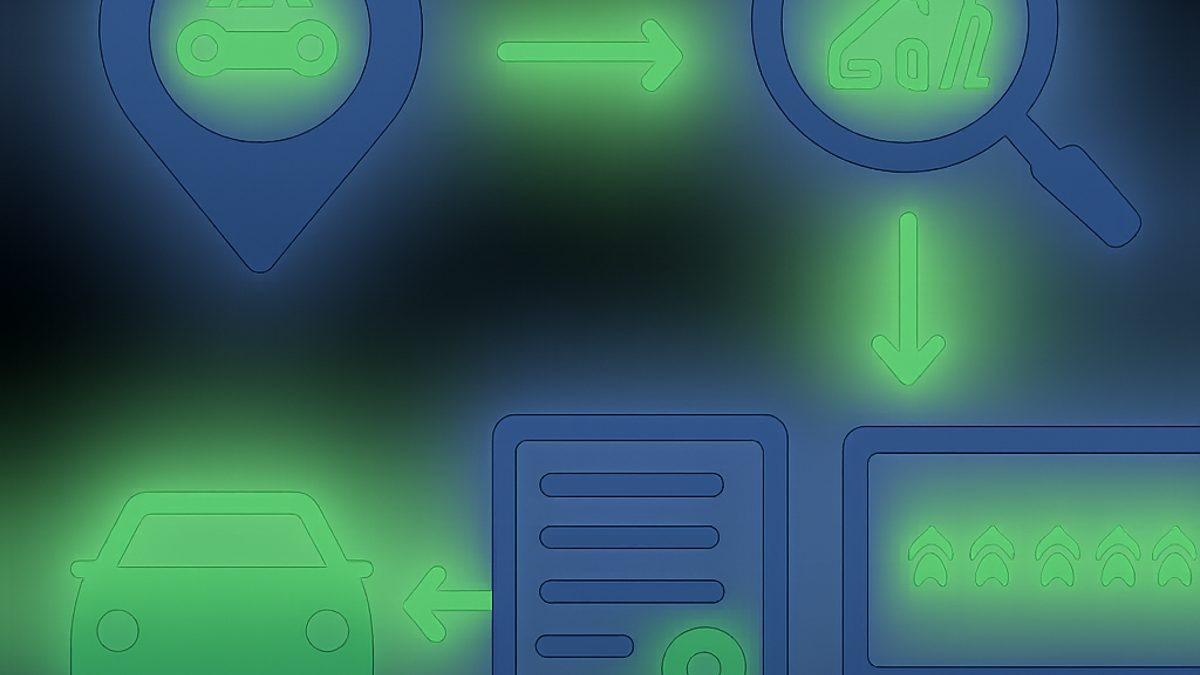
Local citations provide car dealerships with enhanced online visibility, improved local search rankings, and increased trust with potential customers. By appearing consistently across various platforms, dealerships can capture more attention from local buyers actively searching for vehicles and related services.
The benefits extend beyond just search engine visibility. For a car dealership, citations contribute significantly to what Google calls "prominence" and "relevance" factors in its local ranking algorithm, as detailed in Google Business Profile Help. When your dealership is listed on industry-specific sites like DealerRater, Cars.com, or Edmunds, it not only broadens your reach but also reinforces your authority within the automotive sector. This specialized presence tells Google that your business is a relevant entity for car-related queries. Furthermore, citations often include opportunities for customer reviews, which are incredibly influential for car buyers. A well-managed citation strategy ensures your dealership's reputation is consistently presented across all platforms, driving both online traffic and actual showroom visits.
The Anatomy of a Powerful Local Citation: NAP, Website, and Beyond
A powerful local citation meticulously includes your dealership's Name, Address, and Phone number (NAP) in an identical format, along with your website URL, accurate business categories, and a compelling description. This detailed and consistent information strengthens your online presence and improves search engine recognition.
Ensuring absolute NAP consistency is paramount. Even minor discrepancies, like "St." versus "Street" or varying phone number formats (e.g., (123) 456-7890 vs. 123-456-7890), can confuse search engines and dilute the ranking power of your citations. Beyond NAP, each citation should ideally include:
- Website URL: Link directly to your dealership's primary website.
- Business Categories: Use precise categories that accurately describe your services, aligning with your Google Business Profile categories (e.g., "Car Dealer," "Used Car Dealer," "Car Service Station").
- Business Description: A unique, engaging description that highlights your dealership's offerings, brands carried, and unique selling propositions.
- Hours of Operation: Keep these updated across all listings.
- Images/Videos: High-quality photos of your showroom, inventory, and team enhance engagement.
- Schema Markup: For advanced optimization, implement AutoDealer schema markup on your website to provide structured data about your dealership directly to search engines, improving how your business information is displayed in search results.
Which Local Citation Sites Are Essential for Car Dealerships?
Essential local citation sites for car dealerships include major aggregators like Google Business Profile, Yelp, and Facebook, alongside specialized automotive directories such as Cars.com, Edmunds, AutoTrader, and DealerRater. Prioritizing these platforms ensures broad visibility and industry-specific authority.
Building a robust citation profile requires a strategic approach, focusing on a mix of general business directories and niche-specific automotive platforms. Here’s a breakdown:
Core Business Directories (High Authority, Broad Reach)
- Google Business Profile: Absolutely non-negotiable. This is the foundation of your local SEO and directly influences Google Maps and local pack rankings. Ensure it's fully optimized with accurate information, photos, and regular updates.
- Yelp: A highly influential platform for reviews and local business discovery.
- Facebook: Essential for social proof, engagement, and direct communication with customers.
- Apple Maps: Critical for iPhone users, especially with in-car navigation systems.
- Bing Places for Business: While Google dominates, Bing still holds a significant market share, especially for desktop searches.
- Yellow Pages, Foursquare, BBB: Established directories that still carry weight.
Automotive-Specific Directories (Industry Authority, Targeted Audience)
These sites are crucial because they directly connect with potential car buyers and signal specific relevance to search engines.
- Cars.com: A leading online marketplace for new and used vehicles.
- Edmunds: Provides car reviews, pricing, and a vast inventory of new and used cars.
- AutoTrader: Another major online car marketplace.
- DealerRater: Focuses heavily on dealership reviews and customer satisfaction.
- CarGurus: Compares local listings and prices for new and used cars.
- Kelley Blue Book (KBB): Known for vehicle valuations, also lists cars for sale.
- TrueCar: Offers transparent pricing and connects buyers with certified dealers.
Data Aggregators
Companies like ExpressUpdate (Infogroup), Neustar Localeze, and Factual (now Foursquare) collect business data and distribute it to hundreds of other directories and platforms. Ensuring your dealership's information is accurate with these aggregators can propagate correct data widely, though direct submission to key sites is still recommended for maximum control.
Here's a comparison of citation types:
| Citation Type | Key Examples | Primary Benefit for Dealerships |
|---|---|---|
| Major Search Engines/Maps | Google Business Profile, Apple Maps, Bing Places | Direct local search visibility, navigation, reviews. |
| General Review/Social Sites | Yelp, Facebook, Yellow Pages | Broad brand exposure, social proof, customer engagement. |
| Automotive Specific Marketplaces | Cars.com, Edmunds, AutoTrader, CarGurus | Direct lead generation, inventory display, industry authority. |
| Automotive Review Sites | DealerRater, Google Reviews (via GBP) | Builds trust and reputation, influences purchasing decisions. |
How to Build and Manage Local Citations for Your Dealership: A Step-by-Step Guide
Building and managing local citations for your dealership involves auditing existing listings, creating a master list of target directories, ensuring NAP consistency, and optimizing each profile. This systematic approach ensures maximum accuracy and local search impact.
Follow this checklist to establish and maintain a robust citation profile:
- Conduct a Comprehensive Citation Audit:
- Use tools (like ProMapRanker's GBP audit feature) to identify all existing mentions of your dealership online.
- Look for inconsistent NAP data, duplicate listings, or outdated information. Document every discrepancy.
- Create a Master NAP Data Sheet:
- Establish one definitive, exact version of your dealership's Name, Address, and Phone number. This includes formatting (e.g., "LLC" vs. "L.L.C.", "Suite" vs. "Ste").
- Use this master data for every new submission and correction.
- Prioritize Core and Automotive-Specific Directories:
- Start with top-tier directories (Google Business Profile, Yelp, Facebook, Apple Maps).
- Move on to automotive-specific platforms (Cars.com, Edmunds, DealerRater, AutoTrader).
- Consider relevant local chamber of commerce, industry associations, and niche blogs. Aim for 20+ quality citations.
- Manually Claim and Optimize Listings:
- For each directory, claim or create your business listing. This often involves a verification process.
- Fill out every field completely and accurately, using your master NAP data.
- Add high-quality images, videos, and a detailed business description.
- Select the most precise business categories for your dealership.
- Address Inconsistencies and Duplicates:
- Correct any inaccurate listings identified in your audit. This might involve contacting the directory directly.
- Merge or remove duplicate listings. This is crucial as duplicates can confuse search engines and split your local SEO authority.
- Leverage Data Aggregators (Optional but Recommended):
- While direct submission is best, consider using services that push your correct data to major aggregators for broader distribution. Be cautious about relying solely on these, as they offer less granular control.
- Monitor and Update Regularly:
- Local citations are not a "set it and forget it" task. Review your key citations quarterly for accuracy.
- Update hours for holidays, change of services, or new phone numbers promptly across all platforms.
- Actively manage reviews on these platforms.
Measuring the Impact of Your Citation Strategy with Geo-Grid Rank Tracking
Measuring the impact of your citation strategy involves tracking local search rankings across a defined geographic area, which geo-grid rank tracking provides. This allows dealerships to visualize how their citation efforts translate into improved visibility for specific keywords at various points around their location.
At ProMapRanker, we understand that traditional rank tracking doesn't tell the full story for local businesses like car dealerships. A dealership might rank #1 in the exact center of its city but drop significantly just 5 miles away. This is where geo-grid rank tracking becomes indispensable. For a car dealership, we recommend a minimum 5x5 grid at 5-mile intervals to understand local search performance accurately. This provides a granular view of your dealership's visibility for keywords like "new cars [brand] [city]" or "car repair [zip code]."
When you implement a robust citation strategy, you should see a positive correlation with your geo-grid rankings. ProMapRanker allows you to:
- Visualize Ranking Improvements: See how your dealership's pin on the geo-grid brightens (indicating higher rankings) over time as your citation profile strengthens.
- Identify Gaps: Pinpoint areas where your dealership's visibility is weak, potentially indicating a need for more localized citations or content targeting those specific neighborhoods.
- Track Share of Local Voice (SoLV) and Average Rank Position (ARP): These metrics within ProMapRanker provide a clear understanding of your overall dominance in the local search landscape for target keywords. A strong citation profile directly contributes to higher SoLV and lower (better) ARP.
- Perform a Google Business Profile audit: Our tools can highlight areas for improvement within your GBP, often related to information consistency that citations rely on.
By connecting your citation efforts to tangible ranking improvements, you can demonstrate the ROI of your local SEO strategy and make data-driven decisions. Start your free geo-grid scan with ProMapRanker today to see your dealership's true local search performance.
Common Pitfalls and How to Avoid Them in Car Dealership Citation Management
Common pitfalls in car dealership citation management include inconsistent NAP data, ignoring duplicate listings, failing to utilize niche automotive directories, and a "set it and forget it" mentality. Avoiding these mistakes is crucial for maintaining strong local search visibility and authority.
- Inconsistent NAP Data: This is the most detrimental error. Even minor variations can confuse search engines.
- Solution: Maintain a single, definitive master sheet of your dealership's Name, Address, and Phone number. Use this exact format for all online properties, including your website, Google Business Profile, and every citation.
- Ignoring Duplicate Listings: Duplicate listings occur when your dealership has multiple profiles on the same platform, often with slightly different information. This dilutes your authority.
- Solution: Regularly audit your citations. If you find duplicates, contact the directory's support to merge or remove them. This process can be tedious but is essential for consolidating your local SEO power.
- Neglecting Niche Automotive Directories: Focusing only on major directories misses out on highly relevant, targeted traffic.
- Solution: Actively seek out and claim listings on automotive-specific sites like Cars.com, Edmunds, DealerRater, and CarGurus. These sites often carry more weight for car-related searches.
- "Set It and Forget It" Mentality: Citation management is an ongoing process, not a one-time task. Business information can change, and new directories emerge.
- Solution: Schedule quarterly reviews of your top 20-30 citations. Update any changes (hours, services, phone numbers) promptly. Regularly search for new relevant directories to add your listing to.
- Incomplete or Unoptimized Profiles: Simply having a listing isn't enough; it needs to be fully optimized.
- Solution: Fill out every available field, including business hours, photos, videos, services offered, and a compelling description. Ensure your chosen categories accurately reflect your dealership's offerings.
- Ignoring Reviews on Citation Sites: Many citation sites double as review platforms. Ignoring customer feedback can harm your reputation.
- Solution: Actively monitor and respond to all reviews, both positive and negative. Timely and professional responses demonstrate customer care and can mitigate negative sentiment.
By proactively addressing these common pitfalls, your car dealership can build a stronger, more reliable local citation profile that significantly contributes to your local search success. ProMapRanker can help you audit your Google Business Profile for free, identifying key areas for improvement.
Frequently Asked Questions
What does local citation mean in local SEO?
In local SEO, a local citation refers to any online mention of your business's Name, Address, and Phone number (NAP). These mentions can appear on business directories, social media platforms, review sites, and other websites. Search engines use the consistency and volume of these citations to verify your business's legitimacy and location, which helps determine your ranking in local search results.
How to do local citations?
To do local citations, first create a master list of your exact Name, Address, and Phone number (NAP). Then, identify key online directories and automotive-specific platforms. Systematically claim or create your dealership's listing on each, ensuring every detail matches your master NAP list. Finally, optimize each profile with categories, descriptions, and images, and regularly audit for consistency and new opportunities.
What is a red flag in a dealership?
A red flag in a dealership could include high-pressure sales tactics, a lack of transparent pricing, salespeople unwilling to provide a detailed vehicle history report, or numerous negative online reviews citing similar issues. Other red flags might be a dealership that only offers in-house financing without external options, or one with a poorly maintained lot or unprofessional staff appearance, suggesting a lack of attention to detail and customer care.
How much does a car salesman make on a $30,000 car?
The commission a car salesman makes on a $30,000 car varies widely based on the dealership's pay plan, the car's profit margin, and whether it's new or used. Typically, a salesman might earn anywhere from 15% to 30% of the "front-end" gross profit (the difference between the car's invoice price and its selling price), plus potential bonuses for volume or "back-end" products like warranties. This often translates to a few hundred dollars per vehicle, not a percentage of the total sale price.
How often should car dealerships check their local citations?
Car dealerships should ideally check their critical local citations quarterly, or at least twice a year. This regular review helps ensure NAP consistency, identify new duplicate listings, and update any business information changes like hours or services. Proactive monitoring prevents outdated or incorrect information from negatively impacting local search rankings and customer trust.
Can negative reviews on citation sites hurt my dealership?
Yes, negative reviews on citation sites can significantly hurt your dealership. They can deter potential customers, damage your online reputation, and even influence local search rankings (as review sentiment is a known ranking factor). Actively monitoring and professionally responding to all reviews, both positive and negative, is crucial for mitigating damage and demonstrating excellent customer service.
See where you really rank - block by block
ProMapRanker scans Google Maps across a grid of your service area. Simple monthly plans from $19, white-label on every plan.
Start free