 ProMapRanker
Best LMS for Financial Services in 2026

Key takeaways
- The best LMS for financial services must prove completion, track renewals, and export evidence an auditor can read, not just deliver courses.
- Docebo, Absorb LMS, and LearnUpon lead for larger firms, while TalentLMS and Litmos offer clearer pricing for smaller teams.
- Regulatory content and the LMS are separate purchases in many cases, so confirm which courses, jurisdictions, and updates are included.
- Internal course certificates do not automatically count as regulated continuing education, so check approval and reporting rules for your roles.
Quick comparison
| Pick | Great for | Pricing starts at | Free tier | |
|---|---|---|---|---|
 Docebo | Large banks and insurers | See website | No | Visit |
 Absorb LMS | Mid-size to large compliance programs | See website | No | Visit |
 LearnUpon | Multi-audience training with strong support | See website | No | Visit |
 TalentLMS | Smaller teams with clear pricing | $119 per month | Yes | Visit |
 Litmos | Compliance content plus tracking | See website | Free trial | Visit |
 Cornerstone | Enterprise talent and compliance | See website | No | Visit |
 Skillsoft Percipio | Large course library for finance teams | See website | No | Visit |
 CYPHER Learning | Compliance with no-code course creation | See website | No | Visit |
 Sana Learn | AI-led compliance for global firms | See website | No | Visit |
The best LMS for financial services
Financial services training has a higher bar than general corporate training. Courses must reach the right roles, renew on time, and leave a record that stands up in an audit. The platforms below are judged on that evidence job, as well as on course delivery and ease of use.
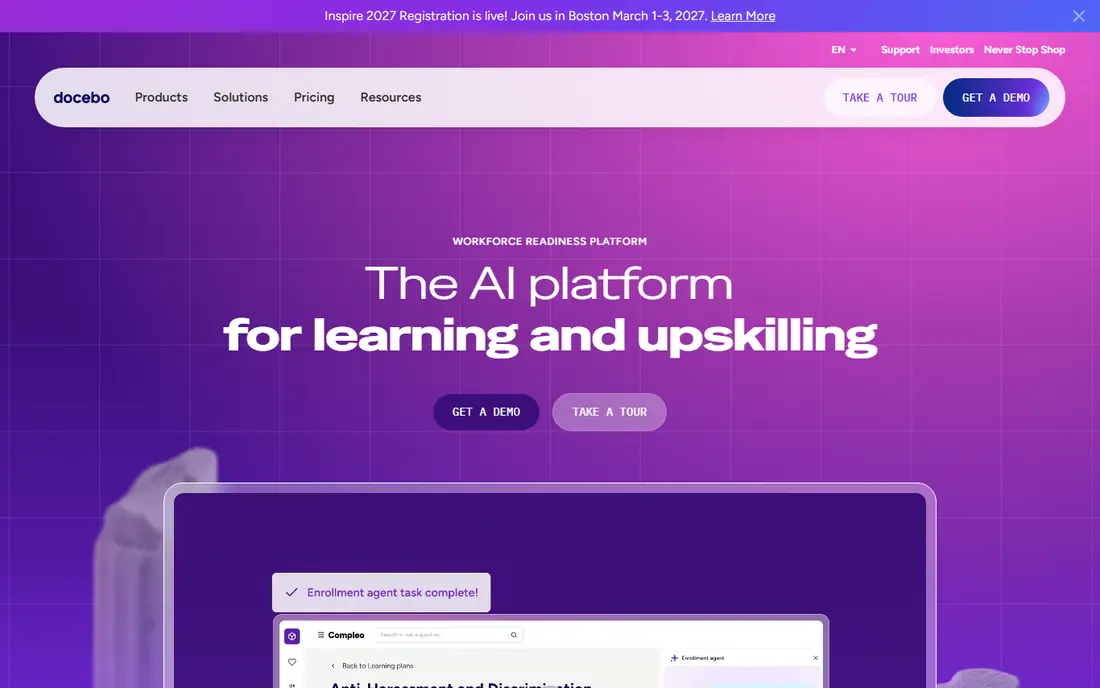
Docebo is a strong enterprise choice for a financial firm that trains employees, advisors, and partners from one system. Its automation can assign courses by role, track certification renewals, and surface overdue training before it becomes a compliance gap. AI features help personalize learning paths, while dashboards give managers a clear view of completion by team or region.
The trade-off is complexity and cost. Docebo is priced by quote, often based on active users, and implementation takes planning, especially when HR systems and identity tools must connect. It is best for large firms that will use its scale, rather than a small firm that only needs basic compliance tracking.
- AI-driven automation and personalization
- Advanced compliance dashboards
- Scales to employees, partners, and customers
- Pricing is quote based
- Setup can be complex
- Smaller firms may not need its full scale
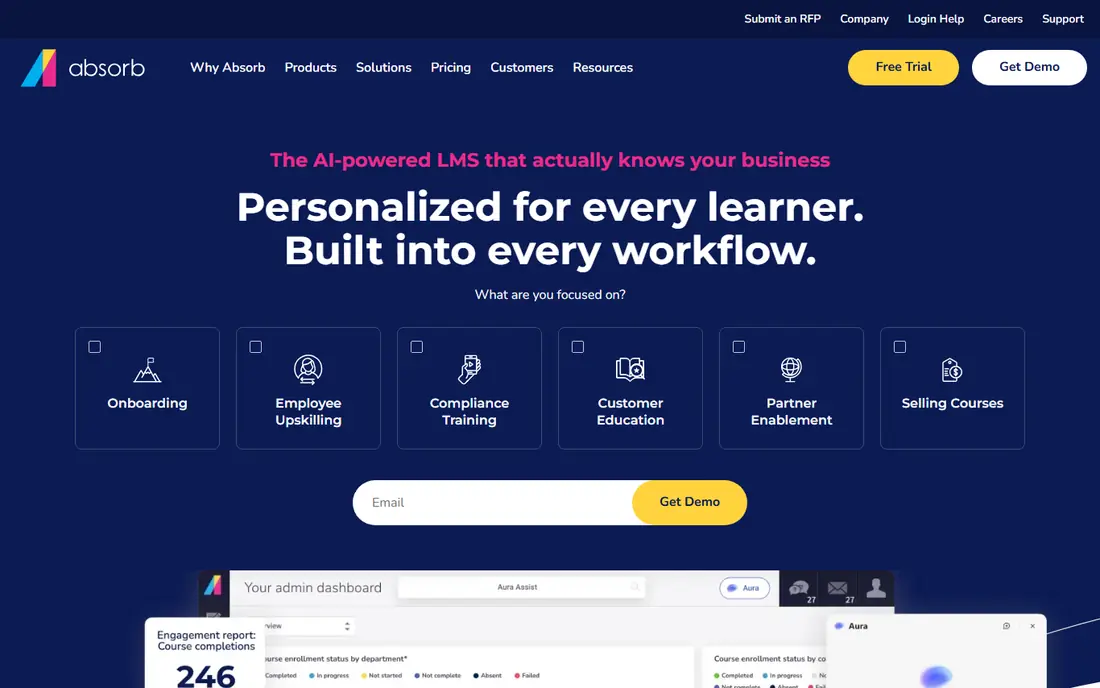
Absorb LMS earns its place through the unglamorous compliance work that financial firms rely on. Courses follow employees automatically when they change role or location, certifications renew on a schedule, and reminders go out before expiry. That automation reduces the manual chasing that causes most compliance gaps, and its reporting is detailed enough for audit review.
The admin side is powerful but dense, so plan for training and a trial with your own administrators. Pricing is quote based and usually fits firms with several hundred users or more. A very small firm may pay for capacity it does not use, but a growing firm will value the automation as headcount rises.
- Rule-based enrollment by role and location
- Automated reminders and certification tracking
- Reports an auditor can follow
- Pricing is quote based
- Admin interface can feel dense
- Authoring is best for simpler courses
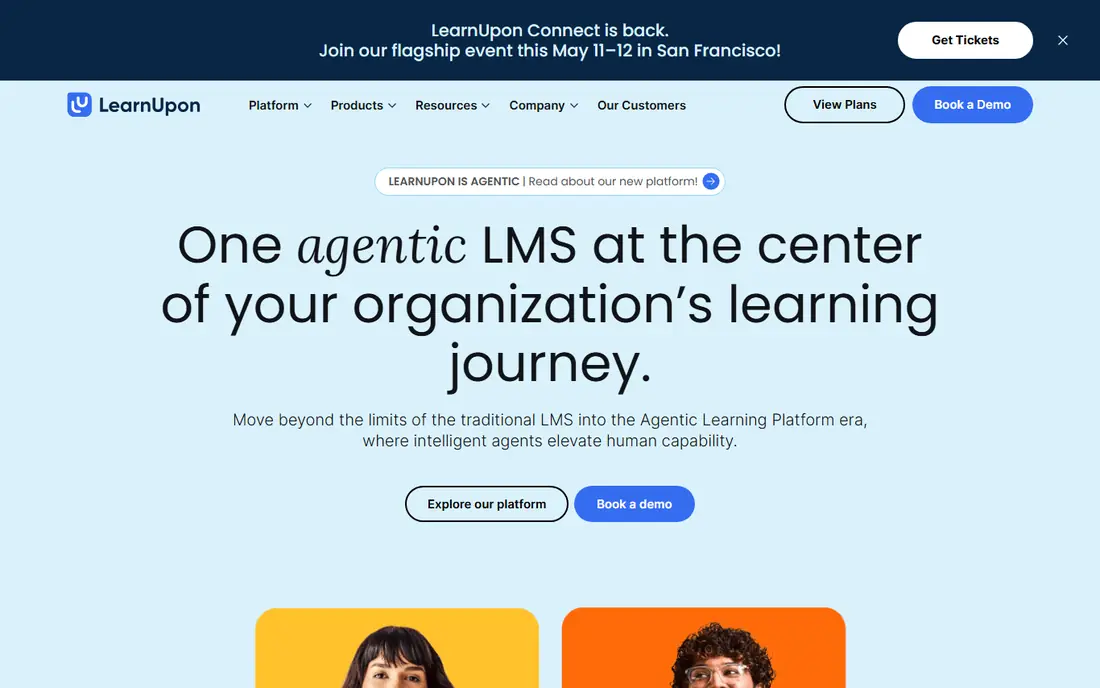
LearnUpon suits financial firms that train more than one audience, such as staff, advisors, and external partners, without running separate systems. Each audience can have its own portal, branding, and course set, while administrators keep one central record. Reviewers often rate it highly for ease of setup and support, which matters when a compliance deadline is near.
Pricing is quote based, and minimum user counts apply to some products, so a very small team should confirm fit early. For a mid-size to large firm that values a clean learner experience and reliable support, LearnUpon is a practical enterprise option.
- Separate portals for employees, customers, and partners
- Strong ease of use and support
- Good compliance reporting
- Pricing is quote based
- Minimum user levels apply to some products
- Less AI depth than Docebo
TalentLMS is the clearest starting point for a smaller financial firm, advisory practice, or fintech team that needs compliance tracking without an enterprise contract. The free plan covers up to 5 users, and paid plans start at $119 per month, which makes budgeting simple. Setup is fast, and AI tools help turn documents into courses, which is useful for firm-specific policies.
The limit is scale and depth. Very large firms with complex certification rules, multi-entity reporting, and heavy audit demands will need a more specialized platform. For a team of dozens or a few hundred learners, TalentLMS covers onboarding, policy training, and renewal tracking well.
- Free plan for up to 5 users
- Transparent tiered pricing
- Fast setup with AI course creation
- Compliance depth is below enterprise specialists
- Advanced reporting needs higher tiers
- Large firms will outgrow it sooner
Litmos is attractive when a financial firm wants both a platform and a large library of ready-made courses. Its content covers compliance and professional skills, and its certification tools track renewals, deadlines, and escalation alerts. Audit-ready reports and exports help compliance teams answer questions without rebuilding records by hand.
Check what the content library actually includes for your jurisdictions and roles, because library access varies by tier. The learner interface is practical rather than polished, which may affect engagement for voluntary development courses, though it matters less for required compliance training.
- Large off-the-shelf course library
- Automated certification management
- Audit-ready reporting and exports
- Pricing is quote based
- Learner interface is more functional than modern
- Content library is an add-on tier for some plans
Cornerstone is an enterprise talent platform that includes learning alongside performance, skills, and career tools. For a large bank or insurer that already manages talent in one system, keeping compliance training inside that suite avoids duplicate records and gives leaders a fuller view of workforce readiness. Its reporting and global scale suit firms with many entities and regulators.
That breadth is also the drawback. Implementation takes time, and a firm that only needs learning and compliance tracking may pay for talent features it never uses. Choose Cornerstone when the wider talent strategy justifies it, not for a standalone compliance project.
- Broad talent suite beyond learning
- Strong enterprise reporting
- Scales across global workforces
- Pricing is quote based
- Implementation can be long
- Smaller firms may find it too broad
Skillsoft Percipio is best known for its course library, which covers finance, risk, leadership, and technology topics that financial teams need beyond mandatory compliance. Learning paths help managers guide development, and assessments check understanding rather than just completion. For firms that want development and compliance in one place, the library is a real advantage.
Percipio is not a compliance platform by itself. Tracking, renewal rules, and audit exports depend on configuration and on whether the firm uses Skillsoft content, its own courses, or both. Confirm how your mandatory courses will be tracked before assuming the library alone solves compliance.
- Very large professional course library
- Content for finance, risk, and leadership skills
- Learning paths and assessments
- Pricing is quote based
- Library quality varies by topic
- Compliance tracking depends on how the platform is configured
CYPHER Learning combines an AI-powered LMS with no-code authoring, which helps compliance teams turn policies into courses without a separate authoring tool. It integrates with leading compliance course providers, supports custom learning paths by role or regulation, and offers skills mapping and analytics for workforce planning. That combination suits regulated firms that update content often.
As a less widely known enterprise name than Docebo or Cornerstone, CYPHER Learning deserves a careful pilot. Test course creation, reporting, and integrations with your HR and governance tools before a full rollout, and confirm support coverage for your regions.
- No-code course creation
- Compliance content integrations
- Skills mapping and analytics
- Pricing is quote based
- Brand recognition is lower than Docebo or Cornerstone
- Enterprise rollout needs planning
Sana Learn targets global banks and insurers that need fast, AI-led compliance training with strong audit evidence. It offers course kits covering major regulations, automated attestations, and audit logs that support evidence packs for regulators. Adaptive quizzes and microlearning help keep required training short and relevant, which improves completion rates.
Pricing is premium, and firms moving from a legacy LMS should plan migration support for courses, records, and user data. Sana Learn is most convincing for a larger firm with global regulatory exposure, where audit evidence and completion speed justify the investment.
- AI-driven adaptive learning
- Automated attestations and audit logs
- Course kits for major regulations
- Premium pricing
- Migration from legacy systems may need support
- Best fit is larger global firms
How we picked these
We compared official feature and pricing pages, public reviews, and comparisons focused on financial services compliance. We favored platforms with certification tracking, renewal automation, role-based assignment, and exportable records, and we included both enterprise suites and clearer-priced options for smaller firms. Where pricing is quote based, we wrote See website rather than repeating third-party estimates as vendor prices. We did not claim hands-on testing.
How to choose an LMS for a regulated firm
Start with the evidence you must produce. List every mandatory course, the roles it applies to, the renewal period, and the report an auditor will ask for. Then test each platform against that list, using your own role structure, not a vendor demo with generic roles. A platform that cannot show overdue training by role, course version, and completion date will create manual work at audit time.
Next, separate content from platform. Ask which regulatory courses are included, which jurisdictions they cover, how often they are updated, and whether updates trigger re-enrollment. If you must write your own policy courses, test authoring, version control, and translation. A strong platform with weak content, or strong content on a weak platform, will both leave gaps.
Finally, price the full rollout. Include licenses, content, implementation, identity integration, migration of historical records, and administrator time. A quote that covers only licenses will understate the first-year cost, especially for a firm moving from spreadsheets or a legacy system. Ask for a written total for year one and year two, based on your actual learner count.
Frequently asked questions
What is the best LMS for financial services?
Docebo, Absorb LMS, and LearnUpon are the strongest overall picks for larger financial firms, because they combine compliance tracking with scale and reporting. TalentLMS is the best lower-cost start for smaller teams, while Sana Learn and CYPHER Learning suit firms that want AI-led compliance features.
What is the LMS with the best reviews for financial services?
Review scores vary by site and sample, but LearnUpon, Absorb LMS, and TalentLMS consistently receive strong reviewer ratings for ease of use and compliance tracking. Treat review scores as a starting point, and run a pilot with your own courses and roles before deciding.
Does an LMS alone make training compliant?
No. An LMS tracks delivery and completion, but compliance also depends on approved content, correct role assignment, renewal rules, and reporting that matches your regulator's requirements. Confirm content approval and record-keeping rules separately for each regulated role.
How much does an LMS for financial services cost?
Costs range from a free TalentLMS plan for up to 5 users and $119 per month for paid tiers, to quote-only enterprise contracts that run into five or six figures per year. Total cost depends on learner count, content, integrations, and implementation, so ask for a full written quote.
Can a small financial firm use TalentLMS for compliance?
Yes, for basic compliance tracking, onboarding, and policy training, TalentLMS is a practical fit for smaller teams. As certification rules grow more complex or learner counts rise into the thousands, a specialist enterprise platform may become a better long-term choice.
Sources
- https://www.coursebox.ai/blog/lms-platforms-for-financial-services
- https://thirst.io/blog/best-lms-for-financial-services-2026/
- https://www.cypherlearning.com/blog/business/top-3-lmss-for-fintech-and-financial-services
- https://www.docebo.com/learning-network/blog/lms-pricing/
- https://www.talentlms.com/blog/absorb-lms-alternatives/
See where you really rank - block by block
ProMapRanker scans Google Maps across a grid of your service area. Simple monthly plans from $19, white-label on every plan.
Start freeKeep reading
 zscaler alternatives
Best Zscaler Alternatives in 2026
Looking for zscaler alternatives? We compare 9 SASE and zero trust platforms on architecture, data protection, pricing, and fit for your network and team.
Read → zapier alternatives free
Best Zapier Alternatives Free in 2026
Nine automation tools for zapier alternatives free in 2026, all with genuinely free tiers, plus free plan limits, starting prices and upgrade paths explained.
Read → which platform is best for online reputation
Which Platform Is Best for Online Reputation in 2026
Wondering which platform is best for online reputation? We compare 8 review, listing, and response tools for small and multi-location businesses and agencies.
Read →