 ProMapRanker
Best LiveJournal Alternatives in 2026

Key takeaways
- No single platform copies LiveJournal exactly, because its mix of friends-only posts, communities, and long journals is now split across several services.
- Dreamwidth is the closest match for LiveJournal-style journaling, communities, and access controls.
- WordPress.com, Blogger, and Tumblr suit writers who want a public blog with a built-in audience or a simple free start.
- Medium and Substack suit writers who care more about readers and email subscribers than about a private journal.
- Ghost, Write.as, and Bear Blog suit writers who want a clean, independent home for their writing with more control over the result.
Quick comparison
| Pick | Great for | Pricing starts at | Free tier | |
|---|---|---|---|---|
 Dreamwidth | LiveJournal-style journaling | Free | Yes | Visit |
 WordPress.com | Flexible public blogs | Free | Yes | Visit |
 Blogger | Simple free blogs | Free | Yes | Visit |
 Tumblr | Short posts and fandom | Free | Yes | Visit |
 Medium | Reaching readers | Free | Yes | Visit |
 Substack | Newsletters and paid writing | Free | Yes | Visit |
 Ghost | Independent publications | See website | Free trial | Visit |
 Write.as | Minimal private writing | Free | Yes | Visit |
 Bear Blog | Tiny fast personal blogs | Free | Yes | Visit |
The best LiveJournal alternatives
LiveJournal built its following on personal journals, friend groups, communities, and comments that felt like a small social circle. Modern platforms tend to favor public reach or email lists instead, so the right alternative depends on what you miss most. We compared official feature pages, pricing pages, and community tools to find options that are live in October 2026 and genuinely fit journaling or personal blogging.
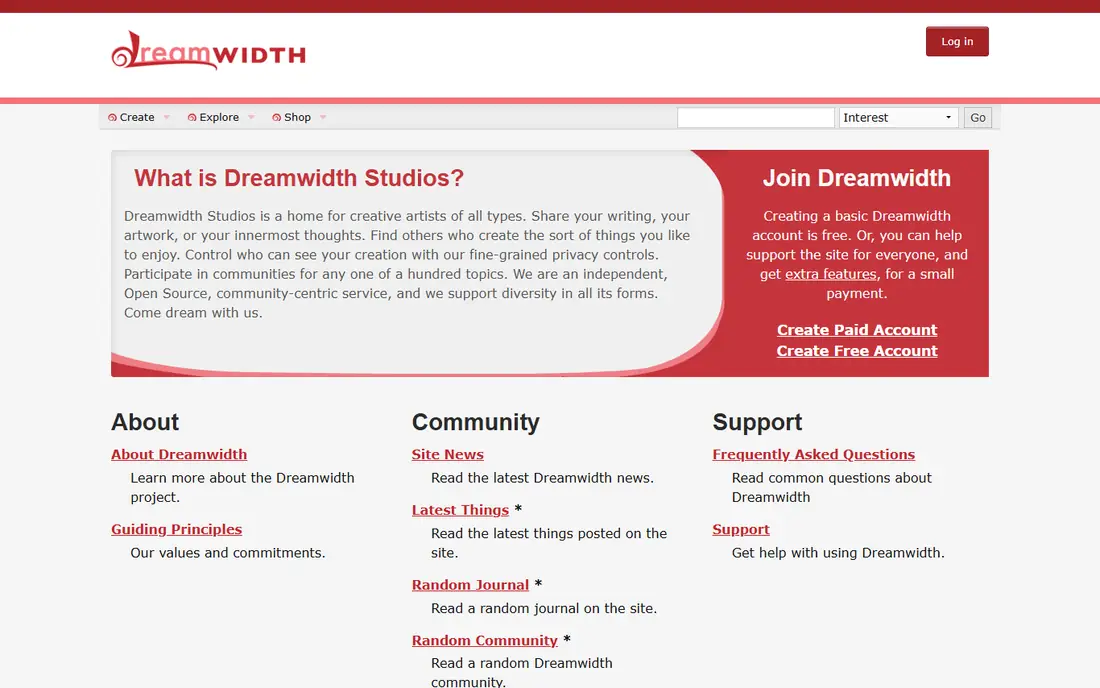
Dreamwidth is the closest thing to LiveJournal still running, and that is not an accident. It grew out of the same journaling tradition, with personal journals, community journals, friends lists, and access levels that let you keep some posts private to a group. If you want to keep writing the way you wrote on LiveJournal, Dreamwidth asks for the least change in habit.
The trade is audience size. Dreamwidth is a community platform, not a discovery engine, so new readers arrive slowly and mostly through other journals and communities. It also looks plainer than a modern site builder, though themes and customization help. For writers who value the journal format itself, those limits matter less than the familiar structure.
- Journals, communities, and access controls like LiveJournal
- Import tools for LiveJournal content
- Open-source codebase
- Smaller audience than the big blogging platforms
- Design feels older than modern builders
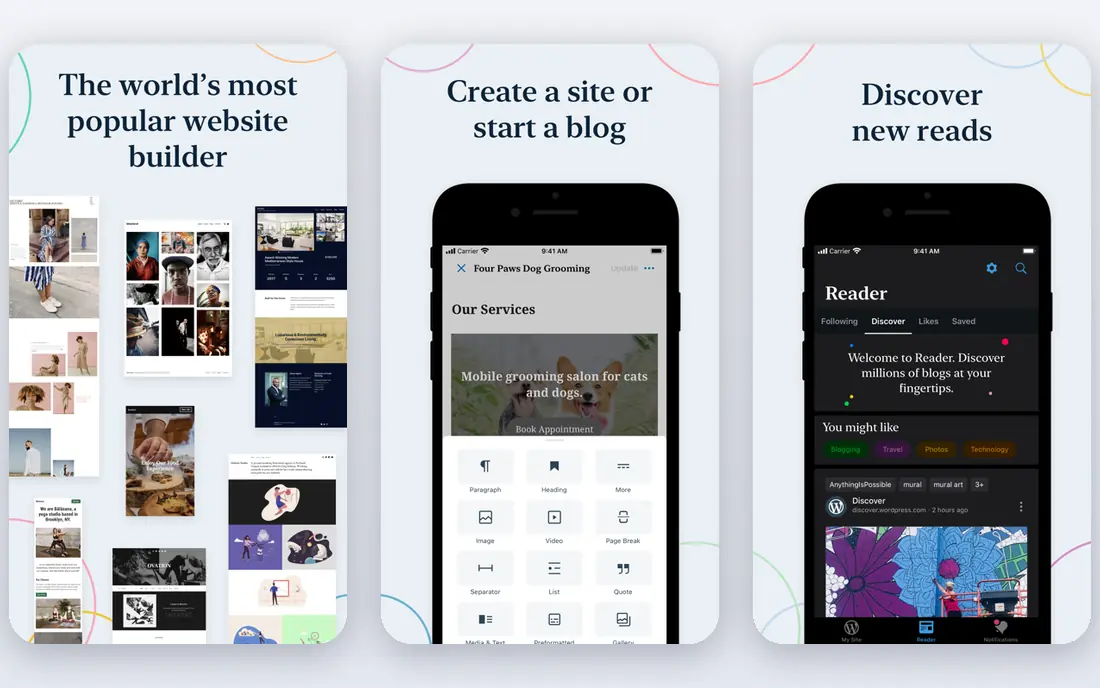
WordPress.com is the practical choice when you want a blog that can grow. You can start free, pick a theme, and publish posts that search engines and readers can find. As your writing grows, paid plans add a custom domain, more storage, plugins, and monetization options, so the same site can move from hobby journal to full publication.
It does not copy LiveJournal social features. There are no friends-only journals in the same sense, and comments work more like a public blog than a closed circle. Privacy controls exist, including password-protected and private posts, but the platform is built for public writing first. Choose it when reach and flexibility matter more than a closed community.
- Free plan to start
- Huge theme and plugin ecosystem on paid plans
- Strong search visibility for public posts
- Free plan shows ads and limits customization
- The best features sit in paid tiers

Blogger remains a solid free starting point, and its simplicity is the point. A Google account gets you a blog in minutes, with posts, pages, labels, and comments included. It suits personal journals that do not need memberships, newsletters, or complex layouts, and it costs nothing to keep running.
The limits show up over time. Blogger has fewer themes, fewer integrations, and less active development than the larger platforms, so writers who later want memberships or advanced design may need to move. For a low-effort personal journal that you update when you feel like it, though, Blogger still does the job well.
- Free with a Google account
- Easy setup
- Custom domain support
- Limited design and feature growth
- Fewer modern tools than WordPress.com
Tumblr keeps the community feeling that many LiveJournal users miss, just in a shorter format. You follow blogs, reblog posts, tag your work, and join conversations around shared interests. Fandom, art, and personal photo blogs still thrive there, and the social layer is built into the platform rather than added on.
Long essays are possible, but Tumblr favors quick posts and visual content, so a writer who publishes long journal entries may feel constrained. Search and archive tools are also weaker than a full blog platform. Pick Tumblr when community and short, frequent posts matter more than long-form archives.
- Free blogs with reblogging and community tags
- Good for short posts, images, and fandom
- Easy to follow other blogs
- Weaker for long-form writing
- Discovery depends on tags and the dashboard feed
Medium suits writers who want readers without building a site. You create an account, write in a clean editor, and publish to an audience that already browses the platform. Publications on Medium can give a new writer far more early readers than a standalone blog, and the reading experience is consistent across devices.
The cost is control. Your work lives on Medium terms, your blog design is limited, and moving your audience elsewhere takes effort. Medium also gates some reading behind membership, which affects how many people see a given post. It is a strong choice for essays and ideas, and a weaker choice for a private journal.
- Built-in audience and clean reading experience
- Easy publishing with no setup
- Publications add reach
- Limited site control and branding
- Monetization rules favor the Partner Program
Substack turns writing into an email-first habit. Readers subscribe, posts arrive in their inbox, and a web archive keeps older posts readable. Writers can offer free posts, paid subscriptions, or both, and the platform handles payments and delivery. That model fits essayists, analysts, and niche writers who publish on a regular schedule.
It is not a journal replacement. There are comments and community features, but no friends-only journal structure and no community journals in the LiveJournal sense. Substack also takes a share of paid subscription revenue, so writers with large paid lists should compare that cost with a self-hosted option such as Ghost.
- Email newsletters plus a web archive
- Paid subscriptions built in
- Simple setup for writers
- Less community journaling
- Paid features take a revenue share on subscriptions
Ghost is for writers who want to own their publication. It combines blogging, email newsletters, and paid memberships in one system, with a clean editor and modern themes. You can use Ghost hosting for a managed setup, or self-host the open-source software if you are comfortable running a server.
The price and effort are higher than a free blog. Ghost hosting starts on a paid plan, and self-hosting trades money for maintenance work. In return you get control over branding, memberships, and your subscriber list, which matters when writing becomes a serious project rather than a casual journal.
- Memberships and newsletters built in
- Clean editor
- You can self-host the open-source version
- Hosted plans are paid
- Setup takes more work than a free blog platform
Write.as appeals to writers who want the words first and everything else second. Its editor is minimal, its blogs load fast, and it offers private and anonymous publishing options that suit journaling. Paid plans add custom domains, newsletters, and more blogs, but the free tier is enough for a simple personal blog.
The small community is both a strength and a limit. You will not find the same social activity as Tumblr or Dreamwidth, and discovery is limited. If your goal is a quiet place to write, with readers you invite yourself, Write.as fits well.
- Clean, distraction-free editor
- Anonymous and private publishing options
- Simple blogs and newsletters
- Small community
- Limited design and social features
Bear Blog is deliberately small. It gives you a fast, plain blog with posts, pages, and a simple dashboard, and it stays out of your way. Writers who liked the personal, low-pressure side of LiveJournal often like Bear Blog for the same reason: it is a place to write, not a feed to perform for.
That minimalism has clear limits. There is no community layer, no newsletter system, and little design flexibility beyond the basics. Bear Blog is best as a personal home base, with links to other places where you talk with readers.
- Free blogs that load very fast
- Simple writing and publishing
- No ads on free blogs
- Minimal features by design
- No built-in community or newsletter tools
How we picked these
We compared official feature pages, pricing pages, and community tools, and we kept only platforms that are live and accepting new writers in October 2026. We favored platforms that cover at least one core LiveJournal need: personal journals, community interaction, private or group posts, or long-form personal writing. We left out platforms that had shut down, stopped sign-ups, or offered only short social posts with no blogging home.
How to choose the right one
Start with one question: do you want a private circle, a public audience, or a quiet home for your writing. A private circle points to Dreamwidth, a public audience points to Medium or WordPress.com, and a quiet home points to Write.as or Bear Blog. If email subscribers are the goal, Substack or Ghost fit better than any journal platform.
Next, check what you can take with you. Export your LiveJournal entries if you still have access, and test import or manual migration on your top two choices before you commit. Keep your old journal readable while you settle in, and tell your regular readers where to find you, since no alternative will move your community for you.
Frequently asked questions
What is the closest alternative to LiveJournal?
Dreamwidth is the closest match, with journals, communities, friends lists, and access controls in the same tradition as LiveJournal. It has a smaller audience than the big platforms, but the writing format will feel familiar.
Can I move my LiveJournal posts to another platform?
Dreamwidth offers import tools for LiveJournal content, and WordPress.com supports imports from several blogging platforms. Export your entries first, test the import on a private or draft blog, and check that private posts keep the privacy level you expect.
Is there a free LiveJournal alternative?
Yes. Dreamwidth, Blogger, Tumblr, Medium, Substack, Write.as, and Bear Blog all offer free plans or free blogs. Free plans differ in ads, storage, and features, so check the limits before you move a large archive.
Which alternative is best for private journaling?
Dreamwidth and Write.as are the strongest picks for private writing, thanks to access controls and private publishing options. WordPress.com also supports private and password-protected posts, but it is built mainly for public blogs.
Which alternative is best for building an audience?
Medium and Substack give new writers the fastest path to readers, since both have built-in discovery and email delivery. WordPress.com is better if you want search traffic and full control over your site over time.
Is LiveJournal still running?
LiveJournal is still online, but many writers have moved because its community has shrunk and its terms and ownership have changed over the years. If you stay, keep a backup of your entries so you can move them later.
Sources
See where you really rank - block by block
ProMapRanker scans Google Maps across a grid of your service area. Simple monthly plans from $19, white-label on every plan.
Start freeKeep reading
 zscaler alternatives
Best Zscaler Alternatives in 2026
Looking for zscaler alternatives? We compare 9 SASE and zero trust platforms on architecture, data protection, pricing, and fit for your network and team.
Read → zapier alternatives free
Best Zapier Alternatives Free in 2026
Nine automation tools for zapier alternatives free in 2026, all with genuinely free tiers, plus free plan limits, starting prices and upgrade paths explained.
Read → which platform is best for online reputation
Which Platform Is Best for Online Reputation in 2026
Wondering which platform is best for online reputation? We compare 8 review, listing, and response tools for small and multi-location businesses and agencies.
Read →