 ProMapRanker
LiteLLM Alternatives in 2026

Key takeaways
- OpenRouter suits teams that want fast access to many models through one API and one bill, without running a gateway.
- Portkey and Bifrost suit production routing, with Portkey stronger on governance and Bifrost stronger on self-hosted scale.
- Helicone and Langfuse suit teams whose main problem is visibility, since both focus on request logs, costs and traces.
- Cloudflare AI Gateway and Vercel AI Gateway suit teams already inside those platforms, where edge or serverless integration matters most.
- Kong AI Gateway suits organisations that already run Kong for APIs and want AI traffic under the same governance.
Quick comparison
| Pick | Great for | Pricing starts at | Free tier | |
|---|---|---|---|---|
 OpenRouter | Fast multi-model access | See website | Yes | Visit |
 Portkey | Production gateway and governance | See website | Yes | Visit |
 Helicone | Observability-first gateway | See website | Yes | Visit |
 Langfuse | LLM traces and evaluation | See website | Yes | Visit |
 Cloudflare AI Gateway | Edge caching and logging | Free | Yes | Visit |
 Vercel AI Gateway | Vercel and Next.js apps | See website | Yes | Visit |
 Kong AI Gateway | Enterprise API governance | See website | Free trial | Visit |
 Bifrost | Self-hosted production routing | Free | Yes | Visit |
 Martian | Cost and quality routing | See website | Yes | Visit |
The best LiteLLM alternatives
These are alternatives to LiteLLM only. LiteLLM itself is not listed. Each tool below routes, observes or governs large language model traffic, but they differ in hosting, governance and price, so match the tool to the problem you actually need to solve.
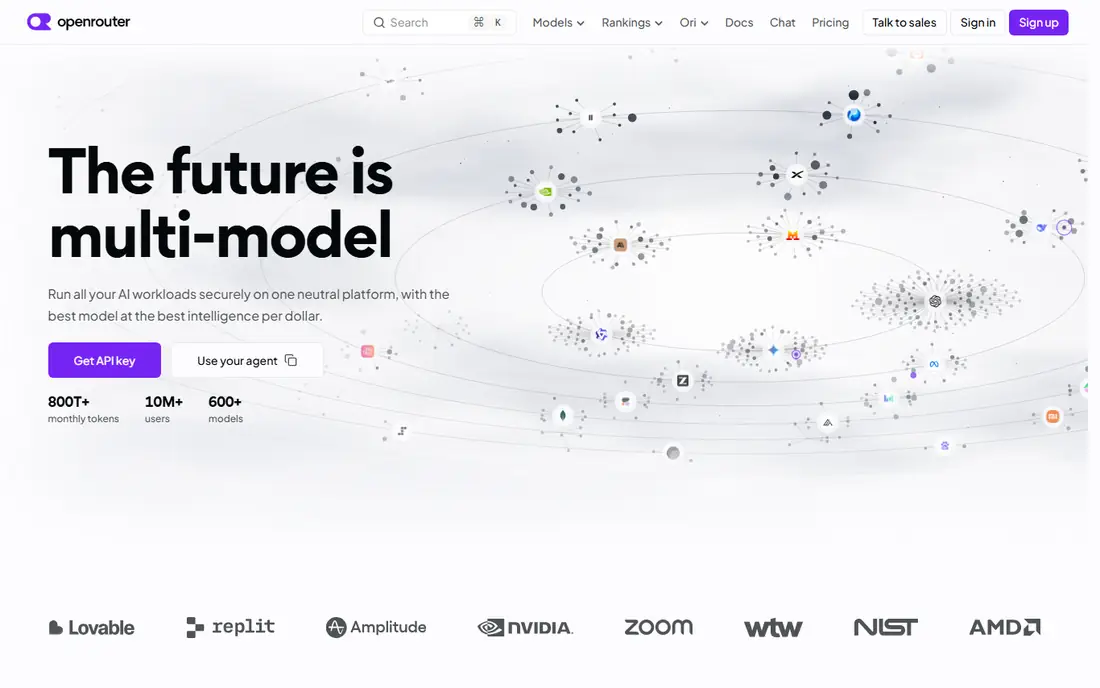
OpenRouter is the fastest way to try many models without building a gateway. One API key covers hundreds of models from many providers, with unified billing and routing controls. Teams can switch models per request, compare outputs and manage spend from one dashboard, which suits prototyping and multi-model products.
The trade-off is control. OpenRouter is a managed service, so teams that need self-hosting, on-premise data handling or deep enterprise governance will find Portkey or Kong a better fit. For speed and breadth, though, few alternatives match OpenRouter for a first multi-model setup.
- Hundreds of models through one API
- Pay-as-you-go billing
- Bring-your-own-key support
- Managed only, no self-hosting
- Enterprise governance is thinner than Portkey
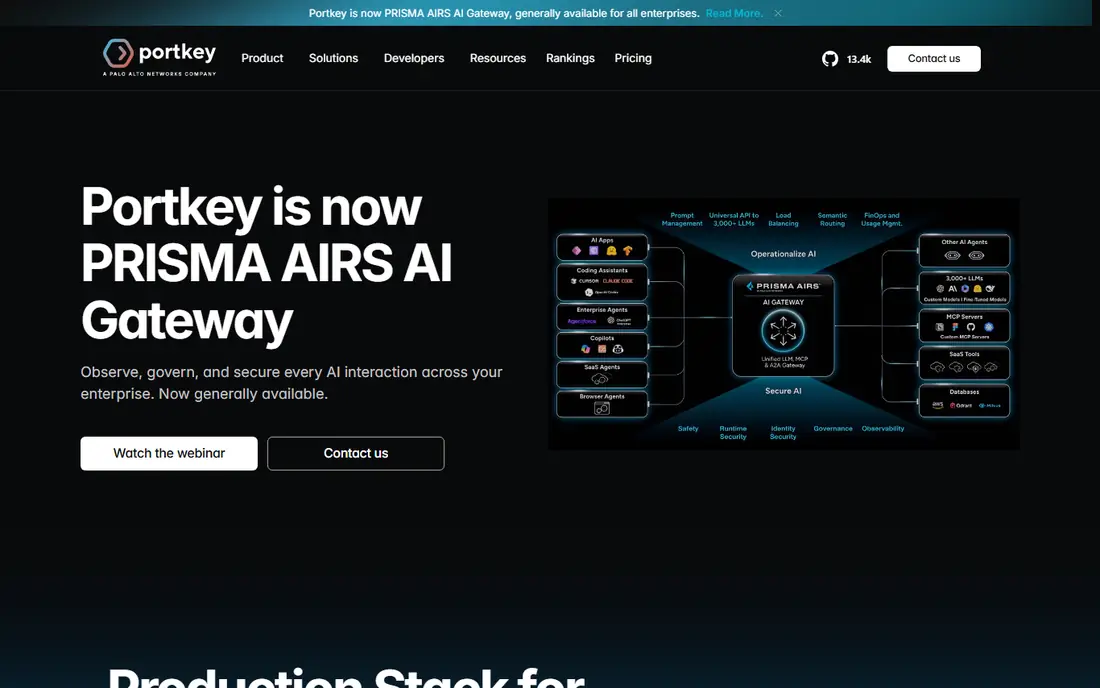
Portkey combines a gateway, routing, caching, guardrails and observability in one production system. It covers a large provider range, supports virtual keys, budgets and fallbacks, and adds governance features such as PII handling and audit trails on higher tiers. That breadth suits teams running LLM features for real customers.
Setup takes more work than a simple aggregator, and the most useful governance features sit on paid plans. Portkey suits teams that have moved past prototyping and need reliable routing, cost control and policy enforcement in production, not just model access.
- Gateway plus guardrails and observability
- Many providers
- Virtual keys and budgets
- Full enterprise features need paid plans
- Setup is deeper than OpenRouter
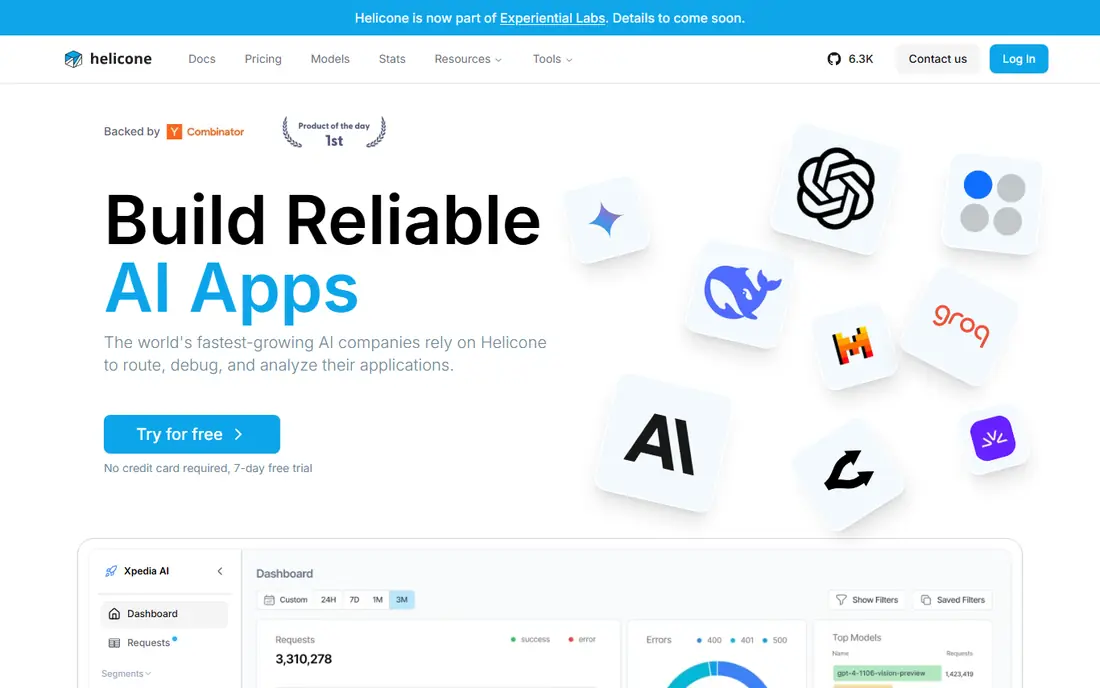
Helicone started as an observability proxy and now adds gateway features such as caching and routing. Its strength is visibility: every request, cost, latency and error is logged in a way developers can search and debug. A drop-in proxy setup means existing code needs only a small change to start logging.
Routing and governance are less deep than Portkey, so teams that need complex policy enforcement may need another layer. Helicone suits teams whose main pain is debugging and cost visibility, especially when they want to keep their existing provider setup and add observability first.
- Request-level logging and caching
- Self-hosting option
- Drop-in proxy setup
- Routing depth is thinner than Portkey
- Some enterprise features need higher tiers
Langfuse focuses on tracing, evaluation and prompt management for LLM applications. Developers can see prompts, completions, costs and latencies per trace, build datasets from real traffic, and run evaluations before shipping a prompt change. That workflow suits teams improving quality over time.
Langfuse is not a drop-in replacement for a full routing gateway on its own, since routing and failover need other tooling or integrations. It pairs well with a gateway such as Portkey or OpenRouter when a team needs both routing and deep evaluation. Choose Langfuse when quality and debugging matter more than gateway policy alone.
- Detailed traces and prompts
- Evaluation and datasets
- Open-source option
- Not a full production gateway on its own
- Needs integration work for routing
Cloudflare AI Gateway sits on Cloudflare's edge network and adds caching, analytics, rate limiting and fallback controls to LLM calls. Core features are free, and setup needs no server, which makes it attractive for teams already using Cloudflare for DNS, security or delivery. Cached responses can also cut cost and latency for repeated prompts.
Governance depth is thinner than dedicated gateways, and the tool fits best inside a Cloudflare-heavy stack. Teams outside that ecosystem may prefer a provider-neutral gateway. For Cloudflare users, though, AI Gateway adds useful control with almost no operational overhead.
- Edge caching and analytics
- No infrastructure to run
- Rate limiting and fallback controls
- Less focused on LLM routing governance than Portkey
- Tied to Cloudflare ecosystem
Vercel AI Gateway gives Vercel and Next.js apps one endpoint for many models, with failover, budgets and spend controls. It fits teams already deploying on Vercel, since model access, hosting and front-end code sit in the same workflow. Prototyping a new AI feature inside an existing Vercel app is fast.
Outside Vercel, the advantage fades, and observability depth trails Helicone and Langfuse. Vercel AI Gateway suits product teams building AI features into Vercel apps, rather than platform teams seeking a provider-neutral gateway for many services.
- One endpoint for many models
- Failover and budgets
- Fits Vercel workflows
- Best inside Vercel
- Observability depth trails dedicated tools
Kong AI Gateway brings LLM traffic under Kong's mature API gateway platform. Policy enforcement, traffic control, authentication and audit trails apply to AI calls in the same way as other APIs, which suits large organisations with existing governance standards. Teams already running Kong gain AI routing without a second gateway platform.
Kong is more general-purpose than LLM-focused tools, so model-specific features such as prompt evaluation need other tooling. Pricing for enterprise use also needs a sales conversation. Kong suits enterprises that value unified API governance above LLM-specific convenience.
- Enterprise policy enforcement
- Traffic control and auditability
- Existing Kong ecosystem fit
- More general-purpose than LLM-focused
- Enterprise pricing needs a sales conversation
Bifrost, from Maxim AI, is an open-source gateway built for production scale. It routes across many providers, supports load balancing, caching and virtual keys, and runs self-hosted for teams that need control over data and infrastructure. Its Go-based design suits high-throughput services where latency matters.
Self-hosting means your team owns deployment, upgrades and on-call work, which is a real cost. Observability is also more basic than dedicated tools such as Helicone or Langfuse. Bifrost suits engineering teams that want a fast, open, self-hosted gateway and can operate it themselves.
- Open source and self-hosted
- Low-latency routing
- Load balancing and caching
- Needs operational ownership
- Observability is more basic than Helicone
Martian is a smart router that picks a suitable model per request based on cost, quality and latency goals. Instead of hard-coding one model, a team can let Martian route simple prompts to cheaper models and hard prompts to stronger ones. That approach can cut spend without a manual model review for every use case.
Martian is a managed router, not a full governance platform, so teams needing deep policy, audit and self-hosting controls will need another layer. For product teams focused on cost and quality balance, Martian offers a simpler path than building routing logic in application code.
- Routes each request to a suitable model
- Cost and quality trade-offs handled automatically
- Simple setup
- Managed only
- Less governance depth than Portkey or Kong
How we picked these
We compared official product pages, gateway comparisons and provider documentation for tools that route, observe or govern LLM traffic. We favoured tools with a current free tier, trial or open-source option, a clear routing or observability role, and a realistic production use case. We left out pure chat products and pure model providers with no gateway role. We compared feature pages, pricing and public reviews rather than claiming hands-on testing.
How to choose the right alternative
Start with the problem. If the problem is access to many models, OpenRouter or Martian will solve it fastest. If the problem is production reliability and governance, Portkey, Bifrost or Kong fit better. If the problem is debugging and quality, Helicone or Langfuse should come first, even if you keep your current gateway.
Next, decide on hosting. Self-hosted tools such as Bifrost give control but need operational work, while managed tools such as OpenRouter, Portkey and Martian shift that work to the vendor. Check data handling, key management and compliance needs before choosing, since LLM traffic often carries user data that falls under company policy.
Finally, test failover and cost controls with real traffic. Route a small share of requests through the new gateway, check logs, latency and spend, and confirm that fallbacks work when a provider fails. A gateway that looks good in docs can still surprise you on error handling, so a staged rollout beats a full switch on day one.
Frequently asked questions
What are the best alternatives to LiteLLM?
OpenRouter suits fast multi-model access, Portkey suits production governance, Helicone and Langfuse suit observability and evaluation, and Bifrost suits self-hosted routing. Cloudflare and Vercel gateways suit teams already inside those platforms, while Kong suits enterprises already running Kong.
Is OpenRouter a direct replacement for LiteLLM?
OpenRouter replaces the multi-model access part of LiteLLM, with one API and one bill for many models. It does not replace self-hosting or deep enterprise governance. Teams that need those controls should look at Portkey, Bifrost or Kong instead, depending on hosting and policy needs.
Which LiteLLM alternative is best for observability?
Helicone suits request-level logging, caching and cost visibility with a drop-in proxy. Langfuse suits traces, prompt management and evaluation over time. Many teams use both patterns, with a gateway handling routing and an observability tool handling quality and debugging.
Can I self-host a LiteLLM alternative?
Yes. Bifrost and Portkey's gateway core offer self-hosting options, and Helicone and Langfuse also offer self-hosted setups. Self-hosting gives data control but adds deployment and on-call work, so weigh that cost against a managed plan before committing.
Do these alternatives support failover if a provider fails?
Portkey, OpenRouter, Cloudflare AI Gateway, Vercel AI Gateway, Kong and Bifrost all support routing or fallback controls in some form. Check the exact fallback behaviour, retry rules and cost impact on each vendor's docs, since fallback logic differs and a failed provider can still generate charges on retries.
Sources
See where you really rank - block by block
ProMapRanker scans Google Maps across a grid of your service area. Simple monthly plans from $19, white-label on every plan.
Start freeKeep reading
 zscaler alternatives
Best Zscaler Alternatives in 2026
Looking for zscaler alternatives? We compare 9 SASE and zero trust platforms on architecture, data protection, pricing, and fit for your network and team.
Read → zapier alternatives free
Best Zapier Alternatives Free in 2026
Nine automation tools for zapier alternatives free in 2026, all with genuinely free tiers, plus free plan limits, starting prices and upgrade paths explained.
Read → which platform is best for online reputation
Which Platform Is Best for Online Reputation in 2026
Wondering which platform is best for online reputation? We compare 8 review, listing, and response tools for small and multi-location businesses and agencies.
Read →