 ProMapRanker
ListKit Alternatives in 2026

Key takeaways
- ListKit is a B2B lead generation platform built around plain-language search and triple-verified contact exports for cold outbound, so this list compares tools that build prospect lists in the same way.
- Apollo is the closest all-in-one swap because it pairs a contact database with sequencing, while ZoomInfo and Cognism suit larger or European teams.
- Credit systems decide the real cost, so compare credits per email, credits per mobile number, and how unused credits are handled before you judge a monthly price.
- Our pick for most small teams is Apollo, because it starts free, publishes prices, and covers prospecting and outreach in one place.
- Use these tools only for lawful business outreach to business contacts, and respect opt-outs, local rules, and each vendor's acceptable use policy.
Quick comparison
| Pick | Great for | Pricing starts at | Free tier | |
|---|---|---|---|---|
 Apollo | All-in-one prospecting and outreach | $49 per month | Yes | Visit |
 ZoomInfo | Enterprise coverage and intent data | See website | Yes | Visit |
 Lusha | Fast contact lookups from a browser extension | See website | Yes | Visit |
 Seamless.AI | Real-time contact search at volume | See website | Yes | Visit |
 Prospeo | Verified emails for outbound lists | Free | Yes | Visit |
 Clay | Waterfall enrichment across many providers | See website | Yes | Visit |
 RocketReach | Self-serve email and phone lookup | See website | Yes | Visit |
 Cognism | European prospecting and verified mobiles | See website | No | Visit |
 Hunter | Email finding and verification only | See website | Yes | Visit |
The best ListKit alternatives
ListKit, at listkit.io, is best understood as a list-building tool for outbound sales teams. You describe an ideal customer in plain language, get companies and contacts from a large database, and export contacts that have passed verification checks. The alternatives below do that core job in different ways, from a full outreach platform to a focused email finder, so the right pick depends on whether you need volume, phone data, European coverage, or a simple lookup tool.
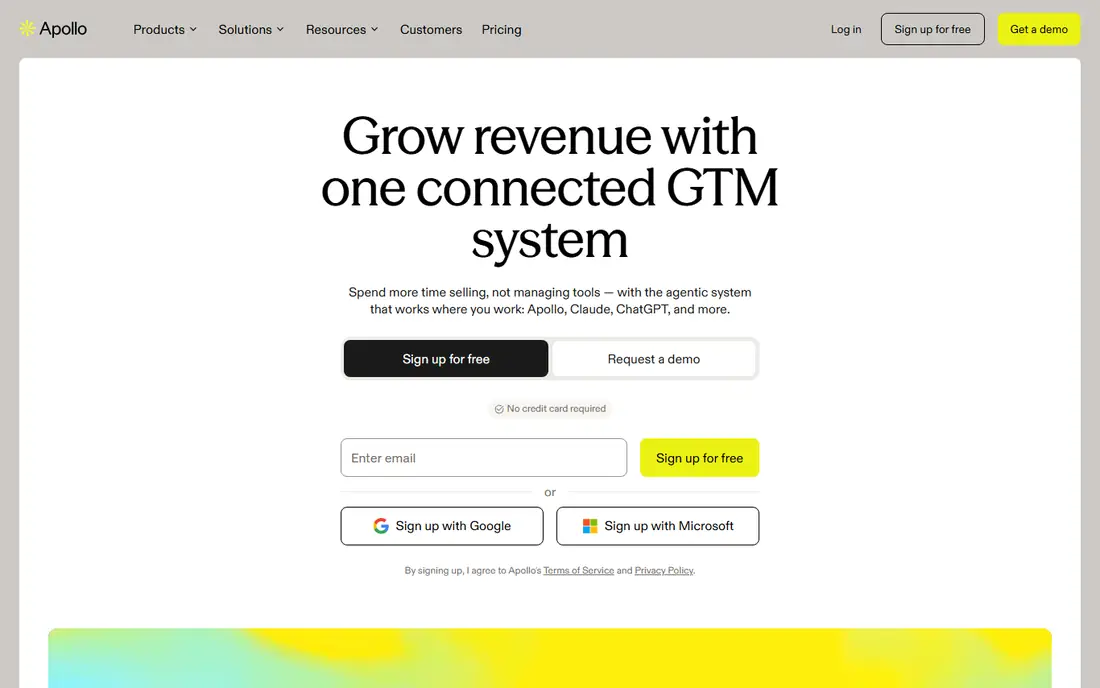
Apollo is the most direct replacement for a team that wants to build a list and then work it without buying a second tool. It combines a contact database with filters, sequencing, and a basic CRM, so a small team can move from search to first email in one workspace. The free tier lets you test search quality on your own market before paying, and the $49 per month Basic plan, billed annually, gives a clear entry point for paid use.
The honest limit is data quality by region. Apollo works best for many US focused teams, while teams prospecting heavily in Europe or in niche industries should test accuracy on a sample list first. Add a verification step before large sends, because a low bounce rate protects sender reputation more than any single feature. If you need only a list and already have a sending tool, a focused database may be cheaper than Apollo's full platform.
- Database plus sequencing in one tool
- Published pricing
- Useful free tier for testing
- Accuracy can vary outside the United States
- Mobile coverage is not its strongest area
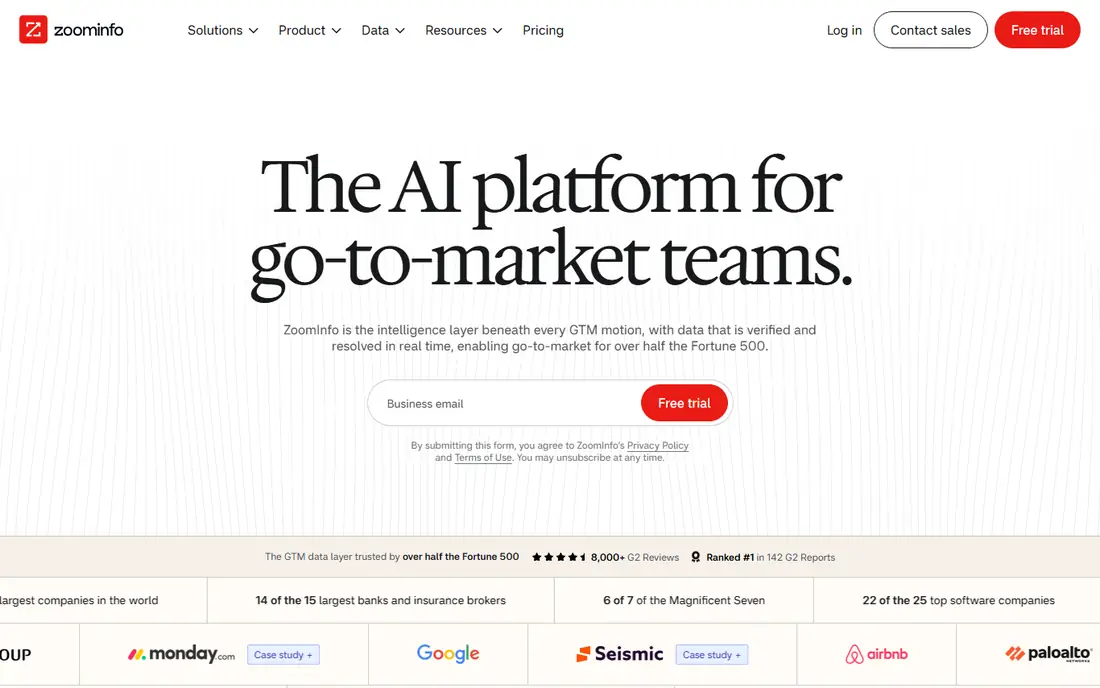
ZoomInfo suits revenue teams that sell into large accounts and need more than a name and email. Its coverage, company data, intent signals, and organisation charts help teams map buying committees and prioritise accounts, which is a different job from simply pulling a cold list. A free Lite tier exists for limited lookups, which helps an individual seller test the interface before a sales conversation.
The trade-off is cost and process. Paid plans are quoted, contracts are usually annual, and published buyer data points to a much higher total than self-serve tools. That makes ZoomInfo hard to justify for a solo founder or a small team with a narrow market. Choose it when account depth, intent, and enterprise integrations are core to your sales motion, not when you only need a few hundred verified emails a month.
- Very broad company and contact coverage
- Intent and org data for larger teams
- Strong CRM integrations
- Paid pricing is quote-based and often high
- Small teams may pay for depth they do not use
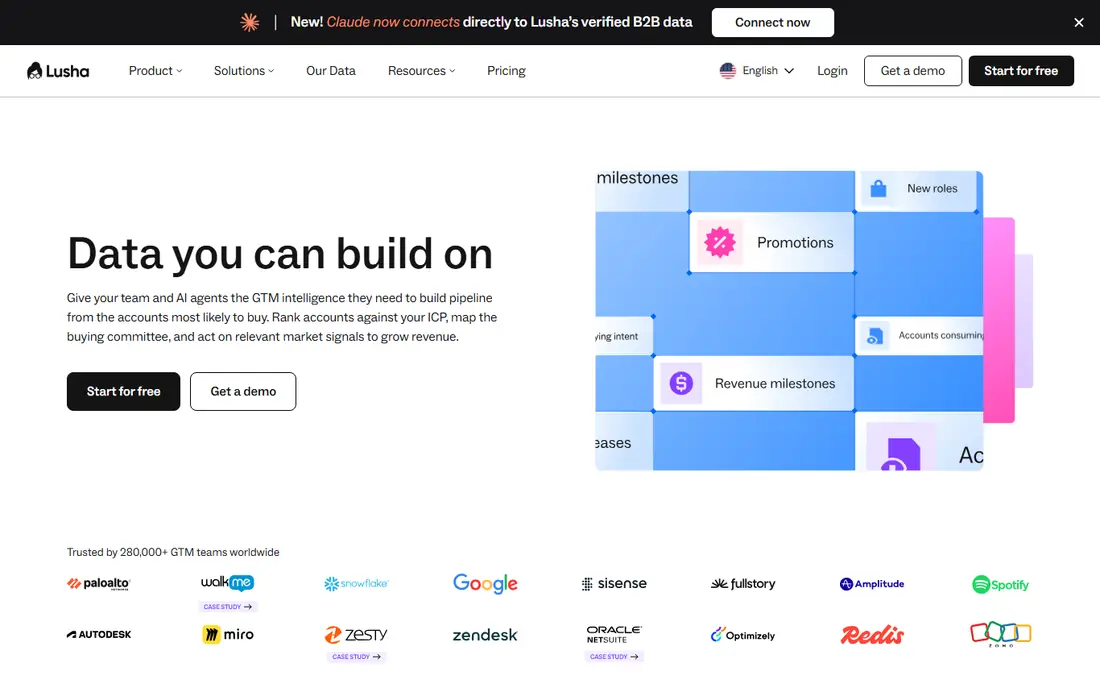
Lusha works best as a lookup tool for reps who already know which companies to target. A browser extension reveals contact details while you browse profiles and company pages, which keeps prospecting inside a normal workflow instead of forcing a separate list-building session. The free plan gives a small monthly credit allowance, and paid plans scale by credits and seats.
The limit is scale. Lusha is not designed to replace a full outbound platform, and heavy list builders will hit credit limits sooner than they would with a flat database plan. It also works best when you combine it with a CRM and a sending tool, so factor those costs into the total. Pick Lusha when speed per lookup matters more than bulk list export.
- Quick reveal of contacts while browsing
- Simple credit model
- Good for individual reps
- Credit limits can run out fast at volume
- Not a full sequencing platform
Seamless.AI pitches real-time search rather than a static list, which appeals to teams that build lists on demand. You search for a role, company, or market, get contacts in the moment, and export them for outreach. That model suits SDR teams that work fresh lists each week and want to avoid stale data from an old export.
The catch is that real-time search does not remove the need for verification. Test a sample, check bounce rates, and confirm phone data separately if calls are central to your motion. Paid pricing is also quote-based, so the free tier is the right place to judge search quality before a sales call. Choose Seamless.AI when volume and speed matter, and keep a verification step in the workflow.
- Live search for contacts and companies
- Built for high-volume outbound
- AI search features
- Paid pricing is quote-based
- Accuracy still needs verification before large campaigns
Prospeo is a focused alternative for teams whose main problem is email accuracy. It combines a profile database with a multi-step verification process, including catch-all handling and spam trap checks, and it presents pricing in a simple per-email style that is easier to forecast than some credit systems. A free tier lets you test exports before paying, which is useful for small teams.
The limit is scope. Prospeo does not try to be a CRM, dialer, and sequencing suite, so you will still need a sending tool for campaigns. That can be a benefit if you already like your sender, because you pay only for the data layer. Pick Prospeo when bounce rate and list quality are your main concern, and judge it on a real sample from your market, not on a headline accuracy claim.
- Verification built into exports
- Flat per-email style pricing on paid plans
- No contract focus on self-serve plans
- Smaller feature set than a full outreach platform
- Mobile data is not the main strength
Clay is not a simple list download tool. It is a workflow platform that lets teams enrich a list by trying several data providers in sequence, scoring leads, and building targeted tables for outreach. That waterfall approach helps when one provider has weak coverage in a niche, because a second or third source can fill the gap. It also suits RevOps and growth teams that want repeatable enrichment, not one-off exports.
The trade-off is complexity and cost control. Clay takes time to learn, and enrichment volume, provider charges, and plan limits can push costs up if workflows are not watched. Start with one clear use case, such as enriching inbound leads or a defined target list, and expand only after you see clean output. Choose Clay when enrichment quality and workflow control matter more than a simple search and export.
- Pulls data from many providers in one workflow
- Strong for enrichment and scoring
- Flexible tables
- Learning curve is higher
- Costs can rise with enrichment volume and provider use
RocketReach suits reps and recruiters who want a straightforward lookup tool without an enterprise sales process. You search for a person or company, get email and phone details where available, and export or sync the result. A free lookup allowance lets you test coverage on your own target roles before choosing a paid plan, and the browser extension keeps prospecting close to daily browsing.
The limit is the same as for most databases: coverage is not uniform. Test it on your hardest roles, not just on well-known companies, and verify emails before a large send. RocketReach is a good middle option between a free email finder and a large enterprise database, especially for small teams that need both email and phone data but do not need intent or org chart depth.
- Self-serve signup and clear lookup workflow
- Email and phone search
- Browser extension
- Coverage varies by industry and region
- Paid plans scale with lookup volume
Cognism is built for teams that prospect in Europe and need mobile numbers they can trust. Its phone-verified data and compliance focused approach make it a strong choice for GDPR aware teams, and its intent signals help prioritise accounts rather than simply expanding a list. That focus is valuable when US centric databases show thin coverage or weak phone data in European markets.
The trade-off is access and price. Pricing is quote-based, and there is no free plan, so evaluation usually runs through a demo and a trial arranged with sales. That makes Cognism a poor fit for a solo founder who wants instant self-serve access. Choose it when European coverage, verified mobiles, and compliance process are worth a sales-led purchase.
- Phone-verified mobile data
- Strong European coverage
- Compliance focused positioning
- Quote-based pricing
- No free plan for testing at scale
Hunter is the narrowest tool on this list, and that narrow focus is its strength. It finds emails linked to a domain, verifies them, and helps teams avoid bounces, without pretending to be a full sales platform. The free plan gives a small monthly credit allowance, which is enough to test domain coverage and verification quality before paying.
The limit is obvious: Hunter does not provide phone numbers, intent data, or outreach sequencing. Teams that need those features will pair Hunter with another tool, which adds cost and steps. Pick Hunter when email is your main channel, your list already exists, or you want a clean verification layer on top of another database. Do not pick it as a sole replacement if phone outreach is central to your motion.
- Fast domain search and email verification
- Simple pricing
- Useful free credit allowance
- No phone database or sequencing
- Limited company depth compared with full databases
How we picked these
We compared official product pages, pricing pages, and documentation for B2B contact databases and enrichment tools available in October 2026. We kept only tools that build or enrich prospect lists in a way comparable to ListKit, and we excluded general CRMs that do not provide contact data on their own. We weighed database focus, verification, pricing transparency, free access, regional coverage, and whether the tool also handles sequencing, because those factors change the total cost of an outbound workflow.
What to check before you pay
Start by testing on your own market, not on a vendor demo list. Pull a sample of 50 to 100 contacts in your target roles and regions, verify the emails, and check how many are current, relevant, and reachable. That sample tells you more than a database size claim, because coverage varies by industry, company size, and country. Also check credit rules in writing: what counts as one credit, whether failed lookups still cost credits, and whether unused credits roll over.
Then check the full workflow cost. A cheap database can become expensive if you still need a separate verifier, sender, and CRM, while a pricier all-in-one tool can be cheaper once those pieces are added. Finally, keep outreach lawful and respectful. Use business contacts for business purposes, honour opt-outs promptly, follow local privacy rules, and never use contact data to harass, stalk, or expose private personal details.
Frequently asked questions
What is ListKit?
ListKit is a B2B lead generation platform at listkit.io that builds prospect lists from plain-language searches and exports triple-verified contacts for cold outbound. It is aimed at founders and sales teams who need verified business emails at volume.
Which ListKit alternative is cheapest to start with?
Hunter and Prospeo offer useful free tiers for email focused work, while Apollo offers a free tier for a fuller prospecting and outreach test. The cheapest paid option depends on whether you need phones, sequencing, or only emails, so compare credit use at your real monthly volume.
Is Apollo better than ZoomInfo?
Apollo is usually better for small teams because it starts free, publishes prices, and includes sequencing. ZoomInfo is usually better for large teams that need deep account data, intent signals, and org charts, and can justify a quoted annual contract.
Do I still need email verification if a tool claims verified data?
Yes, for large campaigns. Verification claims vary by market, and a small sample test plus a verifier step protects sender reputation. Treat any accuracy claim as a starting point, not a guarantee for your list.
Can I use these tools for personal phone numbers?
No. These tools are for business contact data and lawful business outreach. Do not use them to find private personal details, track individuals, or contact people who have not given a lawful basis for business contact. Follow each vendor's acceptable use policy.
What is a credit, and why does it matter?
A credit is the unit a database charges for a lookup, export, or enrichment step. Some tools charge one credit per email and more per mobile number or intent signal, so two tools with the same monthly price can deliver very different list sizes. Always compare credits at your actual mix of emails and phones.
Sources
See where you really rank - block by block
ProMapRanker scans Google Maps across a grid of your service area. Simple monthly plans from $19, white-label on every plan.
Start freeKeep reading
 zyte alternatives
Best Zyte Alternatives in 2026
These zyte alternatives cover managed scraping APIs, proxy networks and no code tools for lawful collection from your own or consented sources only in 2026.
Read → zerto alternatives
Best Zerto Alternatives in 2026
Compare the best zerto alternatives for disaster recovery and replication, with recovery targets, cloud options and honest trade-offs for teams in 2026.
Read → zerofox alternatives
Best ZeroFox Alternatives in 2026
We compared 9 zerofox alternatives for brand protection, phishing takedowns, dark web monitoring, and social impersonation, with clear coverage notes.
Read →