 ProMapRanker
Best LaunchDarkly Alternatives in 2026

Key takeaways
- GrowthBook is our pick for most teams leaving LaunchDarkly because it combines flags with experimentation and clear seat pricing.
- Unleash and Flagsmith are the strongest open source flag platforms, with self-hosting and flexible deployment.
- ConfigCat suits teams that want simple remote configuration and predictable flag delivery without experimentation depth.
- PostHog and Statsig bundle flags with analytics and experimentation, which suits product teams that want one platform.
- Flipt and CloudBees cover GitOps-style flags and enterprise delivery workflows, two different ends of the same problem.
Quick comparison
| Pick | Great for | Pricing starts at | Free tier | |
|---|---|---|---|---|
 GrowthBook | Flags plus experimentation | Free | Yes | Visit |
 Unleash | Open source flags with self-hosting | Free | Yes | Visit |
 Flagsmith | Flexible hosted and self-hosted flags | Free | Yes | Visit |
 ConfigCat | Simple remote configuration | See website | Yes | Visit |
 PostHog | Flags bundled with product analytics | Free | Yes | Visit |
 Statsig | Experimentation-led flag management | See website | Yes | Visit |
 Flipt | GitOps-style feature flags | Free | Yes | Visit |
 CloudBees Feature Management | Enterprise delivery and governance | See website | Free trial | Visit |
The best LaunchDarkly alternatives
LaunchDarkly is the enterprise standard for feature management, but teams leave it for price, per-user billing, self-hosting or experimentation needs. The alternatives below cover open source, hosted and analytics-bundled options, and we compared them on flag delivery, targeting, experimentation, deployment and price. LaunchDarkly itself is not listed here, since this article covers alternatives only.
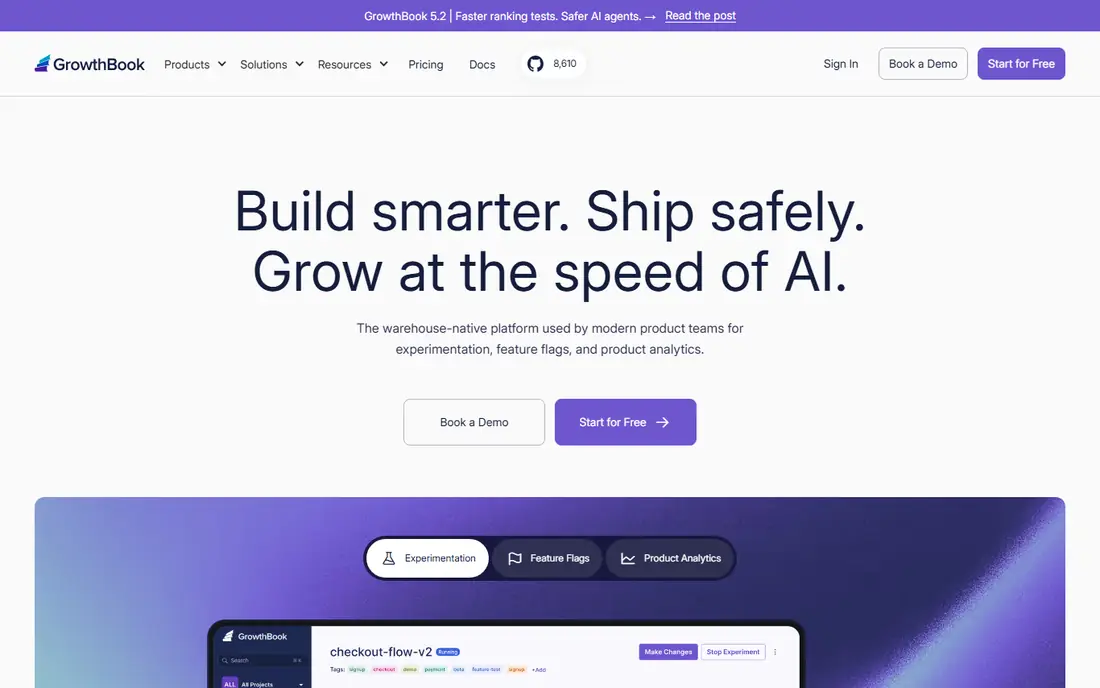
GrowthBook is our pick for most teams leaving LaunchDarkly because it solves two problems at once: safe rollouts and measurement. Feature flags support percentage rollouts, targeting and safe rollout controls, while the experimentation engine runs A/B tests with warehouse-native statistics. Seat-based pricing means costs grow with your team, not with your end-user traffic.
The trade-off is setup for self-hosted use, where you bring your own warehouse and infrastructure. Cloud Starter is free for up to three users, with Pro from $40 per seat per month in recent listings. For a product team that wants to know whether a release helped or hurt, GrowthBook gives the clearest answer here.
- Free Starter cloud plan for up to three users
- Strong experimentation with warehouse-native stats
- Seat-based pricing, not per end user
- Self-hosting needs a data warehouse setup
- Enterprise governance features sit on higher tiers
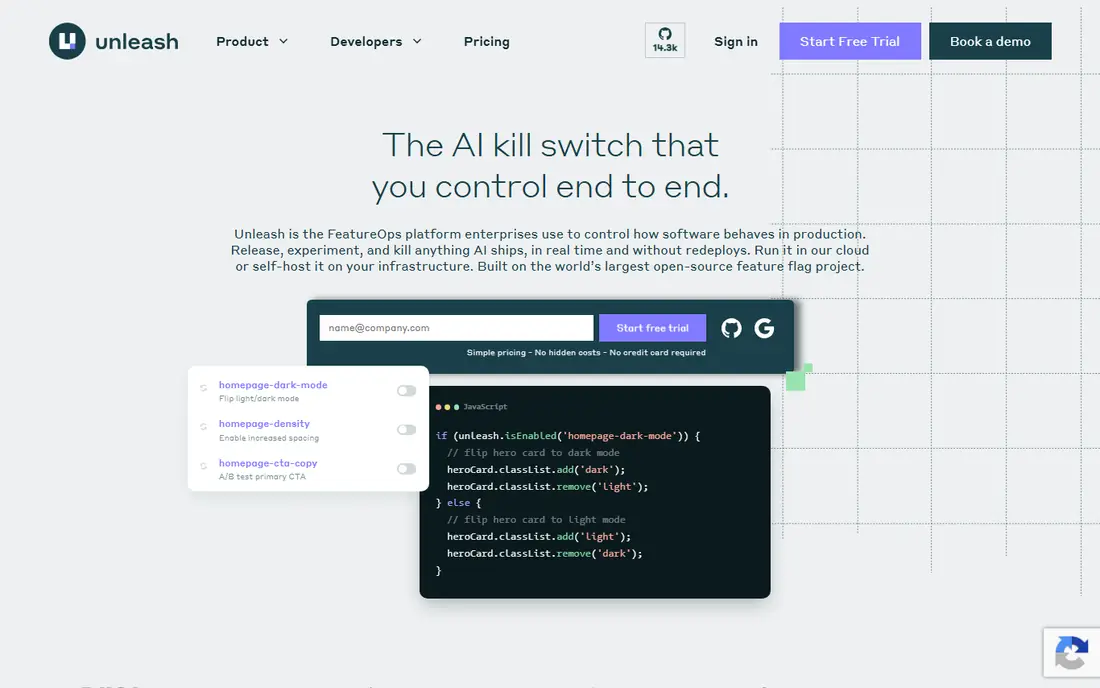
Unleash is a focused feature flag platform with an open source core that teams can self-host for free. It supports boolean flags, gradual rollouts, targeting rules and strategies for different user segments, with SDKs for major languages and frameworks. That focus makes it a clean replacement for teams that only need flags, not a full experimentation suite.
Experimentation is the limit. Unleash offers variants and basic analysis, but teams that need rigorous A/B testing will pair it with another tool or choose GrowthBook. Paid cloud plans start at $75 per seat per month in recent roundups, with a free self-hosted option. For regulated or data-sovereign teams, self-hosting is the main draw.
- Open source core with self-hosting
- Strong targeting and gradual rollouts
- Wide SDK coverage
- Experimentation analysis is limited compared with GrowthBook
- Paid cloud pricing needs a quote check
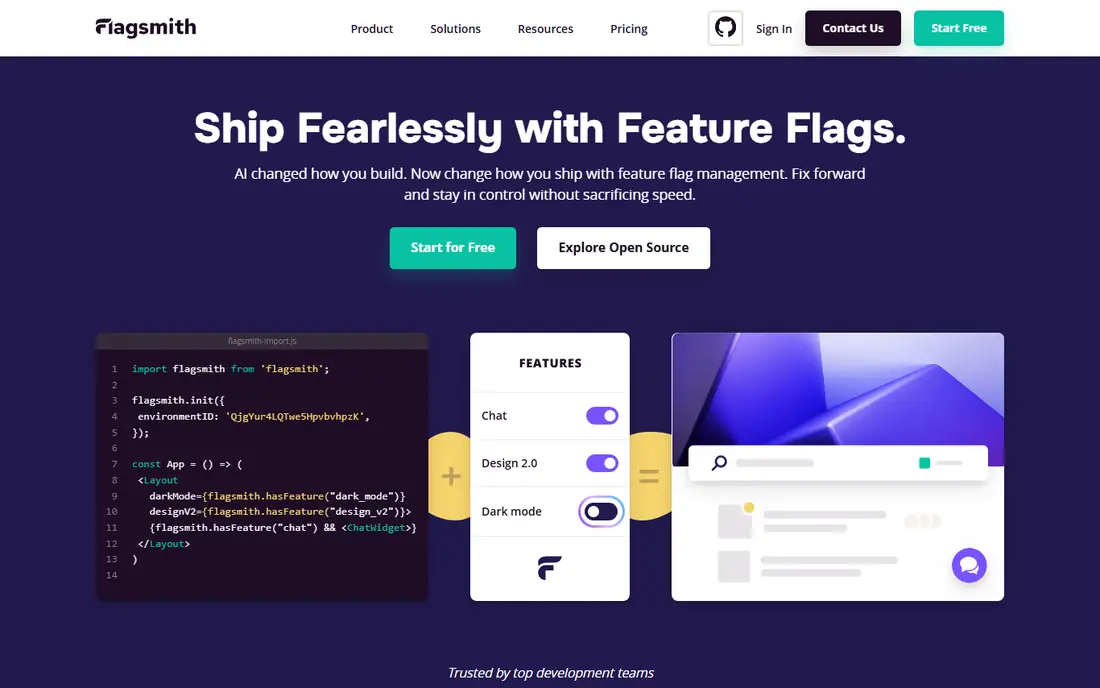
Flagsmith gives teams deployment choice without locking them into one model. You can use the hosted cloud, run it in a private cloud, or self-host the open source core, and the same flags and remote configuration work across those options. Remote configuration is a useful bonus, letting teams change strings, limits and settings without a deploy.
Pricing needs modeling, since it combines request volume and team size, with a free tier covering 50,000 requests per month and paid plans from around $45 per month in recent listings. Experimentation is basic compared with GrowthBook or Statsig. For a team that wants open source flexibility and hosted convenience, Flagsmith is a balanced pick.
- Open source core
- Hosted, private cloud and on-prem options
- Remote configuration alongside flags
- Pricing scales with requests and seats, so high-traffic apps need careful modeling
- Experimentation is basic
ConfigCat is the simplest tool on this list, and that simplicity is its appeal. Teams create flags and configuration values, target them by user attributes, and roll them out gradually, all from a clean dashboard. Polling-based delivery keeps the model easy to understand, and the free tier covers small projects.
The limit is depth. ConfigCat does not offer the experimentation engine of GrowthBook or the analytics bundle of PostHog, and pricing scales with configuration fetches, so high-polling apps should model costs carefully. For a team that wants reliable flags and remote configuration without a larger platform, ConfigCat is a low-friction choice.
- Simple flag and configuration management
- Predictable delivery model
- Good SDK coverage for common languages
- Experimentation and analytics are limited
- Pricing scales with configuration fetches
PostHog bundles feature flags with product analytics, session replay and experimentation, so a team can roll out a flag, watch how users react and measure the impact without switching tools. Flags are included in the free tier, with generous event allowances, which makes it the best free starting point for a small product team.
Pure flag governance is less deep than a dedicated platform, with fewer enterprise controls for very large flag estates. Paid experimentation features also add cost as usage grows. For a startup or small product team that wants flags as part of a build-measure-learn workflow, PostHog is the most practical all-round option here.
- Flags included in a free tier
- Analytics, session replay and experimentation in one platform
- Broad SDK coverage
- Pure flag governance is less deep than LaunchDarkly
- Paid experimentation tiers cost more
Statsig treats feature flags as gates for experiments. Teams can ship flags, run A/B tests, analyze results and roll out winners from one platform, with analytics built in. Free unlimited flags on some tiers make it easy to start, and the experimentation depth rivals GrowthBook for product teams that test often.
The broader platform can feel like more than a flag tool, and event-based pricing needs modeling for high-traffic products. Teams that only need simple kill switches may find Statsig heavy. For a product team that experiments constantly and wants flags tied directly to measurement, Statsig is a strong alternative.
- Free unlimited flags on some tiers
- Strong experimentation and analytics
- Feature gates with targeting
- Pricing model needs care for high event volumes
- Platform is broader than flags alone
Flipt suits platform teams that want flags stored as code. Flags live in Git-backed storage, changes go through pull requests, and the API and SDKs keep evaluation simple across services. That model fits teams that already manage infrastructure as code and want flag changes reviewed like any other code change.
Flipt does not include built-in experimentation or product analytics, so teams that need those features will pair it with another tool. Its ecosystem is also smaller than Unleash or Flagsmith, which means fewer ready-made integrations. For a GitOps-first team that values reviewable flag changes over a large dashboard, Flipt is a clean, free option.
- Open source and Git-backed flag storage
- Clean API and SDKs
- Good fit for platform teams that prefer config as code
- Smaller ecosystem than Unleash or Flagsmith
- Experimentation and analytics are not built in
CloudBees Feature Management is built for enterprise teams that want flag decisions inside the delivery process, not in a separate system. It supports advanced targeting, flag scheduling, approvals, lifecycle management and configuration as code, with visibility across the delivery pipeline. That governance suits regulated teams and large engineering organizations.
Pricing is quote-based, and the full value appears when a team already uses CloudBees delivery tools. Smaller teams will find it heavy and expensive. For an enterprise team that needs delivery and flag governance in one workflow, CloudBees is the most credible large-scale alternative here.
- Flags integrated with software delivery workflows
- Approvals, scheduling and lifecycle management
- Strong governance
- Quote-based pricing
- Best value inside the wider CloudBees delivery platform
How we picked these
We compared official feature pages, pricing pages and current feature flag guides, and we kept tools that are live, actively sold and genuinely used for feature management. We favored a mix of open source, hosted and analytics-bundled options, and we noted where pricing is quote-based or scales with requests, seats or events. Prices are starting prices checked in October 2026 and can change with plan and usage.
How to choose a LaunchDarkly alternative
Start with what you need flags to do. If you need flags plus rigorous experimentation, shortlist GrowthBook and Statsig. If you need open source self-hosting, shortlist Unleash, Flagsmith and Flipt. If you need flags inside product analytics, shortlist PostHog. If you need simple configuration, shortlist ConfigCat, and if you need enterprise delivery governance, shortlist CloudBees.
Next, migrate one representative flag and test the full cycle: create, target, roll out gradually, roll back, and audit the change. Check SDK support for your languages, evaluation latency for your traffic, and how flag history is stored. Confirm the pricing unit, whether it is seats, requests, fetches or events, and model it at your real traffic level. A tool that is cheap at low volume can become expensive at scale.
Frequently asked questions
What are the best LaunchDarkly alternatives?
GrowthBook is our pick for most teams because it combines flags with experimentation and seat-based pricing. Unleash and Flagsmith lead for open source self-hosting, PostHog leads for flags bundled with analytics, and CloudBees leads for enterprise delivery governance. The best choice depends on your deployment and experimentation needs.
Is there a free alternative to LaunchDarkly?
Yes, GrowthBook, Unleash, Flagsmith, ConfigCat, PostHog, Statsig and Flipt all offer free tiers or free self-hosted editions. Free tiers limit users, requests or features, so they suit small teams and testing better than large production estates. Paid plans add seats, governance and support.
What is the best open source LaunchDarkly alternative?
Unleash, Flagsmith and Flipt are the strongest open source options. Unleash offers the deepest flag-specific feature set, Flagsmith offers the most deployment flexibility, and Flipt offers the cleanest GitOps model. GrowthBook also offers a free self-hosted edition with experimentation included.
Do these alternatives support experimentation?
GrowthBook and Statsig offer the strongest built-in experimentation, with statistical analysis and rollout controls. PostHog bundles experimentation with analytics, while Unleash, Flagsmith and ConfigCat offer only basic variants or none at all. Choose an experimentation-led tool if A/B testing is a core need.
How hard is it to migrate from LaunchDarkly?
Migration is usually straightforward for simple flags, since most tools offer SDKs and import options, but targeting rules, segments and flag history need manual review. Start with one service, migrate a few representative flags, test rollouts and rollbacks, and then move the rest in batches. Keep LaunchDarkly running until the new system proves stable.
Sources
See where you really rank - block by block
ProMapRanker scans Google Maps across a grid of your service area. Simple monthly plans from $19, white-label on every plan.
Start freeKeep reading
 zoho inventory alternatives
6 Alternatives to Zoho Inventory, Compared on Price and Fit
Zoho Inventory alternatives: 6 tools compared on price, free plans and fit. Katana leads the list for manufacturers. Fit and flaws are laid out for each entry.
Read → zoho crm alternatives
Best Zoho CRM Alternatives (2026)
Need Zoho CRM alternatives? We compare 7 tools on cost, free access and who each suits. Every pick gets a straight assessment. Built for quick decisions.
Read → zelle alternatives
Best Zelle Alternatives in 2026
Compare the best Zelle alternatives for sending money to friends, paying sellers and moving funds abroad, with honest notes on fees, speed and safety in 2026.
Read →