 ProMapRanker
Best LangGraph Alternatives in 2026

Key takeaways
- CrewAI is the fastest route to role-based multi-agent work, while AutoGen suits conversational agent teams.
- LlamaIndex and Haystack suit retrieval-heavy apps, with LlamaIndex focused on data and Haystack on auditable pipelines.
- Semantic Kernel, DSPy, Mastra, and Pydantic AI suit teams that want typed code, prompt optimization, or TypeScript.
- n8n is the non-code option in this list, for visual workflows that call agents and tools without a framework.
- Most frameworks here are free and open source, so the real cost is model calls, hosting, and tracing, not licenses.
Quick comparison
| Pick | Great for | Pricing starts at | Free tier | |
|---|---|---|---|---|
 CrewAI | Role-based multi-agent crews | Free | Yes | Visit |
 AutoGen | Conversational multi-agent systems | Free | Yes | Visit |
 LlamaIndex | Retrieval and document agents | Free | Yes | Visit |
 Haystack | Auditable retrieval pipelines | Free | Yes | Visit |
 Semantic Kernel | Enterprise .NET and Python apps | Free | Yes | Visit |
 DSPy | Programmatic prompt optimization | Free | Yes | Visit |
 Mastra | TypeScript agent apps | Free | Yes | Visit |
 Pydantic AI | Typed Python agents | Free | Yes | Visit |
 n8n | Visual agent workflows | Free | Yes | Visit |
The best langgraph alternatives
LangGraph is known for explicit graph control, durable state, and agents that can pause, resume, and recover after failures. Teams look elsewhere for simpler multi-agent code, stronger retrieval, typed Python, TypeScript, or a visual builder. The tools below cover those angles, and most are open source, so the choice is about code style and control, not just price.
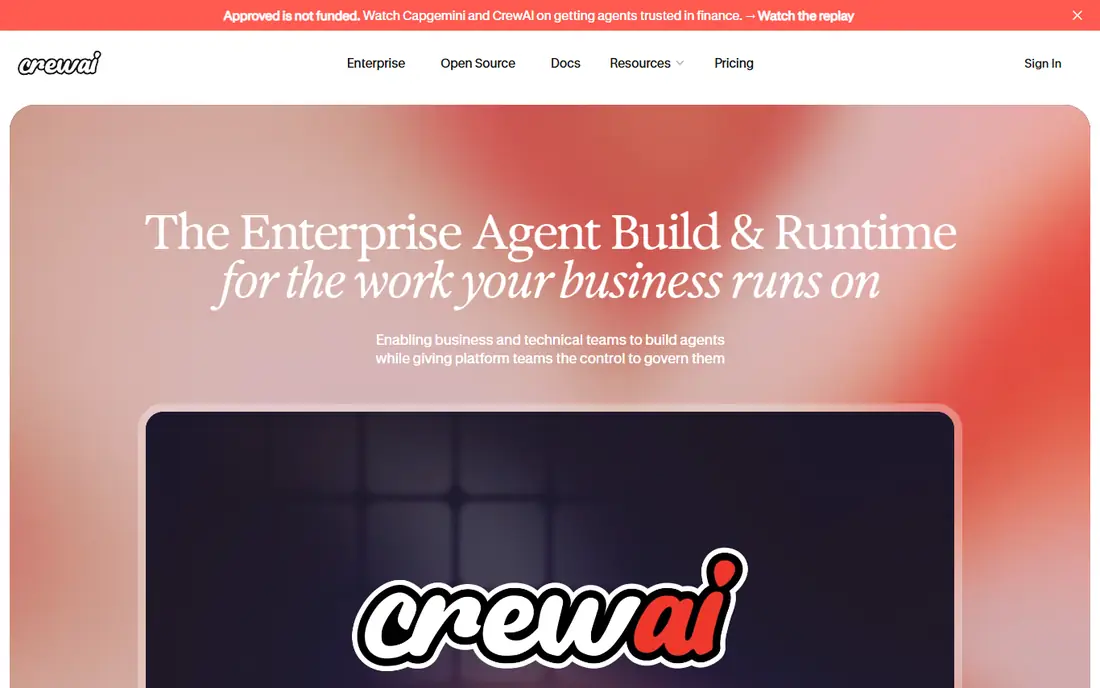
CrewAI is the most approachable multi-agent framework for teams that think in roles. You define agents with roles and goals, assign tasks, and let the crew collaborate, which can produce a working prototype in far less code than a hand-built graph. Its Flows model adds structure for multi-step processes, and a hosted suite covers deployment and governance on paid plans.
The trade is control. LangGraph gives you explicit nodes, edges, and state handling, while CrewAI abstracts more of that flow into crews and tasks. That abstraction speeds up early work and can hide behavior when a crew grows complex. If your product is a team of agents with clear roles, CrewAI is the fastest credible alternative. If you need fine-grained state control, test it against a real workflow before committing.
- Role, goal, and task model that reads like a team brief
- Flows for multi-step processes
- Hosted deployment options on paid plans
- Less explicit graph control than LangGraph
- Hosted pricing varies by plan
- Debugging large crews still needs care
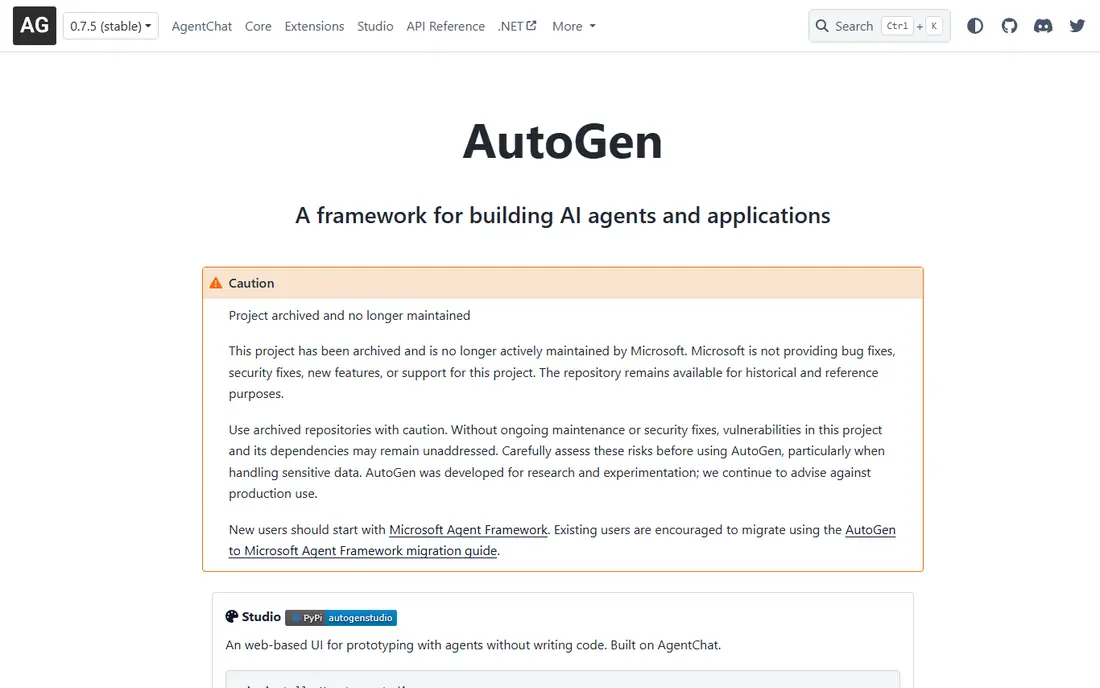
AutoGen, from Microsoft, models multi-agent work as conversations between agents. That design suits research, coding, and planning tasks where agents need to discuss, critique, and revise work in turns. It has a long history in agent research, and its concepts have shaped many later frameworks.
The important note for 2026 buyers is version history. AutoGen has evolved, with much of its work now continuing under the Microsoft Agent Framework, so teams should check the current docs and migration notes before starting a new project. If your team works in .NET or Python and likes conversational agents, AutoGen remains a serious option, provided you build on the current supported path.
- Conversation-based agent design
- Strong fit for research and coding agents
- Microsoft backing and ongoing development
- Project history needs checking, since AutoGen has evolved into the Microsoft Agent Framework
- Setup varies by version
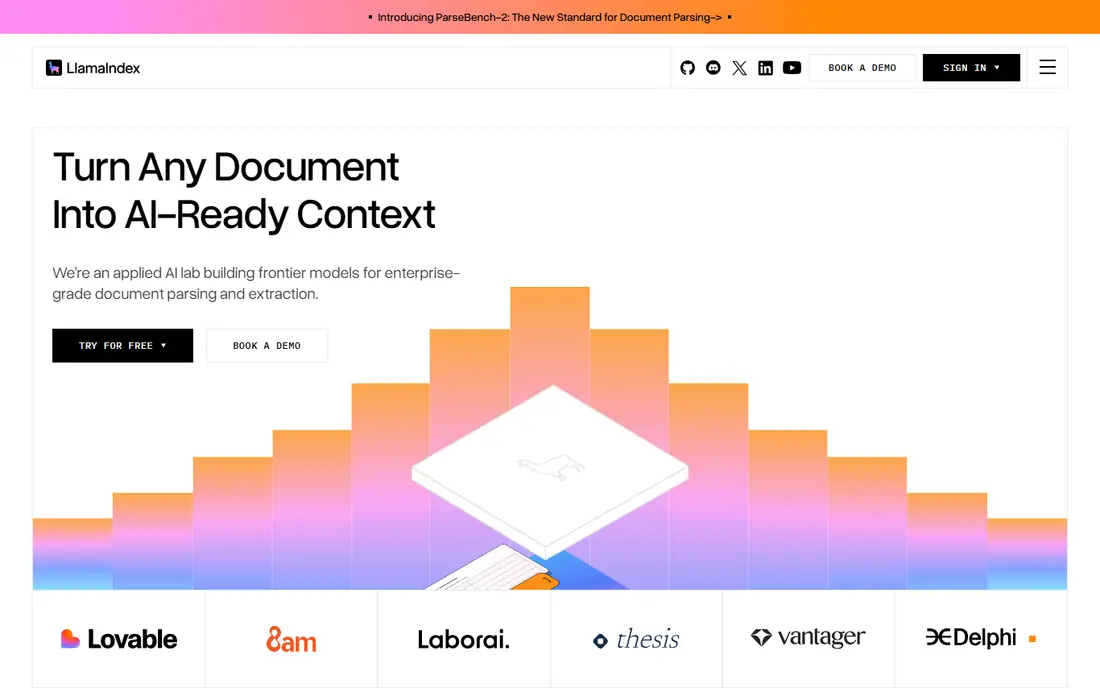
LlamaIndex starts from documents, not from graphs. It helps you ingest files, build indexes, retrieve relevant passages, and ground agent answers in your own data, with connectors for many sources. Its Workflows module adds multi-step and multi-agent coordination, and LlamaAgents packages document agents for deployment.
That focus is both a strength and a limit. If your agent mainly answers questions over internal documents, LlamaIndex is often the fastest and most reliable choice. If your agent needs long-running state, human approval pauses, and recovery after failures, LangGraph still has an edge. Many teams pair LlamaIndex retrieval with another orchestration layer, rather than treating it as a full replacement.
- Strong document ingestion, indexing, and retrieval
- Many data connectors
- Workflows for multi-step agent processes
- Less durable graph execution than LangGraph
- Hosted LlamaCloud adds cost for parsing and indexing
- Retrieval focus can narrow agent design
Haystack is a pipeline framework for search and retrieval, built by deepset. You compose components for ingestion, embedding, retrieval, and generation into pipelines that can be versioned and inspected, including YAML definitions that help teams audit what ran. That design suits platform teams that must explain and reproduce retrieval behavior.
Haystack is not a drop-in LangGraph clone. Its strength is retrieval pipelines, not durable graph execution with human-in-the-loop pauses. Teams that need both often use Haystack for the retrieval layer and a separate orchestration tool for agent state. If auditability and pipeline control are your main pain, Haystack is a strong pick.
- Clear pipeline components for retrieval
- YAML pipeline definitions that aid audit and versioning
- Production-focused design
- More setup than a simple agent library
- Agent orchestration is less graph-native than LangGraph
- Hosted tooling is separate
Semantic Kernel, from Microsoft, is an SDK for adding AI agents and plugins to existing applications. It suits enterprise teams that already run .NET or Python services and want agents to call business functions, use memory, and follow prompts inside a familiar stack. Its plugin model helps teams expose existing code to agents in a controlled way.
The trade is graph control. Semantic Kernel does not center on explicit graph execution the way LangGraph does, and its agent features have evolved across versions, so teams should check the current SDK docs. If your goal is to add agents to an enterprise app without rebuilding the stack, Semantic Kernel is a practical choice. If your goal is a long-running graph, test its current agent model first.
- Microsoft-backed SDK for .NET and Python
- Plugin and memory model for enterprise apps
- Good fit for existing Microsoft stacks
- Less graph-native than LangGraph
- Agent orchestration features vary by SDK version
- Learning curve for plugin design
DSPy takes a different approach to agent building. Instead of hand-writing prompts and wiring steps, you define a program with signatures and modules, then optimize it against examples and metrics. That suits teams that care about measurable quality and want to improve prompts systematically, rather than tuning wording by trial and error.
That paradigm shift is also the drawback. DSPy is not a graph execution engine, and it does not replace LangGraph for long-running agents with pauses and recovery. It is best used alongside an orchestration layer, or for tasks where prompt quality is the main bottleneck. If your team already evaluates agents with metrics, DSPy can lift quality in a way that prompt edits alone rarely do.
- Optimizes prompts and programs from examples
- Separates program logic from prompt wording
- Strong for evaluation-driven teams
- Different paradigm from graph frameworks
- Higher learning curve
- Not a direct replacement for durable agent state
Mastra is the clearest TypeScript-first alternative to LangGraph. It lets TypeScript teams build agents, workflows, and tools in one codebase, with observability and deployment options on its platform. That matters for web teams that already run Node and do not want to switch to Python for agents.
The caution is maturity and licensing. Mastra is newer than the Python frameworks, its community is smaller, and teams should check which parts are open source and which sit behind its platform. For a TypeScript shop that wants agent workflows without a Python service, Mastra is the most direct fit. For a Python shop, CrewAI or LlamaIndex will feel more natural.
- TypeScript-first agent framework
- Workflows, agents, and tools in one codebase
- Hosted platform options for deployment
- Newer ecosystem than Python frameworks
- Licensing for some platform parts needs checking
- Smaller community than LangChain
Pydantic AI suits Python teams that value type safety and clean validation. It builds on Pydantic, the validation library many Python teams already use, and lets you write agents with typed inputs, outputs, and tool calls. That clarity helps in production code, where untyped agent outputs can cause brittle failures.
The scope is narrower than LangGraph. Pydantic AI does not aim to be a full graph platform, and multi-agent orchestration is lighter. Hosted tracing through Logfire is available, with team plans listed at a monthly rate in current guides, but the framework itself is free. Pick Pydantic AI when typed Python and validation matter most, and pair it with another orchestration layer if you need durable graphs.
- Typed Python design with Pydantic validation
- Model-agnostic agent code
- Logfire tracing options for teams that want hosted observability
- Smaller framework scope than LangChain
- Graph and multi-agent features are lighter
- Hosted tracing adds cost on team plans
n8n is the non-code option in this list, and that makes it useful for a different buyer. Its visual builder lets teams chain triggers, AI models, tools, and apps into workflows, with agent nodes for tasks that need model calls. Self-hosting is free, and cloud plans price by executions, which suits teams that want to prototype without writing a framework.
The limit is control at scale. Visual workflows can become hard to follow when they grow large, and n8n does not offer the same code-level graph state handling as LangGraph. It is best for automation teams, ops teams, and prototypes that call agents as steps in a larger workflow. If your product is the agent itself, a code framework will give you more control.
- Visual workflow builder with AI agent nodes
- Self-hosting option
- Large integration range for tools and apps
- Less code-level graph control than LangGraph
- Workflow complexity grows fast at scale
- Cloud pricing varies by executions
How we picked these
We compared official documentation, release notes, and current framework guides for agent tools that work in October 2026. We kept frameworks and platforms that support multi-step agent work, tool use, or retrieval, and we left out tools that reached end of life. That includes Flowise, which reached end of life on 31 August 2026 with its repository archived, so we did not list it as a live product.
We also weighed code style, not just features. A Python team, a TypeScript team, and a no-code ops team will make different choices even for the same agent idea. That is why this list spans CrewAI, Mastra, and n8n, rather than nine Python libraries that differ only in syntax.
What to check before you switch
Start with the failure case, not the happy path. LangGraph users often value pause, resume, and recovery, so test whether your replacement handles a failed tool call, a human approval step, and a restart without losing state. A framework that looks simple in a demo can fail on that test.
Next, check tracing and evaluation. Agents need logs, traces, and metrics to debug, and hosted tracing can cost more than the framework itself. LangSmith, LlamaCloud, and Logfire all have free tiers and paid plans, so model tracing cost alongside model token cost.
Finally, prototype one real workflow end to end. Build the retrieval step, the agent step, and the tool call, then run it with real data and edge cases. That single workflow will reveal gaps in state handling, retrieval quality, and debugging faster than a feature table.
Frequently asked questions
What are the best alternatives to LangGraph for multi-agent work?
CrewAI is best for role-based crews, while AutoGen suits conversational agent teams. Mastra suits TypeScript teams, and Pydantic AI suits typed Python teams. The best choice follows your language, your agent model, and how much graph control you need.
Is LangGraph part of LangChain?
Yes. LangGraph is built by the LangChain team as the graph execution layer for agent apps, with LangSmith as its hosted tracing and evaluation companion. That is why many teams compare LangGraph with other frameworks, rather than treating LangChain chains and LangGraph graphs as the same thing.
Which LangGraph alternative is best for retrieval?
LlamaIndex is best when document retrieval is the core job, with strong ingestion and indexing. Haystack suits teams that need auditable retrieval pipelines. If retrieval is only one step in a larger agent, either can feed a separate orchestration layer.
Can I use n8n instead of LangGraph?
Yes, for visual workflows that call agents and tools, especially for automation and prototypes. n8n is less suited to code-level durable graphs with complex state handling. If your product is a long-running agent, a code framework will give you more control than a visual builder.
Are these frameworks free?
Most frameworks in this list are free and open source, including CrewAI, AutoGen, LlamaIndex, Haystack, Semantic Kernel, DSPy, Mastra, and Pydantic AI. The real costs are model API calls, hosting, and tracing services, which vary by provider and volume. Check hosted plan prices before you budget.
Sources
See where you really rank - block by block
ProMapRanker scans Google Maps across a grid of your service area. Simple monthly plans from $19, white-label on every plan.
Start freeKeep reading
 zscaler alternatives
Best Zscaler Alternatives in 2026
Looking for zscaler alternatives? We compare 9 SASE and zero trust platforms on architecture, data protection, pricing, and fit for your network and team.
Read → zapier alternatives free
Best Zapier Alternatives Free in 2026
Nine automation tools for zapier alternatives free in 2026, all with genuinely free tiers, plus free plan limits, starting prices and upgrade paths explained.
Read → which platform is best for online reputation
Which Platform Is Best for Online Reputation in 2026
Wondering which platform is best for online reputation? We compare 8 review, listing, and response tools for small and multi-location businesses and agencies.
Read →