 ProMapRanker
Best Jellyfish Alternatives in 2026

Key takeaways
- Jellyfish focuses on engineering and finance alignment, so most alternatives differ on whether they lead with delivery metrics, developer experience or cost.
- LinearB starts at $29 per contributor per month and Swarmia offers a free tier for small teams, giving smaller groups two clear entry points.
- Haystack starts at $20 per member per month and Allstacks prices per contributor per year, which helps teams compare seat costs before a sales call.
- Teams that need delivery forecasting should weigh Allstacks and Waydev, while teams that want working agreements and surveys should weigh Swarmia and DX.
- No tool on this list replaces good management judgment. Metrics should guide conversations, not rank individual developers in isolation.
Quick comparison
| Pick | Great for | Pricing starts at | Free tier | |
|---|---|---|---|---|
 LinearB | Pull request workflow automation | $29 per month | Free trial | Visit |
 Swarmia | Small teams and working agreements | Free | Yes | Visit |
 Pluralsight Flow | Workflow visibility at scale | See website | Free trial | Visit |
 Code Climate Velocity | Code quality plus delivery metrics | See website | Free trial | Visit |
 Sleuth | Deployment tracking and DORA | See website | Free trial | Visit |
 Waydev | Git analytics with broad integrations | See website | Yes | Visit |
 Haystack | Lightweight DORA reporting | $20 per month | Free trial | Visit |
 Allstacks | Delivery forecasting | $400 per year | Free trial | Visit |
 DX | Developer experience surveys plus data | See website | Free trial | Visit |
The best Jellyfish alternatives
Jellyfish is an engineering management platform that connects delivery data with business and finance views. These alternatives cover the same ground from different angles, from pull request automation to forecasting and developer experience. We compared pricing pages, feature lists and integration coverage, and kept only tools that are still sold and maintained.

LinearB starts where engineers already work: the pull request. It automates review routing, flags stuck work and surfaces bottlenecks, then adds delivery metrics on top of that workflow. That combination suits a team that wants insight without adding a separate reporting chore for developers.
The catch is scale rules. Published plans show seat minimums for Essentials and Enterprise tiers, so a tiny team may pay for seats it does not need. Larger teams are less affected, and the workflow automation alone can justify the cost if review delays are a real problem.
- Strong pull request automation
- DORA and flow metrics
- AI code review features
- Seat minimums on paid plans can exclude very small teams
- Enterprise features need the higher tier
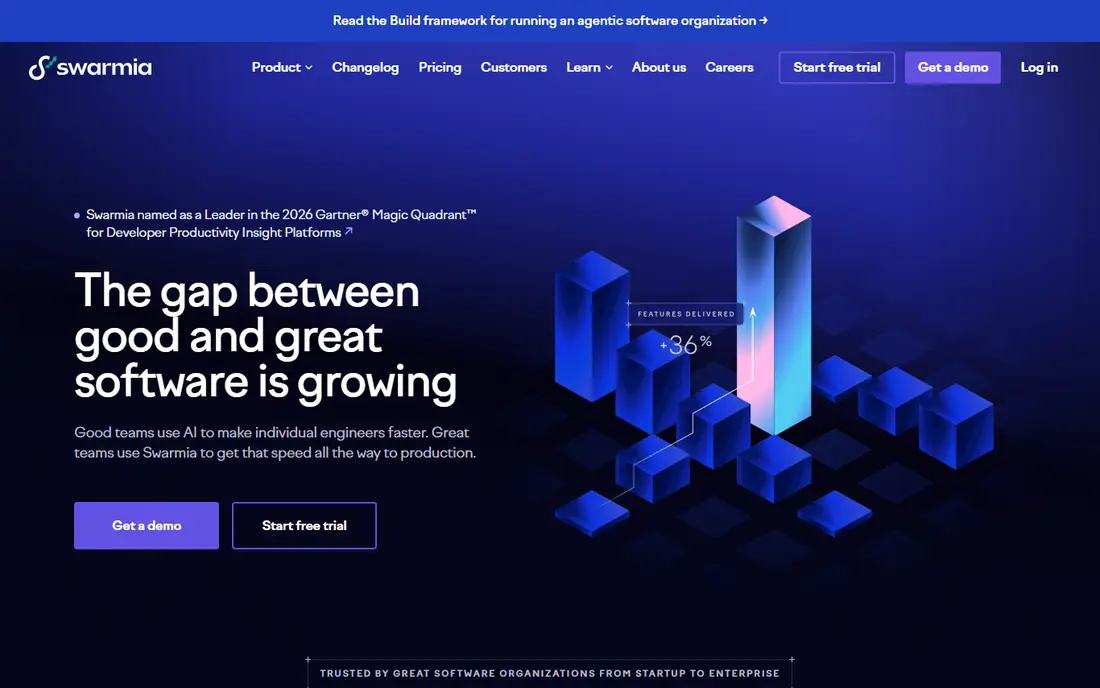
Swarmia takes a team habits view of engineering data. It tracks flow, velocity and developer experience, then helps teams agree on working practices such as review turnaround or work in progress limits. The free tier for up to 9 developers makes it one of the easiest tools on this list to try with a real team.
Growth changes the price picture. Paid modules start from a low per developer figure, but the total depends on which modules a team enables. Teams that want finance alignment or cost allocation will still need a separate view, since Swarmia leads with team practice rather than budget reporting.
- Free for teams up to 9 developers
- Working agreements
- DORA and SPACE metrics
- Paid modules add cost as teams grow
- Smaller scope than enterprise finance tools
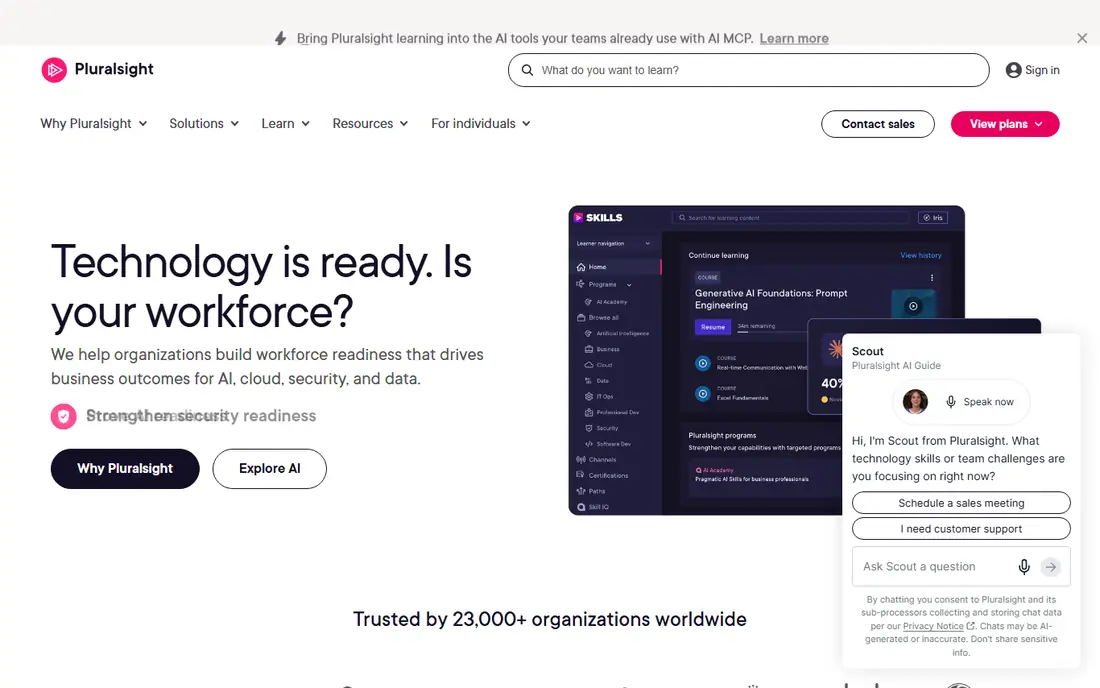
Pluralsight Flow, formerly GitPrime, looks at patterns across repos and agile tools to show where work stalls. Managers can compare trends, spot overloaded reviewers and check whether healthy habits are spreading across teams. The link to Pluralsight learning content is a bonus for teams that pair delivery insight with skill development.
The main drawback is buying friction. Pricing is sales led, so a small team cannot quickly model cost from a public page. It also fits larger organizations better than a startup, since the value grows with the number of teams and repos being compared.
- Deep workflow pattern reports
- Ties to Pluralsight skills content
- Broad agile tool integrations
- Pricing is not published as a simple entry tier
- Setup suits larger organizations
Code Climate Velocity pairs delivery speed with code health, which is a useful pairing for teams that worry about shipping fast at the cost of maintainability. It reports on pull request cycle time, review patterns and delivery trends, alongside quality signals from the codebase.
Interpretation is the risk. A quality score can look precise while hiding context, such as a legacy codebase or a deliberate refactor. Teams should use Velocity to start conversations about code health, not to set rigid targets for every developer. Pricing is quote based, so budget planning needs a sales conversation.
- Combines delivery metrics with code quality insight
- Pull request analytics
- Team trend reports
- Pricing requires a quote
- Quality metrics need careful interpretation
Sleuth keeps the focus tight: deployments, change lead time, failure rate and recovery time. That narrow scope is a strength for a team that already has project tools and just wants reliable DORA reporting without a large platform rollout. Deployment tracking across services helps teams see which changes went out together and which ones caused trouble.
The limit is breadth. Sleuth does not try to cover finance alignment, surveys or workflow automation in the same depth as Jellyfish or LinearB. Teams that want one platform for every engineering question may need to pair it with another tool, while teams that want clean DORA numbers will like the focus.
- Clear DORA metrics
- Deployment tracking across services
- Impact and health views
- Narrower scope than full engineering management suites
- Pricing is not published plainly
Waydev reads Git repos and turns commit, pull request and review data into engineering performance reports. It supports the main Git hosts and Azure DevOps, which helps mixed teams that do not all use GitHub. Recent listings also highlight AI impact reporting, including token level cost views, which matters as teams adopt coding assistants.
Pricing is the weak point for quick comparison. Current vendor listings describe paid plans as private quotes, even though third party sources still show older per contributor figures. We use See website for that reason. Teams should also agree on how reports will be used, since Git activity alone does not measure the quality of thinking behind a change.
- Free tier available
- GitHub, GitLab, Bitbucket and Azure DevOps support
- AI impact reporting
- Paid plans are quote based in current listings
- Reports need context to avoid misuse
Haystack suits a team that wants DORA metrics without a heavy platform. At $20 per member per month on an annual commitment, it is one of the lowest published entry prices in this group. Delivery trends and key performance reports give managers a steady view of throughput and cycle time.
The trade off is scope. Haystack does not offer developer experience surveys, and it lacks the finance and forecasting depth of Jellyfish or Allstacks. For a small or mid sized team that mainly needs to track delivery health, that focus is fine. For a larger organization that needs surveys and cost views, another tool will fit better.
- Low published entry price
- DORA and delivery trends
- No seat minimum in third party listings
- No developer experience surveys
- Fewer enterprise features than larger suites
Allstacks leads with prediction. It uses models over software delivery data to forecast whether an initiative will land on time and where delivery risk is building. That angle separates it from tools that only report what already happened, and it suits leaders who must answer timing questions from product and finance teams.
Forecast quality depends on data quality. A team with messy tickets, missing links between work items and code, or short history will get weaker predictions. The $400 per contributor per year starting figure also means a large engineering group faces a large bill, so teams should pilot it on one portfolio before rolling it out widely.
- Machine learning based delivery forecasting
- Broad connector coverage
- Value stream views
- Per contributor yearly price adds up at scale
- Forecasting needs clean historical data
DX takes a different starting point: ask developers how work feels, then pair those answers with system data. Its Core framework covers areas such as speed, effectiveness and satisfaction, and recent features add AI usage and impact analysis. That mix helps leaders see problems that Git data alone would miss, such as tool friction or unclear priorities.
The catch is effort. A survey program needs someone to run it, act on results and repeat it, or it becomes another form that developers ignore. Pricing is also sales led, so small teams cannot quickly compare it with Haystack or Swarmia on price alone. For organizations serious about developer experience, DX is one of the strongest options here.
- Combines surveys with telemetry
- DX Core framework
- AI usage and impact analysis
- Pricing is sales led
- Survey programs need ownership to stay useful
How we picked these
We compared official pricing pages, feature lists and integration coverage for engineering analytics tools that overlap with Jellyfish. We kept tools that cover delivery metrics, developer experience or forecasting, and we left out Jellyfish itself. Where pricing was quote based or differed across sources, we used See website rather than inventing a figure.
How to choose without misusing the data
Start by naming the question you need answered. If the question is about delivery speed, pick a DORA focused tool such as Sleuth or Haystack. If the question is about whether a plan will land on time, weigh Allstacks. If the question is about developer experience or AI impact, weigh DX, Swarmia or LinearB.
Next, agree on ground rules before the first report goes to leadership. Metrics should describe teams and systems, not rank individuals, and they should sit next to context such as on call load, legacy code and changing priorities. Check integration coverage for your Git host and issue tracker, and run a pilot with one or two teams. A tool that only produces charts will not improve delivery. A tool that changes one habit, such as faster reviews or smaller batches, will.
Frequently asked questions
What is Jellyfish used for?
Jellyfish is an engineering management platform that connects engineering delivery data with business and finance views. It helps leaders see where engineering time goes, how delivery is trending, and how work maps to company goals and costs.
Which Jellyfish alternative is best for small teams?
Swarmia is a strong small team pick because it is free for up to 9 developers and covers DORA and working agreements. Haystack is another low cost option at $20 per member per month, focused on DORA reporting without enterprise complexity.
Do these tools track individual developers?
They can show activity by person, but that is a poor use of the data. Good practice is to report at team level, use trends rather than single week snapshots, and pair metrics with surveys or conversations about blockers and tool friction.
What are DORA metrics?
DORA metrics are four measures of software delivery: deployment frequency, lead time for changes, change failure rate and time to restore service. Together they give a balanced view of speed and stability, rather than speed alone.
Is LinearB a direct Jellyfish replacement?
It overlaps on delivery metrics and adds pull request automation, but it leads with workflow rather than finance alignment. Teams that need cost allocation and business mapping may need a different tool or a second view alongside LinearB.
How much do Jellyfish alternatives cost?
Prices range from free small team tiers to quote based enterprise plans. Published starting points on this list include $20 per member per month for Haystack, $29 per contributor per month for LinearB and $400 per contributor per year for Allstacks. Most others require a sales quote.
Sources
See where you really rank - block by block
ProMapRanker scans Google Maps across a grid of your service area. Simple monthly plans from $19, white-label on every plan.
Start freeKeep reading
 zyte alternatives
Best Zyte Alternatives in 2026
These zyte alternatives cover managed scraping APIs, proxy networks and no code tools for lawful collection from your own or consented sources only in 2026.
Read → zerto alternatives
Best Zerto Alternatives in 2026
Compare the best zerto alternatives for disaster recovery and replication, with recovery targets, cloud options and honest trade-offs for teams in 2026.
Read → zerofox alternatives
Best ZeroFox Alternatives in 2026
We compared 9 zerofox alternatives for brand protection, phishing takedowns, dark web monitoring, and social impersonation, with clear coverage notes.
Read →