 ProMapRanker
IT Service Management Best Practices in Healthcare in 2026

Key takeaways
- The angle here is plain: these are ITSM tools and services that put service management practices into action in healthcare settings.
- Incident, problem, change and asset practices matter most when clinical systems, devices and records must stay available.
- A tool alone does not make a practice compliant with privacy rules, so contracts, access controls and audits still matter.
- Healthcare teams should check HIPAA-related controls, audit logs and data handling with each vendor directly.
- Small clinics need simple, fast ITSM, while large health systems need deeper governance, asset tracking and change control.
Quick comparison
| Pick | Great for | Pricing starts at | Free tier | |
|---|---|---|---|---|
 ServiceNow | Large health systems | See website | No | Visit |
 Freshservice | Fast mid-sized ITSM rollout | $19 per agent per month | Free trial | Visit |
 ManageEngine ServiceDesk Plus | Budget and on-premise options | See website | Yes | Visit |
 Jira Service Management | Engineering and DevOps-led teams | $20 per agent per month | Yes | Visit |
 SolarWinds Service Desk | Simple IT teams | $19 per technician per month | Free trial | Visit |
 BMC Helix ITSM | Enterprise service operations | See website | No | Visit |
 Ivanti Neurons for ITSM | Unified endpoint and service work | See website | No | Visit |
The best it service management best practices healthcare tools
IT service management, or ITSM, is the set of practices that keeps IT services running: logging incidents, fixing root causes, controlling changes, managing assets and answering staff requests. In healthcare, those practices protect clinical workflows, from electronic records and imaging to phones, printers and medical devices connected to the network. The tools below put those practices into action, but software alone does not make a practice compliant with privacy rules. Your policies, access controls, training and audits must support the tool.
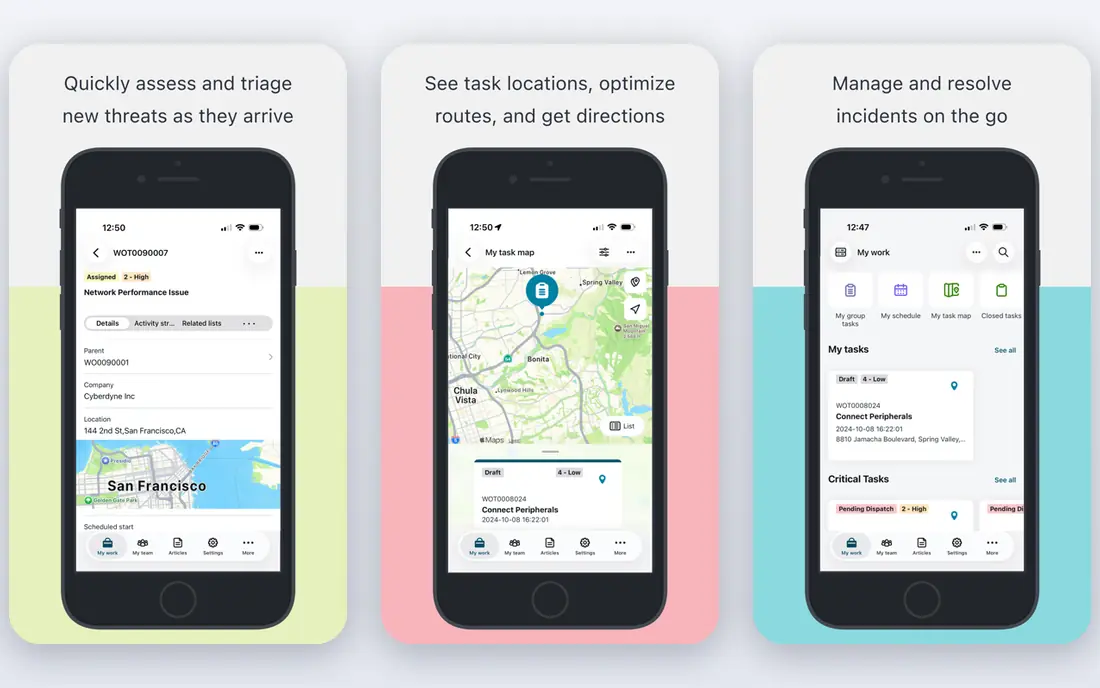
ServiceNow is the standard choice for large health systems that need incident, problem, change, request and asset work in one governed system. Its workflows can route a clinical system outage, a device request and a routine access change through different approvals, while keeping an audit trail for each step. That governance is valuable when many sites, vendors and clinical teams share the same IT estate.
The cost is enterprise scale, with quoted pricing and implementation work that needs dedicated admins. A small clinic will rarely need this depth, and may find the setup slows a simple rollout. ServiceNow fits health systems that already have ITSM staff and need a single, auditable platform across sites.
- Deep ITSM, asset and workflow coverage
- Strong enterprise governance
- Wide healthcare use
- Quoted enterprise pricing
- Implementation needs dedicated staff
- Smaller clinics may find it heavy
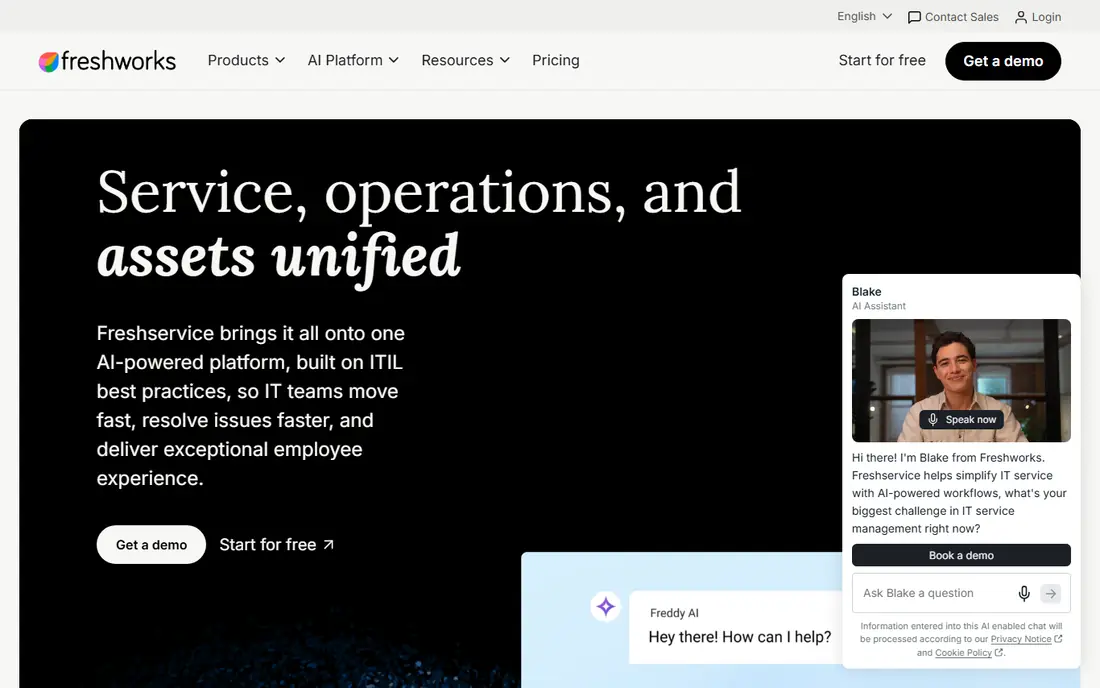
Freshservice suits mid-sized hospitals, clinics and care groups that want ITSM running quickly without a long project. Its Starter plan starts at $19 per agent per month in the pricing we found, and covers core ticketing with service level management. Growth and Pro plans add problem, change and asset depth, plus AI assistance for agents.
Freshservice is less deep than ServiceNow for very large, multi-site governance, and its Freddy AI copilot is a paid add-on on higher plans. For a team that needs solid ITSM habits fast, such as a single hospital or a clinic group, that trade is sensible. Start with incident categories, service levels and a service catalog, then add change control as the team matures.
- Quick setup and clean interface
- Incident, problem, change and asset features
- AI help on higher plans
- Advanced features sit on higher plans
- Asset and AI add-ons cost extra
- Large enterprise depth is limited
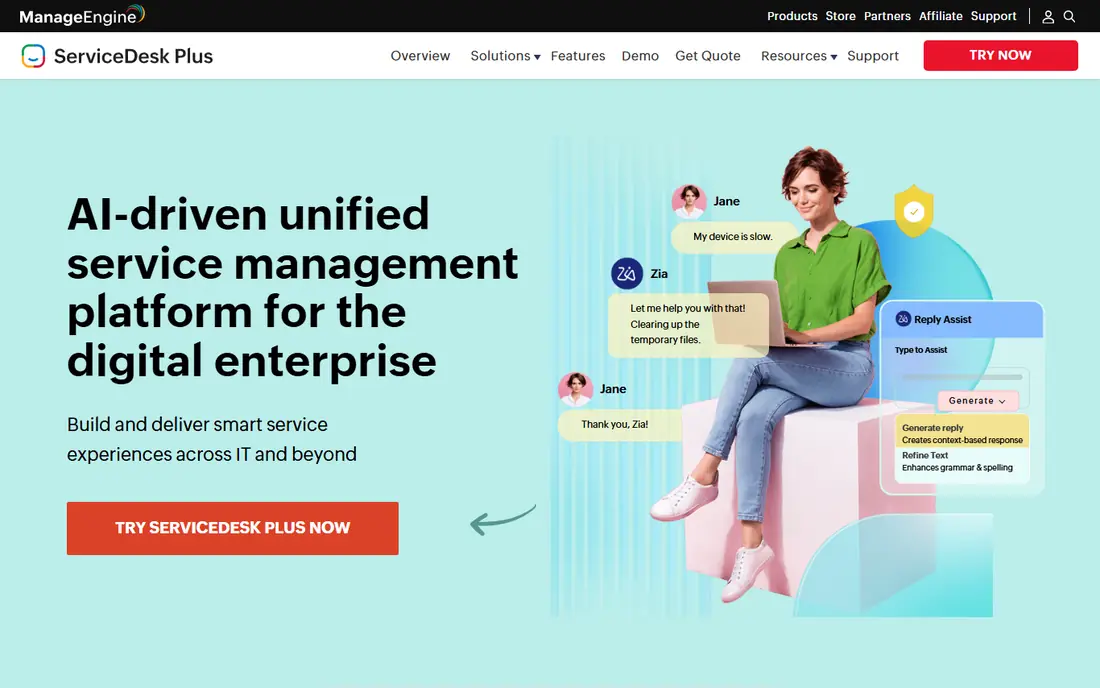
ManageEngine ServiceDesk Plus is a practical pick for healthcare IT teams that want broad ITSM coverage at a controlled cost, including an on-premise option. It covers incident, problem, change, asset, project and service catalog work, and it is used in education, healthcare and public sector settings. The free Standard edition for small technician teams lets a clinic test real ITSM habits before paying.
The interface is less modern than Freshservice or Jira, and some modules sit behind higher editions, so check the edition that covers your needs. Pricing also varies by cloud or on-premise deployment, so we list it as quoted here. For teams with tight budgets or on-premise requirements, those trade-offs are often acceptable.
- Cloud and on-premise deployment
- Broad ITSM modules
- Free edition for small technician teams
- Interface feels dated in places
- Module depth varies by edition
- Pricing varies by deployment
Jira Service Management fits healthcare IT teams that already use Jira or Confluence, especially where developers and IT staff work closely. It offers service requests, incident and change workflows, a knowledge base and asset objects, with a free plan for up to three agents. Its Standard plan starts at $20 per agent per month in the pricing we found.
Jira is less of a standalone asset management suite than ServiceNow or ManageEngine, so teams with large device estates should check asset limits. It also rewards teams that already know Atlassian tools, and can feel technical to non-IT staff. For a DevOps-led hospital IT group, the integration and automation strengths outweigh those limits.
- Free for up to three agents
- Strong Atlassian integration
- Asset tracking and automation included in scope
- IT asset depth is lighter than dedicated ITSM suites
- Setup needs Atlassian familiarity
- Enterprise governance needs care
SolarWinds Service Desk is built for IT teams that want ITSM without a long implementation. It covers ticketing, incident handling, asset tracking and service requests in a straightforward interface, with entry pricing around $19 per technician per month in the pricing we found. That simplicity helps small hospital IT teams and clinic groups adopt consistent practices quickly.
The limit is depth. Large health systems with complex change governance, multi-site asset estates and deep reporting will outgrow it. SolarWinds fits teams whose main ITSM gaps are untracked requests, unclear ownership and missing asset records, rather than enterprise workflow design.
- Simple setup and interface
- Incident, asset and change basics
- Clear per-technician pricing
- Less enterprise depth than ServiceNow
- Advanced automation is limited
- Add-ons can raise cost
BMC Helix ITSM is an enterprise platform for organisations that need deep incident, problem, change, asset and service level management at scale. Its automation and AI features aim to predict and prevent incidents, not just log them, which can matter for a health system where downtime affects care. It is designed for large, regulated estates with dedicated ITSM staff.
Pricing is quoted, and implementation is a substantial project rather than a quick setup. A small clinic should not shortlist it unless it is part of a larger enterprise group. For a large health system that needs enterprise governance and automation depth, BMC Helix is a serious alternative to ServiceNow.
- Deep enterprise ITSM and automation
- Strong fit for large, regulated estates
- AI and predictive features
- Quoted pricing
- Implementation is a major project
- Smaller teams will find it heavy
Ivanti Neurons for ITSM links service desk work with endpoint management, so an incident about a clinic workstation can connect to device health, patching and asset data in the same workflow. That link helps healthcare IT teams that spend much of their time on devices, from nursing stations to imaging workstations. Automation can route, assign and resolve routine device issues faster than manual handling.
Ivanti pricing is quoted, and the breadth of its platform means scoping matters: agree which modules you will actually use. Healthcare teams should also confirm data handling, access controls and audit features with Ivanti directly, since a tool alone does not create privacy compliance. Ivanti fits IT teams that want service and endpoint work in one operating view.
- Links service work with endpoint management
- Automation and asset visibility
- Enterprise controls
- Quoted pricing
- Breadth needs careful scoping
- Healthcare-specific fit needs vendor confirmation
How we picked these
We compared official feature pages, pricing pages, deployment options and public reviews for ITSM tools that are live in October 2026 and used in healthcare or other regulated settings. We focused on incident, problem, change, request and asset practices, plus audit, access control and deployment options that matter for clinical environments. We did not claim hands-on testing, and we did not invent compliance certifications. Where a vendor does not publish pricing, we list it as quoted and advise a direct check.
Putting ITSM practices into action in healthcare
Start with the practices that protect care delivery. Define incident categories for clinical systems, network outages and device failures, with response targets that reflect clinical impact, not just IT convenience. Keep a separate change process for systems that touch patient records or clinical devices, with approvals, rollback plans and maintenance windows agreed with clinical leads. Log assets, including workstations, printers and network-connected devices, so an incident can be traced to the right device quickly.
Next, build the supporting controls. Limit access by role, log who viewed or changed records and tickets, and review those logs regularly. Train staff on phishing, password handling and incident reporting, since human error causes many healthcare IT incidents. Review service performance monthly with clinical and IT leads together, and use problem management to fix repeat causes rather than closing the same incident again. Remember that general information in this article is not legal or compliance advice, and your privacy and security teams should review any ITSM deployment.
Frequently asked questions
What is ITSM in healthcare?
ITSM is the set of practices for running IT services, including incident, problem, change, request and asset management. In healthcare, it keeps clinical systems, records, devices and staff tools available and supported. Good ITSM gives every issue an owner, a priority and a record.
Does ITSM software make a hospital HIPAA compliant?
No. Software can support compliance through access controls, audit logs and secure handling, but compliance also needs policies, training, contracts and audits. Check each vendor's security documentation and sign a business associate agreement where required, with your own legal and privacy teams.
Which ITSM practice matters most in a clinic?
Incident management matters most at first, because clinical work stops when systems fail. Clear categories, response targets and escalation paths help staff get help fast. Add change control and asset tracking next, since unplanned changes and unknown devices cause many repeat incidents.
How should healthcare teams handle change control?
Use approvals, testing and rollback plans for changes to clinical systems, with maintenance windows agreed with clinical leads. Record every change, its approver and its result. Emergency changes still need a record and a later review.
Can small clinics use enterprise ITSM tools?
They can, but simpler tools often fit better. A small clinic usually needs fast ticketing, asset records and a knowledge base, not enterprise workflow design. Start simple, and move to a larger platform when volume or governance needs grow.
How do we measure ITSM success in healthcare?
Track incident response and resolution times, repeat incidents, change success rates, asset accuracy and staff satisfaction with IT support. Review those numbers with clinical leads, and fix the repeat causes, not just the latest incident.
Sources
- https://www.servicenow.com
- https://www.freshworks.com/freshservice/
- https://www.manageengine.com/products/service-desk/
- https://www.atlassian.com/software/jira/service-management
- https://www.solarwinds.com/service-desk
- https://www.bmc.com/itsm.html
- https://www.ivanti.com/products/neurons-for-itsm
- https://blog.invgate.com/servicenow-alternatives
See where you really rank - block by block
ProMapRanker scans Google Maps across a grid of your service area. Simple monthly plans from $19, white-label on every plan.
Start freeKeep reading
 worlds best local seo company
8 Worlds Best Local SEO Companies for Map Pack Growth in 2026
Compare the worlds best local seo company options for Google Business Profile work, citations, reviews, and multi-location rankings and reporting in 2026.
Read → world's best web hosting company
World's Best Web Hosting Company in 2026
Searching for the world's best web hosting company? We compared 10 hosts on price, renewal rates, speed, and support to help you choose well today in 2026.
Read → who's got the best nanny tax services
Who's Got the Best Nanny Tax Services in 2026
We answer who's got the best nanny tax services, comparing full filing, back taxes, software, and pricing so families can handle nanny taxes correctly.
Read →