 ProMapRanker
Best Istio Alternatives in 2026

Key takeaways
- Linkerd is the simplest Kubernetes mesh for teams that want mutual TLS and observability without Istio complexity.
- Consul suits hybrid teams running services on Kubernetes and virtual machines together.
- Kuma and Kong Mesh suit multi-zone and multi-cloud deployments with a single control plane.
- Cilium fits teams already using Cilium networking, since the mesh uses eBPF rather than sidecars alone.
- Most open-source meshes are free to run, while commercial support and managed control planes are quote-based.
Quick comparison
| Pick | Great for | Pricing starts at | Free tier | |
|---|---|---|---|---|
 Linkerd | Simplest Kubernetes mesh | Free | Yes | Visit |
 HashiCorp Consul | Hybrid Kubernetes and VM services | Free | Yes | Visit |
 Kuma | Multi-zone universal mesh | Free | Yes | Visit |
 Cilium | eBPF-based mesh for Cilium users | Free | Yes | Visit |
 Traefik Mesh | Lightweight mesh for small clusters | Free | Yes | Visit |
 AWS App Mesh | AWS-native managed mesh | See website | No | Visit |
 Aspen Mesh | Managed Istio-style control plane | See website | No | Visit |
 Kong Mesh | Enterprise mesh based on Kuma | $250 per month | No | Visit |
The best istio alternatives
Istio is a powerful service mesh for Kubernetes, with advanced traffic control, security policies, and observability, but it can be heavy to run. The meshes below offer the same core job, which is secure, observable service-to-service traffic, with different trade-offs in simplicity, scope, and operations. We compared official documentation, pricing pages, and public reviews, and we did not claim hands-on testing we did not do. Use these tools only for systems you are authorised to run, and test upgrades in staging before production.
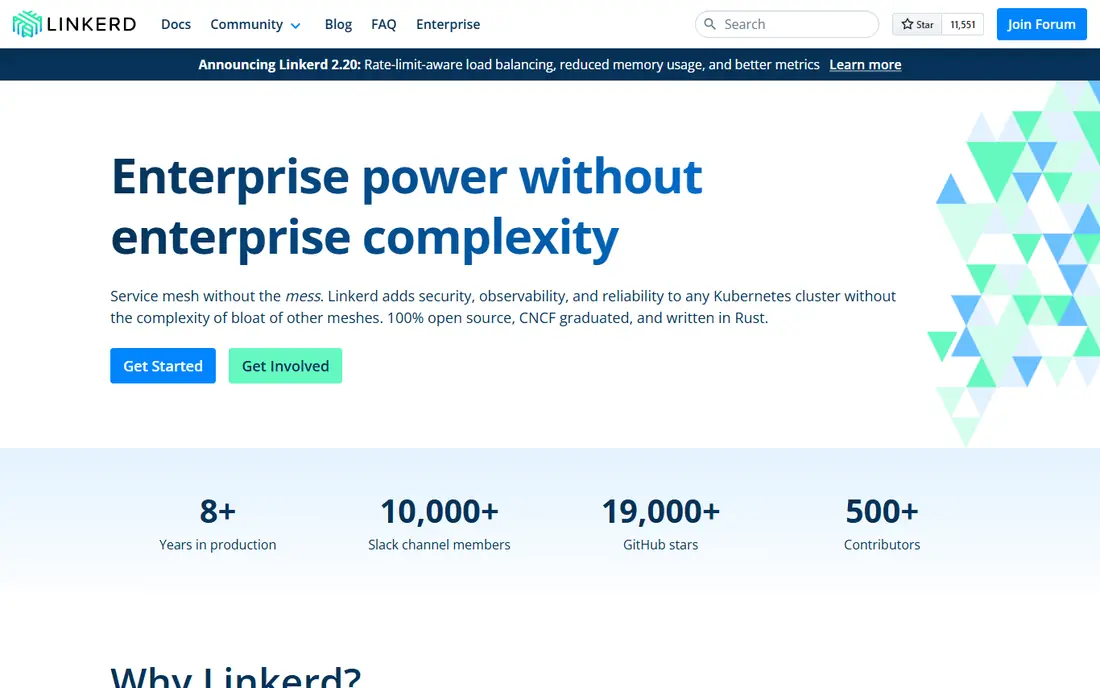
Linkerd is the mesh we would pick for a team that wants Istio-style security without Istio-style operations. Install is a short CLI flow, mutual TLS is on by default, and the dashboard shows service health, success rates, and latencies without a separate observability stack. The data plane proxy is written in Rust and is lighter than the Envoy proxy used by many rivals.
The trade-off is feature depth. Linkerd covers traffic splitting, retries, and timeouts, but it does not match Istio on complex routing, policy, or multi-cluster features. Since 2024, stable production releases have been tied to Buoyant Enterprise for many teams, while edge releases remain open. For a small to mid-size Kubernetes team, Linkerd is the easiest mesh to run well.
- Very simple install and operation
- Mutual TLS by default
- Lightweight Rust-based proxy
- Fewer advanced traffic features than Istio
- Stable production builds need Buoyant support for many teams
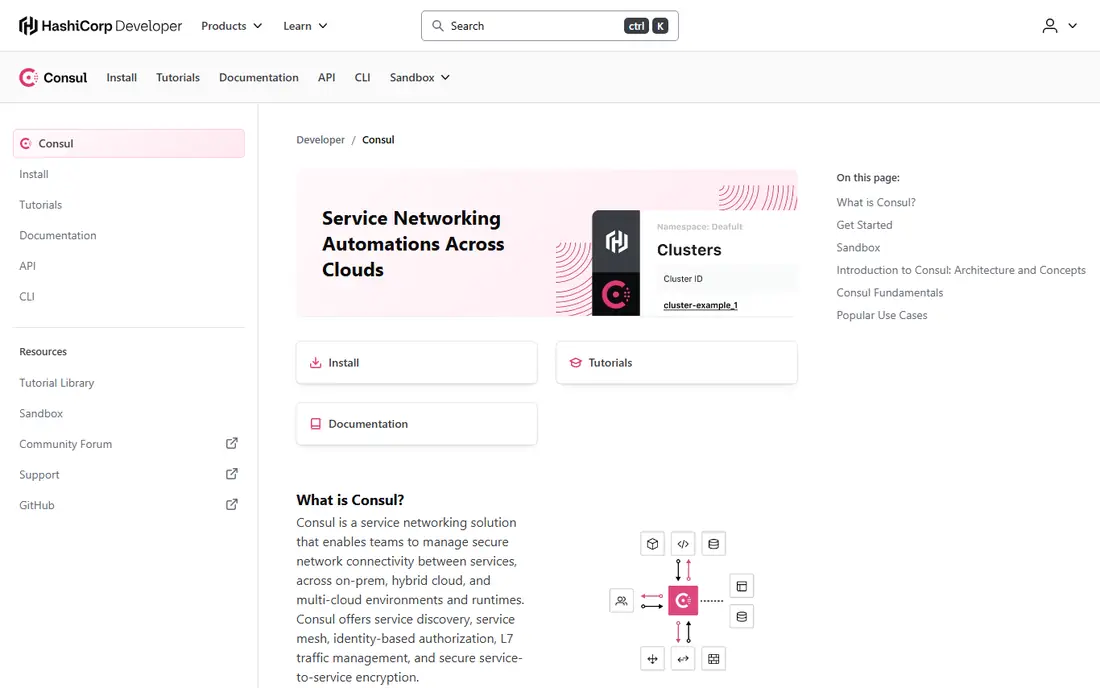
Consul is more than a mesh: it is a service discovery and configuration tool that also provides service mesh features such as mutual TLS, intentions for access control, and traffic management. That breadth suits hybrid estates where some services run on Kubernetes and others still run on virtual machines, since Consul can connect both with one control plane. Federation across datacentres is a mature feature.
Consul is more complex to operate than Linkerd, with agents, servers, and ACLs to manage. The open-source version covers the core mesh, while HCP Consul and enterprise features add governance and support on a quote basis. For a hybrid team that already uses Consul for discovery, adding the mesh is a natural step.
- Service discovery plus mesh in one tool
- Works on Kubernetes and virtual machines
- Strong enterprise support path
- Mesh setup is more involved than Linkerd
- Commercial features are gated behind HCP Consul
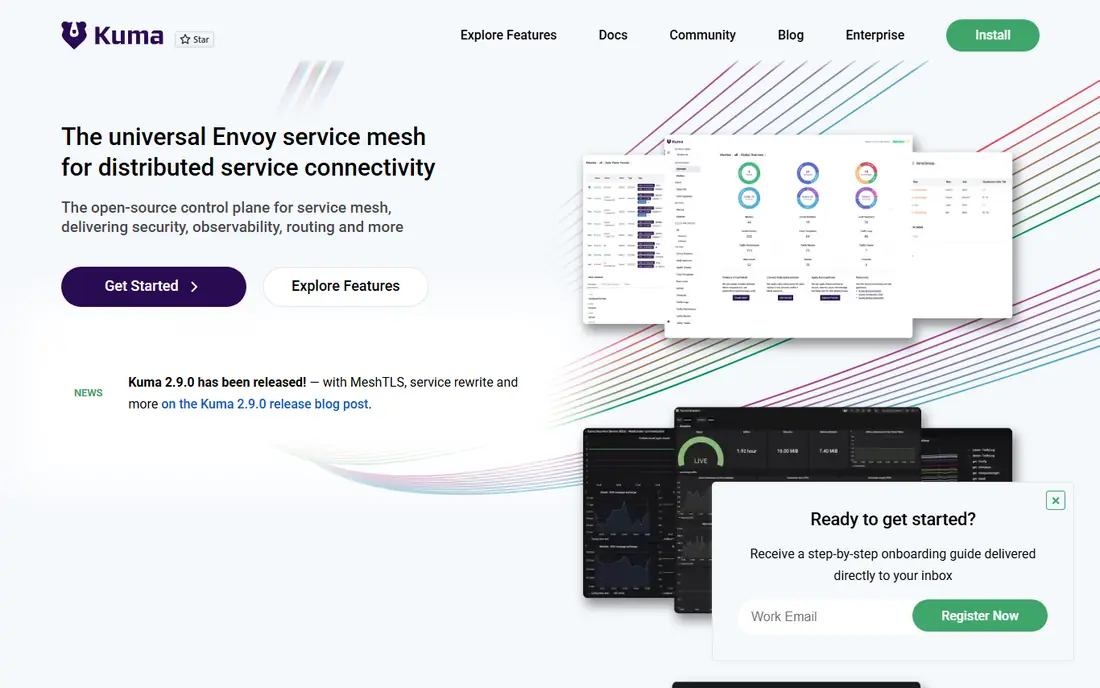
Kuma is a universal service mesh built on Envoy, designed to run across Kubernetes, virtual machines, and multiple zones from one control plane. A global control plane manages policies, while zone control planes handle local services, which suits multi-cloud and multi-cluster deployments. Built-in policies cover mutual TLS, traffic permissions, rate limiting, and observability, with a native GUI for management.
Kuma has a smaller community and fewer third-party guides than Istio or Linkerd, so troubleshooting unusual cases can take longer. The policy model is also distinct, with its own resources for traffic routes and permissions. For a team that needs one mesh across Kubernetes and VMs in several zones, Kuma is a strong open choice.
- Works on Kubernetes and virtual machines
- Multi-zone control plane
- Envoy-based data plane
- Smaller community than Istio or Linkerd
- Policy model takes time to learn
Cilium started as a networking plugin and now includes service mesh features built on eBPF, the kernel technology that lets Cilium enforce policy and observe traffic with less overhead than a sidecar proxy alone. Teams already running Cilium for networking get mesh features such as mutual TLS, load balancing, and traffic management without adding a second data plane. Hubble provides flow observability that helps during incidents.
The catch is scope. Cilium mesh shines when Cilium already handles networking, while a team on another CNI may need to change networking first. Enterprise features, including extended Hubble observability and compliance tooling, are sold through Isovalent, now part of Cisco, on a quote basis. For a Cilium shop, the mesh is a natural extension rather than a new platform.
- Uses eBPF for efficient networking and security
- Can run sidecar-free
- Strong observability through Hubble
- Best value needs Cilium networking already in place
- Enterprise features are quote-based through Isovalent and Cisco
Traefik Mesh, formerly Maesh, is a lightweight mesh for small Kubernetes clusters that want basic service-to-service traffic control without a heavy control plane. It uses a sidecar-less design in its classic form, with a controller that configures proxies per node, and it installs via Helm with minimal configuration. Teams already using Traefik for ingress will find the routing concepts familiar.
Traefik Mesh does not support multi-cluster deployments, and its feature set is narrower than Istio, Consul, or Kuma. There is no native GUI of the depth found in Kuma or Consul, and enterprise support is thinner. For a small cluster that needs mutual TLS and simple traffic control, Traefik Mesh keeps operations light.
- Simple sidecar-less design for small clusters
- Easy install via Helm
- Familiar Traefik routing concepts
- No multi-cluster support
- Fewer enterprise features than larger meshes
AWS App Mesh is a managed service mesh for AWS workloads, with no control plane for your team to run. It works with Amazon ECS, Amazon EKS, and EC2, and it integrates with CloudWatch for metrics and logs. Traffic routing, retries, and mutual TLS are configured through AWS APIs and CloudFormation, which fits teams already standardised on AWS infrastructure as code.
The limit is portability. App Mesh is tied to AWS services, so a multi-cloud team will need another mesh elsewhere or accept two meshes. Pricing is usage-based through AWS, with charges for the underlying compute and for App Mesh resources, so the total depends on your AWS bill. For an AWS-only team that wants a managed mesh, App Mesh removes the most operational work.
- Fully managed by AWS
- Integrates with ECS, EKS, and CloudWatch
- No control plane to run
- AWS-only scope
- Less portable than open-source meshes
Aspen Mesh provides a managed control plane and enterprise support for Istio-based service mesh deployments, with tools for multi-cluster management, policy, and observability. It suits organisations that like Istio features but do not want to run the control plane and upgrades themselves. Aspen Mesh adds hardening, support, and management tooling around the Istio core.
Aspen Mesh is not a different mesh engine: it builds on Istio, so teams still need Istio knowledge for routing and policy. Pricing is quote-based, which suits enterprises more than small teams. For a large organisation committed to Istio but short on platform staff, Aspen Mesh is a managed path rather than a replacement engine.
- Managed control plane and support for Istio-based deployments
- Multi-cluster management
- Enterprise hardening
- Quote-based pricing
- Still Istio-based, so it does not remove Istio concepts
Kong Mesh is the enterprise distribution of Kuma, adding support, governance, and management features on top of the open-source mesh. It deploys with a single command, connects services automatically with built-in discovery, and supports multi-cluster, multi-cloud, and hybrid Kubernetes plus VM deployments. Published summaries place the starting price at $250 per month, which gives a budgeting figure for a small enterprise deployment.
Kong Mesh is heavier than open Kuma for a team that only needs a single cluster, and the enterprise features may go unused at small scale. The Envoy-based data plane and multi-zone design still suit larger estates. For an enterprise that wants Kuma with vendor support and governance, Kong Mesh is the commercial path.
- Enterprise Kuma with support and governance
- Multi-cloud and multi-cluster support
- 50 plus observability charts out of the box in published summaries
- Entry price starts at $250 per month in published summaries
- Heavier than open Kuma for a small team
How we picked these
We compared official documentation, pricing pages, and public reviews for service meshes that are actively maintained in October 2026. We kept meshes that run on Kubernetes, that provide mutual TLS and traffic management, and that have a clear open-source or managed path. We left out Open Service Mesh, which is archived, and NGINX Service Mesh, which is deprecated, since neither is a safe new deployment in 2026. Where commercial pricing is quote-based, we say so rather than guessing a price.
Choosing by team shape
A small Kubernetes team should start with Linkerd or Traefik Mesh, since both install quickly and need less platform staff. A hybrid team with VMs and Kubernetes should look at Consul or Kuma, since both handle services outside Kubernetes. A team already on Cilium networking should test Cilium mesh first, since it reuses the existing data plane. An AWS-only team can choose App Mesh for a managed service, while an enterprise that wants vendor support should compare Kong Mesh, HCP Consul, and Aspen Mesh on support terms, not just features.
Test with a real service, not just a demo cluster. Deploy the mesh on a staging namespace, enable mutual TLS, break a service deliberately, and check that traffic, retries, and observability behave as expected. Also test upgrades: a mesh that is easy to install but hard to upgrade will cost more over a year than a slightly heavier mesh with a clear upgrade path. Check how the mesh handles certificate rotation, since an expired trust anchor can break all service traffic at once.
Security checks that matter
Confirm that mutual TLS is on by default or easy to enforce, and that access policies deny traffic by default rather than allowing it. Check how the mesh handles identity for services outside Kubernetes, and whether policy changes are audited. A mesh alone does not make an application secure: application code, secrets handling, and network policies still matter, and the mesh should be one layer in that stack, not the whole plan.
Frequently asked questions
What is the simplest Istio alternative?
Linkerd is the simplest Istio alternative for most Kubernetes teams, with a short install, mutual TLS by default, and a clear dashboard. Traefik Mesh is also simple for a small cluster, but it lacks multi-cluster support. If your team has no dedicated platform staff, start with Linkerd and only move to a heavier mesh when a specific feature is missing.
Can I run a service mesh without Kubernetes?
Yes, with Consul or Kuma. Both support services on virtual machines as well as Kubernetes, with a single control plane for hybrid estates. Linkerd, Cilium mesh, and Traefik Mesh are primarily Kubernetes-focused, while AWS App Mesh is tied to AWS compute services. Choose a hybrid mesh if a large share of services still runs outside Kubernetes.
Is a service mesh free to use?
The open-source cores of Linkerd, Consul, Kuma, Cilium, and Traefik Mesh are free to run, apart from your own infrastructure costs. Commercial support, managed control planes, and enterprise features are paid, often on a quote basis. Budget for platform staff time as well, since running any mesh well needs upgrades, monitoring, and incident practice.
Do I need a service mesh at all?
Not always. A small monolith or a handful of services can use ingress, API gateways, and application-level TLS without a mesh. A mesh earns its keep when many services call each other, when mutual TLS and access policy need central control, or when traffic splitting and observability across services become painful. Start with clear pain points rather than adopting a mesh because it is popular.
How does Cilium mesh differ from Istio?
Cilium mesh uses eBPF in the kernel for networking and policy, which can reduce sidecar overhead compared with Istio Envoy sidecars. Istio offers a wider set of traffic and policy features and a larger ecosystem, while Cilium mesh fits best when Cilium already handles cluster networking. Both provide mutual TLS and observability, but the data plane design and the operational trade-offs differ.
What happened to Open Service Mesh?
Open Service Mesh was a lightweight CNCF mesh, but the project is archived and no longer maintained for new deployments. Teams that evaluated it in earlier years should choose Linkerd, Cilium, or Kuma instead, depending on cluster size and hybrid needs. Do not start a new production deployment on an archived mesh, since security fixes and upgrades will not arrive.
Sources
See where you really rank - block by block
ProMapRanker scans Google Maps across a grid of your service area. Simple monthly plans from $19, white-label on every plan.
Start freeKeep reading
 zyte alternatives
Best Zyte Alternatives in 2026
These zyte alternatives cover managed scraping APIs, proxy networks and no code tools for lawful collection from your own or consented sources only in 2026.
Read → zerto alternatives
Best Zerto Alternatives in 2026
Compare the best zerto alternatives for disaster recovery and replication, with recovery targets, cloud options and honest trade-offs for teams in 2026.
Read → zerofox alternatives
Best ZeroFox Alternatives in 2026
We compared 9 zerofox alternatives for brand protection, phishing takedowns, dark web monitoring, and social impersonation, with clear coverage notes.
Read →