 ProMapRanker
Best AI Optimization Tools for Visibility in 2026


enterprise teams running dedicated AI visibility programs · Pricing starts at: See website
Key takeaways
- AI optimization for visibility means improving how a brand appears and is cited in AI answers, not just in classic search results.
- Otterly is the cheapest tracker here at $29 per month, while Profound and AthenaHQ target enterprise work.
- Most tools monitor visibility first and optimise second, so check how much action guidance each plan includes.
- Engine coverage varies by plan, so confirm the engines your audience uses are included.
Quick comparison
| Pick | Great for | Pricing starts at | Free tier | |
|---|---|---|---|---|
| Profound | enterprise teams running dedicated AI visibility programs | See website | Free trial | Visit |
 Otterly | small teams that want affordable AI visibility tracking | $29 per month | Free trial | Visit |
 Peec AI | agencies and brands that need competitor comparisons | $95 per month | Free trial | Visit |
 Goodie | teams that want monitoring plus prioritised fixes | $295 per month | Free trial | Visit |
 Scrunch | brands and agencies managing AI presence at scale | $250 per month | Free trial | Visit |
 AthenaHQ | teams that want a free test before buying | $295 per month | Yes | Visit |
 Semrush AI Visibility Toolkit | teams already using Semrush for SEO | $99 per domain per month | No | Visit |
 Ahrefs Brand Radar | SEO teams that want AI data beside backlink data | See website | No | Visit |
 Writesonic | content teams that want creation plus monitoring together | $79 per month | Free trial | Visit |
The best AI optimization tools for visibility
To put the awkward topic phrasing plainly, this article is about AI optimization tools for visibility: tools that track how a brand appears in AI answers and help teams improve that presence. This field is often called generative engine optimization, or GEO, and answer engine optimization, or AEO. We compared trackers that monitor prompts across ChatGPT, Gemini, Perplexity, and Google AI features, and we favoured tools that turn those results into actions, not just charts. Our pick for most small teams is Otterly for price, with Profound for enterprise depth.
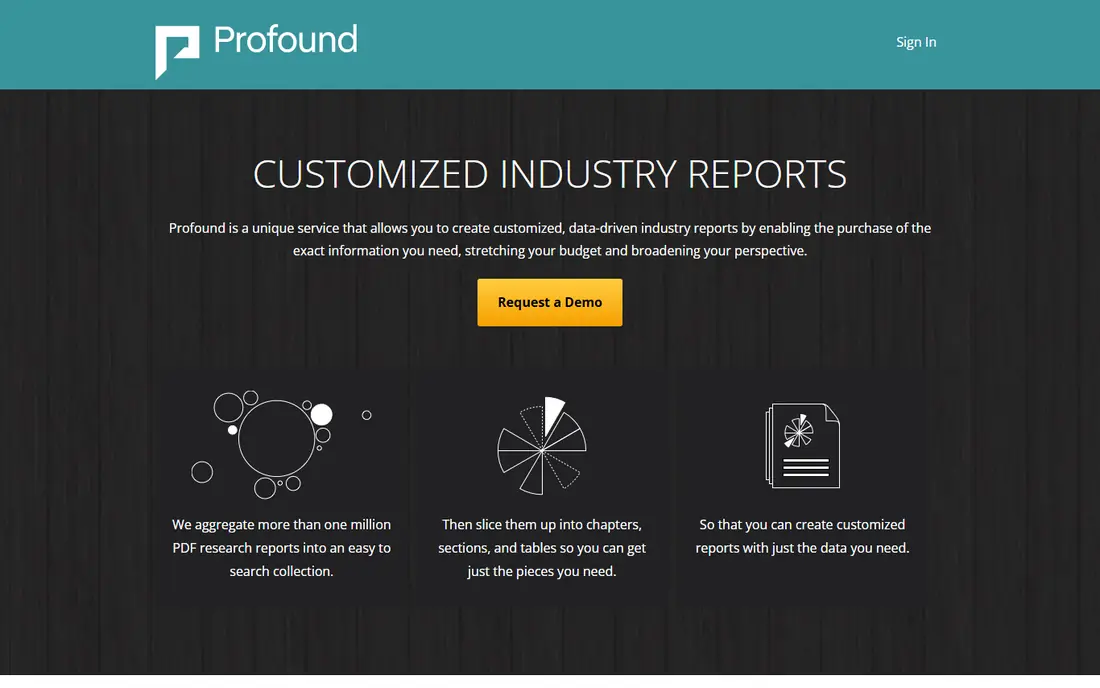
Profound is a strong choice for enterprise teams running dedicated AI visibility programs. Profound tracks how a brand appears across AI engines and surfaces the prompts, sources, and answers behind that visibility. Its reporting helps large teams see which topics they win, which they lose, and where content or citation gaps sit.
The trade-off is worth weighing before you commit. Pricing is custom, so small teams should ask for a clear quote before a trial ends. The depth is valuable for enterprises, but smaller sites may get enough from a cheaper tracker. Check the current plan limits on the vendor site, since allowances and add-ons change often, and run a small pilot with real tickets, content, or data before you roll it out more widely.
- Tracks many AI engines
- Prompt and persona reporting
- Optimisation agents
- Custom pricing
- Enterprise focus may exceed small-team needs
For small teams that want affordable AI visibility tracking, Otterly stands out for a practical reason. Otterly is the budget entry point in this category, with tracking across core AI engines for $29 per month. Its reports are easy to read, and multi-brand views suit agencies and small teams with several clients.
There is a catch to plan around. Entry tiers cover fewer engines, with others as add-ons, so check engine coverage for the models your audience actually uses. It monitors visibility well but gives lighter optimisation guidance than enterprise tools. That does not rule it out, but it does mean you should test it against your own workflow and confirm the price for your team size before you buy.
- Low entry price
- Straightforward monitoring
- Multi-brand reports
- Fewer engines on entry tier
- Optimisation advice is lighter
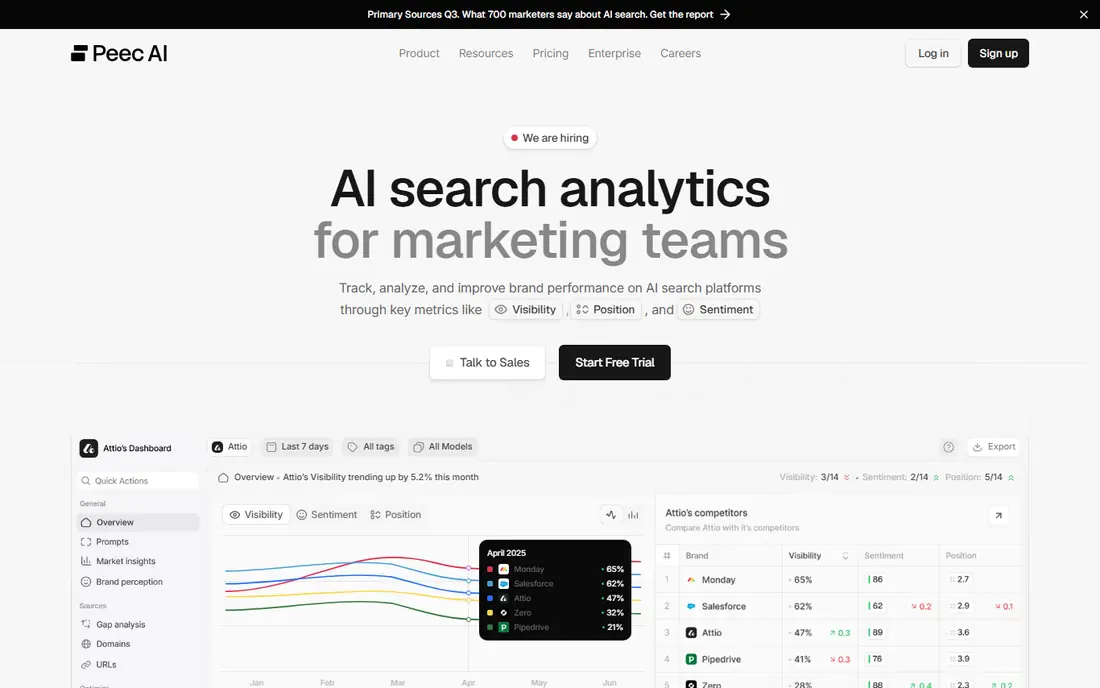
Peec AI earns its place here through its fit for agencies and brands that need competitor comparisons. Peec AI tracks visibility at prompt level and compares your share of voice with competitors, which helps teams see whether rivals are cited more often for the same questions. Multi-country and multi-language tracking suits brands in several markets.
Watch the limits as well as the strengths. Each plan caps the engines you can choose, so pick the engines that matter most before you buy. Confirm the monthly price for your billing term, since annual and monthly rates differ. A short trial with your own examples will tell you more than any feature page, so use that time to test the parts you will rely on every week.
- Prompt-level tracking
- Competitor share of voice
- Multi-market support
- Engine choice is capped per plan
- Pricing varies by billing term
If your main need is teams that want monitoring plus prioritised fixes, start with Goodie. Goodie pairs AI visibility monitoring with a prioritised list of fixes, rather than leaving teams to interpret charts alone. That action list helps content teams decide what to publish or update next.
The honest limit matters here. The Core price is higher than budget trackers, and it covers fewer engines than higher tiers. Teams should check whether the engines they need are included before paying. If that limit touches your core work, compare the next tier or a rival before you sign up, and keep an eye on renewal terms.
- Monitoring plus optimisation
- Prioritised fix lists
- Attribution features
- Higher entry price
- Core tier covers fewer engines
Scrunch suits teams and individuals focused on brands and agencies managing AI presence at scale. Scrunch organises AI presence work into monitoring, analysis, and optimisation, with persona and journey views that show how different audiences meet a brand in AI answers. Its audits help teams find crawler and content gaps.
Price and fit need a final check. Higher tiers are needed for full engine coverage and agency workflows, and some plans bill annually. Confirm the total for your prompt volume before committing. Start on the lowest plan or trial that covers your main task, measure what it saves or improves, and only then move up a tier.
- Prompt monitoring
- Audits
- Persona and journey modelling
- Enterprise features need higher tiers
- Pricing is annual on some plans
Among the options here, AthenaHQ is the one to check first for teams that want a free test before buying. AthenaHQ offers a free tier, which makes it a practical first test for teams unsure whether AI visibility tracking is worth paying for. Paid plans cover many models and turn citation gaps into content recommendations.
The trade-off is worth weighing before you commit. The Starter price is high once the free tier runs out, so use the free tier to test engine coverage and report quality first. Check credit limits on each tier. Check the current plan limits on the vendor site, since allowances and add-ons change often, and run a small pilot with real tickets, content, or data before you roll it out more widely.
- Free tier for testing
- Broad model coverage
- Content recommendations
- Starter price is high
- Free tier limits apply
Semrush AI Visibility Toolkit is built around teams already using Semrush for SEO, and that focus shows in daily use. Semrush AI Visibility Toolkit adds AI answer tracking to the SEO data many teams already use, covering ChatGPT, Google AI Overviews, AI Mode, Gemini, and Perplexity. Keeping SEO and AI visibility in one place simplifies reporting.
There is a catch to plan around. It is priced per domain on top of a Semrush plan, so multi-domain teams should add up the total. There is no free trial for the toolkit itself, so use the demo and docs first. That does not rule it out, but it does mean you should test it against your own workflow and confirm the price for your team size before you buy.
- AI visibility alongside SEO data
- Per-domain tracking
- Daily updates
- Add-on cost on top of Semrush
- No free trial for the toolkit
Buyers who need SEO teams that want AI data beside backlink data will find Ahrefs Brand Radar a sensible shortlist pick. Ahrefs Brand Radar tracks brand mentions and citations across AI engines and pairs that data with Ahrefs backlink and keyword research. That combination helps SEO teams see both traditional authority and AI visibility in one workflow.
Watch the limits as well as the strengths. It needs a base Ahrefs plan plus the AI index cost, so the total is higher than the index price alone. Confirm both parts of the bill before you buy. A short trial with your own examples will tell you more than any feature page, so use that time to test the parts you will rely on every week.
- Large prompt index
- Citation discovery
- Strong SEO data alongside
- Needs a base Ahrefs plan
- AI index pricing is separate
Writesonic takes a clear approach to content teams that want creation plus monitoring together. Writesonic combines AI content creation with GEO-style monitoring, which suits content teams that publish often and want to check visibility without a second tool. Its Starter plan covers core engines for small teams.
The honest limit matters here. Monitoring covers fewer engines than specialist trackers, and it is not a full enterprise visibility platform. It fits teams that value the combined workflow more than maximum engine coverage. If that limit touches your core work, compare the next tier or a rival before you sign up, and keep an eye on renewal terms.
- Content creation plus GEO monitoring
- Starter tracking for small teams
- Fewer engines than specialist trackers
- Monitoring is not its main focus
How we picked these
We compared official pricing and feature pages for each tool, plus recent GEO comparisons checked in October 2026, and kept only tools still offered as AI visibility products. We checked engine coverage, prompt volume, and whether each tool offers optimisation guidance or only monitoring. We did not claim hands-on testing. Where pricing is custom or per domain, we say so, since the total depends on domains, prompts, and engines chosen.
How to choose an AI visibility tool without overspending
Start with a free baseline
Before paying, run a free check or trial and record how often your brand is mentioned and cited for your top twenty questions. That baseline shows whether you have a visibility problem worth a monthly fee, or a content problem a tracker alone will not fix.
Pick engines by audience, not by count
A tool that tracks fourteen engines is not better if your customers mainly use ChatGPT and Google AI Overviews. Choose the plan that covers the engines your audience actually uses, and add others only if the data shows they matter.
Demand actions, not just charts
Ask each vendor what a team should do when visibility drops for a key prompt. Tools that give prioritised content, citation, and technical fixes will save more time than tools that only show a falling line.
Frequently asked questions
What are AI optimization tools for visibility?
They are tools that track how a brand, product, or site appears in AI-generated answers and help teams improve that presence through content, citations, and technical fixes. They are also called GEO or AEO tools.
Is AI optimization the same as SEO?
No, but the two overlap. SEO improves visibility in classic search results, while AI optimization focuses on AI answers, citations, and prompt-level mentions. Strong content and authority help both.
Which AI visibility tool is cheapest?
Otterly is the cheapest in this guide at $29 per month. AthenaHQ offers a free tier for testing, and Peec AI starts at about $95 per month.
Can a tool guarantee I appear in AI answers?
No tool can guarantee placement, since AI answers depend on many sources and model behaviour. Tools can show gaps and guide fixes, but results depend on content quality and authority.
How many prompts should I track?
Start with twenty to fifty prompts that match real customer questions, then expand to competitor and funnel prompts once the baseline is clear. Tracking too many prompts early wastes budget.
Sources
See where you really rank - block by block
ProMapRanker scans Google Maps across a grid of your service area. Simple monthly plans from $19, white-label on every plan.
Start freeKeep reading
 zoho inventory alternatives
6 Alternatives to Zoho Inventory, Compared on Price and Fit
Zoho Inventory alternatives: 6 tools compared on price, free plans and fit. Katana leads the list for manufacturers. Fit and flaws are laid out for each entry.
Read → zoho crm alternatives
Best Zoho CRM Alternatives (2026)
Need Zoho CRM alternatives? We compare 7 tools on cost, free access and who each suits. Every pick gets a straight assessment. Built for quick decisions.
Read → zelle alternatives
Best Zelle Alternatives in 2026
Compare the best Zelle alternatives for sending money to friends, paying sellers and moving funds abroad, with honest notes on fees, speed and safety in 2026.
Read →