 ProMapRanker
Best InvestorLift Alternatives Crowdfunding Platforms in 2026


Diversified beginner portfolios · Pricing starts at: $10 minimum investment
Key takeaways
- Fundrise and Arrived are the most accessible starting points, with minimums of 10 dollars and 100 dollars in recent listings.
- RealtyMogul offers both REITs for non-accredited investors and private deals for accredited investors, while CrowdStreet and EquityMultiple are mainly accredited-only.
- Groundfloor suits short-term debt investors, while Streitwise and Yieldstreet suit people who want a single diversified product or a broader private market mix.
- Real estate crowdfunding is often illiquid and carries loss risk, so never invest money you may need soon, and read each offering document before you invest.
Quick comparison
| Pick | Great for | Pricing starts at | Free tier | |
|---|---|---|---|---|
| Fundrise | Diversified beginner portfolios | $10 minimum investment | Yes | Visit |
 RealtyMogul | Commercial REITs and private deals | $5,000 minimum investment | Yes | Visit |
 CrowdStreet | Accredited commercial deals | $25,000 minimum investment | Yes | Visit |
 Arrived | Single-family rental shares | $100 minimum investment | Yes | Visit |
 Groundfloor | Short-term real estate debt | $10 minimum investment | Yes | Visit |
 EquityMultiple | Accredited equity and debt deals | $5,000 minimum investment | Yes | Visit |
 Yieldstreet | Broader private market mix | $2,500 minimum investment | Yes | Visit |
 Streitwise | Simple commercial REIT product | $5,000 minimum investment | Yes | Visit |
The best investorlift alternatives crowdfunding platforms
This is not financial advice, and real estate investing carries risk, including possible loss of capital. These eight platforms let US investors pool money into property-backed offerings, but liquidity, fees and eligibility differ sharply, so compare the offering documents, not just the headline minimum.
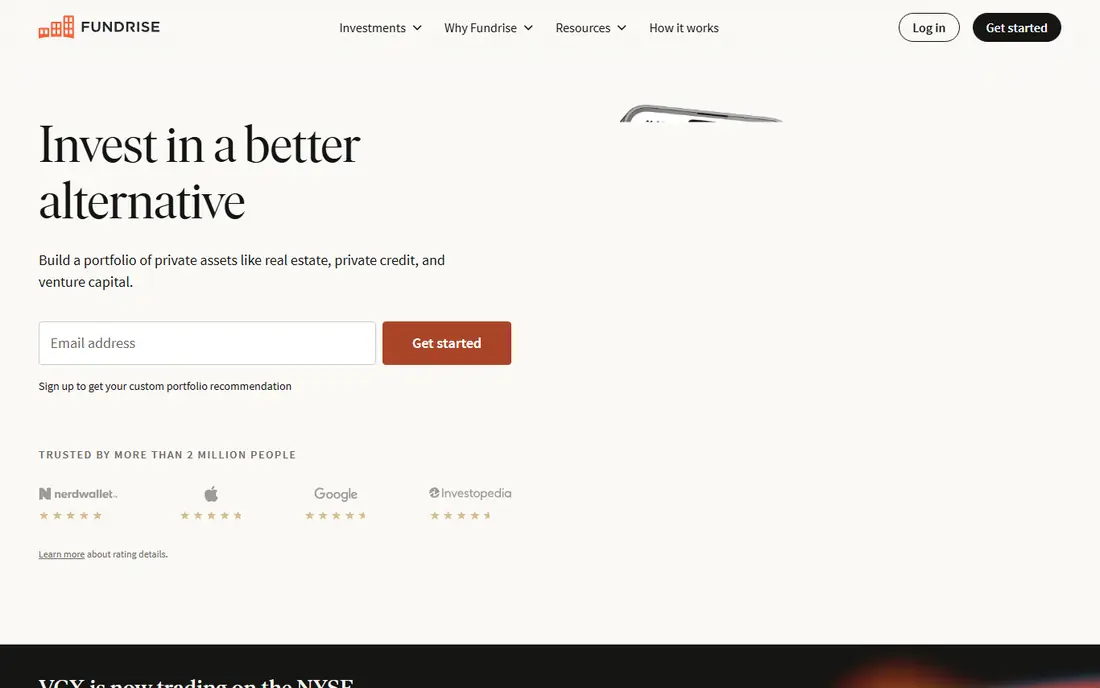
Fundrise is the most accessible platform on this list, and the best starting point for a first small allocation. Investors pick a strategy such as income, balanced or growth, and Fundrise allocates money across diversified portfolios of residential and commercial properties. The low minimum lets you learn how quarterly reporting, distributions and redemptions work without committing a large sum.
Liquidity is the main limit. Redemptions run in quarterly windows and are conditional, with penalties possible in early years, so this is not a savings account substitute. Annual fees near 1 percent have been reported in recent comparisons, though current fees should be checked on the Fundrise site. Start small, diversify, and treat any return figure as past performance, not a promise.
- Very low 10 dollar minimum in recent listings
- Diversified eREIT portfolios
- Automatic reinvestment options
- Redemptions are quarterly and conditional
- Returns vary by year and strategy

RealtyMogul offers two tracks that suit different investors. Non-accredited investors can buy into its REIT products, while accredited investors can access individual private placements in commercial and multifamily properties. That split makes it a useful middle step between a beginner platform and a deal-by-deal platform, since you can start with a REIT and move to private deals only if you qualify and understand the lockup.
Fees and liquidity need a careful read. REIT fees near 1 to 1.25 percent annually have been reported, and private placements carry their own deal fees and multi-year holds. Monthly distributions on REITs are not guaranteed, and property values can fall. Read the REIT prospectus and each deal document before you invest.
- REITs open to non-accredited investors
- Private placements for accredited investors
- Commercial and multifamily focus
- Private deals lock capital for years
- REIT redemptions are conditional

CrowdStreet is built for accredited investors who want to pick individual commercial deals rather than buy a diversified fund. Offerings cover office, industrial, retail and multifamily projects, with sponsor track records, deal documents and financial projections published for review. That transparency helps an experienced investor compare deals, though it also demands more homework than a fund.
The minimum is the barrier. Private deals have been listed from 25,000 dollars, with some REIT options lower, and capital is generally locked until the deal exits, often after three to seven years. There is no guaranteed secondary market. CrowdStreet suits an investor with a long horizon and a diversified portfolio elsewhere, not someone seeking quick access to cash.
- Detailed deal data and sponsor information
- Single-deal commercial offerings
- REIT options at lower minimums in some listings
- Accredited investors only for most private deals
- Capital is illiquid until deal exit, often several years
Arrived lets investors buy shares in individual single-family rental homes and, in some listings, vacation rentals, for a 100 dollar minimum. That model gives you direct exposure to a specific property and rental market, rather than a broad fund, which some investors prefer for learning how rental income works. Properties are managed by Arrived and its partners, so you do not act as a landlord.
Single-property risk is the honest catch. A vacancy, a major repair or a weak local market affects that property directly, and early exit depends on a limited redemption program rather than a liquid market. Diversifying across several properties and keeping each allocation small helps, but it does not remove property risk. Read the offering circular for each home before you buy.
- Low 100 dollar minimum
- Shares in individual rental homes
- Rental income and appreciation exposure
- Limited redemption program, not guaranteed
- Single-property risk on each offering
Groundfloor focuses on debt rather than equity. Investors fund short-term loans secured by real estate, often for fix-and-flip projects, with terms commonly measured in months. That shorter horizon appeals to people who do not want a multi-year equity lockup, and the low per-loan minimum lets you spread money across many loans.
Debt is not risk-free. If a borrower fails to repay, recovery depends on the property and the loan position, and delays can extend the term. Groundfloor has listed no fees to investors in recent comparisons, with revenue coming from borrower-side fees, but confirm current terms on its site. Spread across many loans, keep allocations small, and do not treat loan interest as guaranteed income.
- Low 10 dollar minimum per loan after an initial deposit in some listings
- Short loan terms of months, not years
- No investor fees in recent listings
- Debt risk if a borrower defaults
- Returns depend on loan performance and repayment
EquityMultiple offers accredited investors a mix of commercial equity, preferred equity and debt deals, with underwriting materials and sponsor information for each offering. That range lets an experienced investor balance growth-oriented equity with income-oriented debt, though each deal still carries its own property and sponsor risk. Minimums have been listed from 5,000 dollars, with some deals higher.
Liquidity is limited, as with CrowdStreet, since most deals pay out only at exit or through scheduled distributions. Fees vary by deal and should be read in the offering documents, not assumed from a summary page. EquityMultiple suits an accredited investor who already holds liquid assets elsewhere and wants commercial real estate exposure as a smaller portfolio slice.
- Commercial equity and debt offerings
- Detailed deal underwriting materials
- Diversified deal types
- Accredited investors only for most deals
- Capital locked until deal exit
Yieldstreet is broader than a pure real estate platform, since it offers real estate beside other private market assets such as private credit and art-related offerings in past listings. That breadth suits an investor who wants private market exposure in one account, rather than opening a separate platform for each asset class. Real estate minimums have been listed from 2,500 dollars, though each offering sets its own terms.
Breadth also means complexity. Fees, lockups and risk profiles differ by asset class, so a real estate offering and a private credit offering should not be compared on headline yield alone. Accreditation rules vary by offering as well. If you use Yieldstreet, compare each offering document separately and keep total private market exposure modest relative to liquid savings.
- Real estate beside other private market offerings
- Curated deal selection
- IRA options on some offerings
- Minimums and eligibility vary by offering
- Fees and liquidity vary by asset class
Streitwise keeps the decision simple by offering a single REIT focused on commercial properties, rather than dozens of individual deals. That simplicity appeals to investors who want commercial real estate exposure without picking sponsors and deals one by one. The minimum for non-accredited investors has been listed at 5,000 dollars, with quarterly reporting and distributions that vary with property performance.
Concentration is the trade-off. A single REIT product means your real estate exposure rises and falls with that portfolio, and redemptions are conditional rather than on demand. Fees and distribution history should be checked in the current prospectus. Streitwise suits an investor who wants a simple, long-term commercial REIT allocation, not a deal-picking platform.
- Single REIT product keeps choices simple
- Commercial property focus
- Straightforward fee presentation in past listings
- Single-product concentration
- 5,000 dollar minimum for non-accredited investors in past listings
- Redemptions conditional
How we picked these
We compared official platform pages, offering documents summaries and public comparisons for US real estate crowdfunding platforms live in October 2026. We favored legitimate platforms with published minimums, clear accreditation rules and offering documents, and we excluded platforms with no verifiable product or no public offering information. This article is not financial advice, and no return figure here is a promise of future results. Minimums and fees change, so confirm them on each platform site before you invest.
What to check before you invest
Read the offering document, not just the summary page
The prospectus or offering circular states fees, risks, redemption terms and conflicts of interest. If you cannot explain the main risks in plain language after reading it, the offering is not a good fit yet.
Match lockup to your cash needs
Quarterly redemption windows, multi-year deal holds and limited secondary markets all mean your money may be unavailable when you need it. Keep emergency savings and near-term spending money outside crowdfunding platforms entirely.
Diversify and keep allocations modest
Spread across properties, sponsors and deal types, and keep total crowdfunding exposure to a small share of your investable assets. A single property or sponsor problem should never threaten your overall financial plan.
Frequently asked questions
What is the lowest minimum for real estate crowdfunding?
Fundrise and Groundfloor have been listed with 10 dollar minimums, while Arrived starts at 100 dollars. Low minimums make learning easier, but they do not reduce property risk or improve liquidity.
Do I need to be accredited to invest?
It depends on the offering. Fundrise, Arrived, Groundfloor and Streitwise offer products open to non-accredited investors, while CrowdStreet and EquityMultiple private deals are mainly for accredited investors. RealtyMogul splits the difference, with REITs open more broadly and private deals restricted.
Can I sell my investment early?
Usually only in limited ways. Some REITs offer quarterly redemption windows that are conditional, while private deals are generally illiquid until exit. Do not invest money you may need before the stated term ends.
Are returns guaranteed?
No. Distributions, interest and appreciation all depend on property performance, borrower repayment and market conditions, and you can lose capital. Any platform or deal that implies guaranteed returns should be treated with caution.
Is real estate crowdfunding the same as owning property?
No. You own shares in a fund, REIT or deal entity, not the property directly, and you do not control management, leasing or sale decisions. That structure gives you exposure without landlord duties, but also without direct control.
How do fees work on these platforms?
Fees vary by platform and offering, and may include annual management fees, deal fees and property management costs. Read the fee section of each offering document, since fees reduce net returns even when gross property performance looks strong.
Sources
See where you really rank - block by block
ProMapRanker scans Google Maps across a grid of your service area. Simple monthly plans from $19, white-label on every plan.
Start freeKeep reading
 zscaler alternatives
Best Zscaler Alternatives in 2026
Looking for zscaler alternatives? We compare 9 SASE and zero trust platforms on architecture, data protection, pricing, and fit for your network and team.
Read → zapier alternatives free
Best Zapier Alternatives Free in 2026
Nine automation tools for zapier alternatives free in 2026, all with genuinely free tiers, plus free plan limits, starting prices and upgrade paths explained.
Read → which platform is best for online reputation
Which Platform Is Best for Online Reputation in 2026
Wondering which platform is best for online reputation? We compare 8 review, listing, and response tools for small and multi-location businesses and agencies.
Read →