 ProMapRanker
Best Intercom Fin Alternatives in 2026

Key takeaways
- Zendesk AI Agents and Freshworks Freddy AI Agent are the fastest starts for teams already on those help desks.
- Salesforce Agentforce is the natural pick for teams already running Service Cloud, since it can act on CRM data directly.
- Ada, Decagon, and Sierra suit larger operations that need deeper workflows, voice, and governance controls.
- Tidio Lyro and Gorgias AI Agent offer lower entry costs for small and ecommerce teams, with per-conversation pricing to watch.
Quick comparison
| Pick | Great for | Pricing starts at | Free tier | |
|---|---|---|---|---|
 Zendesk AI Agents | Zendesk help desks | See website | No | Visit |
 Freshworks Freddy AI Agent | Freshdesk teams | See website | No | Visit |
 Salesforce Agentforce | Salesforce Service Cloud teams | See website | No | Visit |
 Ada | No-code enterprise automation | See website | No | Visit |
 Decagon | Complex multi-step workflows | See website | No | Visit |
 Sierra | Enterprise brand-critical CX | See website | No | Visit |
 Tidio Lyro | Small teams and stores | Free | Yes | Visit |
 Gorgias AI Agent | Ecommerce support teams | $10 per month | No | Visit |
The best Intercom Fin alternatives
Intercom Fin is an AI agent that answers customer questions from support content and, in newer versions, takes actions and hands off to humans with full context. The alternatives below are AI customer-service agents in their own right, not general chatbots, and they differ mainly in which help desk they live in, how they charge, and how much workflow depth they offer. Note that Fin itself is not listed here, since this is a list of replacements for it.
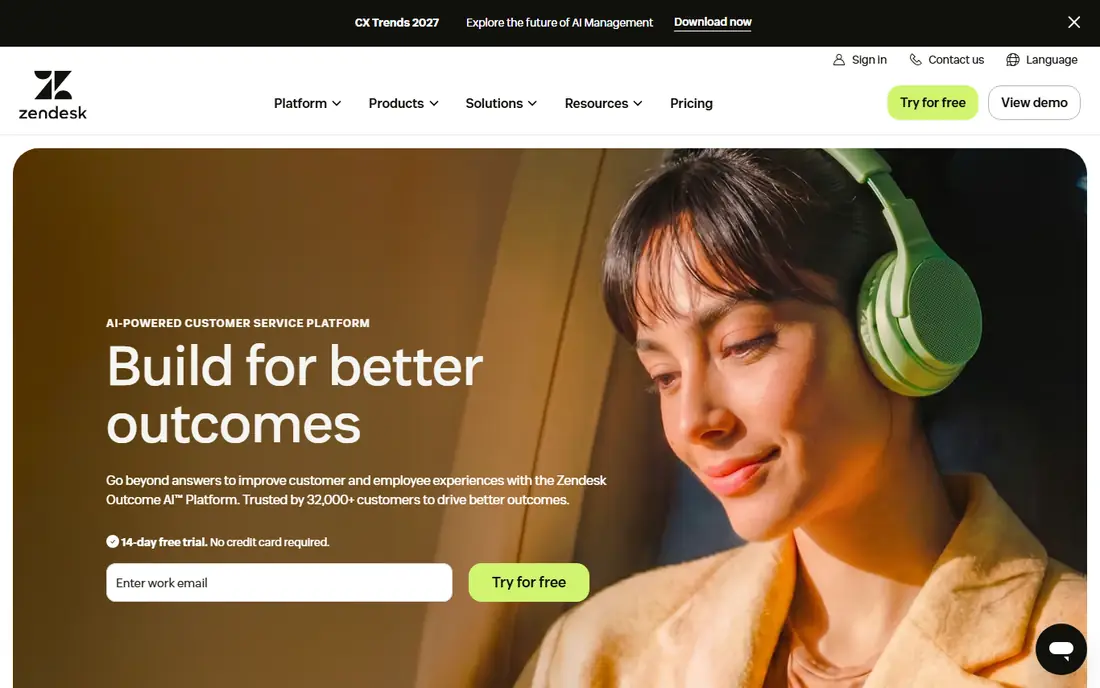
Zendesk AI Agents are the obvious first alternative for any team already on Zendesk. Because the agent lives inside the help desk, it can use tickets, macros, and customer data without a separate integration project, and handoffs to human agents keep full conversation context. For teams with established Zendesk workflows, that native fit shortens deployment.
Pricing is the part to model carefully. Zendesk includes a limited number of automated resolutions per agent and charges for additional resolutions, with committed and pay-as-you-go rates, so a team with high AI volume should forecast monthly resolutions before signing. If your team is not on Zendesk, a standalone agent may be cheaper than moving help desks only for AI.
- Native to Zendesk Suite
- Works across chat, email, and messaging
- Includes triage and copilot features in the suite
- Automated resolution pricing needs careful modelling
- Best value stays inside Zendesk
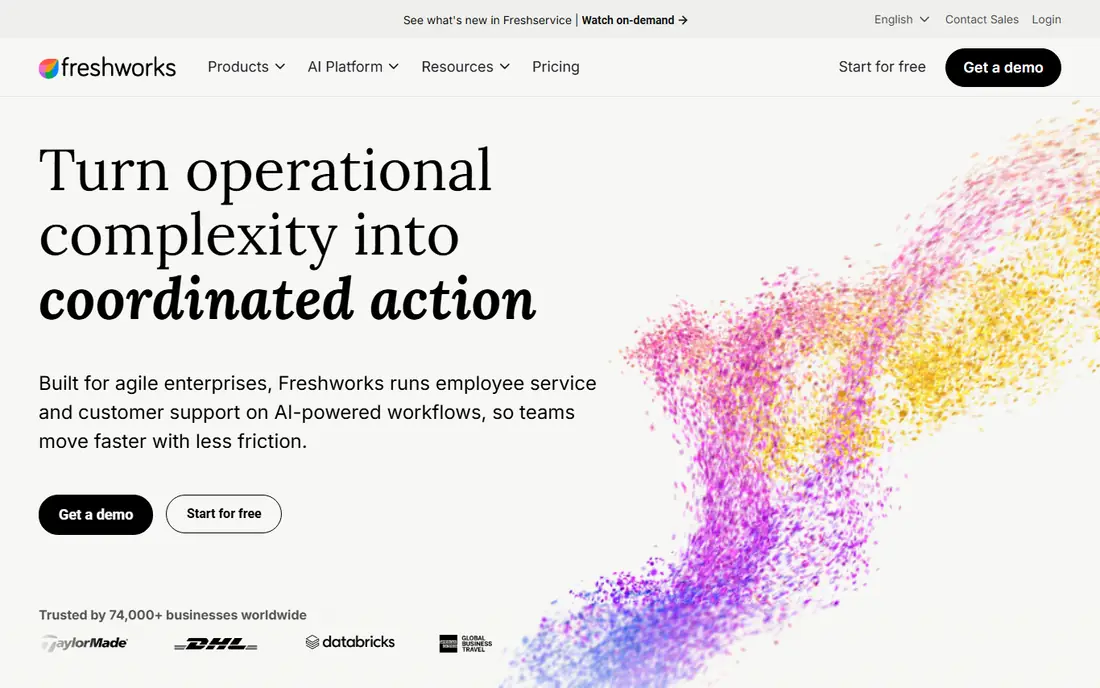
Freddy AI Agent is Freshworks' AI agent for Freshdesk, and it suits teams that want AI answers and ticket automation without an enterprise price tag. It can answer from help content, assist agents, and automate routine service tasks, and it works across chat and email. For small and mid-sized teams already on Freshdesk, it is the lowest-friction route to an AI agent.
The limit mirrors Zendesk: the agent is strongest inside its own help desk, and teams on another system would need to weigh a help desk move against a standalone agent. Session packs and plan tiers also mean the real cost depends on volume, so model sessions against your actual conversation count.
- Native to Freshdesk and Freshservice
- Session-based pricing options
- Good fit for budget-conscious teams
- Deepest value stays inside Freshworks
- Advanced agent features need higher tiers
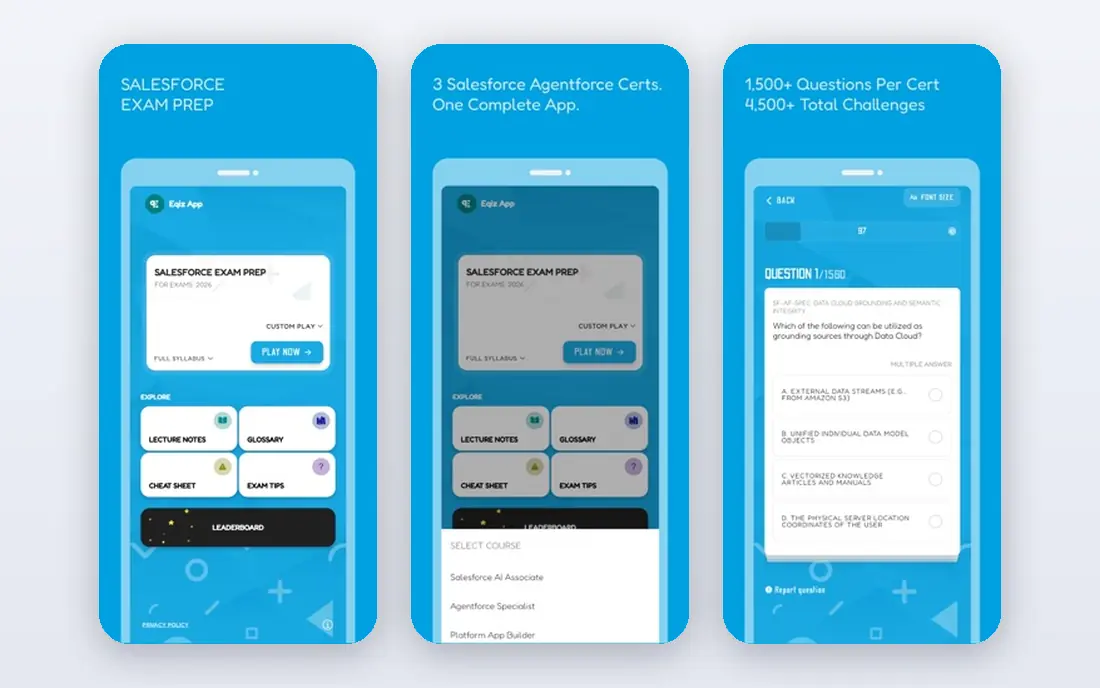
Salesforce Agentforce builds AI agents that can read and act on data inside Salesforce, such as orders, cases, and account records, which lets an agent do more than answer a question. It can check a case, update a record, or follow a defined workflow, then hand off to a human when needed. For organizations already running Service Cloud, that CRM connection is a strong advantage.
Pricing is consumption-based, with per-conversation or credit models depending on the plan, so teams should forecast conversation volume and the actions each agent will take. Teams without Salesforce will face a larger platform decision, and a help desk native or standalone agent may fit better.
- Acts on Salesforce CRM data
- Covers chat, email, and voice
- Foundations tier helps teams start
- Consumption pricing needs forecasting
- Best value requires a Salesforce setup
Ada is a standalone AI agent platform that lets support teams build and manage automated conversations without heavy engineering work. It integrates with major help desks, supports chat, voice, and messaging, and offers controls for tone, escalation, and knowledge sources. That independence suits teams that want AI without changing their help desk.
The trade-off is enterprise pricing and usage costs. Ada is quote-based, and resolution or conversation pricing means high-volume teams must model total cost, not only the platform fee. Smaller teams may find a help desk native agent cheaper, while larger teams with complex automation needs will value Ada's depth.
- No-code building for support teams
- Strong multilingual and voice options
- Works across help desks
- Quote-based pricing
- Per-resolution or per-conversation costs add up at scale
Decagon is built for high-volume consumer brands with complex support operations. Its agents follow structured procedures, reason across several messages, and handle multi-step tasks across chat, email, and voice, with governance features suited to enterprise use. Vendor-supported setup helps teams iterate on agent behavior after launch.
Decagon is an enterprise purchase, with custom contracts and an implementation commitment that smaller teams may not need. Teams with simpler question-and-answer needs will get faster value from a help desk native agent, while teams with long, branching workflows and strict controls will benefit most from Decagon's structure.
- Multi-step reasoning across channels
- Structured agent procedures for governance
- Voice and chat coverage
- Enterprise contract and implementation
- Quote-based pricing
Sierra builds AI agents for large brands where tone, accuracy, and customer experience matter as much as resolution rate. Its agents handle chat and voice, can take actions in connected systems, and are built with a mix of an agent SDK for developers and a studio for non-developers. Simulation and testing tools help teams check agent behavior before launch.
The cost and commitment are the main barriers. Sierra is priced for enterprise buyers, with outcome-based pricing and a substantial implementation effort, so it suits Fortune 500 style teams rather than small support teams. For brand-critical support at scale, that investment can be justified; for simple deflection, it is more than needed.
- Autonomous agents for chat and voice
- Strong brand voice controls
- SDK for custom agent building
- Enterprise pricing with a high floor
- Services-led implementation
Tidio Lyro is the accessible end of this list. Tidio offers a free plan with live chat and ticketing, and Lyro, its AI agent, answers from FAQs, website content, and imported help articles, takes actions in Shopify, and hands off to a human when needed. Lyro can also run attached to another help desk, so teams can try AI without moving their inbox.
Pricing needs care, since Tidio meters human conversations, Lyro conversations, and automation visitors separately. The entry Lyro plan starts at $39 per month on monthly billing for 50 conversations, with lower monthly equivalents on annual billing, so total cost depends on the mix of quotas a team actually uses. For small stores, it remains one of the cheapest ways to try a real AI agent.
- Free plan for starting
- Lyro answers from support content and takes Shopify actions
- Can run alongside another help desk
- Lyro conversations are metered separately
- Human conversation quotas add to the bill
Gorgias AI Agent is built for online stores, with native Shopify order lookups, returns handling, and support across chat, email, and social channels. Its ticket-based pricing avoids per-seat fees, which suits stores with many part-time agents, and AI Agent usage is charged per automated interaction on top of plan pricing. For ecommerce teams, that combination is practical and easy to understand.
The limit is focus. Gorgias is a help desk for commerce, so SaaS teams with complex B2B workflows may find its toolset narrower than Zendesk, Salesforce, or a standalone agent platform. Ecommerce teams, though, will value order actions and store integrations that general tools handle less directly.
- Built for Shopify and ecommerce
- AI Agent included on plans
- Ticket-based pricing with no seat fees
- AI usage is charged per automated interaction
- Best fit is ecommerce, not general SaaS
How we picked these
We compared official product pages, pricing pages, and public documentation for AI agents that resolve customer conversations, take actions where possible, and hand off to humans, and we kept only products live in October 2026. We mixed help desk native agents with standalone enterprise platforms and lower-cost options, so buyers can match the list to their current help desk and volume. Where pricing is quote-based or usage-based, we wrote See website in the table and explained the model in the text.
What to check before you buy
Start with your help desk. If you are happy on Zendesk, Freshdesk, Salesforce, or Gorgias, the native agent is usually the fastest and cheapest path, since integration and handoff are already built in. Only move to a standalone platform such as Ada, Decagon, or Sierra if you need deeper workflows, voice depth, or help desk independence.
Next, read how each vendor defines a resolution, conversation, or session, and model your real volume against that definition. A low per-resolution price can still produce a high bill if the vendor counts every unanswered follow-up as a resolution, or if included allowances are small. Ask for a sample bill at your monthly volume before signing.
Finally, pilot on real conversations. Give each shortlisted agent the same set of past tickets, check answer accuracy, action completion, and handoff quality, and confirm that knowledge updates, tone controls, and reporting meet your needs. A pilot that only tests demo questions will hide the gaps that appear on messy, real customer messages.
Frequently asked questions
What is Intercom Fin?
Intercom Fin is Intercom's AI agent for customer service. It answers questions from support content, can take actions in connected systems, and hands off to human agents with conversation context when it cannot resolve an issue.
Which Intercom Fin alternative is best for Zendesk users?
Zendesk AI Agents are the best fit for Zendesk users, since they are native to Zendesk Suite and use tickets, customer data, and handoff workflows already in place. Teams should still model automated resolution allowances and overage rates before committing.
Are there cheaper Intercom Fin alternatives for small teams?
Yes. Tidio Lyro offers a free plan for starting, with Lyro conversation packs added on top, and Gorgias AI Agent starts at $10 per month for ecommerce teams. Both meter AI usage separately, so forecast conversation volume to get the true monthly cost.
Do AI agents replace human support teams?
No, in most cases they handle routine questions and tasks and hand off complex, sensitive, or high-value cases to humans. The best setups use AI for volume and speed, and keep humans for judgment, empathy, and cases where an agent lacks the data or authority to act.
What should I check in an AI agent contract?
Check how resolutions are defined, what volume is included, what overage rates apply, how knowledge is updated, and what controls exist for tone, escalation, and data use. Ask for references in your industry and a pilot on real conversations before signing a long contract.
Sources
See where you really rank - block by block
ProMapRanker scans Google Maps across a grid of your service area. Simple monthly plans from $19, white-label on every plan.
Start freeKeep reading
 zoro.to alternatives
Best Zoro.to Alternatives in 2026
We compare the best zoro.to alternatives in 2026, listing only legal licensed anime streaming services, from Crunchyroll to free options for fans today.
Read → zip alternatives
Best Zip Alternatives in 2026
We compare the best zip alternatives for buy now, pay later in 2026, covering pay-in-4 plans, fees, spending limits, and credit reporting options today.
Read → yesware alternatives
Best Yesware Alternatives in 2026
Compare the best yesware alternatives for sales email tracking, templates, and sequences, with current pricing and honest tradeoffs for small sales teams.
Read →