 ProMapRanker
Best Informatica PowerCenter Alternatives in 2026


Enterprises that need data quality with integration · Pricing starts at: See website
Key takeaways
- Airbyte and Apache NiFi are the strongest open-source starting points, while Fivetran and Stitch suit teams that want managed pipelines with little upkeep.
- Talend and Matillion suit transformation-heavy work, but both are quote-led or credit-based, so model volume before signing.
- Azure Data Factory and AWS Glue suit teams already committed to one cloud, while Airbyte and NiFi suit multi-cloud and on-prem needs.
- Managed ELT pricing often scales with rows or credits, so high-churn tables can cost far more than the entry tier suggests.
- PowerCenter users should inventory mappings, schedules, and on-prem sources before choosing between a lift-and-shift tool and a cloud-native rebuild.
Quick comparison
| Pick | Great for | Pricing starts at | Free tier | |
|---|---|---|---|---|
| Talend | Enterprises that need data quality with integration | See website | No | Visit |
 Fivetran | Teams that want managed ELT with minimal upkeep | See website | Yes | Visit |
 Matillion | Transformation-heavy cloud warehouse work | See website | No | Visit |
 Airbyte | Open-source data movement with published pricing | Free | Yes | Visit |
 Apache NiFi | On-prem, hybrid, and streaming data flows | Free | Yes | Visit |
 Azure Data Factory | Azure-native ETL and orchestration | See website | No | Visit |
 AWS Glue | AWS-native serverless ETL | See website | No | Visit |
 Stitch | Small teams that want simple managed ELT | See website | Free trial | Visit |
 Hevo Data | No-code pipelines for mid-size teams | $239 per month | Free trial | Visit |
The best informatica powercenter alternatives
Informatica PowerCenter is enterprise data integration and ETL software for moving, transforming, and loading data between on-prem and cloud systems. The tools below replace that job in different ways: some are managed ELT services, some are visual ETL platforms, and some are open-source engines you run yourself. We kept only tools that are live and sold or maintained in October 2026.
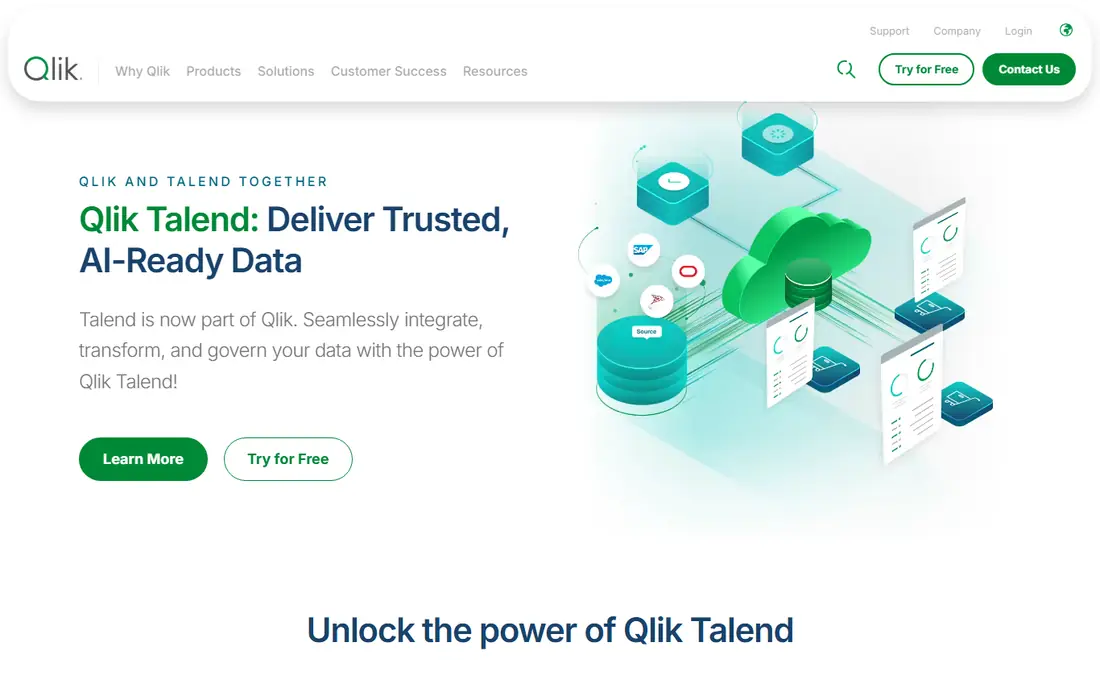
Talend is the closest enterprise analogue to PowerCenter in this list. It combines visual ETL design with data quality, profiling, and governance features, which suits firms that need clean, trusted data as well as moved data. Its Data Fabric platform covers integration, quality, and governance in one commercial package.
The honest catch is cost and the end of the free edition. Talend is sold by quote, with third-party reports putting entry pricing around 12,000 dollars a year, and Open Studio is no longer maintained. Firms that relied on the free edition should look at Airbyte or NiFi instead, and firms that buy Talend should price the full Data Fabric scope.
- Visual pipeline design with data quality tools
- Broad connector and governance features
- Qlik ownership gives a wide data platform
- Quote-only pricing
- Talend Open Studio was retired in January 2024, so the free path is gone
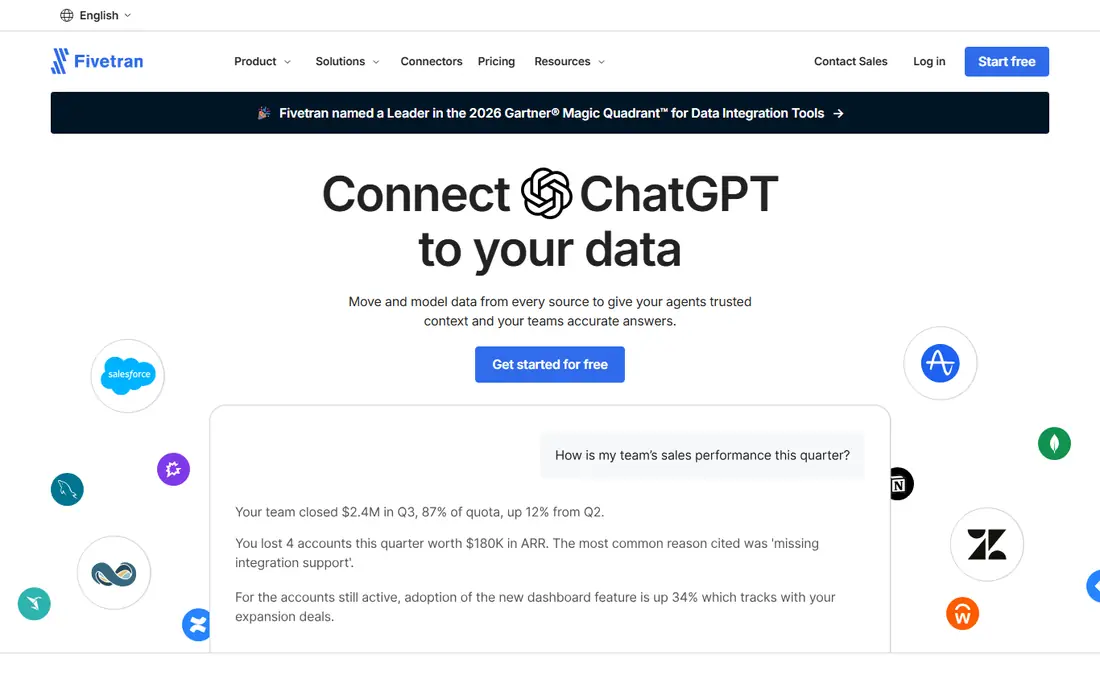
Fivetran flips the PowerCenter model: instead of building transformations before load, it loads data first and lets teams transform it in the warehouse with dbt. Managed connectors handle schema changes and retries, which cuts pipeline maintenance for small data teams. A free tier up to 500,000 monthly active rows lets a team test real sources before paying.
The pricing model needs care. Fivetran bills on monthly active rows, so tables that change often cost more than stable tables, and paid plans carry a 12,000 dollar annual contract minimum in recent reporting. Model row churn for your largest sources before signing, not just the number of connectors.
- Fully managed connectors with automated schema handling
- Free up to 500,000 monthly active rows
- Strong compliance attestations
- Bills on monthly active rows, so high-churn data costs more
- Annual contract minimum applies on paid plans
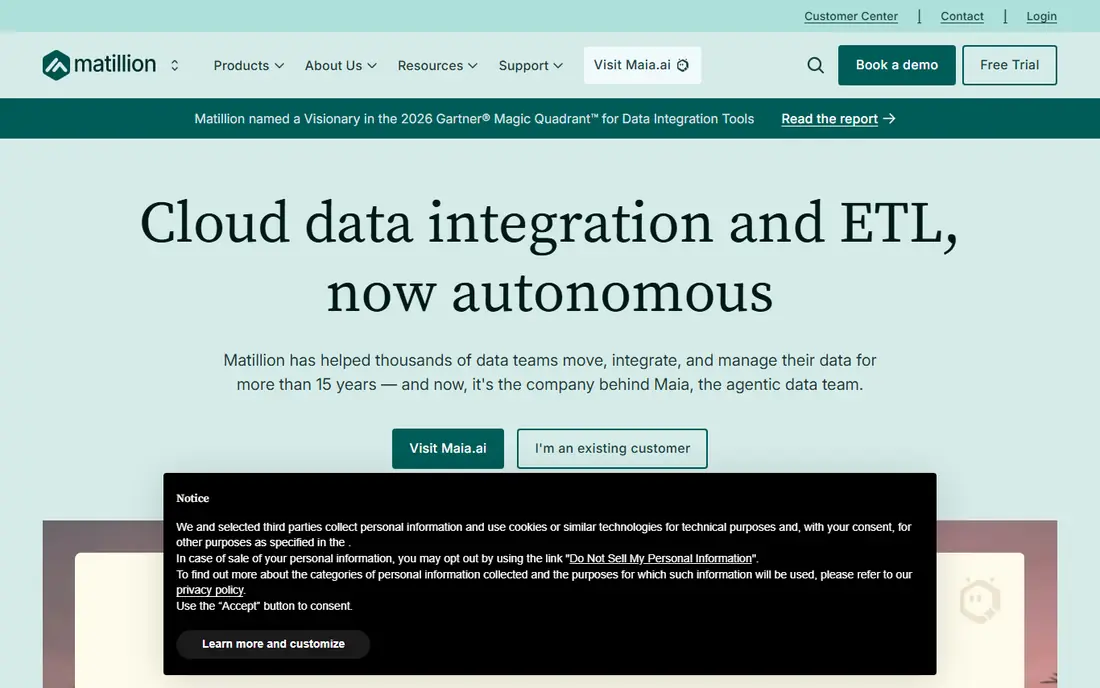
Matillion suits teams whose warehouse is the centre of gravity. Its visual designer builds ELT pipelines and transformations for Snowflake, BigQuery, and Redshift, with orchestration and scheduling that replace much of what PowerCenter did for batch loads. Credit-based pricing lets a team scale compute with workload, at least in theory.
The catch is forecasting. Credit use depends on transformation complexity and run time, so a heavy pipeline can cost more than a simple monthly estimate suggests. Matillion is also batch-first, so teams that need millisecond streaming should look at Estuary-style tools or NiFi alongside it.
- Visual ELT design for Snowflake, BigQuery, and Redshift
- Strong transformation and orchestration tools
- Credit-based flexibility
- Credit pricing can be hard to forecast
- Limited native change data capture compared with streaming tools
Airbyte is the open-source pick most PowerCenter teams should test first. The core is free to self-host, the connector catalogue is broad, and a connector builder helps when a needed source is missing. Cloud pricing starts from 20 dollars per month in recent vendor comparisons, with credits priced at 2.50 dollars each, so small teams can start cheaply.
The trade-off is operations. Self-hosting is free in licence terms but not in staff time, and cloud costs rise with sync volume and premium connectors. Airbyte suits teams that want control and portability, and that can staff pipeline operations or accept credit-based cloud billing.
- Free open-source core to self-host
- Over 700 connectors
- Cloud, self-hosted, and on-prem deployment options
- Cloud pricing is credit-based and can rise with volume
- Self-hosting needs operations effort
Apache NiFi is the flow-based alternative for teams that still run on-prem sources. Its visual canvas designs data flows with routing, transformation, and provenance tracking, and it handles streaming and batch work in the same engine. For a PowerCenter shop with on-prem databases, files, and message queues, NiFi feels familiar in structure even though the interface differs.
The limit is support and skill. NiFi is free open-source software, so there is no vendor subscription to call, and setup, scaling, and security need in-house skill. Firms that want a supported product should pair NiFi with a vendor distribution or choose a managed tool like Fivetran or Airbyte Cloud instead.
- Free open-source flow engine
- Visual flow design with provenance and data lineage
- Strong fit for on-prem and hybrid sources
- Needs skilled setup and operations
- No vendor support contract in the open-source edition
Azure Data Factory is the natural pick for a firm already committed to Azure. Pipelines, data flows, and orchestration sit natively beside Azure storage, Synapse, and Databricks, and pricing is pay-per-use rather than a large base licence. That makes it cheap to start for an Azure shop with modest pipeline volume.
The weakness is portability. Data Factory is Azure-first, so a multi-cloud or on-prem-heavy estate will need extra tooling, and operation counts and data movement can push costs above a simple estimate. For an Azure-centred warehouse, it is a strong, low-friction replacement. For a multi-cloud estate, Airbyte or Talend will fit better.
- Native Azure integration with Synapse, Databricks, and storage
- Visual pipeline designer
- Pay-per-use with no base licence fee
- Multi-cloud support is limited
- Costs rise with pipeline runs and data movement
AWS Glue is the AWS mirror of Data Factory. It runs serverless ETL jobs on Spark, catalogues data in the AWS Glue Data Catalog, and bills by DPU-hour, with a commonly cited rate around 0.44 dollars per DPU-hour. For an AWS shop, that means no servers to manage and a direct path from S3, RDS, and Redshift into analytics.
The limits are the same shape as Data Factory. Glue is AWS-only, so multi-cloud teams need another tool, and complex transformations need Spark skill to tune well. Simple jobs are easy, but heavy jobs reward a team that understands partitioning, job bookmarks, and DPU sizing.
- Serverless Spark-based ETL with no servers to manage
- Native AWS catalogue and storage links
- Pay per DPU-hour
- AWS-only by design
- Job tuning needs Spark skill for complex transforms
Stitch is the simpler managed ELT cousin of Fivetran. It replicates data from common sources into a warehouse with little setup, and row-based pricing starts low for small teams. A firm that needs reliable replication without deep transformation tooling will find Stitch easier to run than a full ETL platform.
The catch is scale and depth. Row tiers rise with volume, and transformation work still needs a warehouse tool like dbt, since Stitch focuses on loading rather than transforming. For a small team with stable sources, Stitch is a good value pick. For a team with heavy transformation needs, Matillion or Talend will serve better.
- Simple row-based managed ELT
- Quick setup for common sources
- Lower entry cost than Fivetran for small volumes
- Row-based pricing scales with volume
- Transformation depth trails Matillion and Talend
Hevo Data suits mid-size teams that want pipelines without writing code. Its visual builder connects sources to warehouses with automated schema handling, and pricing starts at 239 dollars per month on an event-based model. That published starting price makes Hevo easier to budget than quote-only rivals.
The limit is transformation depth and event scaling. Complex transformations still belong in the warehouse, and high event volumes push the bill up. For a team that wants reliable no-code replication at a known starting price, Hevo is a practical middle ground between Stitch and Fivetran.
- No-code pipeline builder with many connectors
- Event-based pricing from $239 per month
- Near-real-time options for common sources
- Event pricing rises with volume
- Transformation depth is lighter than Matillion
How we picked these
We compared official feature and pricing pages, vendor comparisons, and public pricing trackers for data integration tools that are live in October 2026. We kept only tools that move and transform data at production scale, not single-source sync tools. Where pricing was not published, we wrote See website, and where pricing is usage-based, we named the billing unit so readers can model their own volume.
How to migrate from PowerCenter
Start with an inventory, not a vendor demo. List every mapping, schedule, source, target, and custom transformation, and mark which ones are still used. PowerCenter estates often carry dead mappings, and migrating them wastes time and money. A clean inventory also shows whether you need batch ETL, managed ELT, or streaming, which narrows this list fast.
Next, decide between lift-and-shift and rebuild. Talend and NiFi suit teams that want to keep a visual ETL shape, while Fivetran, Stitch, and Hevo suit teams willing to rebuild around ELT and warehouse transformations. Run one real pipeline end to end in the trial, including error handling and a schema change, before committing to a full migration.
Cost modelling
Model three volumes, not one: current volume, peak volume, and volume after a year of growth. Row-based tools punish churn, credit tools punish long transformations, and cloud-native tools punish idle runs and data movement. The cheapest tool at current volume is not always the cheapest at peak volume.
Frequently asked questions
What is the best open-source alternative to PowerCenter?
Airbyte and Apache NiFi are the strongest open-source picks. Airbyte suits warehouse ELT with a broad connector catalogue, while NiFi suits on-prem, hybrid, and streaming flows with visual design and provenance tracking.
Is Fivetran a direct replacement for PowerCenter?
Fivetran replaces the outcome, not the method. It loads data first and transforms it in the warehouse, while PowerCenter transforms before load. Teams willing to adopt ELT and dbt will find Fivetran simpler to run, while teams that need pre-load transformation should look at Talend or Matillion.
Which tool is cheapest for a small team?
Airbyte Core and Apache NiFi are free to self-host, though staff time is the real cost. Among managed tools, Airbyte Cloud starts from 20 dollars per month in recent vendor comparisons, while Stitch and Hevo suit small teams with modest row or event volumes.
Do these tools support on-prem sources?
Yes, with different approaches. NiFi runs on-prem natively, Airbyte offers self-hosted and hybrid deployment, and Talend supports hybrid architectures. Fivetran offers hybrid deployment on higher plans, so check the tier before assuming on-prem access.
How long does a PowerCenter migration take?
It depends on mapping count and complexity, but a small estate can migrate in weeks while a large estate takes months. Inventory dead mappings first, pilot one real pipeline, and plan for parallel running during cutover so reporting does not break.
Sources
See where you really rank - block by block
ProMapRanker scans Google Maps across a grid of your service area. Simple monthly plans from $19, white-label on every plan.
Start freeKeep reading
 zyte alternatives
Best Zyte Alternatives in 2026
These zyte alternatives cover managed scraping APIs, proxy networks and no code tools for lawful collection from your own or consented sources only in 2026.
Read → zerto alternatives
Best Zerto Alternatives in 2026
Compare the best zerto alternatives for disaster recovery and replication, with recovery targets, cloud options and honest trade-offs for teams in 2026.
Read → zerofox alternatives
Best ZeroFox Alternatives in 2026
We compared 9 zerofox alternatives for brand protection, phishing takedowns, dark web monitoring, and social impersonation, with clear coverage notes.
Read →