 ProMapRanker
Best Cell Phone Service Options in 2026

Key takeaways
- Major carriers offer wider perks and in-store help, while MVNOs offer lower prices on the same major networks in many cases.
- Prices vary by plan, line count, AutoPay, and area, and headline rates often exclude taxes and fees.
- Coverage has no guarantee, so check a carrier map and a trial or a friend's phone in the places you use most.
- A cheap plan is a poor deal if data slows sharply after a cap, so check the high-speed data amount before choosing.
Quick comparison
| Pick | Great for | Pricing starts at | Free tier | |
|---|---|---|---|---|
 Verizon | Widest major-carrier cover | $75 per month | No | Visit |
 AT&T | Major-carrier cover and perks | $60 per month | No | Visit |
 T-Mobile | Major-carrier value and perks | $55 per month | No | Visit |
 Visible | Simple Verizon-network unlimited | $25 per month | No | Visit |
 US Mobile | Flexible plans across networks | $10 per month | No | Visit |
 Google Fi Wireless | Flexible and travel-friendly plans | $20 per month | No | Visit |
 Cricket Wireless | AT&T-network prepaid simplicity | $35 per month | No | Visit |
 Boost Mobile | Low-cost unlimited with AutoPay | $25 per month with AutoPay | No | Visit |
 Consumer Cellular | Simple plans with phone support | $20 per month | No | Visit |
The best cell phone service options
This guide compares US cell phone service options, from the three major carriers to MVNOs that run on those networks. Prices vary by plan and area, and no carrier can guarantee coverage at a specific address. We compared official carrier pages and published October 2026 plan comparisons, focusing on starting prices, high-speed data, network, and support style.
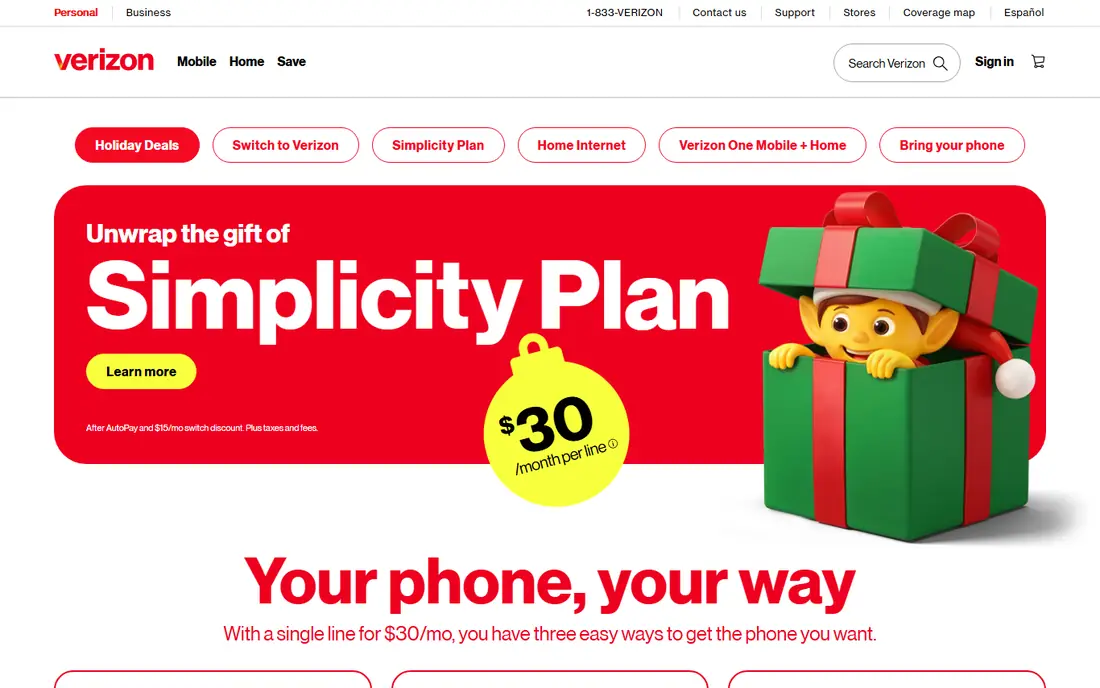
Verizon suits a user who wants a major carrier with broad cover and a store to visit when a problem arises. Unlimited Welcome gives unlimited data on the Verizon network, with higher plans adding premium data, hotspot, and perks. Device deals and trade-in offers can lower the cost of a new phone, though they often require a plan and a trade-in.
The price is the clear trade-off. At $75 per month for one line on the entry unlimited plan in published comparisons, Verizon costs far more than a comparable MVNO. Check the AutoPay price, the tax treatment, and the hotspot amount before comparing it to a prepaid plan that includes taxes.
- Unlimited Welcome listed at $75 per month in October 2026 comparisons
- Broad network cover
- In-store help and device deals for new lines
- Higher starting price than MVNOs
- Taxes and fees are extra on many plans
- Top plan costs far more than the entry plan
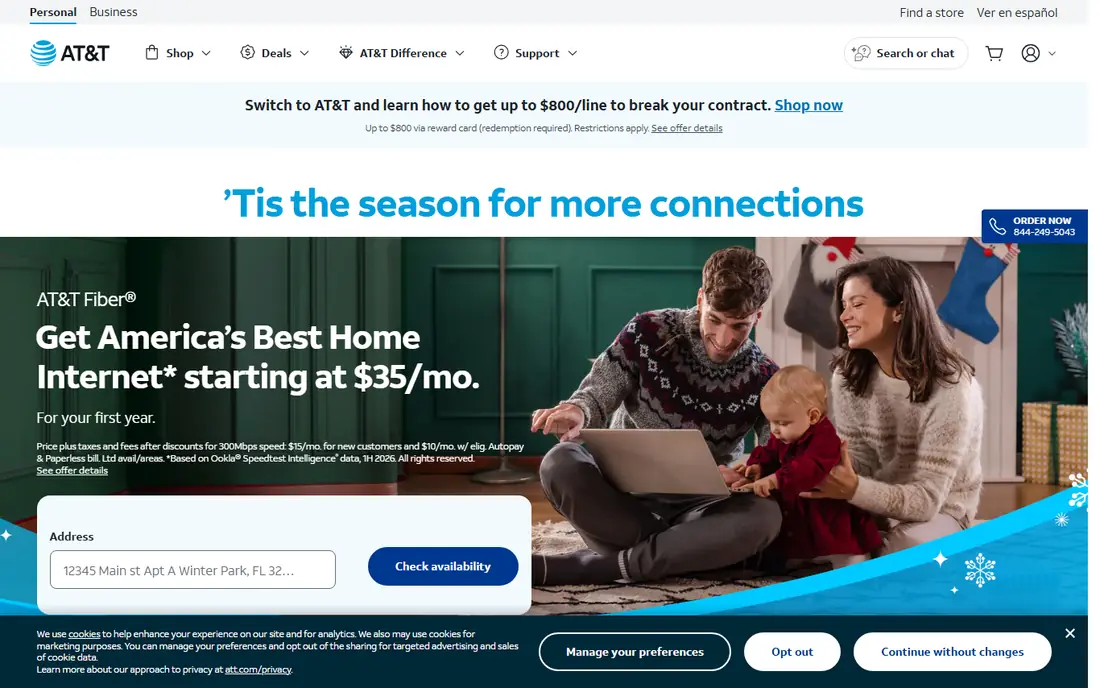
AT&T fits a user who wants a major carrier and may already use AT&T for home internet. The Value plan gives a lower entry point than Verizon, with higher plans adding premium data, hotspot, and streaming perks. In-store help and bundle discounts can make AT&T attractive for a household that buys several services together.
The limits are familiar for a major carrier. Taxes and fees add to the headline rate, and the entry plan may slow sooner than a top plan during congestion. Compare the total monthly bill, not just the headline rate, and check whether a bundle discount requires a specific internet plan.
- Value plan listed at $60 per month in October 2026 comparisons
- Broad network cover
- In-store help and bundle options with home internet in some areas
- Taxes and fees are extra on many plans
- Entry plan has less premium data than top plans
- Perks sit on higher tiers
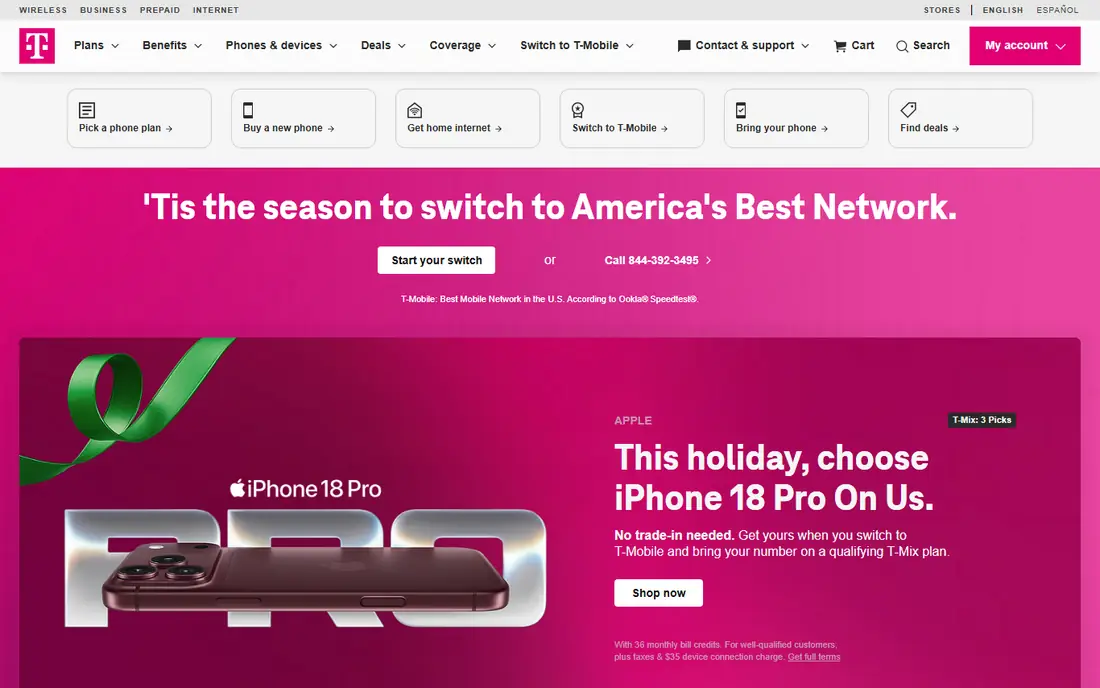
T-Mobile suits a user who wants major-carrier service at a lower entry price than Verizon or AT&T. Essentials Saver gives unlimited data with a set premium amount, while higher Experience plans add more premium data, hotspot, and perks. Family pricing can lower the per-line cost sharply when several lines join one account.
The catch is area. T-Mobile's 5G cover is strong in many cities, but rural cover varies, so a coverage check for home, work, and travel routes matters. Entry hotspot limits also matter for a user who tethers a laptop. Test cover with a trial or a prepaid line before porting a main number.
- Essentials Saver listed at $55 per month in October 2026 comparisons
- Strong urban 5G cover in published comparisons
- Perks and family pricing on higher plans
- Taxes and fees are extra on many plans
- Entry plan hotspot is limited
- Rural cover varies by area
Visible is the simplest route to Verizon-network unlimited data at a low price. One plan, one price, and taxes included in the published October 2026 rate make the bill easy to predict. Signup and management happen in the app, which suits a user who does not need in-store help.
The trade-off is support and priority. Visible is online-only, so a user who wants a store visit should choose Verizon or another carrier with stores. Data may also slow during congestion, since Visible sits below Verizon's own premium plans in priority. For a single line with light support needs, Visible is a strong value pick.
- Base plan listed at $25 per month with taxes included in published comparisons
- Runs on the Verizon network
- Simple app-based signup and management
- Online-only support with no stores
- Single-line focus means no family discount structure
- Speeds may slow during congestion
US Mobile suits a user who wants to choose a network and a data amount without paying for unlimited data they do not use. Light plans with a few gigabytes cost far less than unlimited plans, while Unlimited Premium gives a higher data amount for heavy users. The ability to pick a network in its offer helps a user who knows which major network works best at home.
The range of plans is both a strength and a weakness. A buyer must compare light, shared, and unlimited options, plus network choices, before ordering. For a light user or a household with mixed needs, that flexibility saves money. For a user who wants one simple plan, Visible or Cricket may be easier.
- Light plan listed at $10 per month in October 2026 comparisons
- Choice across major networks in its offer
- Taxes included in published comparisons
- Plan choice can confuse a first-time buyer
- Premium unlimited costs more than the light plan
- Support is mainly online
Google Fi Wireless fits a user who wants flexible billing or travels abroad often. The Flexible plan charges a base rate plus a per-gigabyte amount, which suits a light user who stays on Wi-Fi most of the day. Unlimited plans give a simpler bill for heavier users, and international data features help travelers who cross borders.
The limit is network and device fit. Fi runs mainly on T-Mobile, so cover follows that network, and some phones get fuller Fi features than others. Check phone compatibility and the international terms for the countries you visit before choosing Fi for travel alone.
- Flexible plan listed at $20 per month plus $10 per gigabyte in published comparisons
- Unlimited plans from $35 per month in other comparisons
- International features for travelers
- Runs mainly on the T-Mobile network, so cover follows that network
- Taxes and fees are extra
- Phone choice matters for full network features
Cricket Wireless suits a user who wants AT&T-network cover with prepaid simplicity and a store to visit. The Sensible plan gives a set data amount at a clear price, while unlimited plans remove the data cap worry for heavier users. Taxes included in published comparisons make the bill easier to predict than a major-carrier postpaid bill.
The trade-off is priority. Prepaid data can slow during congestion, and hotspot amounts vary by plan, so a user who tethers often should check the hotspot line. For a single line or a family that wants stores plus prepaid pricing, Cricket is a balanced pick.
- Sensible plan listed at $35 per month in October 2026 comparisons
- Runs on the AT&T network
- Stores for in-person help
- Taxes included in published comparisons
- Data may slow during congestion on prepaid plans
- Higher unlimited plans cost more
- Hotspot amounts vary by plan
Boost Mobile fits a user who wants low-cost unlimited data with the option of in-store help. The AutoPay unlimited price undercuts major carriers sharply, and family pricing can lower the per-line cost further. Stores give a route for a user who prefers face-to-face help over app-only support.
The details need checking. Taxes and fees are extra on many Boost plans, and the network and premium data amount vary by tier, so the cheapest unlimited plan may slow sooner than a higher tier. Confirm the AutoPay price, the tax treatment, and the premium data amount before comparing Boost to a taxes-included MVNO.
- Unlimited plan listed at $25 per month with AutoPay in published comparisons
- Stores and online signup
- Family pricing for extra lines
- Taxes and fees are extra on many plans
- Network cover varies by area and plan
- Premium data amounts vary by tier
Consumer Cellular suits a user who wants simple plans and phone support from people who take time to explain options. The Basic plan gives a small data amount at a low price, while unlimited plans suit heavier users. That simplicity helps a user who does not want to compare dozens of plan tiers.
The limit is data on entry plans. A user who streams video daily will need an unlimited plan, which costs more than the Basic rate. Check the data amount against real use, and remember that cover follows the underlying network, so a coverage check still matters.
- Basic plan listed at $20 per month with AutoPay credit in October 2026 comparisons
- Phone support with a reputation for patient help
- Simple plan structure
- Taxes and fees are extra
- Data amounts are lower on entry plans
- Network is AT&T-based in published comparisons, so cover follows that network
How we picked these
We compared official carrier pages and published October 2026 plan comparisons, focusing on starting prices for one line, network, high-speed data, tax treatment, and support style. We kept only carriers and MVNOs that are live in the US in October 2026, and we noted where a price requires AutoPay or excludes taxes. No coverage guarantee is made for any carrier here.
How to compare plans in ten minutes
A plan comparison works best when it starts with real use, not with a headline price. Gather three facts, then match a plan to them.
Check data use, lines, and places first
Look at the last three months of data use, count the lines that will join, and list the places where cover matters most, such as home, work, school, and travel routes. A light user on Wi-Fi needs a different plan from a heavy streamer who rarely sees Wi-Fi.
Compare the total bill, not the headline rate
Add taxes and fees where they apply, check the AutoPay requirement, and note whether the price changes after an introductory period. A taxes-included MVNO price and a postpaid price with taxes extra are not directly comparable until both totals are shown.
Test cover before porting a main number
Use a trial, a prepaid line, or a friend's phone on the same network in the places you use most. Porting a main number is easy to do and hard to undo quickly, so a short test is worth the effort.
Frequently asked questions
What is an MVNO?
An MVNO is a mobile virtual network operator that runs on a major carrier network rather than owning its own towers. MVNOs often charge less because they operate online or with fewer stores, but data may slow during congestion compared with the major carrier's own premium plans.
Which carrier has the best coverage?
No carrier wins everywhere, and coverage varies by area, building, and terrain. Check each carrier's map for your home, work, and travel routes, and test with a trial line when possible, rather than trusting a national claim.
Are MVNO plans really cheaper?
In many cases, yes, for a single line with moderate data use. Major carriers can be cheaper per line for large families with perks and device deals, so compare the total household bill, not just one line.
Can I keep my phone number when I switch?
Yes, in most cases, by porting the number to the new carrier. Keep the old account active until the port completes, and have the account number and PIN from the old carrier ready.
Do prepaid plans include taxes?
Some do and some do not. Visible and Cricket publish taxes-included rates in October 2026 comparisons, while many postpaid and some prepaid plans add taxes and fees. Check the total bill before choosing.
Sources
See where you really rank - block by block
ProMapRanker scans Google Maps across a grid of your service area. Simple monthly plans from $19, white-label on every plan.
Start freeKeep reading
 worlds best local seo company
8 Worlds Best Local SEO Companies for Map Pack Growth in 2026
Compare the worlds best local seo company options for Google Business Profile work, citations, reviews, and multi-location rankings and reporting in 2026.
Read → world's best web hosting company
World's Best Web Hosting Company in 2026
Searching for the world's best web hosting company? We compared 10 hosts on price, renewal rates, speed, and support to help you choose well today in 2026.
Read → who's got the best nanny tax services
Who's Got the Best Nanny Tax Services in 2026
We answer who's got the best nanny tax services, comparing full filing, back taxes, software, and pricing so families can handle nanny taxes correctly.
Read →