 ProMapRanker
HR Service Delivery Best Practices


Large employers with complex HR cases · Pricing starts at: See website
Key takeaways
- Good HR service delivery means one clear place to ask, one tracked case, and one consistent answer.
- Self-service only works when the knowledge base is current, plainly written and easy to find.
- Measure response time, reopen rates and employee satisfaction, not only ticket volume.
- Employment rules vary by state and country, so treat this article as general information only, not legal advice.
Quick comparison
| Pick | Great for | Pricing starts at | Free tier | |
|---|---|---|---|---|
| ServiceNow HR Service Delivery | Large employers with complex HR cases | See website | No | Visit |
 Workday Human Capital Management | Large employers needing one HR system | See website | No | Visit |
 SAP SuccessFactors | Global employers with many locations | See website | No | Visit |
 BambooHR | Small and mid-size teams | See website | No | Visit |
 Rippling | Growing teams that want HR and IT together | See website | No | Visit |
 ADP Workforce Now | Mid-size employers needing payroll and HR | See website | No | Visit |
 Oracle HCM | Large enterprises with deep HR needs | See website | No | Visit |
The best hr service delivery best practices tools
This article explains best practices through the tools and services that put them into action. We compared official feature pages, pricing pages, app store listings, privacy policies and public reviews. The focus is on how each tool handles requests, knowledge, onboarding, cases and reporting, not only on its feature list.
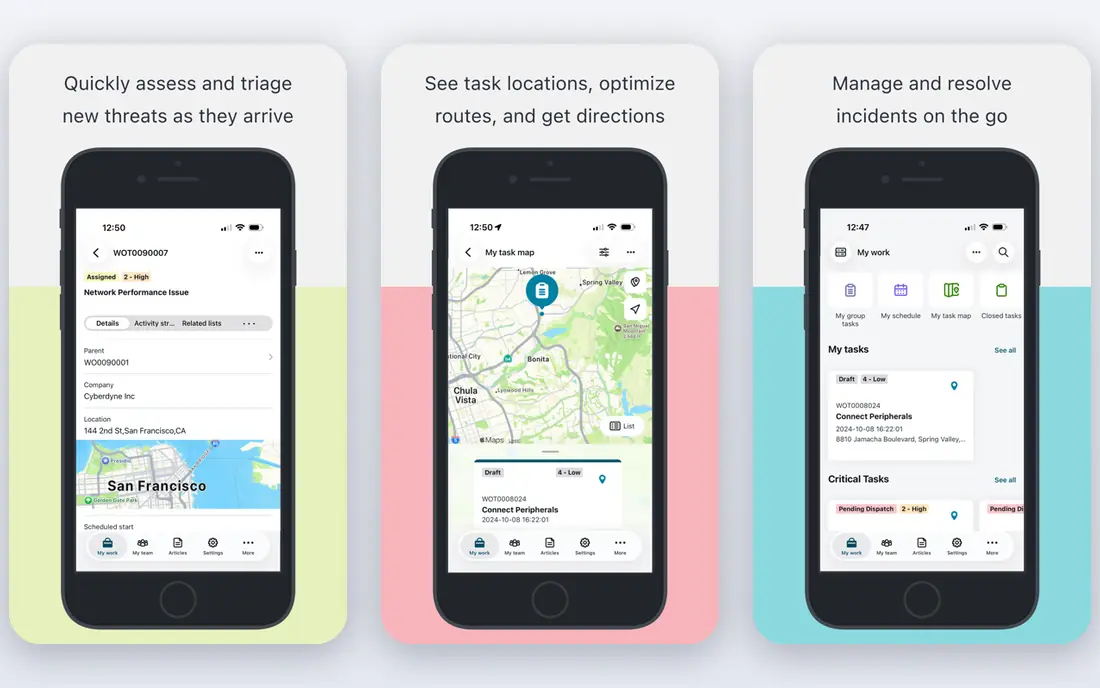
ServiceNow HR Service Delivery is built for the core practice of turning scattered HR questions into tracked cases. Employees ask through one centre, cases route to the right team, and agents work from a shared workspace with knowledge articles and documents. That structure reduces duplicate emails and gives managers a clear view of bottlenecks.
The cost is complexity and setup time. Smaller employers may find the platform more than they need, and success depends on keeping knowledge articles current. Without a named owner for content and routing rules, even a strong tool becomes another inbox.
- Dedicated HR case management
- Employee centre and knowledge tools
- Strong workflow automation
- Pricing is quoted
- Implementation can be long and needs skilled owners
Workday supports a best practice that many HR teams miss: keep the employee record, the request and the answer linked. When core HR data, time off, benefits and case handling sit in one system, agents spend less time re-keying data and more time solving the actual question. Its mobile tools also let employees check pay, time off and documents without calling HR.
The trade-off is scale. Workday suits larger employers with dedicated HR operations staff, and implementation needs careful planning around data, security and local rules. Smaller teams should weigh that effort against a simpler HR tool.
- One system for core HR, talent and payroll data
- Strong reporting
- Mobile self-service
- Quoted pricing
- Change projects can be large and slow
SAP SuccessFactors helps global employers apply consistent service practices across countries while still handling local differences in language, benefits and employment rules. Its modules cover core HR, recruiting, learning, performance and employee experience, with case and service tools that route requests to the right local team.
That breadth brings configuration work. A company with one location and a small HR team may not need this depth, and may find setup slower than a simpler tool. It works best when HR operations, IT and local HR leaders plan the rollout together.
- Broad global HR coverage
- Strong talent and learning tools
- Local compliance features
- Quoted pricing
- Configuration can be heavy for small teams
BambooHR puts a best practice into reach for smaller teams: give employees one place to update details, request time off and find key documents. Its clean records and self-service tools cut routine emails, which frees a small HR team for harder cases such as leave, performance and employee relations.
It is not a full enterprise case platform, so a large employer with complex routing, service levels and audits may outgrow it. For a team of tens or a few hundred people, the simplicity is often the point, since a tool staff actually use beats a powerful tool they avoid.
- Easy employee records and time off
- Friendly self-service
- Quick setup for smaller teams
- Less depth for very large or complex case workflows
- Some advanced features need higher tiers
Rippling supports onboarding as a service practice, not a checklist buried in email. When a new hire joins, HR, payroll, benefits and device access can be set up through connected workflows, with tasks assigned and tracked. That reduces first-week delays and missed steps, which are common sources of frustration for new employees.
The catch is scope. Rippling covers a lot, so buyers should decide which modules they truly need at launch and which can wait. A phased rollout, starting with core HR and onboarding, usually works better than turning everything on at once.
- Combines HR, payroll and IT access
- Strong onboarding workflows
- Automation across apps
- Pricing is quoted
- Breadth can mean more setup decisions
ADP Workforce Now links HR service delivery to payroll reality, which matters when a question involves pay, tax, benefits or leave. Employees can view pay, request time off and update details, while HR teams track cases and approvals in one place. ADP also publishes compliance guidance and tools, though employers must still check state and local rules for their own situation.
Buyers should confirm exactly which modules and service levels are included in their quote, since ADP sells several packages. A clear list of included support hours, implementation help and reporting tools prevents surprises after signing.
- Established payroll and HR coverage
- Compliance support tools
- Employee self-service
- Quoted pricing
- Interface and modules vary by package
Oracle HCM suits large enterprises that need deep control over HR data, talent processes and workforce planning alongside service delivery. Its analytics and workflow tools help HR leaders spot repeat questions, slow teams and policy gaps, then fix the underlying process rather than only answering faster.
That depth requires investment in implementation, data cleanup and ongoing administration. Smaller employers will likely find it heavy, while large employers with complex structures and audit needs may find the control worth the effort.
- Deep HR, talent and workforce planning tools
- Strong analytics
- Global coverage
- Quoted pricing
- Implementation needs experienced project leadership
How we picked these
We compared official feature pages, pricing pages, app store listings, privacy policies and public reviews. We kept tools that provide employee self-service, case or request tracking, knowledge content and reporting, since those are the mechanics behind good HR service delivery. Where pricing was quoted rather than published, we wrote See website.
Five practices that matter most
First, publish one front door for HR help, with clear categories and a search box that actually finds answers. If employees must guess whether to email, message or call, requests will scatter and tracking will fail. Second, write knowledge articles in plain language, with the steps, the form link and the expected wait time, and review them every quarter.
Third, set service levels by case type, not by who shouts loudest. A payroll error needs faster handling than a general policy question, and managers should see that difference in the queue. Fourth, protect employee data carefully. Limit access by role, log who viewed sensitive cases, get consent where required, and never share case details in open channels or shared spreadsheets.
Fifth, close the loop with data. Track first-contact resolution, reopen rates, satisfaction scores and the top ten question topics each month. When the same question keeps appearing, fix the policy, the form or the article behind it, rather than only staffing the queue harder.
A final practice deserves attention: train managers as well as HR staff. Managers are often the first people employees ask about leave, pay and performance, and inconsistent manager answers create repeat HR cases. Give managers short guides for common questions, clear escalation steps, and a way to check case status without seeing sensitive details. When managers answer consistently and escalate early, HR teams spend less time correcting confusion and more time on cases that truly need specialist help.
Review access rights twice a year as well, since staff change roles and old permissions linger longer than anyone expects.
Frequently asked questions
What is HR service delivery?
It is the way an HR team receives, tracks, answers and improves employee requests, from time off and pay questions to onboarding and employee relations cases. Good delivery uses one intake point, clear routing, knowledge content and reporting.
How do we start without buying enterprise software?
Start with one intake form, a shared case tracker, a short knowledge page and a weekly review of open cases. That discipline matters more than the tool, and it makes a later software choice much easier.
Should HR cases and IT cases use the same system?
They can share a platform, but HR cases need stricter privacy controls. Keep HR case details visible only to authorised HR staff, even when IT and HR share workflows or a service portal.
How do we handle employee data privacy?
Limit access by role, use secure systems rather than personal email or shared drives, and follow consent and retention rules that apply in each state and country. When in doubt, ask employment counsel before collecting or sharing sensitive data.
What metrics show HR service delivery is improving?
Watch first-contact resolution, average response and resolution time, reopen rates, employee satisfaction and the volume of repeat questions. Falling repeat questions often signal that knowledge content and processes are improving.
Sources
See where you really rank - block by block
ProMapRanker scans Google Maps across a grid of your service area. Simple monthly plans from $19, white-label on every plan.
Start freeKeep reading
 worlds best local seo company
8 Worlds Best Local SEO Companies for Map Pack Growth in 2026
Compare the worlds best local seo company options for Google Business Profile work, citations, reviews, and multi-location rankings and reporting in 2026.
Read → world's best web hosting company
World's Best Web Hosting Company in 2026
Searching for the world's best web hosting company? We compared 10 hosts on price, renewal rates, speed, and support to help you choose well today in 2026.
Read → who's got the best nanny tax services
Who's Got the Best Nanny Tax Services in 2026
We answer who's got the best nanny tax services, comparing full filing, back taxes, software, and pricing so families can handle nanny taxes correctly.
Read →