 ProMapRanker
How Do I Choose the Best AI Sales Platform in 2026


CRM with Einstein AI · Pricing starts at: $25 per user per month
Key takeaways
- Start from the bottleneck, not the feature list: prospecting, coaching, forecasting, or CRM hygiene each point to a different tool.
- A platform is only as good as its data, so check contact quality, CRM sync, and how AI suggestions are explained before you buy.
- Published pricing helps small teams, while enterprise tools need a written quote that covers seats, AI usage, and implementation.
- Salesloft is now part of Clari, so buyers should confirm the current product name, roadmap, and contract terms before signing.
- Pilot with real reps, real deals, and a clear success measure, such as reply rate, meeting rate, or forecast accuracy, not demo data.
Quick comparison
| Pick | Great for | Pricing starts at | Free tier | |
|---|---|---|---|---|
| Salesforce Sales Cloud | CRM with Einstein AI | $25 per user per month | No | Visit |
 HubSpot Sales Hub | CRM plus sales tools | Free | Yes | Visit |
 Outreach | Outbound sequences at scale | See website | No | Visit |
 Salesloft | Cadences and coaching | See website | No | Visit |
 Apollo | Data plus sequences | $49 per user per month | Yes | Visit |
 Gong | Call and revenue intelligence | See website | No | Visit |
 Clari | Revenue forecasting | See website | No | Visit |
 Clay | AI prospect research | See website | No | Visit |
The best AI sales platforms to choose from
This guide answers a choice question, not a single-product pitch. It compares eight AI sales platforms, then gives a framework in the buying guide below for matching one to your team. We compared official feature pages, pricing pages, app store listings, privacy policies, and public reviews, with attention to data quality, AI transparency, CRM fit, and total cost.
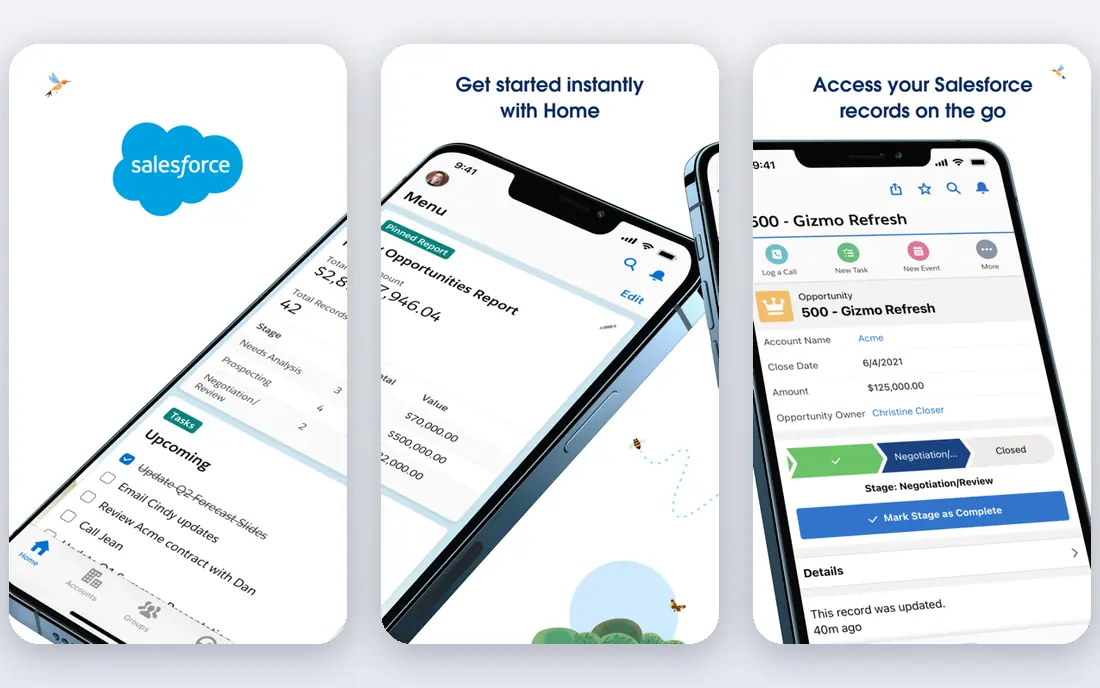
Salesforce Sales Cloud is the system of record for many mid-market and enterprise teams. Einstein AI can score leads and opportunities, surface deal risk, and help with forecasting, while custom objects, workflows, and reports adapt to complex sales processes. That depth is valuable when a team sells across regions, products, and channels, and needs one CRM to hold the truth.
Salesforce is not a quick start. Admin work, data hygiene, and training take time, and some AI features sit in higher editions or add-ons. A small team that needs a simple CRM plus sequences may find HubSpot faster. For a team already on Salesforce, or one that needs deep customisation, Sales Cloud with Einstein is the natural AI base, with other tools layered on top.
- Deep CRM customisation and Einstein scoring
- Forecast and pipeline tools
- Very large app ecosystem
- Setup and admin effort is high
- AI features vary by edition and add-on
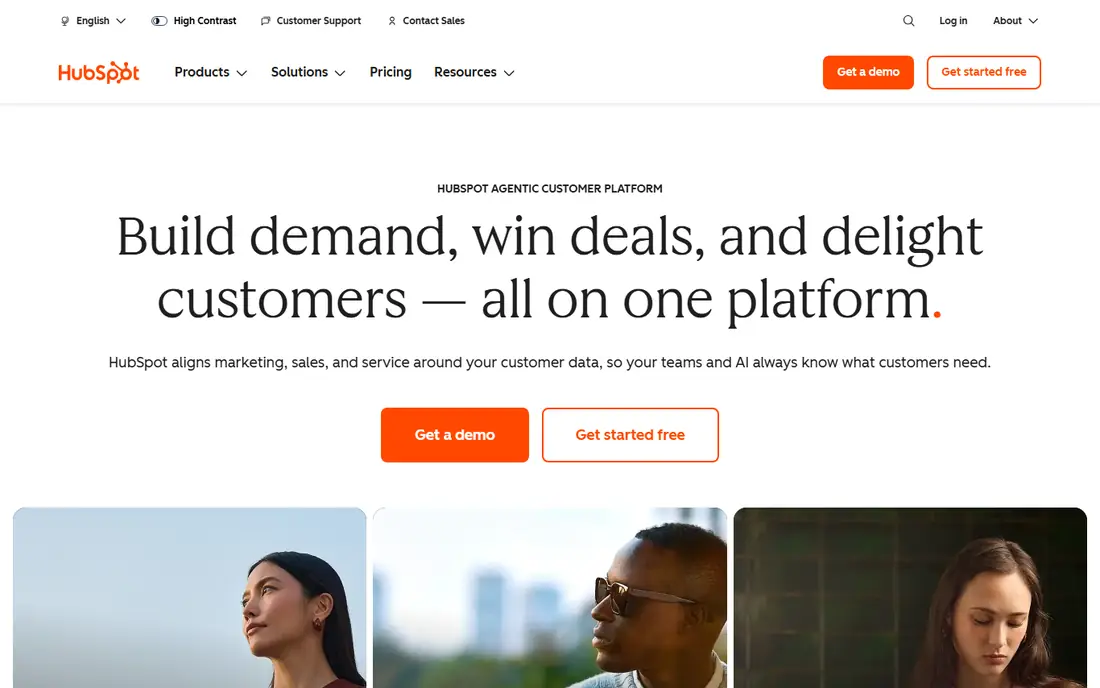
HubSpot Sales Hub suits teams that want CRM and sales tools in one place without a separate Salesforce project. Free tools cover contacts, deals, and basic outreach, while Starter and Professional tiers add sequences, calling, meeting tools, and AI assistance. That single system reduces sync problems, since deals, emails, and calls live beside the contact record.
Paid tiers need careful reading. Recent comparisons list Starter around $20 per seat per month and Professional around $90 per seat per month billed annually, plus a possible onboarding fee. AI features may consume HubSpot credits, so a team should confirm limits before a rollout. For a small or mid-size team that wants one system, HubSpot is a practical and fast choice.
- CRM included
- Free tools for small teams
- Sequences and AI help on paid tiers
- Full sales tiers start higher and may need onboarding
- AI credits and limits need checking
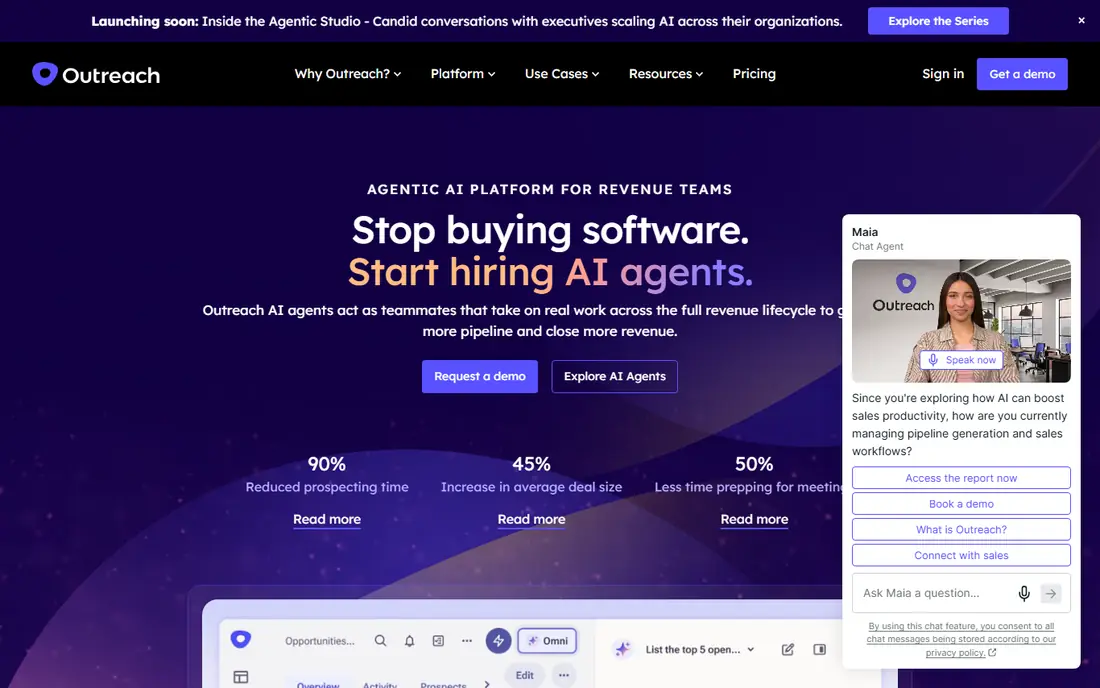
Outreach is built for teams that run outbound at scale. Sequences can span email, calls, and social steps, with testing, analytics, and AI help for writing and prioritising. Deal insights and forecasting add-ons help managers see risk in live deals, not just activity counts. For an enterprise team with a clear outbound motion, that depth is hard to match.
Outreach pricing is quoted, and recent third-party comparisons place it roughly in the $100 per user per month range for many deals, with enterprise contracts higher. A small team with light outbound may find Apollo or HubSpot enough. Choose Outreach when outbound volume, multi-channel steps, and enterprise governance justify the contract and admin effort.
- Deep multi-channel sequences
- AI deal insights and forecasting add-ons
- Strong enterprise CRM links
- Quote-based pricing
- Best value needs a dedicated outbound motion and admin care
Salesloft is known for cadences that reps can learn quickly, plus conversation and coaching tools that help managers review calls and give feedback. That mix suits mid-market teams that want outbound execution and coaching in one tool, without the heaviest enterprise setup. CRM sync keeps activity and deal data in the system of record, which helps reporting.
Buyers should note the late 2025 merger with Clari, reported in recent comparisons. That change can affect product names, packaging, and future roadmap, so ask for a current proposal and a written note on what stays, what merges, and what changes in support. For a team that values usability and coaching, Salesloft remains a strong shortlist pick, with that check done first.
- Clear cadence builder and coaching tools
- Faster learning curve than some enterprise tools
- Strong CRM sync
- Merged with Clari in late 2025, so roadmap and packaging need confirmation
- Pricing is quote-based
Apollo is the budget all-in-one for small teams. It combines a B2B contact database, email sequences, and a dialer, so a team can find prospects and reach them without buying three tools. The free plan covers limited sequences and sends, while Basic is listed at $49 per user per month billed annually in recent comparisons. That published price makes budgeting much easier than a quoted enterprise deal.
Data quality is the check. Apollo works well for common markets and roles, but niche industries and smaller regions may have thinner or older records. Credits for contact data also need care, since unused credits may not roll over. For a lean team that needs data and outreach in one tool, Apollo is a strong first test, with a sample of your own target market checked first.
- Large B2B database plus sequences and dialer
- Free plan for testing
- Published pricing
- Data credits do not roll over in recent listings
- Data quality varies by market and niche
Gong turns sales calls into coaching and deal insight. It records and analyses calls, surfaces talk patterns, objections, and risk signals, and helps managers coach with real examples. Gong Engage adds sequences and outreach, while Forecast tools link call evidence to pipeline predictions. For a team that sells by phone and video, that evidence is more useful than activity counts alone.
Gong pricing is quoted, and third-party procurement data in recent comparisons places core pricing roughly at $1,360 to $1,600 per user per year plus a platform fee. That is an enterprise commitment, and a team with low call volume will see less value. Choose Gong when coaching, deal visibility, and call-based evidence are the bottleneck, and when call volume justifies the cost.
- Deep call analysis, coaching, and deal risk signals
- Engage adds sequences
- Strong revenue intelligence
- Quote-based pricing with a platform fee
- Needs call volume to show value
Clari is the forecast-first pick. It pulls pipeline data into rollups, tracks forecast accuracy, and helps leaders inspect deals, spot risk, and run scenarios. AI forecast tools add predictions and explanations, though leaders should still check the inputs. With Salesloft now part of Clari, the combined offer covers both execution and forecasting, which can reduce the number of vendors a revenue team manages.
Clari needs clean CRM data. If opportunities are out of date, stages are vague, or close dates slip without notes, any forecast tool will struggle. Pricing is enterprise and quoted, so a team should ask for a contract based on users, modules, and implementation. For a RevOps-led team where forecast accuracy is the top problem, Clari is the right shortlist lead.
- Strong forecast rollups and deal inspection
- AI forecast tools
- Now includes Salesloft for execution
- Quote-based enterprise pricing
- Needs clean CRM data to forecast well
Clay is different from the other tools here. It does not replace a CRM or a sequencer. Instead, it builds rich prospect lists by pulling data from many sources, enriching records with AI research, and scoring or segmenting them for outreach. That research depth helps teams that need personalised messages at scale, rather than generic blasts to a bought list.
Clay pricing is usage-based, so enrichment volume drives cost, and a team still needs a sequencer or CRM to send and track outreach. That makes Clay a layer, not a standalone sales platform, for most buyers. For a team whose bottleneck is list quality and personalisation, Clay can lift reply rates, provided the budget for enrichment is set in advance.
- AI research and enrichment from many sources
- Flexible tables for prospect lists
- Strong for personalised outreach
- Pricing is usage-based and can rise with enrichment volume
- Needs a sending tool beside it for sequences
How we picked these
We compared official feature pages, pricing pages, app store listings, privacy policies, and public reviews. We favoured tools that are sold and supported now, in October 2026, and that cover a distinct AI sales job: CRM, sequences, data, call intelligence, forecasting, and research. We included both published-price tools for small teams and quoted enterprise tools, so the guide fits different budgets. Where a vendor did not publish a simple entry price, we marked it as See website rather than guessing.
How to choose the right platform for your team
Start by naming the bottleneck in one sentence. If reps cannot find good prospects, you need data and research, so test Apollo or Clay first. If reps find prospects but replies are low, you need sequences and message quality, so test Outreach, Salesloft, or HubSpot sequences. If deals stall after meetings, you need call coaching and deal insight, so test Gong. If leaders cannot trust the forecast, you need Clari or Salesforce forecasting, plus CRM hygiene work first. A tool that solves a different bottleneck will look impressive in a demo and disappoint in use.
Next, run a short pilot with a clear measure. Pick ten reps or one team, a real target list, and a four-week window. Measure reply rate, meeting rate, time to first meeting, or forecast accuracy, depending on the bottleneck. Check data quality on your own market, not a vendor sample, and check how AI suggestions are explained. Can a rep see why a lead scored high, or why a deal was flagged at risk? If the answer is a black box, managers will struggle to coach from it, and reps will struggle to trust it.
Finally, total the cost and the work. Add seats, AI usage or credits, data credits, implementation, and admin time. Check CRM sync in both directions, data retention and privacy terms, and what happens to your data if you leave. Ask for a written quote, a trial with your own data, and references from a team of similar size and market. Choose the smallest tool that solves the bottleneck well, and add a second layer only when a new bottleneck appears.
Frequently asked questions
Should a small team buy an enterprise AI sales platform?
Usually not at first. Apollo or HubSpot cover data, CRM, and sequences at a published price. Move to Outreach, Gong, or Clari when volume, coaching, or forecasting needs outgrow those tools.
How do I test AI data quality?
Run a sample of your real target accounts through the tool. Check job titles, emails, company details, and recent changes. If the sample is weak for your niche, the tool will not improve with a larger contract.
Does AI replace sales reps?
No. AI helps with research, drafting, scoring, and forecasting, but reps still handle discovery, objections, and trust. The best results in this guide come from AI plus human follow-up, not AI alone.
What is the Salesloft and Clari merger impact?
Salesloft merged with Clari in late 2025, according to recent comparisons. Buyers should confirm current product names, packaging, roadmap, and contract terms before signing, since details may have changed.
How much should I budget beyond the seat price?
Budget for AI usage or credits, data credits, implementation, and admin time. Enterprise tools may also add a platform fee. Ask for a full written quote before you commit.
What if my CRM data is messy?
Fix the basics first: stages, close dates, owners, and activity logging. Forecasting and scoring tools will give weak results on messy data, no matter how strong the AI claims sound.
Sources
See where you really rank - block by block
ProMapRanker scans Google Maps across a grid of your service area. Simple monthly plans from $19, white-label on every plan.
Start freeKeep reading
 worlds best local seo company
8 Worlds Best Local SEO Companies for Map Pack Growth in 2026
Compare the worlds best local seo company options for Google Business Profile work, citations, reviews, and multi-location rankings and reporting in 2026.
Read → world's best web hosting company
World's Best Web Hosting Company in 2026
Searching for the world's best web hosting company? We compared 10 hosts on price, renewal rates, speed, and support to help you choose well today in 2026.
Read → who's got the best nanny tax services
Who's Got the Best Nanny Tax Services in 2026
We answer who's got the best nanny tax services, comparing full filing, back taxes, software, and pricing so families can handle nanny taxes correctly.
Read →