 ProMapRanker
Best Hightouch Alternatives in 2026

Key takeaways
- The best hightouch alternatives move modeled warehouse data into tools your teams already use, such as Salesforce, HubSpot, and advertising platforms.
- Census and RudderStack suit teams that want governance and engineering control, while Segment suits teams already running a customer data platform.
- Polytomic, Airbyte, and Hevo Data are worth a look when you want data movement and activation in one place without a large data team.
- Pricing is often quote-based or usage-based, so compare cost per destination and per synced record, not just the headline plan price.
- Sync freshness, identity resolution, and observability matter as much as destination count, and they are the first things to test in a trial.
Quick comparison
| Pick | Great for | Pricing starts at | Free tier | |
|---|---|---|---|---|
 Census | Governed warehouse-to-app syncs | See website | No | Visit |
 RudderStack | Developer-led customer data pipelines | See website | Yes | Visit |
 Segment | Teams already using a customer data platform | See website | Yes | Visit |
 Polytomic | No-code syncs for RevOps and marketing | See website | No | Visit |
 Airbyte | Open-source data movement at scale | Free | Yes | Visit |
 Hevo Data | No-code pipelines plus activation | See website | Yes | Visit |
 Integrate.io | Fixed-fee data integration and activation | See website | No | Visit |
 Syncari | CRM-focused data unification and sync | See website | No | Visit |
 GrowthLoop | Audience building on the warehouse | See website | No | Visit |
The best hightouch alternatives
Hightouch is a data activation platform that syncs data from a cloud warehouse into business tools, so marketing, sales, and support teams act on the same customer data. The alternatives below cover the same job from different angles: some are pure reverse ETL tools, some are full customer data platforms, and some combine ingestion with activation. Your warehouse, your destination list, and your team's technical skill should drive the choice.

Census is one of the closest direct replacements for Hightouch. It syncs modeled data from warehouses such as Snowflake, BigQuery, and Databricks into CRMs, marketing tools, and support platforms, using SQL or dbt models as the source of truth. That model-first approach keeps definitions in the warehouse, which data teams prefer, while business users still get fresh data in the tools they open every day. Governance features, including access controls and sync monitoring, help larger teams trust what is being sent where.
The catch is that Census works best when your warehouse data is already modeled and clean. Teams without that foundation will spend time on modeling before they see value, and pricing requires a sales conversation rather than a self-serve checkout. For organizations that already treat the warehouse as the source of truth and need controlled, observable syncs, Census is a strong first evaluation.
- Strong dbt and SQL model support
- Governance and observability features
- Wide destination coverage
- Pricing is quote-based
- Setup rewards teams with modeled warehouse data
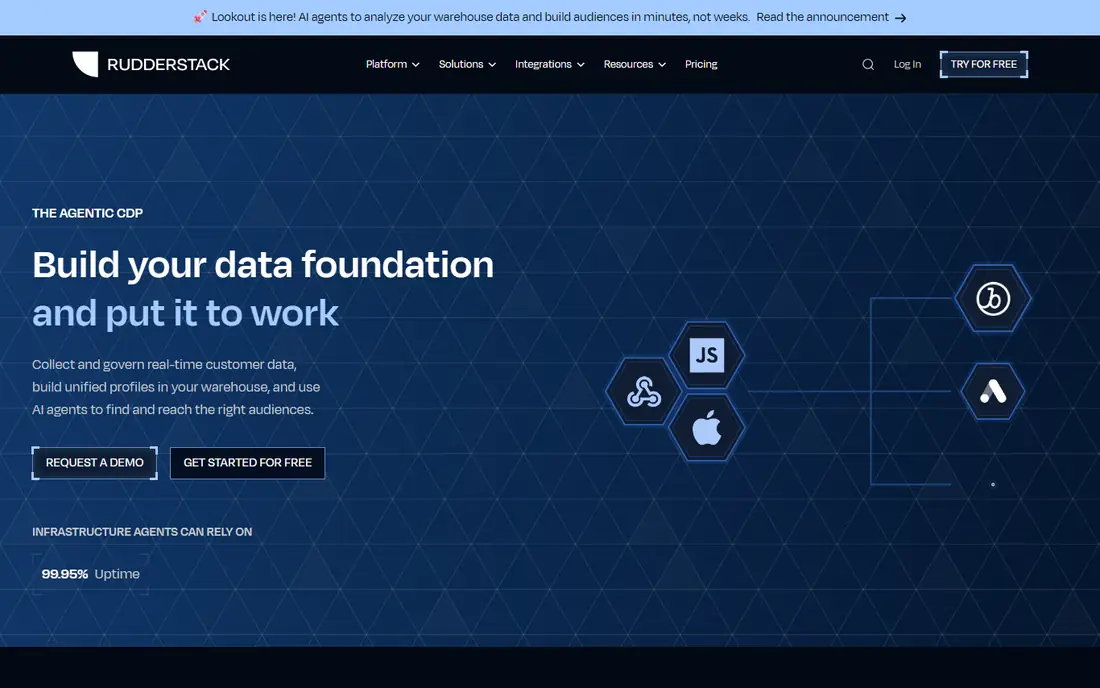
RudderStack started as a customer data pipeline and now covers reverse ETL alongside event collection, which makes it a good fit for engineering-led teams. You can collect events from websites and apps, route them to warehouses and tools, and then sync warehouse data back out to destinations for activation. Its open-source core and self-hosting options appeal to teams with strict data residency or customization needs, and JavaScript transformations give developers control over how data is shaped.
That flexibility comes with effort. RudderStack expects more technical setup than a marketer-friendly audience builder, and smaller teams may find the configuration heavier than they need. Pricing also depends on volume and plan, so get a quote based on your event and sync volume. For teams that want one pipeline for both collection and activation, and have engineers to run it, RudderStack is a capable choice.
- Open-source core
- Event streaming plus reverse ETL
- Flexible transformations
- More engineering effort than no-code tools
- Pricing varies by usage and plan
Segment is a customer data platform that collects, unifies, and routes customer data, and its reverse ETL features let warehouse data flow back into business tools. If your team already uses Segment for event tracking, adding warehouse syncs keeps profiles, audiences, and destinations in one place rather than splitting them across vendors. The destination catalog is broad, covering analytics, advertising, CRM, and support tools, and its identity resolution helps tie events and warehouse records to the same customer.
The drawback is scope and cost. Segment is a full platform, not a narrow sync tool, so teams that only need reverse ETL may pay for capability they do not use, and usage-based pricing can grow with event volume. For companies already committed to Segment, though, its reverse ETL is a natural extension. For teams starting fresh with only activation in mind, a focused tool such as Census or Polytomic may be simpler.
- Large destination catalog
- Unified customer profiles
- Strong ecosystem
- Can be costly at scale
- Reverse ETL is one part of a larger platform
Polytomic focuses on making data syncs usable without writing code. Its visual mapper lets RevOps and marketing users connect warehouse tables to destinations, map fields, and schedule syncs without waiting on engineering for every change. It supports both ingestion into the warehouse and activation out of it, which suits teams that want one tool for moving data in both directions. That balance is useful for mid-size companies where data requests come from business teams faster than engineering can handle them.
The limits are scale and transparency. Pricing is quote-based, and the destination catalog, while solid for common CRM and marketing tools, is smaller than Segment or RudderStack. Teams with unusual destinations should check coverage early. If your main problem is business users waiting on engineers for syncs, Polytomic's no-code approach is a genuine advantage.
- Visual field mapping
- Syncs in both directions
- Good for non-engineering users
- Quote-based pricing
- Smaller destination set than the largest platforms
Airbyte is best known for moving data into warehouses, but its connector catalog and open-source model also make it relevant for teams building activation workflows. You can self-host the open-source version or use Airbyte Cloud, and the large connector library covers databases, warehouses, and SaaS tools. For engineering teams that already use Airbyte for ingestion, extending it toward activation keeps tooling consistent and avoids another vendor for basic movement.
The honest limit is focus. Airbyte's strength is ingestion, and teams that need marketer-friendly audience building, identity resolution, and activation observability may find a dedicated reverse ETL tool more complete. Cloud pricing is capacity-based, so costs depend on usage rather than a flat fee. For open-source-friendly teams with engineering capacity, Airbyte is a flexible and cost-conscious foundation.
- Open-source option
- Very large connector catalog
- Self-hosting available
- Reverse ETL is less central than ingestion
- Cloud pricing is capacity-based
Hevo Data is a no-code data pipeline platform that moves data into warehouses and also supports activation to tools such as HubSpot and Salesforce. Its drag-and-drop setup appeals to teams without dedicated data engineers, and the free tier lets small teams test ingestion before committing. For companies already ingesting with Hevo, adding activation in the same tool reduces vendor sprawl and keeps pipeline monitoring in one place.
The trade is depth. Hevo's reverse ETL coverage is narrower than Census or Hightouch, so teams with many destinations or complex audience logic should verify each destination before committing. Event-based pricing also means costs rise with volume, which is normal for this category but worth modeling. For small to mid-size teams that want simple pipelines plus basic activation, Hevo is a practical pick.
- No-code setup
- Many connectors
- Activation features for common destinations
- Reverse ETL coverage is narrower than dedicated tools
- Event-based pricing can grow
Integrate.io is a low-code data integration platform with ETL, reverse ETL, and transformation features in one place. Its visual builder covers many transformations without code, and its connector set spans databases, warehouses, and SaaS applications. The fixed-fee pricing model stands out in a category where usage-based bills can surprise teams, because it offers more predictable costs for high-volume syncs. That predictability matters for finance and planning teams.
The downside is entry cost. Integrate.io is priced for mid-size and larger teams, and small teams may find cheaper starting points elsewhere. It is also a broad integration platform rather than a pure activation tool, so marketer-facing audience features are less central than in Hightouch or GrowthLoop. For teams that want integration and activation together with predictable pricing, Integrate.io is worth a quote.
- Large connector set
- Visual transformations
- Predictable fixed-fee option
- Higher starting cost for small teams
- Platform is broad rather than activation-only
Syncari focuses on unifying data across CRM and go-to-market systems, then keeping those systems in sync. It handles multi-directional syncs, deduplication, and data quality rules, which helps sales and RevOps teams trust that Salesforce, HubSpot, and related tools agree on accounts and contacts. That CRM-first focus is different from warehouse-first activation, and it suits companies whose main pain is conflicting customer records across sales tools rather than marketing audiences.
The limit is breadth. Syncari is less suited to advertising activation or product analytics destinations than a general reverse ETL tool, and pricing is enterprise-oriented. Teams should evaluate it when CRM data quality is the core problem. When the core problem is warehouse audiences for marketing, Census or GrowthLoop will usually fit better.
- Strong CRM data unification
- Multi-directional sync
- Data quality controls
- Narrower focus than general activation platforms
- Enterprise-oriented pricing
GrowthLoop is built for marketing teams that want to build audiences directly on warehouse data without copying that data into a separate platform. Its visual audience builder lets marketers define segments from warehouse tables, then activate them to advertising, email, and CRM destinations. That warehouse-native model keeps customer data governed in one place while still giving marketers speed, which is the same promise that made Hightouch popular with growth teams.
The trade is technical depth. GrowthLoop is marketer-first, so data teams that need complex SQL modeling, custom transformations, or deep pipeline observability may prefer Census or RudderStack. Pricing is quote-based, so budget planning needs a sales conversation. For growth and lifecycle teams that live in audiences and campaigns, GrowthLoop is one of the most direct Hightouch replacements here.
- Marketer-friendly audience builder
- Warehouse-native approach
- Activation to common destinations
- Less engineering-focused than pure reverse ETL tools
- Pricing is quote-based
How we picked these
We compared official product pages, destination lists, pricing pages, and public documentation for reverse ETL and data activation tools, and we favored tools that are actively sold and supported in 2026. We included warehouse-first tools, customer data platforms, and marketer-friendly audience builders, because Hightouch buyers come from data, engineering, and marketing teams with different needs. We did not claim hands-on testing of every sync, and prices marked as See website reflect quote-based or usage-based pricing that vendors do not publish as a single flat rate.
What to check before you choose
Start with your destinations and your warehouse. List every tool that must receive synced data, then confirm each candidate supports those destinations with the sync frequency you need. A tool with 200 destinations is no help if it lacks the one CRM or ad platform your team depends on. Check sync freshness too: scheduled batch syncs suit many use cases, but triggered or near-real-time syncs matter for sales alerts and lifecycle messages.
Next, decide who will build and maintain syncs. SQL and dbt-first tools suit data teams, visual mappers suit RevOps and marketing, and developer platforms suit engineering teams. Governance also deserves attention: access controls, audit logs, field-level permissions, and monitoring help you catch a bad sync before it reaches customers. Finally, model total cost, including destinations, synced records or events, and any seats, rather than comparing only starting prices.
Frequently asked questions
What are the best hightouch alternatives?
The best hightouch alternatives depend on your team. Census is the closest governed replacement for data teams, RudderStack suits engineering-led pipelines, Segment fits teams already on a customer data platform, and GrowthLoop suits marketers building warehouse audiences. Polytomic is a good middle ground for RevOps teams that want no-code syncs.
Is there a free Hightouch alternative?
RudderStack, Segment, Airbyte, and Hevo Data all offer free tiers or open-source options, though free tiers usually limit volume, destinations, or features. For production syncs at real volume, expect a paid plan. Test sync freshness and destination coverage on the free tier before committing, since those limits matter more than the headline price.
What is reverse ETL in simple terms?
Reverse ETL moves data in the opposite direction from traditional ETL. Instead of loading data into a warehouse for analysis, it takes modeled warehouse data and syncs it back into business tools such as a CRM, email platform, or ad platform. That lets teams act on warehouse insights inside the tools they already use every day.
Do I need a data warehouse to use these tools?
Most tools here work best with a warehouse such as Snowflake, BigQuery, or Databricks, because the warehouse holds the modeled customer data they sync. Some tools, such as Syncari, focus more on syncing between business systems directly. If you do not have a warehouse yet, start with a customer data platform or a CRM sync tool rather than a warehouse-first activation platform.
How is Census different from Hightouch?
Census and Hightouch both sync warehouse data to business tools, but Census places more emphasis on governance, observability, and dbt-native modeling for data teams. Hightouch is often described as more marketer-friendly for audience building. The practical difference shows up in who builds syncs and how much control data teams want over definitions and permissions.
Can these tools replace a customer data platform?
They can replace part of one, but not always all of it. Reverse ETL tools excel at activation, while a full customer data platform also handles event collection, identity resolution, and profile unification. Teams that need both often pair a pipeline tool such as RudderStack or Segment with an activation tool, or choose a platform that covers both jobs.
Sources
See where you really rank - block by block
ProMapRanker scans Google Maps across a grid of your service area. Simple monthly plans from $19, white-label on every plan.
Start freeKeep reading
 zscaler alternatives
Best Zscaler Alternatives in 2026
Looking for zscaler alternatives? We compare 9 SASE and zero trust platforms on architecture, data protection, pricing, and fit for your network and team.
Read → zapier alternatives free
Best Zapier Alternatives Free in 2026
Nine automation tools for zapier alternatives free in 2026, all with genuinely free tiers, plus free plan limits, starting prices and upgrade paths explained.
Read → which platform is best for online reputation
Which Platform Is Best for Online Reputation in 2026
Wondering which platform is best for online reputation? We compare 8 review, listing, and response tools for small and multi-location businesses and agencies.
Read →