 ProMapRanker
Hetzner Alternatives in 2026

Key takeaways
- Hetzner alternatives differ most in price per resource, locations, bandwidth, and support, not just headline VPS prices.
- DigitalOcean, Vultr, and Linode suit developers who want simple cloud VMs, while Contabo and OVHcloud suit value-led buyers.
- Kamatera and Scaleway suit flexible or European hosting, while Hostinger suits beginners who want a guided panel.
- Always compare the same spec: CPU, RAM, storage type, bandwidth, and renewal price, not just the entry plan.
- Hetzner itself is not listed here, because this article covers alternatives only.
Quick comparison
| Pick | Great for | Pricing starts at | Free tier | |
|---|---|---|---|---|
 DigitalOcean | Developers and startups | $4 per month | Free trial | Visit |
 Vultr | Global cloud VMs | $5 per month | No | Visit |
 Akamai Linode | Steady predictable VMs | $5 per month | No | Visit |
 Contabo | Most resources per dollar | See website | No | Visit |
 OVHcloud | European hosting with DDoS protection | See website | No | Visit |
 Kamatera | Fully custom cloud servers | $4 per month | Free trial | Visit |
 Scaleway | European cloud instances | See website | Free trial | Visit |
 UpCloud | Fast European cloud servers | $7 per month | Free trial | Visit |
 Hostinger | Beginner-friendly VPS | See website | No | Visit |
The best Hetzner alternatives
These hosts offer virtual private servers and cloud instances for websites, apps, and side projects. Hetzner itself is not listed here. Compare specs and renewal terms, because entry prices often cover different amounts of CPU, RAM, and bandwidth.
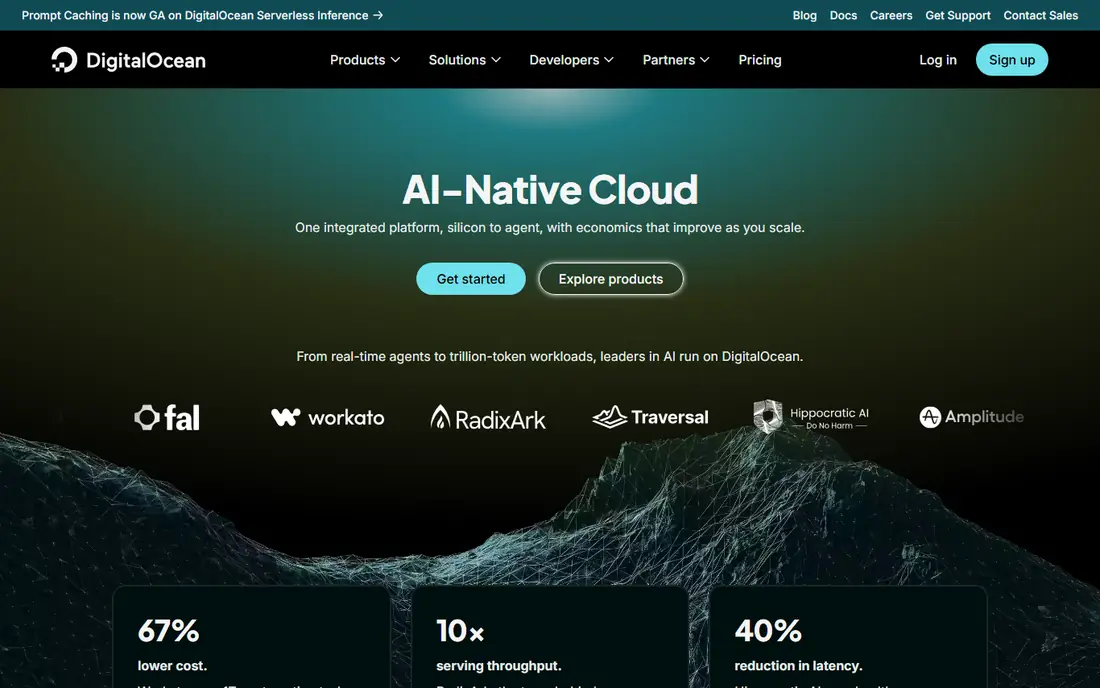
DigitalOcean is the easiest cloud host for developers who want a clean dashboard and good documentation. Its Droplets start at $4 per month in recent guides for a basic instance, with one-click apps for common stacks and managed databases for teams that want to split app and data tiers. That simplicity makes it a good first cloud host.
The trade-off is price per resource. A 4 GB instance costs more than on Contabo or OVHcloud, and transfer allowances need checking for traffic-heavy sites. For developers and startups that value a clear interface and a large tutorial library, it remains a strong alternative.
- Simple dashboard and docs
- One-click apps
- Managed databases and storage options
- Higher price per gigabyte than value hosts
- Transfer allowances are modest on entry plans
- No fully managed VPS by default
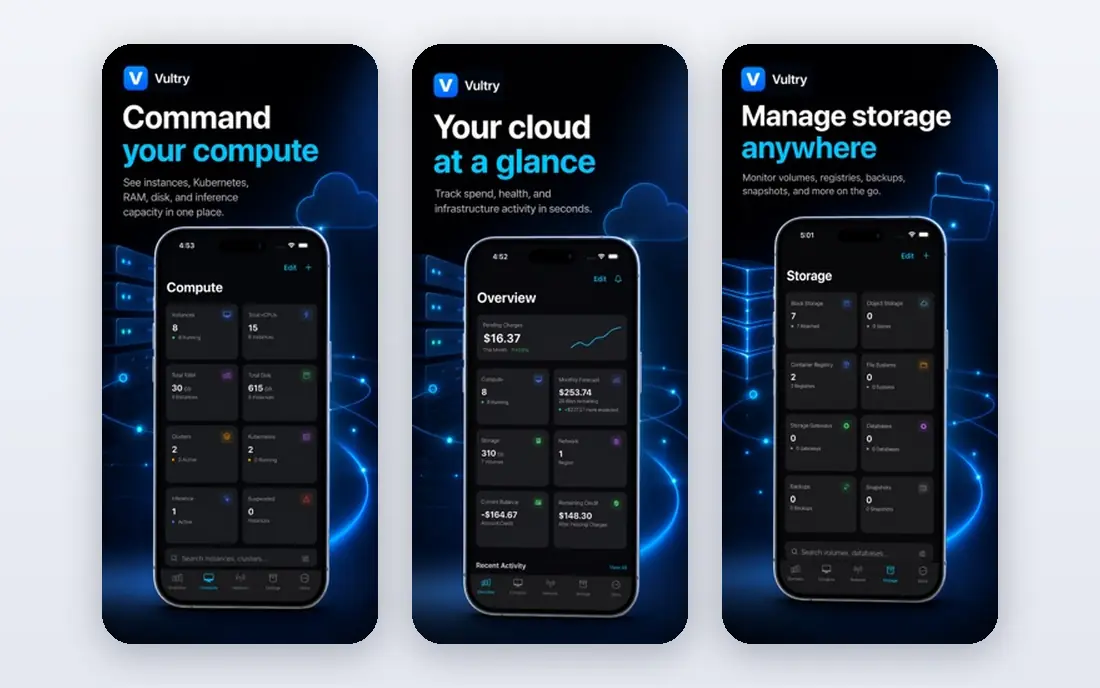
Vultr suits teams that need servers close to users in many regions. It offers cloud compute instances from $5 per month in recent guides, with hourly billing for short-lived work and a wide choice of locations. One-click apps and Kubernetes options help teams move from a single VM to a larger setup.
Entry plans are small, so production sites often need a larger instance, and backups and block storage add cost. Support is also geared to self-managed users rather than fully managed hosting. For global reach and flexible billing, Vultr is a strong pick.
- Many global locations
- Hourly billing
- One-click apps and Kubernetes options
- Entry specs are modest
- Add-ons such as backups add cost
- Support is less hands-on than managed hosts
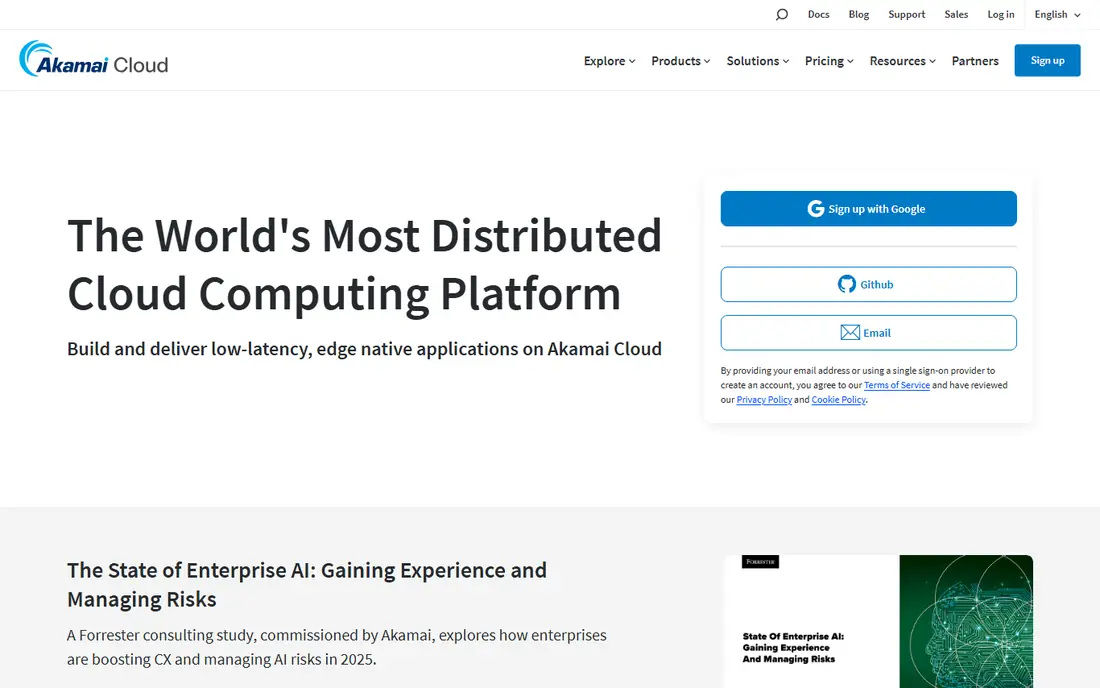
Linode, now part of Akamai Connected Cloud, suits teams that want a steady, predictable Linux VM. Shared CPU plans start at $5 per month in recent guides for a 1 GB instance, with larger plans adding RAM, storage, and transfer. Its transfer overage rates are lower than some rivals, which helps traffic-heavy sites.
It is less of a managed platform than Cloudways or ScalaHosting, so teams should be comfortable with server admin. The dashboard is functional rather than flashy. For teams that want a reliable box with clear pricing, Linode is a safe choice.
- Predictable pricing
- Good performance and transfer terms
- Strong support reputation
- Dashboard feels less modern than some rivals
- Managed services are thinner
- Entry specs are modest
Contabo is the value pick for teams that need a lot of RAM and storage for the price. Its Cloud VPS plans offer 4 vCPUs and 8 GB RAM at a low monthly price in recent guides, with large transfer allowances. That makes it popular for self-hosting, game servers, and projects that need room to grow.
The limits are network speed and support. Entry plans use lower port speeds than some rivals, and support response times vary. Teams that need the fastest network or hands-on managed help should weigh that against the resource value. For resource-heavy work on a budget, Contabo is hard to beat.
- High RAM and storage per dollar
- Large transfer allowances
- Stable renewal pricing in guides
- Port speeds are lower than some rivals on entry plans
- Support can be slower
- Data centre choice is narrower
OVHcloud suits European teams and sites that need strong DDoS protection built in. Its VPS plans offer NVMe storage and generous bandwidth, with entry prices around $5 per month on annual terms in recent guides. That mix makes it useful for websites, apps, and game servers that face traffic spikes or attacks.
Pricing varies by term and region, and support experiences differ by plan. Teams in Asia-Pacific should also check bandwidth quotas, which differ from European plans. For European hosting with protection included, OVHcloud is a solid alternative.
- Strong built-in DDoS protection
- European data centres
- Unmetered bandwidth on many plans outside Asia-Pacific
- Entry pricing varies by term
- Support quality varies
- Some plans have bandwidth quotas in Asia-Pacific
Kamatera suits teams that want to size a server exactly, rather than pick a fixed plan. It offers custom cloud servers from $4 per month in recent guides, with a 30-day trial and credit for new accounts. That flexibility helps staging, testbeds, and workloads with unusual CPU or RAM needs.
Managed services cost extra, so teams should budget for that if they do not want to run the server themselves. As specs grow, the price rises in a straight line, which is predictable but not always the cheapest at larger sizes. For custom sizing and a real trial, Kamatera is a good choice.
- Fully custom CPU, RAM, and storage
- Many data centres
- Free trial with credit
- Managed support is an add-on
- Pricing can rise as specs grow
- Dashboard is less polished than rivals
Scaleway suits European teams that want a low-cost start and a European cloud home. Its entry instances are very cheap in recent guides, with a small Stardust instance listed under $1 per month, though that size suits only tiny workloads. Larger general-purpose instances offer a more realistic starting point for websites and apps.
The ecosystem is smaller than DigitalOcean or Vultr, and support and documentation are thinner. Teams that need many global locations or a large marketplace may prefer a bigger cloud. For European projects with modest needs, Scaleway is a credible, low-cost option.
- European data centres
- Low-cost entry instances
- Clear cloud ecosystem
- Entry instances are very small
- Larger instances cost more
- Support and docs are thinner than larger clouds
UpCloud suits teams that prioritise performance, especially in Europe. Its cloud servers start at $7 per month for a 1 GB instance in recent guides, with fast storage and a focus on reliable performance. That makes it useful for databases, apps, and sites where response time matters.
It costs more at entry than DigitalOcean, Vultr, or Contabo, and its location list is smaller than global clouds. Managed hosting is also limited, so teams should be comfortable with server admin. For performance-led European hosting, it is worth a trial.
- Fast storage and network performance
- European roots
- Clear pricing
- Higher entry price than value hosts
- Fewer locations than global clouds
- Managed options are limited
Hostinger suits beginners who want a VPS without learning a raw cloud dashboard first. Its KVM VPS plans offer generous RAM and NVMe storage, with a guided panel and AI assistant to help with setup. That makes it easier for small business owners and first-time VPS users to get started.
The pricing catch is renewal. Intro prices on longer terms renew higher, so teams should check the renewal price before committing to 24 months. It is also panel-assisted rather than fully managed, so server admin still falls to the user. For a beginner-friendly VPS with clear specs, it is a practical alternative.
- Guided panel and AI assistant
- Good specs on VPS plans
- Easy start for beginners
- Intro prices renew higher
- Longer terms needed for best prices
- Support is panel-led rather than fully managed
How we picked these
We compared official pricing pages, instance specs, locations, bandwidth terms, and support models, and we checked that each host was still operating in October 2026. We required a real VPS or cloud instance product, not shared hosting alone, and we favoured hosts that publish clear specs and pricing. We did not list Hetzner itself, because this article is for alternatives. Prices that depend on term, currency, or renewal are shown as See website where a single starting price would mislead.
What to check before you buy
Compare the same spec across hosts, not just the entry price. A $4 plan with 1 GB RAM and a $5 plan with 4 GB RAM are not the same product, and storage type, CPU sharing, and bandwidth change real performance. Check renewal prices, backup costs, and transfer overage rates before you order.
Check locations, backups, and support
Pick a data centre close to your users, and check whether backups, snapshots, and firewalls are included or extra. Confirm support hours and response times, and whether managed help is included or an add-on. For production sites, test a restore from backup before you rely on it.
Plan for growth and exit
Check how easy it is to resize a server, add storage, or move to a larger plan without downtime. Also check how you can export data and snapshots if you leave. A host that makes resizing easy saves a painful migration later.
Frequently asked questions
What is the best Hetzner alternative?
It depends on your priority. DigitalOcean suits developers who want simplicity, Vultr suits global reach, Contabo suits resources per dollar, and OVHcloud suits European hosting with DDoS protection. Kamatera suits custom sizing, while Hostinger suits beginners. Compare the same spec and renewal price before you decide.
How much does a VPS cost?
Entry cloud VMs on this list start around $4 to $7 per month for small instances, while larger 4 GB instances often cost $24 or more per month on DigitalOcean, Vultr, and Linode. Contabo and OVHcloud offer larger specs for less on entry plans, but check port speeds and renewal terms. Always compare CPU, RAM, storage, and bandwidth together.
Is unmanaged VPS hosting hard?
It needs basic Linux skills: updates, firewalls, backups, and troubleshooting. Managed hosts or panel-assisted hosts such as Hostinger reduce that work, but do not remove it entirely. If you do not want server admin, consider a managed VPS or a platform service instead of a raw cloud VM.
Which host is best for beginners?
Hostinger and DigitalOcean are the easiest starts on this list, because of guided panels, one-click apps, and clear docs. Hostinger suits small business owners, while DigitalOcean suits developers. Both still need some admin, so budget time to learn backups and security basics.
Do I need a VPS or shared hosting?
A VPS suits sites and apps that need root access, custom software, or more resources than shared hosting allows. Shared hosting suits simple websites with modest traffic and no custom server needs. If your site outgrows shared limits or needs custom software, a VPS is the next step.
Can I move from Hetzner to another host easily?
Yes, in most cases, by setting up the new server, moving files and databases, testing the site, and then updating DNS. Keep the old server running until the new one is tested, and take a full backup before you start. Check data centre location and IP changes, because they can affect email and firewall rules.
Sources
See where you really rank - block by block
ProMapRanker scans Google Maps across a grid of your service area. Simple monthly plans from $19, white-label on every plan.
Start freeKeep reading
 zoro.to alternatives
Best Zoro.to Alternatives in 2026
We compare the best zoro.to alternatives in 2026, listing only legal licensed anime streaming services, from Crunchyroll to free options for fans today.
Read → zip alternatives
Best Zip Alternatives in 2026
We compare the best zip alternatives for buy now, pay later in 2026, covering pay-in-4 plans, fees, spending limits, and credit reporting options today.
Read → yesware alternatives
Best Yesware Alternatives in 2026
Compare the best yesware alternatives for sales email tracking, templates, and sequences, with current pricing and honest tradeoffs for small sales teams.
Read →