 ProMapRanker
Best Graylog Alternatives in 2026

Key takeaways
- Splunk and Elastic suit large security and operations teams, while Grafana Loki and Wazuh suit cost-conscious teams with engineering time.
- Datadog and Sumo Logic fit cloud teams that want logs beside metrics, traces and security signals in one platform.
- Papertrail is the simplest small-team option, while SigNoz suits OpenTelemetry-based stacks.
- Log tools should only be used on systems you own or are authorised to monitor, with retention and access controls set from the start.
Quick comparison
| Pick | Great for | Pricing starts at | Free tier | |
|---|---|---|---|---|
 Splunk | Enterprise security analytics | See website | Free trial | Visit |
 Datadog | Cloud observability teams | See website | Free trial | Visit |
 Elastic Stack | Full-text search with control | Free | Yes | Visit |
 Grafana Loki | High-volume Kubernetes logs | Free | Yes | Visit |
 Sumo Logic | Multi-cloud log analytics | See website | Free trial | Visit |
 Wazuh | Open source SIEM | Free | Yes | Visit |
 Papertrail | Small teams, fast setup | $7 per month | Yes | Visit |
 SigNoz | OpenTelemetry-native logs | Free | Yes | Visit |
The best Graylog alternatives
These tools collect, search and alert on logs from servers, apps and network devices. They are for lawful, authorised security and operations work on systems you own or manage, not for monitoring systems you do not control.

Splunk is the benchmark many security teams compare against. Its search language lets analysts query huge log volumes, build correlation rules and investigate incidents across many sources. The app ecosystem adds ready-made content for common platforms, which speeds up a new deployment.
The catch is cost and complexity. Pricing is tied to ingested volume, so a noisy app or a new log source can change the bill fast. Running Splunk well also needs people who understand indexing, retention and search performance, not just the install steps.
We would pick Splunk for a large security operation that needs deep analytics and can fund the volume. Smaller teams will usually get better value from an open source or usage-priced option below.
- Powerful search language and correlation
- Huge app and integration ecosystem
- Strong security analytics
- Cost rises sharply with log volume
- Deployment and tuning need specialist skill

Datadog suits teams already running cloud services and wanting one place for logs, metrics and traces. When an alert fires, you can move from a log line to the related trace and infrastructure view without switching tools. That linked view shortens investigations for distributed apps.
The trade-off is billing complexity. Infrastructure, APM and log ingestion each have their own meter, and log indexing choices change the price. Teams need to set retention and indexing rules early, or a verbose service can surprise the monthly bill.
We would pick Datadog for a cloud team that already uses it for monitoring. If you only need log search, a simpler log-first tool may cost less and stay easier to run.
- Logs beside metrics, traces and security signals
- Fast search and dashboards
- Broad cloud integrations
- Several billing dimensions stack up
- Log costs depend on ingestion and indexing choices
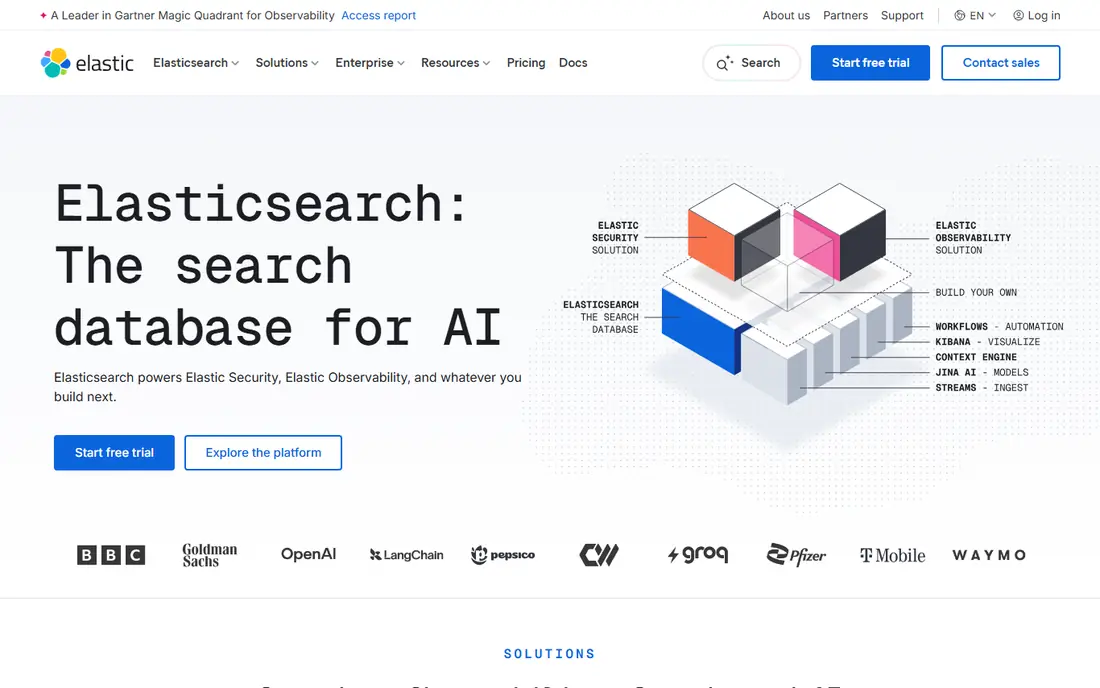
Elastic Stack, often called ELK, gives teams full control over log search. Elasticsearch indexes logs for fast full-text queries, Kibana visualises them, and Elastic Security adds detection content for security teams. Self-hosting is free in software terms, while Elastic Cloud removes the server work for a usage price.
The catch is operations. A production cluster needs sizing, shard planning, upgrades and backup care, and that work grows with volume. Teams without that skill should budget for Elastic Cloud or a managed alternative rather than assuming self-hosting is free.
We would pick Elastic for teams that need flexible search and are willing to run or pay for a cluster. It is a strong Graylog replacement when search depth matters more than a simple setup.
- Strong full-text search
- Self-hosted or Elastic Cloud
- Security analytics through Elastic Security
- Running a cluster well needs engineering time
- Paid features and support add cost
Grafana Loki takes a different approach to cost. It indexes labels rather than full log text, which keeps storage and query costs lower for high-volume Kubernetes logs. Paired with Grafana, teams can view logs beside metrics on the same dashboards they already use for operations.
The limit is search style. Loki is excellent for finding logs by service, pod or label, but it is not a full-text search engine in the Elastic sense. Teams that need deep text search across unstructured logs may find it less flexible.
We would pick Loki for Kubernetes-heavy teams with large log volumes and a Grafana habit. Classic VM or mixed estates may prefer Elastic or a hosted log platform.
- Low-cost log storage for large volumes
- Label-based queries
- Pairs with Grafana dashboards
- Full-text search is thinner than Elastic
- Setup suits Kubernetes teams best
Sumo Logic is a hosted log platform for multi-cloud teams. It ingests logs from cloud services, apps and infrastructure, offers dashboards and alerting, and adds security analytics for teams that need SIEM-style detection. Being hosted removes cluster management from the team's workload.
The trade-off is price control. Like other hosted log tools, cost follows ingested volume and retention, so noisy sources need filtering before they reach the platform. Its query language also takes practice, though dashboards and saved searches help new users.
We would pick Sumo Logic for a multi-cloud team that wants hosted log analytics without running a cluster. Cost-conscious teams should test with real volume before committing to a tier.
- Cloud-native log analytics
- Security and compliance content
- Scales without self-hosting
- Pricing depends on volume and tier
- Learning the query language takes time
Wazuh is the strongest free SIEM option for teams on a budget. Agents on servers and endpoints send logs and security events to a central server, which applies rules, detects threats and supports compliance reporting. The software itself carries no licence cost, which matters for small security teams.
The cost is time. You install and size the server, indexer and dashboard, tune rules to cut false positives, and maintain upgrades. Wazuh Cloud removes that work for a per-agent price, but self-hosting is where the free value sits.
We would pick Wazuh for a security team that needs SIEM capability without a large licence bill and can run the platform. Teams without security engineering time should consider a hosted SIEM instead.
- Free open source SIEM
- Host monitoring, log analysis and threat detection
- Active community
- Self-hosting and tuning need time
- Cloud option is paid and priced by agents
Papertrail is the simplest tool in this list. Point your apps and servers at it, and you get live log tailing, search and basic alerting within minutes. Small teams like that there is no cluster to run and no complex query language to learn first.
The limit is scale and depth. Papertrail is not built for enterprise SIEM correlation or very large log volumes, and retention on lower plans is short. It is a log viewer and alerting tool first, not a full security platform.
We would pick Papertrail for a small team that needs logs visible quickly. Larger or security-focused teams should choose a SIEM or a scalable log platform above.
- Very fast setup
- Simple live tail and search
- Easy to add to apps and servers
- Less suited to huge volumes or deep SIEM work
- Retention and search depth are limited
SigNoz suits teams already standardising on OpenTelemetry. Logs, metrics and traces arrive in one system, so an engineer can follow a request from a log line to its trace without switching vendors. Self-hosting is free, and the cloud option prices by ingested volume.
The trade-off is maturity. SigNoz does not yet match the app ecosystem or detection content of older platforms, and teams new to OpenTelemetry will need to learn its collectors and conventions. That learning pays off for cloud-native stacks, but it is extra work for a traditional estate.
We would pick SigNoz for an OpenTelemetry team that wants a unified, cost-aware observability stack. Teams on older agents and log shippers may find Elastic or Datadog an easier move.
- Logs, metrics and traces from OpenTelemetry
- Self-hosted or cloud
- Usage-based cloud pricing
- Younger ecosystem than Splunk or Elastic
- Setup assumes OpenTelemetry familiarity
How we picked these
We compared official pricing, docs and deployment pages, plus current log management roundups that describe pricing models and scale limits. We kept only tools that are live in October 2026 and that handle log collection, search and alerting as a core job. We excluded LogRhythm as a standalone pick, since it merged into Exabeam, and we used See website where pricing depends on volume, tier or a sales quote.
What to check before you choose
Start with volume and retention. Estimate daily log volume, how long you must keep logs for operations or compliance, and which sources are noisy. That estimate decides whether a per-gigabyte, per-source or flat licence model is cheapest for you.
Next, check authorisation and access. Log tools hold sensitive data, so set role-based access, audit who views logs, and keep personal data out of logs where possible. Use these tools only on systems you own or are authorised to monitor, and document that authorisation for security reviews.
Finally, test search on your own logs. Send a week of real logs to a trial or test instance, run the queries your team uses during incidents, and check alert speed and false positives. A tool that looks cheap but misses the queries you rely on is not a saving.
Frequently asked questions
What is the best Graylog alternative for a small team?
Papertrail is the simplest small-team choice, while Grafana Loki and Wazuh suit small teams with engineering time and larger volumes. Choose Papertrail for speed, Loki for Kubernetes volume, and Wazuh for free SIEM capability.
Is there a free Graylog alternative?
Yes. Elastic Stack, Grafana Loki, Wazuh and SigNoz all offer free self-hosted software, and Papertrail offers a free tier. Free software still costs server time and maintenance, so budget for that work.
Do I need a SIEM or just log management?
Log management collects and searches logs for operations. A SIEM adds correlation, threat detection and compliance reporting for security work. Wazuh, Splunk and Elastic Security cover SIEM use, while Papertrail and Loki focus more on operations logs.
How much do log tools cost at scale?
Cost depends on daily volume, retention and indexing choices, and it can vary widely between vendors. Always test with real volume and set filters for noisy sources before signing, since a small pricing difference per gigabyte becomes large at scale.
Can these tools monitor systems I do not own?
No. Use log and SIEM tools only on systems you own or are authorised to monitor, with proper access controls and retention rules. Monitoring someone else's systems without authorisation is unlawful and outside the scope of these tools.
Which alternative is best for Kubernetes?
Grafana Loki is the strongest Kubernetes-focused pick here, especially beside Grafana dashboards. SigNoz is also strong for OpenTelemetry-based Kubernetes stacks, while Datadog suits teams already using Datadog for cluster monitoring.
Sources
See where you really rank - block by block
ProMapRanker scans Google Maps across a grid of your service area. Simple monthly plans from $19, white-label on every plan.
Start freeKeep reading
 zyte alternatives
Best Zyte Alternatives in 2026
These zyte alternatives cover managed scraping APIs, proxy networks and no code tools for lawful collection from your own or consented sources only in 2026.
Read → zerto alternatives
Best Zerto Alternatives in 2026
Compare the best zerto alternatives for disaster recovery and replication, with recovery targets, cloud options and honest trade-offs for teams in 2026.
Read → zerofox alternatives
Best ZeroFox Alternatives in 2026
We compared 9 zerofox alternatives for brand protection, phishing takedowns, dark web monitoring, and social impersonation, with clear coverage notes.
Read →