 ProMapRanker
Google Optimize Alternatives in 2026

Key takeaways
- Google Optimize was sunset on 30 September 2023 and is not listed as a live product here, because it can no longer run experiments.
- VWO, Optimizely, and AB Tasty are the closest marketer-friendly replacements, while GrowthBook and PostHog suit developer-led teams.
- Convert and Kameleoon publish prices, while VWO, Optimizely, AB Tasty, and Adobe Target are now largely quote-based, so budget for a sales conversation.
- Low-traffic sites should test large changes, such as offers and page layout, rather than button colors that need huge samples to judge.
Quick comparison
| Pick | Great for | Pricing starts at | Free tier | |
|---|---|---|---|---|
 VWO | Marketer-led testing plus insights | See website | No | Visit |
 Optimizely | Enterprise experimentation | See website | Yes | Visit |
 AB Tasty | Personalization and testing | See website | No | Visit |
 Convert Experiences | Privacy-focused testing | $299 per month | Free trial (15 days) | Visit |
 Kameleoon | Marketing and product tests | $495 per month | No | Visit |
 Adobe Target | Adobe Experience Cloud users | See website | No | Visit |
 GrowthBook | Developer-led warehouse testing | Free | Yes | Visit |
 PostHog | Product analytics plus experiments | Free | Yes | Visit |
 Zoho PageSense | Small marketing teams | See website | Yes | Visit |
The best Google Optimize alternatives
Google Optimize was a free tool for A/B testing, and its shutdown left many small teams without a simple replacement. Note plainly: Google Optimize was sunset in September 2023, and it is not listed as a live product in this article, because it cannot run new experiments. The tools below replace different parts of it, from visual editing for marketers to feature flags for developers. Our pick for most marketing teams is VWO or Convert, while developer teams should start with GrowthBook.
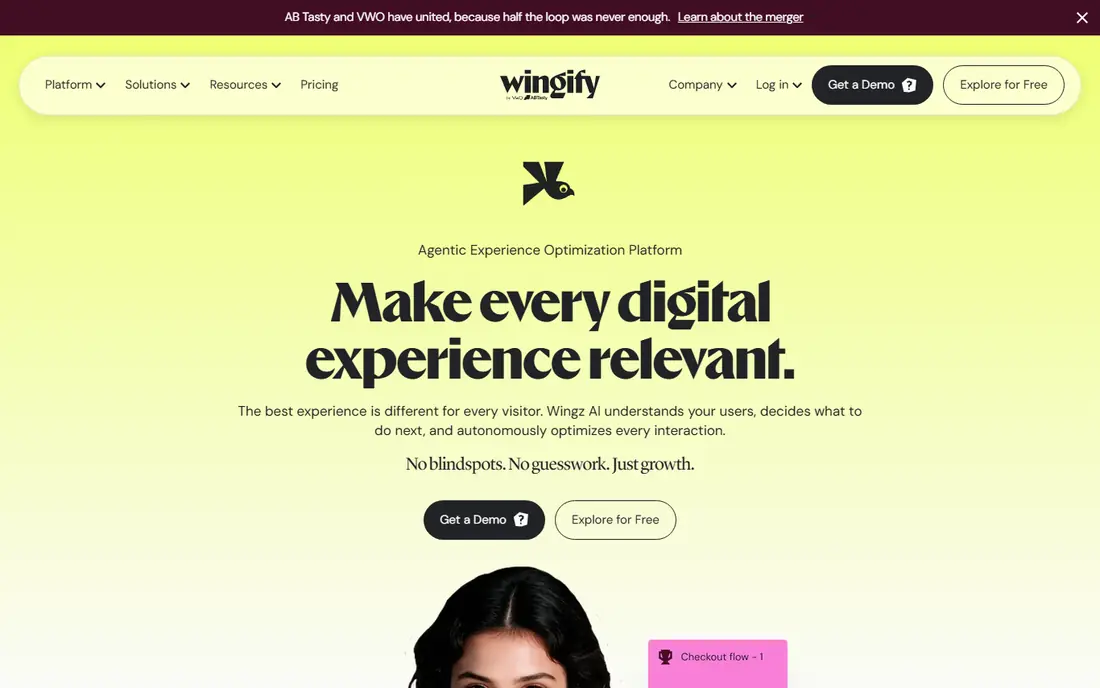
VWO, now under Wingify alongside AB Tasty, is the closest all-round replacement for Optimize users who liked visual editing. A marketer can change headlines, images, and layouts in the editor, launch a test, and watch heatmaps and recordings to understand why a variant won or lost. That combination of testing and behavior insight was part of what made Optimize useful.
The change to watch is pricing. VWO previously published plan prices, but its pricing now redirects to a quote-based page, so a small team cannot budget from the website alone. Ask for the traffic allowance and the included features in writing before signing, and compare the quote with Convert for a published-price alternative.
- Visual editor for tests without code
- Heatmaps and session recordings beside testing
- Multivariate and multi-page testing
- Pricing is now quote-based rather than clearly published
- Full platform can be more than a small site needs
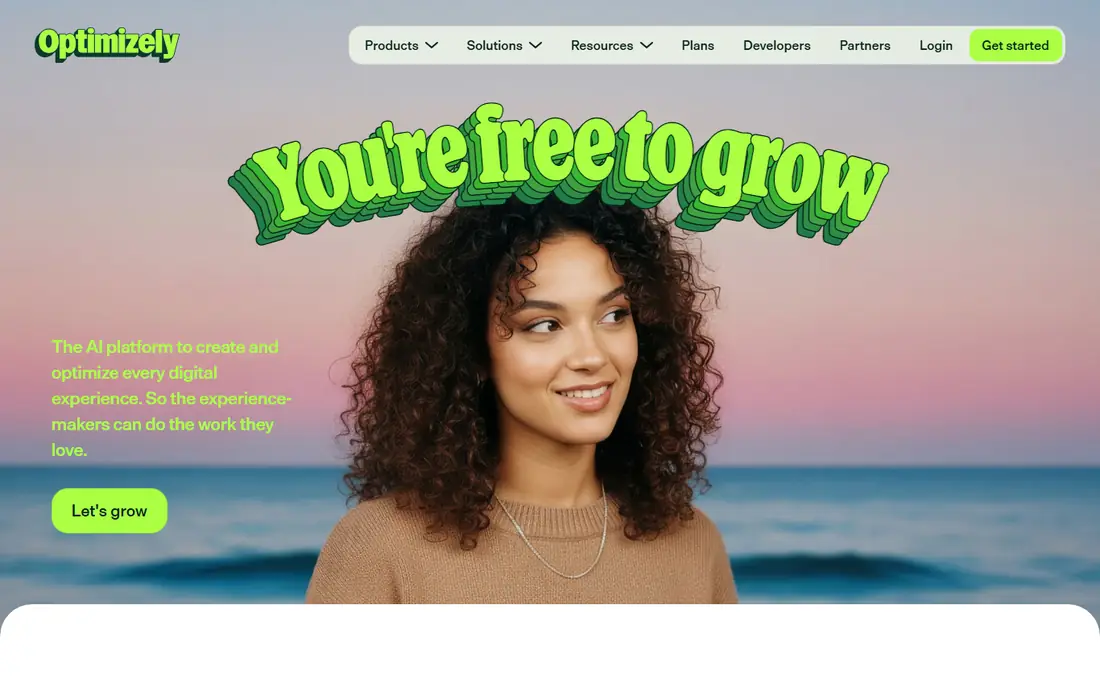
Optimizely is the enterprise-grade replacement, with web experimentation for pages and feature experimentation for product releases. Its GA4 integration lets a team analyze experiment data beside the analytics it already uses, which eases migration from an Optimize and Analytics workflow. The free feature experimentation plan also gives developers a way to start with flags without a sales call.
Optimizely is not a like-for-like free swap. Paid web experimentation is quoted per organization and typically runs to enterprise budgets, and the platform expects a team that can manage governance, QA, and analysis. Small sites should look at Convert, Zoho PageSense, or GrowthBook first.
- Strong web and feature experimentation
- GA4 integration for analysis
- Free feature experimentation plan for flags and limited tests
- Paid pricing is quote-based and enterprise-level
- Setup and governance suit larger teams better than solo marketers
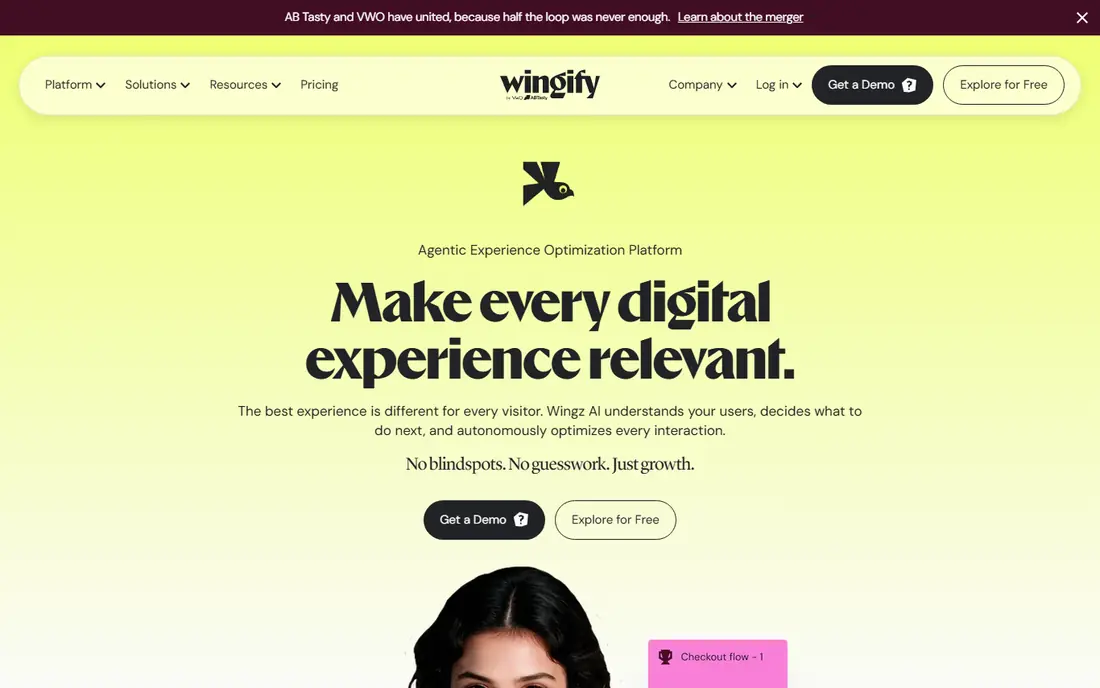
AB Tasty, also now under Wingify, suits marketing teams that want testing plus personalization in one platform. A team can run A/B tests, target segments, and personalize content for returning visitors without switching tools. E-commerce integrations help stores test product pages, offers, and checkout steps in context.
Pricing is the barrier for small teams. AB Tasty has long been quote-led, with annual floors reported well above a small business budget, so it fits mid-market and enterprise buyers better than a solo site owner. If personalization is the goal and budget allows, it is a strong pick. If not, Convert or VWO will cover testing at a clearer price.
- A/B and multivariate testing with personalization
- Strong e-commerce integrations
- Visual editor for marketing teams
- Quote-based pricing with a high annual floor
- More setup than a simple Optimize replacement
Convert is the pick for teams that want a published price and a privacy-conscious vendor. Its $299 per month entry plan, billed annually, is clear on the website, which is now rare in this category. The platform covers A/B, split URL, multivariate, and multi-page tests, with a visual editor for marketers and code options for complex changes.
The entry price means Convert is a serious purchase, not a casual Optimize replacement for a hobby site. Agencies and mid-market teams that run tests every month will get value from it, while a site testing twice a year should consider GrowthBook or Zoho PageSense first. The 15-day trial is enough to test the editor on a real page.
- Published pricing, which aids budgeting
- Privacy-focused with GDPR and CCPA positioning
- Visual editor plus server-side options
- Entry price is high for a low-traffic site
- No standing free plan, only a trial
Kameleoon fits a team that coordinates marketing tests and product experiments in one place. Its editor and AI-assisted variations help a marketing team launch tests faster, while its feature experimentation options give product teams a path to test releases. That breadth suits a company where both teams share an experimentation program.
The $495 per month starting point puts Kameleoon above Convert and well above free options, so it is a mid-market choice. A team that only tests landing pages will not use the full platform. A team that tests pages, features, and personalization together will find the price easier to justify.
- A/B, multivariate, and feature experimentation
- AI-assisted variation ideas
- Personalization for marketing and product teams
- High entry price
- Product experimentation features sit on higher packages
Adobe Target is the right replacement only if a business already runs Adobe Experience Cloud. Inside that stack, Target connects with Analytics and other Adobe tools, supports advanced personalization, and handles complex test types at enterprise scale. For a large Adobe customer, that integration is the point.
Outside Adobe, Target is hard to justify. Pricing is quote-based, setup is technical, and a team without Adobe Analytics will miss much of the value. Optimize users who were not Adobe customers should choose VWO, Convert, or GrowthBook instead.
- Deep testing and personalization inside Adobe Experience Cloud
- Server-side, client-side, and hybrid testing
- Automated decision options
- Quote-based enterprise pricing
- Technical setup and Adobe licensing make it a poor fit outside the Adobe stack
GrowthBook is the best free replacement for a technical team. It is open source, can be self-hosted, and analyzes experiments against data already in a warehouse, which avoids moving data into a new analytics silo. Feature flags, safe rollouts, and multi-arm bandits cover product experimentation well beyond simple page tests.
GrowthBook is not a marketer-only tool. A team needs developers to implement SDKs, connect data sources, and define metrics, and there is no Optimize-style visual editor for quick headline tests. Paid cloud plans start at $40 per seat per month for teams that want hosted convenience. For a developer-led team, it is the strongest value on this list.
- Free self-hosted option for technical teams
- Warehouse-native analysis using existing data
- Feature flags and safe rollouts
- Needs developer setup and data connections
- No visual page editor like Optimize for non-technical marketers
PostHog suits product teams that want experiments measured inside the same analytics they already use. A team can launch a feature flag, run an experiment, watch session replays, and analyze funnels without exporting data between tools. The free allowances for analytics events and flag requests make it easy to start.
PostHog is less of a direct Optimize clone for a marketing-only team. Setting up experiments needs SDK work, and the platform rewards a product mindset. For a SaaS or app team, that is a strength. For a small content site that only tests headlines, Zoho PageSense or Convert will feel simpler.
- Experiments beside product analytics, session replay, and feature flags
- Generous free monthly allowances
- Usage-based pricing
- Experiments are part of a wider product platform, so a pure marketing team may find it technical
- Usage costs rise with event volume
Zoho PageSense is the closest low-cost visual replacement for small marketing teams. It offers split testing, heatmaps, and funnel analysis in one tool, with a free tier for low traffic, which echoes the Optimize appeal of starting without a large budget. Zoho users also get a native fit with the wider Zoho suite.
Zoho PageSense does not match Optimizely or GrowthBook for server-side product experimentation, and its pricing scales with tracked users, so a growing site should check the plan that covers its traffic. For a small team testing pages a few times a month, it is a practical and affordable starting point.
- Visual editing for split and A/B tests
- Heatmaps and funnel analysis in the same tool
- Free tier for small sites
- Pricing varies by traffic and plan, so confirm the current price before budgeting
- Less depth for server-side product experiments
How we picked these
We compared A/B testing and experimentation tools that are live in October 2026 and that can replace Google Optimize for web testing, personalization, or feature experimentation. We checked which vendors still publish prices and which have moved to quote-based pricing, because that change affects budgeting more than any single feature. Google Optimize itself is excluded as a live product, since it was sunset on 30 September 2023. Prices shown are starting prices where published, and we say See website where pricing is quote-based.
How to replace Google Optimize without losing your data habit
Export and save any old Optimize and Analytics data you still need before you rely on a new tool, since Optimize experiments stopped in September 2023. Then choose the new tool by who builds the test: a visual editor for marketers, or SDKs and flags for developers. That choice matters more than the feature list, because a tool your team cannot operate will sit unused.
Match traffic to test size
A low-traffic site needs big changes to reach a reliable result in a reasonable time. Test offers, headlines, page layout, and pricing before testing button colors or small copy tweaks. A high-traffic site can test smaller changes and run multivariate tests that need larger samples.
Keep measurement consistent
Pair the new testing tool with GA4 or your product analytics, and define the primary metric before launch. Stopping a test early because a variant looks good is the most common mistake, so agree on a minimum run time and a conversion target in advance.
Start free where you can
GrowthBook self-hosted, PostHog free allowances, Zoho PageSense free tier, and Optimizely free feature experimentation all let a team learn the workflow before paying. Use a free start to prove the team will actually run tests, then pay for the tool that fits the proven habit.
Frequently asked questions
What happened to Google Optimize?
Google Optimize and Optimize 360 were sunset on 30 September 2023, and experiments running in them stopped on that date. There is no direct Google replacement, so teams now use third-party testing tools paired with GA4 for measurement.
What is the best Google Optimize alternative for small businesses?
Zoho PageSense and GrowthBook are the strongest low-cost starts, with Convert as the published-price option for teams that test regularly. VWO also fits small marketing teams, but its pricing is now quote-based, so request a quote early.
Are there free Google Optimize alternatives?
Yes, with limits. GrowthBook is free to self-host, PostHog has generous free monthly allowances, Zoho PageSense has a free tier, and Optimizely offers a free feature experimentation plan. Free options suit low-traffic sites and developer-led teams best.
What is the best Google Optimize alternative for enterprises?
Optimizely and Adobe Target are the strongest enterprise options, with AB Tasty and Kameleoon close behind for personalization. All four are quote-based, so budget for a sales process and confirm traffic allowances in writing.
Do these alternatives integrate with Google Analytics 4?
Most do, including Optimizely, VWO, and Convert, which can send experiment data to GA4 or a similar analytics tool. Check the integration for the specific plan you buy, since some integrations sit on higher tiers.
Sources
See where you really rank - block by block
ProMapRanker scans Google Maps across a grid of your service area. Simple monthly plans from $19, white-label on every plan.
Start freeKeep reading
 zscaler alternatives
Best Zscaler Alternatives in 2026
Looking for zscaler alternatives? We compare 9 SASE and zero trust platforms on architecture, data protection, pricing, and fit for your network and team.
Read → zapier alternatives free
Best Zapier Alternatives Free in 2026
Nine automation tools for zapier alternatives free in 2026, all with genuinely free tiers, plus free plan limits, starting prices and upgrade paths explained.
Read → which platform is best for online reputation
Which Platform Is Best for Online Reputation in 2026
Wondering which platform is best for online reputation? We compare 8 review, listing, and response tools for small and multi-location businesses and agencies.
Read →