 ProMapRanker
Google Cloud Alternatives in 2026


Broadest cloud service catalog · Pricing starts at: See website
Key takeaways
- AWS and Microsoft Azure are the closest full replacements for Google Cloud, with the broadest service catalogs and global regions.
- DigitalOcean, Linode, and Vultr suit smaller teams that want predictable pricing and simpler virtual servers.
- Oracle Cloud suits database-heavy work and teams that want a generous always-free tier.
- Hetzner Cloud suits price-sensitive teams that can work with fewer regions, mainly in Europe and the United States.
- Cloud bills are driven by egress, storage, and add-ons as much as by server prices, so compare total cost, not just the entry server.
Quick comparison
| Pick | Great for | Pricing starts at | Free tier | |
|---|---|---|---|---|
| Amazon Web Services | Broadest cloud service catalog | See website | Free trial | Visit |
 Microsoft Azure | Microsoft and enterprise hybrid work | See website | Free trial | Visit |
 DigitalOcean | Simple predictable cloud for developers | See website | Free trial | Visit |
 Linode by Akamai | Straightforward VPS and cloud hosting | See website | Free trial | Visit |
 Vultr | Wide choice of locations and instance types | See website | Free trial | Visit |
 Oracle Cloud Infrastructure | Database work and always-free tier | Free | Yes | Visit |
 IBM Cloud | Regulated and hybrid enterprise work | See website | Free trial | Visit |
 Hetzner Cloud | Low-cost cloud servers | See website | No | Visit |
 Alibaba Cloud | Asia Pacific and China-focused work | See website | Free trial | Visit |
The best Google Cloud alternatives
We compared official vendor pricing pages and public cloud comparisons for platforms that are live in October 2026, covering computing, storage, databases, and managed services. Our pick for most teams leaving Google Cloud is AWS for breadth, while DigitalOcean is our pick for smaller teams that want simplicity. Note that this list covers cloud computing and storage broadly, not Google Drive alone, so file-only tools are not included here.
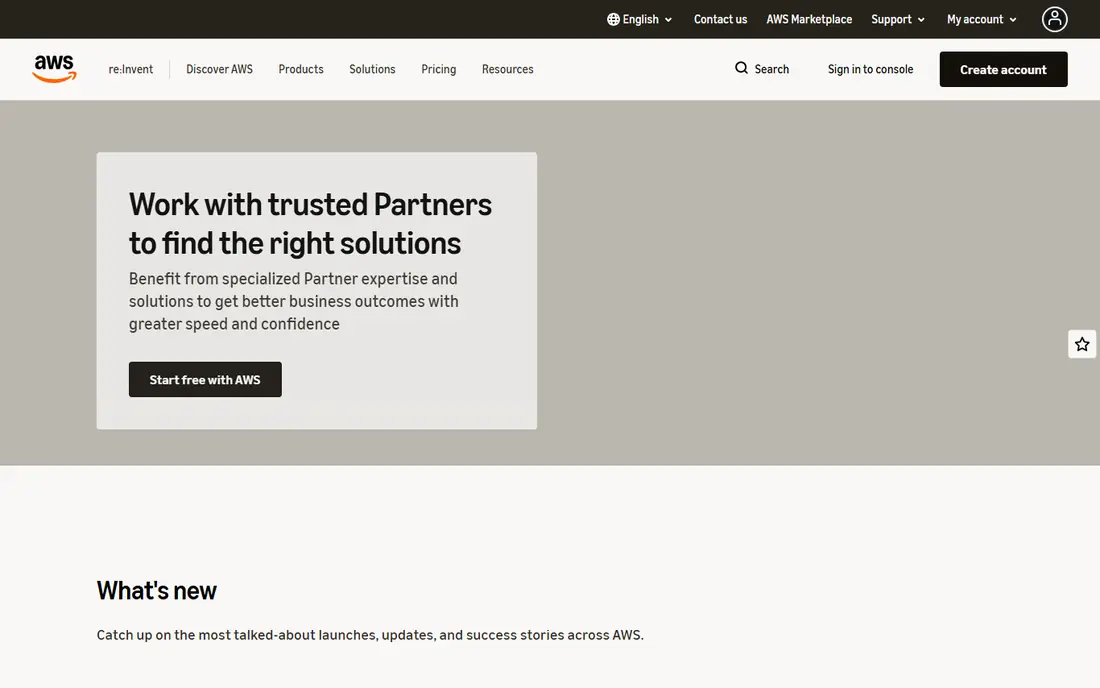
Amazon Web Services is the closest like-for-like replacement for Google Cloud when you need almost every service under one roof. It covers virtual servers, managed databases, object storage, serverless functions, AI services, and data tools, with regions across the world and a deep partner ecosystem. If your Google Cloud setup uses BigQuery, managed Kubernetes, and serverless together, AWS has a counterpart for each piece.
The main drawback is cost control. Pricing is granular, egress fees add up, and a small team can be surprised by storage, load balancer, and data transfer charges. Use budgets, alerts, and the free tier carefully, and cost your real workload, not just a test server. For a team that needs breadth and scale, AWS is the default alternative.
- Largest service catalog and global region coverage
- Mature ecosystem and integrations
- Strong AI, data, and serverless options
- Pricing is complex and egress can be costly
- Console can overwhelm small teams
- Support costs extra at higher tiers
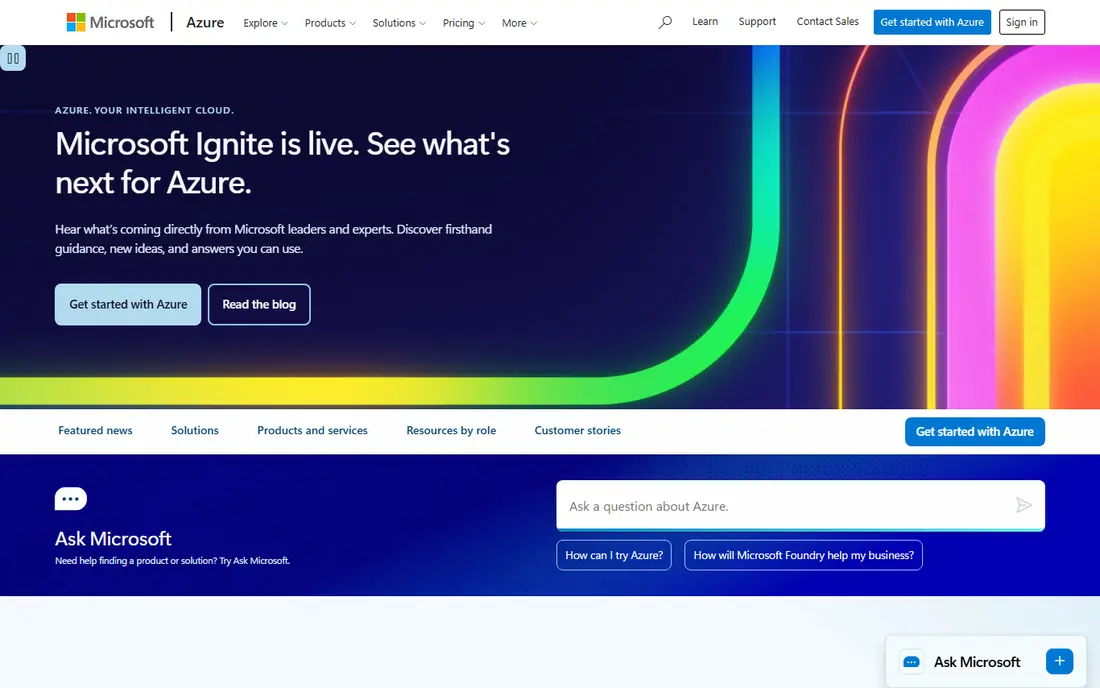
Microsoft Azure suits firms that already run Microsoft 365, Windows Server, Active Directory, or SQL Server, because those tools integrate tightly with Azure. It also supports hybrid setups, where some work stays on premises and some runs in the cloud, which matters for regulated firms and large enterprises. Its global regions and managed services make it a full Google Cloud replacement for most enterprise workloads.
Like AWS, Azure pricing needs care, and egress and add-on costs can lift a bill well above the entry server price. Teams outside the Microsoft world may find less benefit from the integration advantage. For a Microsoft-heavy firm, Azure is often the simplest Google Cloud alternative to adopt.
- Strong Microsoft 365 and Windows integration
- Hybrid cloud options
- Broad enterprise compliance coverage
- Pricing is complex
- Portal can feel crowded
- Some services are strongest inside a Microsoft setup
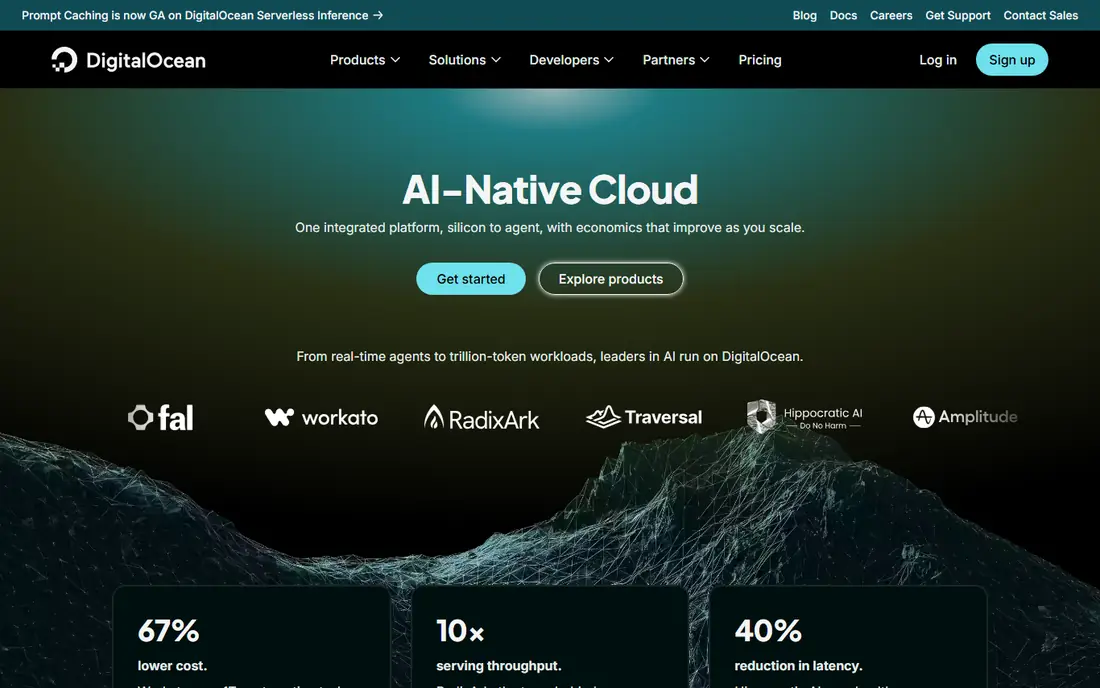
DigitalOcean is built for developers and small teams that want a server up fast without learning a hyperscaler console. Its Droplets, managed databases, object storage, and App Platform cover the common web, app, and API workloads, with transparent monthly pricing that is easier to forecast than usage-based hyperscaler bills. Documentation and tutorials are a stated strength, which helps small teams.
It is not a full replacement for every Google Cloud service. Advanced AI, big data, and specialized enterprise tools are thinner here, and region choice is smaller. For a startup, agency, or small product team that needs reliable servers and managed services at a clear price, DigitalOcean is a strong pick.
- Clear predictable pricing
- Simple control panel and documentation
- Managed databases, Kubernetes, and App Platform
- Smaller service catalog than AWS or Azure
- Fewer regions
- Less suited to very large enterprise compliance needs
Linode, now Akamai Cloud, offers straightforward virtual servers with predictable pricing, plus managed databases, Kubernetes, and object storage. Its backing by Akamai adds CDN and security strengths, which help teams that serve content globally. For a team that wants a reliable VPS provider without hyperscaler complexity, Linode is a dependable choice.
The trade-off is managed depth. You get solid core cloud services, but not the same breadth of AI, data, and enterprise tools as AWS or Azure. Linode also assumes more command-line comfort than DigitalOcean in places. For a technical team that values price clarity and performance, it is a good Google Cloud alternative for core hosting.
- Predictable VPS pricing
- Akamai CDN and security backing
- Linux-friendly and developer-focused
- Smaller managed service catalog than hyperscalers
- Support tiers vary
- Interface assumes more technical skill
Vultr stands out for choice. It offers cloud compute in many locations, plus bare metal, GPU instances, managed Kubernetes, and a wide catalog of instance types, with hourly billing capped monthly. That variety suits teams that need a server in an unusual region, a GPU for inference, or a short-lived test environment without a long contract.
The platform feels less curated than DigitalOcean, so documentation and one-click apps help, but self-sufficiency matters more. Managed AI and data services are thinner than on AWS or Google Cloud. For a team that wants low entry prices and wide location choice, Vultr is a flexible alternative.
- Many locations and instance types
- Hourly billing with monthly caps
- Bare metal, GPU, and Kubernetes options
- Experience assumes more self-sufficiency
- Managed services are thinner than hyperscalers
- Pricing varies by instance type
Oracle Cloud Infrastructure offers an Always Free tier that includes virtual machines and storage, which makes it attractive for learning, testing, and small projects that can stay within free limits. For Oracle database workloads, it also offers performance and pricing advantages that other clouds struggle to match, especially for firms already running Oracle software.
Outside Oracle workloads, the catalog is narrower than AWS or Azure, and the setup can feel enterprise-oriented. Check whether your workload fits the free tier limits, and cost the paid tier for production use. For database-heavy teams and for developers who want a real free tier, Oracle Cloud is worth testing.
- Always Free tier with virtual machines and storage
- Strong Oracle database performance
- Competitive pricing for database workloads
- Service catalog is smaller than AWS
- Console and setup can feel enterprise-heavy
- Best value is clearest for Oracle workloads
IBM Cloud suits regulated industries and large firms that need hybrid cloud, strong compliance coverage, and mainframe or legacy integration alongside modern cloud services. Its watsonx AI platform and enterprise security focus appeal to firms where governance matters as much as speed. For a bank, insurer, or government supplier, those strengths can outweigh a smaller catalog.
Smaller teams will likely find IBM Cloud heavier and more sales-driven than DigitalOcean or Vultr. Developer tutorials and community examples are thinner than for AWS. For an enterprise with hybrid and compliance needs, IBM Cloud is a credible Google Cloud alternative.
- Hybrid cloud and mainframe heritage
- Strong compliance and security focus
- Watsonx AI tools
- Enterprise pricing and sales process
- Smaller developer community than AWS
- Some services are niche
Hetzner Cloud is the price leader in this list for many standard server workloads, with low monthly caps and clear hourly billing. Teams in Europe, and increasingly in the United States, use it for web hosting, development servers, and cost-sensitive production work where a hyperscaler bill would be hard to justify. Performance for the price is a consistent theme in public comparisons.
The limits are location choice, managed services, and support depth. If you need many global regions, advanced AI services, or enterprise compliance tooling, Hetzner will not replace Google Cloud on its own. For a price-sensitive team with straightforward server needs, it is hard to beat on value.
- Low prices for cloud servers
- Clear hourly billing with monthly caps
- Good performance for the price
- Fewer locations than hyperscalers
- No free tier in the usual sense
- Support and managed services are thinner
Alibaba Cloud is the strongest choice in this list for firms that need a real presence in China or across Asia Pacific. It offers a full cloud suite, including compute, storage, databases, and AI services, with regions and local partnerships that United States hyperscalers cannot always match in China. For a firm expanding into that market, regional presence is the deciding factor.
For a United States-only team, Alibaba Cloud offers less advantage, and documentation and support can vary by region. Compliance for China work also needs specialist advice. For Asia Pacific expansion, though, it is a serious Google Cloud alternative, not just a niche provider.
- Strong Asia Pacific and China region coverage
- Full cloud suite
- Competitive regional pricing
- Less familiar to United States teams
- Documentation and support vary by region
- Compliance needs care for China work
How we picked these
We compared official vendor pricing pages and public cloud comparisons for platforms that are live in October 2026, and we kept only providers that offer real cloud computing and storage, not file-sharing tools alone. We mixed hyperscalers with developer clouds and regional specialists, so both enterprise and small teams are covered. Where a vendor does not publish a simple starting price, we wrote See website rather than repeating a third-party estimate as fact.
How to choose a Google Cloud alternative
Start by listing what you actually use on Google Cloud. A team that only runs virtual servers and object storage has a much wider choice than a team that depends on BigQuery, Vertex AI, and managed Kubernetes together. Match the alternative to that list, service by service, before you look at price.
Cost the full workload, not the server
Add storage, egress, load balancers, backups, snapshots, and support to the server price, and test with a realistic workload for a month. A cheap server with high egress can cost more than a pricier server with generous transfer. Set billing alerts on day one, and review the first full invoice before you migrate everything.
Plan migration and data exit
Check how you will move data out, including egress cost and time, and whether your tools support the new cloud without rewrites. Managed Kubernetes, Terraform, and container-based apps migrate more easily than services tied to one vendor. Keep a rollback plan until the new setup has run in production for a full cycle.
Frequently asked questions
What is the best alternative to Google Cloud?
AWS is the broadest replacement, and Azure is the best fit for Microsoft-heavy firms. DigitalOcean, Linode, and Vultr are better for smaller teams that want simpler pricing and core cloud services.
Are there free alternatives to Google Cloud?
Oracle Cloud offers an Always Free tier, and AWS and Azure offer free trials and limited free services. No full hyperscaler is free for production use, so check free tier limits before you rely on them.
Is Google Drive the same as Google Cloud?
No. Google Drive is a file storage and sharing product, while Google Cloud is a full computing platform with servers, databases, AI, and data tools. This list covers cloud computing alternatives, and file-only tools would not replace a Google Cloud workload.
Which Google Cloud alternative is cheapest?
Hetzner Cloud, DigitalOcean, Linode, and Vultr are usually cheapest for standard servers, while Oracle Cloud can be cheapest for small work inside its free tier. The cheapest option for your workload depends on egress, storage, and region, so cost a real workload.
Can I migrate from Google Cloud to AWS or Azure easily?
Container-based apps and standard databases migrate more easily than services tied to Google-specific tools. Plan data transfer, test each service counterpart, and keep a rollback plan until the new setup is proven in production.
Do I need a hyperscaler for a small website?
Usually no. DigitalOcean, Linode, Vultr, or Hetzner Cloud will run a small website or app well at a lower, more predictable price. A hyperscaler makes sense when you need its managed AI, data, or global enterprise services.
Sources
See where you really rank - block by block
ProMapRanker scans Google Maps across a grid of your service area. Simple monthly plans from $19, white-label on every plan.
Start freeKeep reading
 zscaler alternatives
Best Zscaler Alternatives in 2026
Looking for zscaler alternatives? We compare 9 SASE and zero trust platforms on architecture, data protection, pricing, and fit for your network and team.
Read → zapier alternatives free
Best Zapier Alternatives Free in 2026
Nine automation tools for zapier alternatives free in 2026, all with genuinely free tiers, plus free plan limits, starting prices and upgrade paths explained.
Read → which platform is best for online reputation
Which Platform Is Best for Online Reputation in 2026
Wondering which platform is best for online reputation? We compare 8 review, listing, and response tools for small and multi-location businesses and agencies.
Read →