 ProMapRanker
Best GetFeedback Alternatives in 2026


Continuity for SurveyMonkey users · Pricing starts at: See website
Key takeaways
- SurveyMonkey Enterprise is the most direct continuity choice for teams already on SurveyMonkey products.
- Qualtrics and Medallia suit large experience programs, but both need a bigger budget and longer setup.
- SurveySparrow and Zonka Feedback offer a middle path, with conversational surveys and Salesforce connections.
- Delighted and AskNicely suit teams that want short, focused NPS and satisfaction checks rather than full research suites.
- Typeform is best when completion rates matter most, though it is a survey tool first, not a full closed-loop platform.
Quick comparison
| Pick | Great for | Pricing starts at | Free tier | |
|---|---|---|---|---|
| SurveyMonkey Enterprise | Continuity for SurveyMonkey users | See website | No | Visit |
 Qualtrics | Large enterprise experience programs | See website | No | Visit |
 Medallia | Large-scale voice of customer programs | See website | No | Visit |
 SurveySparrow | Conversational omnichannel surveys | $19 per month | Yes | Visit |
 Zonka Feedback | Salesforce-linked CX and kiosk surveys | See website | Free trial | Visit |
 Delighted | Simple NPS and CSAT checks | $19 per month | Yes | Visit |
 AskNicely | Service teams focused on NPS | See website | No | Visit |
 Alchemer | Research-grade surveys with Salesforce links | See website | Free trial | Visit |
 Typeform | High-completion conversational forms | $25 per month | Yes | Visit |
The best getfeedback alternatives
GetFeedback built its name on short customer surveys linked to Salesforce, especially NPS, CSAT, and CES checks after support or sales moments. The tools below cover that same job in different ways, from full experience platforms to light survey tools that stay out of the way.
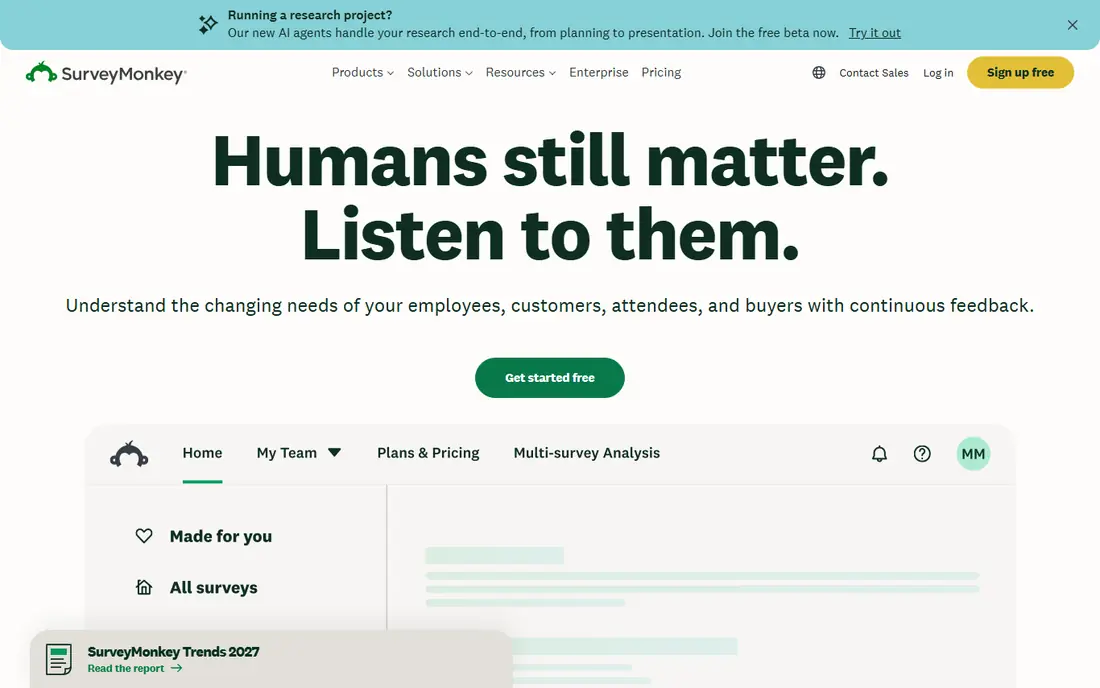
SurveyMonkey Enterprise is the least disruptive move for teams that already use SurveyMonkey elsewhere in the business. It brings surveys, templates, reporting, and integrations under one enterprise account, with controls for teams, permissions, and data handling. If several departments already send surveys from SurveyMonkey, consolidating feedback there can cut duplicate tools and training.
The trade is scope and price. Enterprise pricing is quoted, not listed, so budget approval takes a sales conversation. It also does not automatically rebuild a GetFeedback Salesforce flow; triggers, fields, and follow-up rules still need to be mapped and tested. Choose it for continuity and scale, not because it promises a one-click replacement.
- Broad survey and reporting toolset
- Enterprise controls and integrations
- Official migration path for some GetFeedback users
- Quote-only enterprise pricing
- Salesforce setup still needs planning
- Research features may exceed simple feedback needs
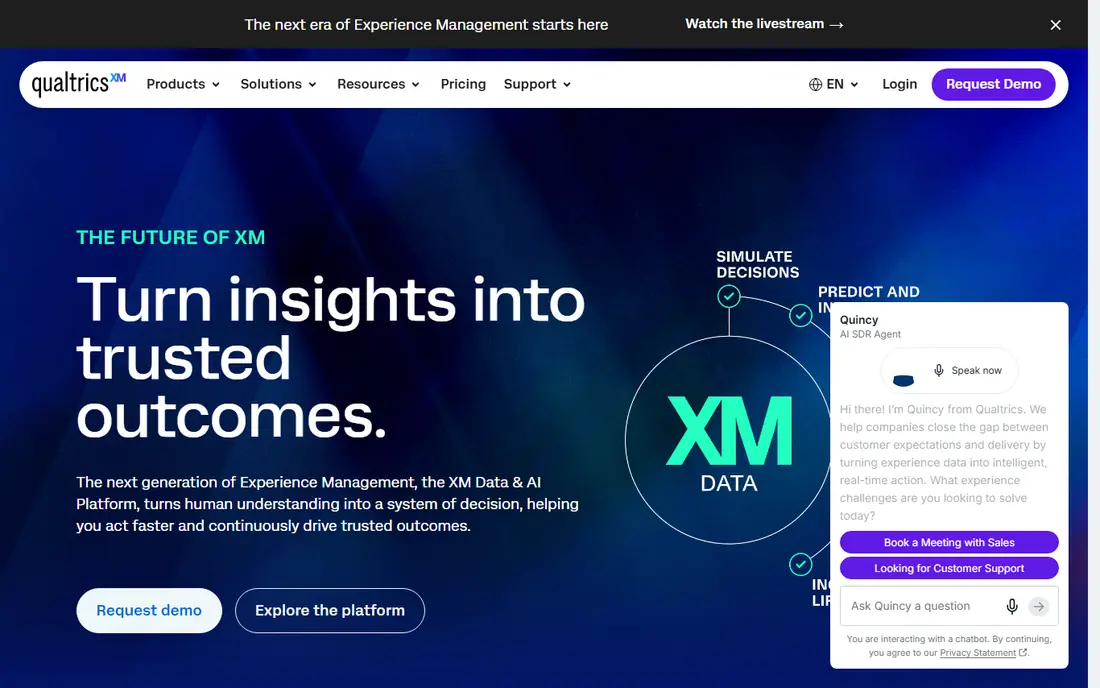
Qualtrics is the heavyweight option for organizations that run feedback as a formal program, not a one-off survey. Its customer experience tools support NPS and CSAT tracking, advanced logic, statistical analysis, and text analysis, and results can feed follow-up workflows. For a global company with many touchpoints, that depth is hard to match with a lighter tool.
That depth is also the drawback. CX pricing is quoted by volume and scope, and a full rollout can take weeks of design and testing. Smaller teams that only need a post-support NPS check will find the platform oversized. Qualtrics fits best when feedback feeds board-level reporting, account health reviews, and multi-team action plans.
- Deep survey logic and text analysis
- Broad customer, employee, and brand experience coverage
- Strong Salesforce connections
- Quote-based CX pricing
- Implementation can be long
- Smaller teams may pay for features they never use
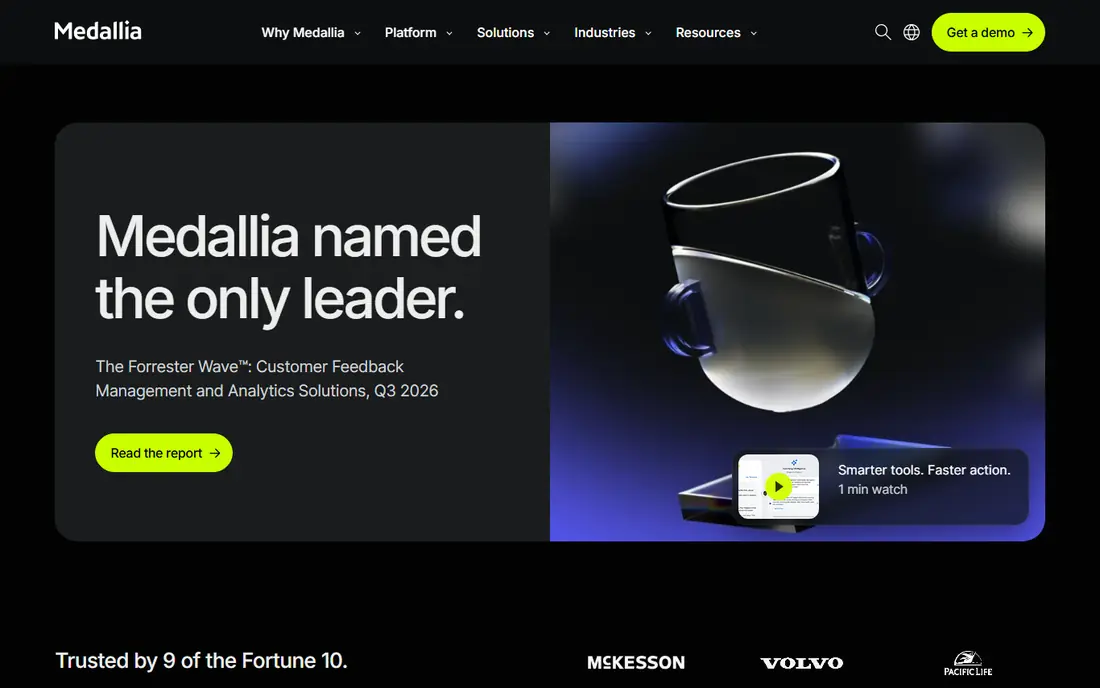
Medallia targets companies that collect feedback from stores, contact centers, apps, and websites at the same time. It can unify those signals, surface themes in open comments, and route issues to owners for follow-up. That closed-loop design is the point: a low score should create a task, not just a chart.
For a mid-size team, Medallia is likely too much platform and too much process. Pricing is quoted, onboarding is involved, and value depends on having staff who act on the data every week. It earns its place here for enterprises that already run a voice-of-customer program and need scale, governance, and cross-channel reporting in one system.
- Enterprise feedback collection across many channels
- AI-assisted analysis of open text
- Closed-loop action tools
- Quote-only pricing
- Long implementation for complex programs
- Overkill for a single survey
SurveySparrow takes a different approach to the same survey: it presents questions one at a time in a chat-like flow. That format suits mobile respondents and can feel less like a form, which helps when you ask for feedback right after a purchase or support chat. It also supports NPS, CSAT, and CES surveys, plus employee and market research surveys on higher plans.
Pricing needs a close read, since plans are shaped by response allowances and contact limits rather than seats alone. A team with seasonal spikes should model peak months, not averages. SurveySparrow is a good middle option for growing teams that want modern surveys and integrations without enterprise pricing, provided they confirm the response tier before launch.
- Chat-style surveys that can lift completion
- Email, link, and website distribution
- Salesforce and HubSpot integrations
- Response allowances need careful checking on each plan
- Advanced CX features sit on higher tiers
Zonka Feedback is one of the more direct GetFeedback-style replacements for Salesforce teams. It supports surveys by email, link, SMS, website embed, and on-site kiosks, which suits service businesses that collect feedback at a counter as well as online. Its Salesforce connection and closed-loop alerts help teams follow up on detractors instead of only reporting scores.
The pricing structure rewards a careful quote. Device licenses, users, and SMS credits can change the total, so a kiosk-heavy rollout costs more than a simple email program. AI analysis is also tiered, so teams that want automatic theme detection should confirm the plan that includes it. For a Salesforce-first CX team that wants omnichannel collection, Zonka is a strong shortlist pick.
- Strong Salesforce focus for CX teams
- Email, SMS, web, and kiosk collection
- AI-assisted theme and sentiment analysis on higher plans
- Pricing varies by devices and features
- AI features are not on every plan
- Setup still needs Salesforce mapping
Delighted does one thing well: short, clean feedback surveys that do not annoy customers. You can send an NPS or CSAT survey by email or link, track trends over time, and share results with a team. That simplicity is valuable after a support interaction, where a long survey would lower response rates and muddy the signal.
It is not a full research platform. Complex branching, large multi-page surveys, and deep workflow automation are not its core strengths, and meaningful volume needs a paid plan well above the starter tier. Pick Delighted when the goal is a steady, easy-to-read pulse on satisfaction, not a full customer experience suite.
- Fast setup for short surveys
- Clean reporting for NPS trends
- Integrations with common support and CRM tools
- Limited free response allowance
- Deeper research and workflow features need higher plans
AskNicely is built around a simple idea: frontline teams improve faster when they see NPS feedback tied to real interactions and coaches. It helps service businesses send short surveys, spot detractors, assign follow-ups, and coach staff on patterns in the feedback. Integrations with Salesforce, Zendesk, HubSpot, and Shopify keep that loop close to daily work.
The limit is breadth. If you need long research surveys, employee engagement suites, or complex questionnaires, AskNicely will feel narrow. Pricing is also quoted, so small teams should request a clear quote for their volume before assuming it fits. For service-led businesses where NPS is the main metric, that focus is a strength, not a gap.
- NPS-first design for service and frontline teams
- Coaching and follow-up workflows
- Integrations with Salesforce, Zendesk, and HubSpot
- Quote-based pricing
- Narrower than general survey platforms
- Less suited to broad market research
Alchemer, formerly SurveyGizmo, suits teams that need more than a two-question pulse check. It supports advanced logic, varied question types, and detailed reporting, while its Salesforce integration can push and pull data for account-level feedback programs. That makes it useful for B2B teams that need to link survey answers to accounts, cases, or opportunities.
The cost of that power is complexity. Building a clean, well-tested survey takes more skill than in Delighted or Typeform, and pricing is often quoted rather than listed. Alchemer is best for research-minded teams that already design surveys carefully and want Salesforce data to stay in sync, rather than for a team that wants a survey live in ten minutes.
- Advanced survey logic and reporting
- Bidirectional Salesforce integration options
- Strong compliance and enterprise controls
- Steeper learning curve than simple NPS tools
- Pricing is quoted for many plans
- Setup takes care for complex surveys
Typeform is the best-known conversational form builder, and that design carries over to feedback. Asking one question at a time, with clean visuals and logic jumps, can lift completion compared with a long grid survey. It works well for post-purchase checks, event feedback, and lead qualification forms that double as surveys.
It is not a full GetFeedback replacement on its own. Closed-loop workflows, account-level NPS reporting, and Salesforce-native follow-up need integrations or a separate CX layer. The free plan is also limited to a small number of responses per month, so real programs need a paid plan. Pick Typeform when the survey experience itself is the priority and you can handle follow-up elsewhere.
- Attractive one-question-at-a-time design
- Strong completion rates for short surveys
- Wide integration range
- Limited free response allowance
- Closed-loop CX features are weaker than dedicated platforms
- Costs rise with responses
How we picked these
We compared official feature and pricing pages, Salesforce integration documentation, and current comparison guides for GetFeedback replacements. We kept tools that run NPS, CSAT, or CES surveys, support follow-up or reporting, and work for customer feedback programs in October 2026. We left out general form tools with no feedback reporting, and we used See website where pricing is quoted or varies by volume, devices, or plan tier.
We also avoided treating every survey tool as equal. A short NPS tool and a full enterprise experience platform solve different problems, even when both send a survey. That is why this list ranges from Delighted to Qualtrics, with middle options for teams that want Salesforce links without enterprise overhead.
What to check before you switch
Map your current GetFeedback flows before you buy anything. List each survey trigger, such as case closed or deal won, the fields that must land in Salesforce, and who follows up on low scores. A replacement that cannot match those triggers will create manual work, even if its survey design looks better.
Next, test the respondent experience on a phone. Most customers answer on mobile, and a survey that feels long or cramped will hurt response rates more than any analytics feature helps. Send a test survey to colleagues, check the Salesforce record it creates, and confirm that alerts reach the right owner.
Finally, check response limits, user seats, and renewal terms together. Some tools charge by responses, others by users or devices, and the cheapest headline plan can become expensive at peak volume. A short paid trial with real volume is worth more than a feature checklist.
Frequently asked questions
What is the best GetFeedback alternative for Salesforce teams?
Zonka Feedback and Alchemer are strong Salesforce-focused picks, with SurveyMonkey Enterprise as the continuity option for existing SurveyMonkey users. The best choice depends on whether you need kiosk and SMS collection, research-grade logic, or simple consolidation. Test the Salesforce field mapping with a real survey before you commit.
Is GetFeedback still available?
GetFeedback has been positioned as a product in transition, and several comparison guides in 2026 describe teams planning a migration. If you still run GetFeedback, confirm your contract, data export options, and timeline directly with the vendor, and start mapping surveys early so a move does not rush follow-up workflows.
Which GetFeedback alternative is cheapest for small teams?
Delighted and SurveySparrow offer low starting plans, and Typeform offers a free tier for very small volumes. The cheapest option depends on how many responses you collect each month, since response limits can push you to a higher plan. Model a busy month, not an average month, before choosing.
Can these tools track NPS, CSAT, and CES?
Most tools in this list support NPS and CSAT, and several support CES as well. Delighted and AskNicely focus on short NPS and satisfaction checks, while SurveySparrow, Zonka Feedback, Qualtrics, and Medallia cover a wider set of metrics. Confirm CES support on the exact plan you buy, since it is not always included on starter tiers.
What are the best GetFeedback alternatives for simple surveys?
Delighted is the simplest pick for short NPS and CSAT checks, and Typeform is best when survey design and completion matter most. SurveySparrow sits just above them, adding conversational surveys and more distribution channels. If you only need one short survey after support, start with one of those three.
Sources
See where you really rank - block by block
ProMapRanker scans Google Maps across a grid of your service area. Simple monthly plans from $19, white-label on every plan.
Start freeKeep reading
 zscaler alternatives
Best Zscaler Alternatives in 2026
Looking for zscaler alternatives? We compare 9 SASE and zero trust platforms on architecture, data protection, pricing, and fit for your network and team.
Read → zapier alternatives free
Best Zapier Alternatives Free in 2026
Nine automation tools for zapier alternatives free in 2026, all with genuinely free tiers, plus free plan limits, starting prices and upgrade paths explained.
Read → which platform is best for online reputation
Which Platform Is Best for Online Reputation in 2026
Wondering which platform is best for online reputation? We compare 8 review, listing, and response tools for small and multi-location businesses and agencies.
Read →