 ProMapRanker
Best Flutter Alternatives in 2026

Key takeaways
- React Native is our pick for most teams, because it uses JavaScript, renders native components, and has a very large ecosystem.
- Kotlin Multiplatform suits teams that want shared business logic with fully native user interfaces on each platform.
- .NET MAUI suits Microsoft-focused teams that already work in C# and the .NET ecosystem.
- Ionic and Capacitor suit web teams that want to reach mobile stores fastest with HTML, CSS, and JavaScript.
- All of the core frameworks here are free and open source, so hiring, language, and long-term maintenance matter more than licence cost.
Quick comparison
| Pick | Great for | Pricing starts at | Free tier | |
|---|---|---|---|---|
 React Native | JavaScript teams and native UI | Free | Yes | Visit |
 Kotlin Multiplatform | Shared logic, native UI | Free | Yes | Visit |
 .NET MAUI | C# and Microsoft teams | Free | Yes | Visit |
 Ionic | Web teams going mobile | Free | Yes | Visit |
 NativeScript | Direct native API access in JavaScript | Free | Yes | Visit |
 Expo | Fast React Native development | Free | Yes | Visit |
 Capacitor | Web apps in native shells | Free | Yes | Visit |
 Framework7 | Mobile web and hybrid apps | Free | Yes | Visit |
The best flutter alternatives
Flutter builds apps with its own rendering engine and the Dart language, which gives pixel-identical interfaces on iOS and Android from one codebase. That approach suits design-heavy consumer apps, but it is not the only way to share code across platforms. The frameworks below use native components, web technologies, or shared logic instead, and we compared official documentation and project pages for each one.
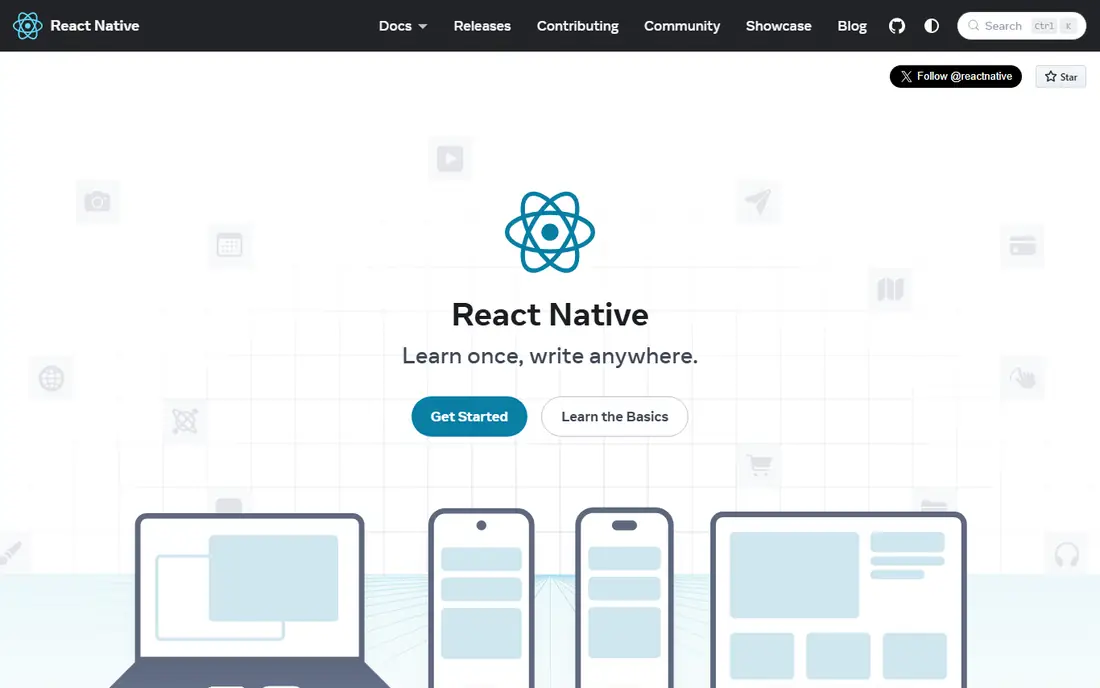
React Native, built by Meta, lets developers build iOS and Android apps with JavaScript or TypeScript and React, rendering real native components rather than drawing every pixel itself. That native rendering gives apps a familiar platform feel, and the JavaScript ecosystem gives access to a huge set of libraries for navigation, state, and APIs. Teams with a React web app can also share logic, types, and some code with mobile.
React Native is free and open source, and its new architecture improves performance and native integration compared with older versions. The catch is that complex features sometimes need native modules, and major upgrades can require care, especially in apps with many third-party libraries. For most business apps and for JavaScript teams, React Native is the strongest Flutter alternative, and the one we would shortlist first.
- Large JavaScript ecosystem
- Native components
- Strong hiring pool
- Native modules sometimes needed
- Upgrade work can be fiddly
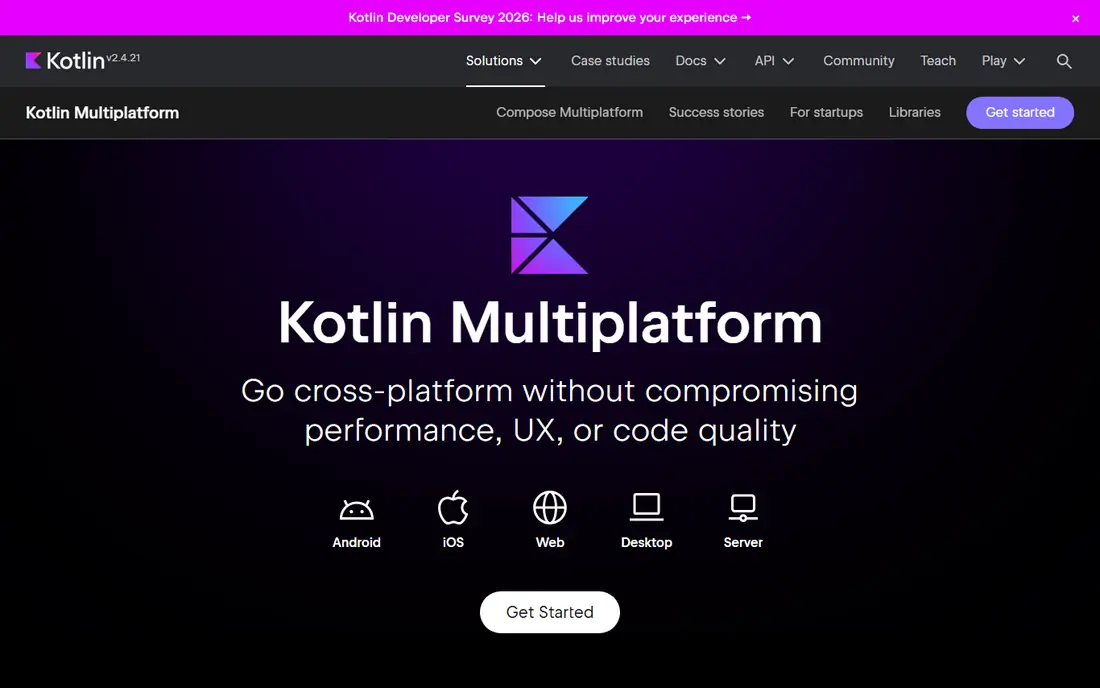
Kotlin Multiplatform, from JetBrains, shares business logic, data models, and networking code across iOS, Android, and other platforms, while each platform keeps its own native user interface, such as SwiftUI on iOS and Jetpack Compose on Android. That split suits teams that want native look, feel, and performance, but do not want to write the same rules, validation, and API code twice. Enterprise and fintech teams have adopted it for that reason.
Kotlin Multiplatform is free and open source, with Compose Multiplatform offering shared UI as an additional option where a team wants it. The trade-off is that UI work remains platform-specific in the core model, so you still need iOS and Android UI skills, and the hiring pool is smaller than for JavaScript. For teams with existing Kotlin or native engineers, it is a pragmatic, long-term alternative to Flutter.
- Shared business logic
- Fully native UI
- Growing enterprise use
- UI still platform-specific
- Smaller hiring pool than JavaScript
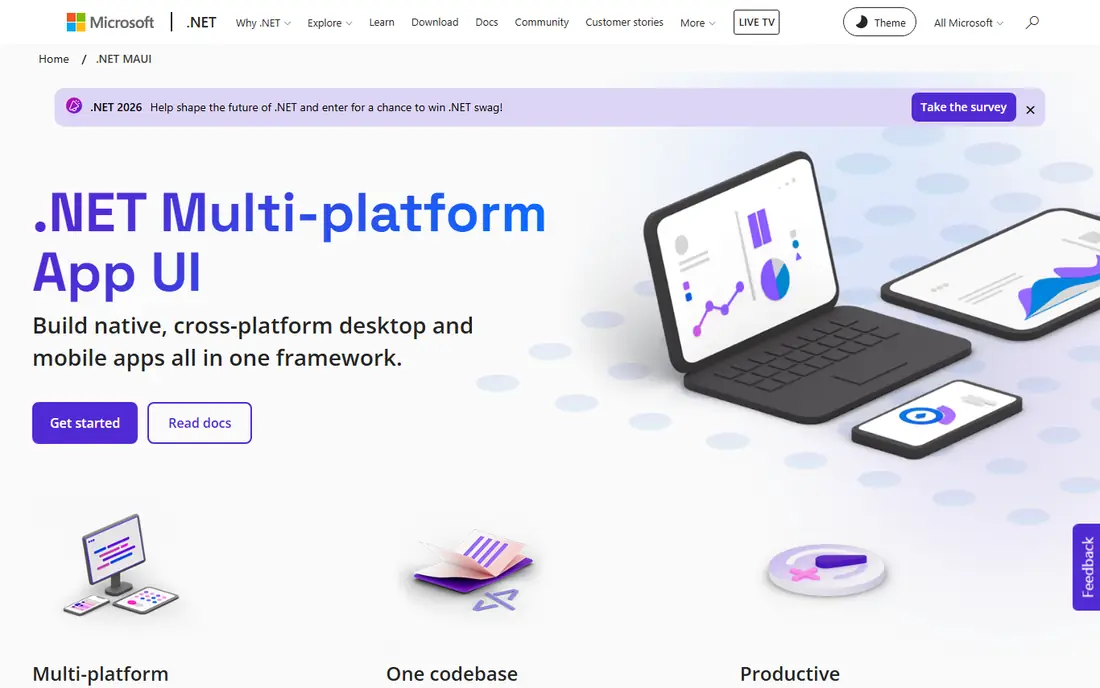
.NET MAUI, the successor to Xamarin.Forms, lets developers build Android, iOS, macOS, and Windows apps from a single C# codebase, using native controls on each platform. It suits Microsoft-focused teams that already use C#, Visual Studio, and Azure, because the same language and tooling carry across mobile and desktop. A team that builds internal business apps for both phones and Windows desktops gets particular value from that breadth.
.NET MAUI is free and open source as part of .NET. The community for mobile is smaller than for React Native or Flutter, so third-party libraries and community answers are fewer, and some advanced mobile features need platform-specific code. For a Microsoft shop, though, the fit is natural, and the shared codebase across mobile and desktop is a genuine advantage over a mobile-only framework.
- Single C# codebase
- Native controls
- Microsoft tooling
- Smaller mobile community
- Fewer third-party libraries
Ionic is an open source UI toolkit for building mobile, desktop, and web apps with HTML, CSS, and JavaScript, using Angular, React, Vue, or plain JavaScript. It provides a large set of mobile-styled components, and apps run in a WebView wrapped as a native app, which lets a web team reach app stores without learning a new language. Prototyping is fast, because a web developer can build a working app with familiar tools.
Ionic itself is free and open source, with paid cloud and enterprise services offered separately. The catch is performance and feel: WebView apps can feel less native than React Native or Flutter apps, especially for heavy animation or complex gestures. For content apps, internal tools, and MVPs, that trade is often acceptable. For a highly animated consumer app, a native-component framework is usually a better fit.
- Web skills transfer directly
- Many UI components
- Angular, React, Vue support
- WebView performance limits for heavy apps
- Native feel varies
NativeScript lets developers build native iOS and Android apps with JavaScript or TypeScript, with direct access to native platform APIs without writing native plugins for common tasks. Unlike a WebView approach, NativeScript renders native UI components, so apps feel closer to platform-native apps, while code sharing remains high for business logic and navigation. It supports Angular, Vue, and plain JavaScript workflows.
NativeScript is free and open source. Its community is smaller than React Native, so components, plugins, and tutorials are fewer, and a team may need to build more pieces itself. The direct API access is a real strength, though, for apps that need device features that other frameworks expose only through plugins. For a JavaScript team that wants native UI without React, NativeScript is a credible alternative.
- Direct native API access
- JavaScript and TypeScript
- Native UI
- Smaller community
- Fewer ready-made components
Expo is a framework and set of tools built on React Native, designed to make React Native development faster, with managed workflows, easy setup, and cloud builds. A team can start a React Native app without configuring native projects by hand, use Expo libraries for camera, notifications, and other device features, and ship over-the-air updates for JavaScript changes. That speed is why Expo is now the recommended starting point for many React Native projects.
Expo itself is free to start, with paid plans for higher build volume and team features. The catch is that it is not a separate framework from React Native: it is a way to build React Native apps, so the same React Native trade-offs apply. Some native modules need a development build rather than the managed workflow, which adds a step. For a team that has chosen React Native, Expo usually makes the work faster, and for a team comparing Flutter alternatives, it belongs on the shortlist as the practical React Native path.
- Fast setup
- Managed builds
- Over-the-air updates
- Built on React Native
- Some native modules need a custom build
Capacitor, from the Ionic team, is a cross-platform runtime that lets you run a web app as a native iOS, Android, or web app, with plugins for device features such as camera, filesystem, and push notifications. It is a modern successor to Cordova, with a simpler plugin model and better tooling, and it pairs well with any web framework. A team with a working web app can often wrap it for the app stores with less rework than a full rewrite.
Capacitor is free and open source. Like Ionic, it is WebView based, so heavy animation and complex native interaction can feel less smooth than in a native-component app. For content apps, business tools, and web-first products, that trade is often fine, and the speed of reaching mobile stores is the point. For a web team that wants a native shell without adopting Ionic UI components, Capacitor is the cleanest route.
- Turns web apps into native apps
- Plugin system
- Modern tooling
- WebView based
- Performance limits for heavy apps
Framework7 is a free and open source framework for building mobile, desktop, and web apps with HTML, CSS, and JavaScript, with components styled to look like iOS and Android apps. It supports Vue, React, and plain JavaScript, and it can produce hybrid apps through Capacitor or Cordova, or run as a mobile web app. Its component set covers common mobile patterns, from lists and cards to sheets, popups, and navigation.
Framework7 is free, with no required build lock-in, which suits small teams and solo developers who want control over their setup. The community is smaller than Ionic, so plugins and answers are fewer, and, like other web-based frameworks, it does not match native-component performance for heavy apps. For a mobile-styled web app or a hybrid app built by a web team, Framework7 is a light, flexible alternative.
- IOS and Android styled components
- No build lock-in
- Vue and React support
- Web based
- Smaller community than Ionic
How we picked these
We compared official documentation for cross-platform frameworks that are active in October 2026 and that can ship iOS and Android apps from a shared codebase or a shared web codebase. We favoured frameworks with current maintenance, clear documentation, and a distinct approach, from native components to shared logic to web shells, rather than listing every experimental project. We did not claim hands-on testing of private apps, and we listed these frameworks as free because their core code is open source.
What to check before you choose a Flutter alternative
Start with your team, not the framework. A JavaScript team will move fastest in React Native or Expo, a Kotlin team in Kotlin Multiplatform, a C# team in .NET MAUI, and a web team in Ionic, Capacitor, or Framework7. Hiring matters too: a framework with a small hiring pool can slow a growing team, even if the technology fits well.
Check the app type next. A design-heavy consumer app with custom animation may need native components or Flutter itself, while a content app, internal tool, or MVP can ship well in a WebView framework. Prototype one real screen, including navigation, a list, and a device feature you actually need, before you commit. Finally, check upgrade history, plugin availability for your device features, and how the framework handles app store builds, because those daily details decide whether a framework stays pleasant after launch.
Frequently asked questions
What is the best alternative to Flutter?
React Native is the best general alternative, because it uses JavaScript, renders native components, and has a large ecosystem and hiring pool. Kotlin Multiplatform is the best choice for teams that want shared logic with fully native UI, while .NET MAUI suits C# teams. The best pick depends on your team language and whether you want shared UI or shared logic.
Is React Native better than Flutter?
React Native suits JavaScript teams and apps that should follow each platform native look, while Flutter suits teams that want pixel-identical, custom interfaces from one codebase. Performance for standard business apps is close in 2026, so team skills, ecosystem, and design goals matter more than raw speed claims. Prototype a real screen in each if the choice is close.
Can I use Kotlin Multiplatform for UI as well?
Kotlin Multiplatform itself shares logic, with UI written natively per platform, while Compose Multiplatform adds shared UI as an option. That means you can start with shared logic and native UI, then share more UI later if it fits. Check the current Compose Multiplatform support for iOS and your target platforms before you plan a shared UI.
Is Ionic good enough for a real app?
Ionic is good enough for content apps, business tools, and MVPs, where web skills and speed matter more than heavy animation. For highly animated consumer apps or apps with complex native gestures, a native-component framework usually feels better. Judge Ionic on your app type, not on a generic claim about hybrid apps.
Are these Flutter alternatives free?
The core frameworks listed here are free and open source, including React Native, Kotlin Multiplatform, .NET MAUI, Ionic, NativeScript, Expo, Capacitor, and Framework7. Paid costs can appear for cloud builds, enterprise support, and app store tooling, but the frameworks themselves do not require a licence fee. Check each project page for paid services if your team needs them.
Sources
See where you really rank - block by block
ProMapRanker scans Google Maps across a grid of your service area. Simple monthly plans from $19, white-label on every plan.
Start freeKeep reading
 leg extension alternatives
Leg Extension Alternatives in 2026
Leg extension alternatives that build quad strength without a machine, from goblet squats to step-ups, with form tips for home and gym training in our guide.
Read → kemono alternatives
Kemono Alternatives in 2026
Find legal kemono alternatives for creators in 2026, from Patreon and Ko-fi to Substack and Ghost, with fees, features, safety notes, and honest limits.
Read → kafka alternatives
Kafka Alternatives in 2026
Compare the best Kafka alternative platform options for event streaming, queues and messaging, with trade-offs on scale, ops and cost for developers now.
Read →