 ProMapRanker
Leg Extension Alternatives in 2026

Key takeaways
- The leg extension machine isolates the quadriceps, but squats, lunges, and step-ups train the same muscles with more hip and core work.
- Goblet squats and Bulgarian split squats are the most useful starting points for most people, because they need little equipment.
- Single-leg moves help fix left-right strength gaps, since each leg must do its own share of the work.
- Knee comfort matters more than load, so a shorter range of motion and lighter weight beat forcing depth through pain.
- This article is general fitness information only, not medical advice, and knee pain should be checked by a qualified professional.
Quick comparison
| Pick | Great for | Pricing starts at | Free tier | |
|---|---|---|---|---|
 Goblet Squat | Beginner quad strength | Free | Yes | Visit |
 Bulgarian Split Squat | Single-leg quad work | Free | Yes | Visit |
 Front Squat | Barbell quad focus | Free | Yes | Visit |
 Leg Press | Heavy quad work without balance demands | See website | No | Visit |
 Hack Squat | Machine quad work | See website | No | Visit |
 Walking Lunge | Quads plus balance | Free | Yes | Visit |
 Step-Up | Functional single-leg strength | Free | Yes | Visit |
 Wall Sit | Low-impact quad endurance | Free | Yes | Visit |
 Sissy Squat | Advanced quad isolation | Free | Yes | Visit |
The best leg extension alternatives
This article is about alternatives to the leg extension exercise, not about buying a leg extension machine. Each option below trains the quadriceps, the muscles at the front of the thigh, in a different way. Some need only body weight, some use dumbbells, and some use gym machines. Pick the ones that fit your equipment, your knee comfort, and your training level.
The goblet squat is the best first alternative for most people. You hold a dumbbell or kettlebell close to your chest, sit back and down, then drive up through your feet. The front load keeps your chest tall, which helps beginners keep a good position without a coach standing over them. Elevating your heels on small plates can increase knee travel and quad work, but only if that feels comfortable.
The limit is loading. At some point, holding a heavy dumbbell becomes harder than squatting it, and the upper back may tire first. That is not a failure of the exercise, it is a sign to move to a barbell squat or a machine for heavier work. For home training, though, goblet squats remain a strong main lift, and they pair well with step-ups or lunges on the same day.
- Teaches upright squat form
- Needs only one dumbbell or kettlebell
- Heel elevation can shift work to the quads
- Load is limited by what you can hold
- Grip and upper back can tire before the legs
The Bulgarian split squat puts the rear foot on a bench behind you while the front leg does the work. A shorter stance and a more upright torso shift more work to the front quadriceps, while a longer stance shifts work toward the glutes. Dumbbells add load without a bar on your back, which suits home gyms and smaller spaces. Because each leg works alone, weaker sides cannot hide behind the stronger leg.
Balance is the early challenge, and form can break down when fatigue sets in. Start with body weight and a low bench, hold a rail or rack for support if needed, and add weight only when you can control the lowering phase. Soreness after the first sessions is common, so keep the first week light. Once form is steady, this move can carry a training program on its own.
- Trains each leg alone
- Strong quad and glute work
- Needs only a bench and dumbbells
- Balance is hard at first
- Can cause heavy soreness for beginners
The front squat holds the bar across the front of the shoulders, which keeps the torso upright and puts more work on the quadriceps than a low-bar back squat. That upright position is exactly why it works as a leg extension alternative. It also demands core strength, because the load sits in front of the body and the trunk must stay rigid. Athletes and lifters who want quad strength without a machine often use it as a main lift.
Mobility is the barrier. Some lifters struggle with the front rack position at first, and crossed arms or lifting straps can help while mobility improves. A rack is needed for safe loading, and beginners should learn the position with an empty bar before adding weight. Done well, the front squat is one of the most direct barbell replacements for quad-focused training.
- Strong quad emphasis from an upright torso
- Builds core strength
- Transfers to Olympic lifting
- Wrist and shoulder mobility can limit beginners
- Needs a rack and barbell
The leg press is the closest machine alternative to the leg extension, because it lets you load the legs heavily while your back stays supported. Placing feet lower and narrower on the platform tends to increase quad work, while higher and wider placement shifts work toward the glutes and hamstrings. That adjustability makes it useful for lifters who want quad volume after a main squat, or for people who struggle with balance on single-leg moves.
Setup matters more than load. Keep the lower back against the pad, control the lowering phase, and avoid locking the knees hard at the top. Depth should stop before the hips lift off the seat, because that shift puts the lower back in a poor position. The leg press needs gym access, and it does not train balance, but for pure quad loading it is hard to beat.
- Allows heavy loading with back support
- Foot position can shift quad emphasis
- No balance skill needed
- Needs gym access
- Poor setup can stress the lower back and knees
The hack squat machine guides the movement on a fixed path, with the shoulders under pads and the feet on a platform. That guided path makes it easier to keep an upright torso and push through the quads, which is why many lifters use it as a leg extension replacement. It also allows heavy sets close to failure with less worry about balance or dropping a bar.
Machine fit varies, and not every gym has one. Some hack squat machines place the knees in an uncomfortable position for taller lifters, and others feel awkward for shorter lifters. Try a light set first, adjust foot position, and stop if the knees feel pinched. When the fit is right, the hack squat is a simple and effective way to add quad volume after squats or leg presses.
- Guided path keeps form consistent
- Strong quad focus
- Back support reduces balance demands
- Needs a hack squat machine
- Some machines fit taller or shorter lifters poorly
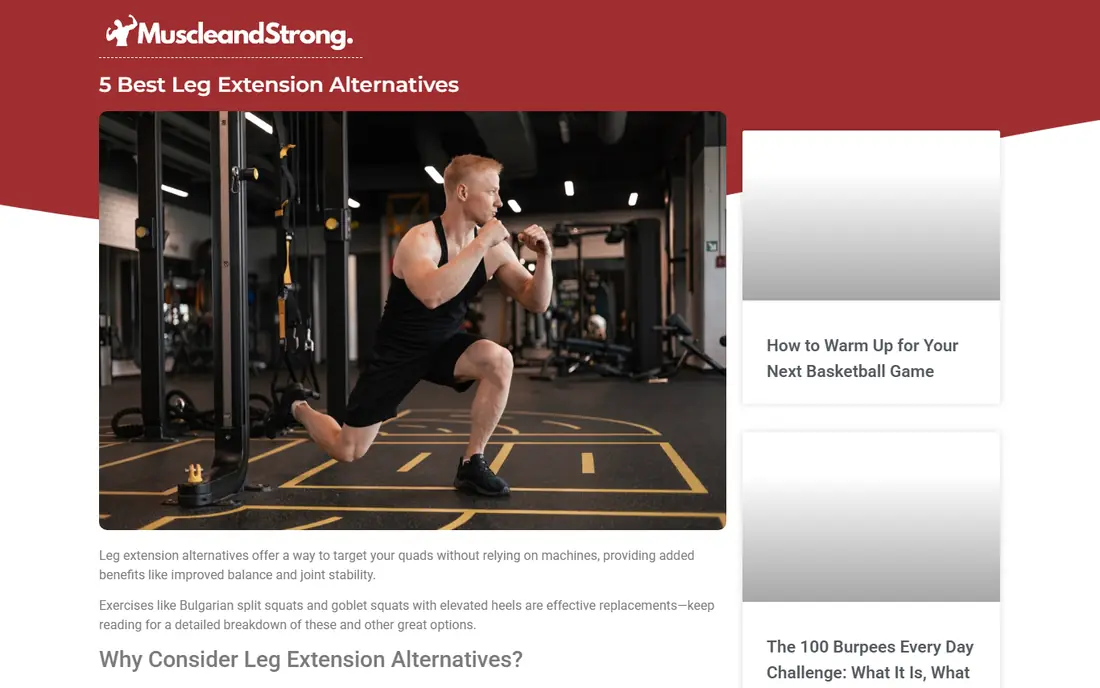
Walking lunges train the quadriceps in a moving, single-leg pattern that carries over to walking, running, and sport. Each step asks the front leg to brake, stabilize, and drive forward, which builds coordination as well as strength. Body weight alone is enough for beginners, and dumbbells add load once form is steady. Shorter steps with a more upright torso tend to keep work on the quads.
Space and fatigue are the limits. Walking lunges need a clear path, and form often breaks down late in a set when the core tires. Keep steps moderate, keep the torso tall, and stop the set before the knee collapses inward. Used in moderate sets, lunges add useful quad work and balance training that a machine cannot offer.
- Trains quads, glutes, and balance together
- Needs no equipment
- Easy to scale with dumbbells
- Needs floor space
- Form can slip when tired
- Hard on knees if steps are too long
Step-ups are simple and honest. Step onto a box with one foot, drive through that foot until you stand, then lower with control. The working leg does the lifting, which makes step-ups a strong single-leg alternative to leg extensions. A lower box suits beginners and knee-sensitive lifters, while a higher box increases range of motion and glute work. Dumbbells make the move harder without changing the pattern.
The box must be stable, and the height must fit the lifter. A box that is too high forces leaning forward and turns the move into a hip-dominant effort. Start low, place the whole foot on the box, and avoid pushing off the trailing foot. Done with control, step-ups build quad strength in a pattern that matches stairs and everyday movement.
- Single-leg strength with a clear everyday pattern
- Height adjusts difficulty
- Dumbbells add load easily
- Needs a sturdy box or bench
- Height that is too high can shift work away from quads
The wall sit holds a squat position against a wall, with knees bent and back flat. It gives constant tension in the quadriceps without joint impact or moving load, which makes it useful for beginners, for warm-ups, and for lifters managing knee discomfort. Hold times can be increased gradually, and the position can be adjusted by moving the feet farther from the wall or bending the knees less.
The limit is strength transfer. Long holds build endurance and tolerance, but they do not replace loaded squats for maximal strength. Wall sits work best as a finisher, a warm-up, or a low-load option on days when heavier work is not suitable. They also teach patience in a squat position, which helps form on loaded moves later in the week.
- No equipment and no impact
- Constant quad tension
- Useful for knee-sensitive lifters
- Builds endurance more than maximal strength
- Can feel dull for experienced lifters
The sissy squat leans the body back while the knees travel forward, keeping the hips extended and the quadriceps under strong tension. It is one of the closest body-weight matches to the leg extension, because the quads do most of the work through knee extension. A support, such as a rack or a sissy squat bench, helps with balance, and the range can be kept short at first.
This is an advanced move, not a starting point. Knee stress is high, and lifters with knee pain should skip it or seek professional advice first. Beginners should build strength with goblet squats, step-ups, and split squats before trying sissy squats. For experienced lifters with healthy knees, short controlled sets add intense quad work without any machine.
- Very direct quad work without a machine
- Needs little space
- Body weight can be enough
- Demanding on knees and balance
- Not suitable for beginners or painful knees
How we picked these
We compared fitness guides and coaching sources on quad training, then kept moves that train the quadriceps directly and can be done at home or in a standard gym. We favored a mix of bilateral and single-leg work, body-weight and loaded options, and machine and free-weight choices, so readers can build a full leg session without a leg extension machine. We left out moves that mainly train the hamstrings or glutes, because they do not replace quad work. This article is general fitness information only, not medical advice.
How to build a leg session without the machine
Start with a main compound move, such as a goblet squat, front squat, or leg press, for three to four sets. Follow it with a single-leg move, such as a Bulgarian split squat or step-up, for two to three sets per leg. Finish with a lighter option, such as a wall sit or walking lunges, if you still have energy and good form. That order puts the hardest work first, when you are freshest.
Keep progression simple. Add a small amount of weight, one rep, or a slightly higher box only when the current version feels controlled for all sets. Film a set from the side now and then, and check that the knee tracks over the foot and the torso stays tall. If a move causes sharp pain, swelling, or pain that lasts beyond normal soreness, stop that move and get advice from a qualified professional before trying it again.
Frequently asked questions
What is the best leg extension alternative for home workouts?
The goblet squat is the best home starting point, because it needs only one dumbbell or kettlebell and teaches good squat form. Bulgarian split squats and step-ups are strong follow-ups, since they train each leg alone with the same small amount of equipment. A sturdy bench or box covers all three moves.
Can squats fully replace leg extensions?
For most people, yes, because squats train the quadriceps along with the glutes, hamstrings, and core. The difference is isolation: leg extensions load the quads alone, while squats share the work. Lifters who want extra isolated quad work can add sissy squats or a leg press after their main squat work.
Are leg extension alternatives safer for knees?
No single move is safe for every knee, and comfort depends on form, load, and range of motion. Many lifters find squats and step-ups kinder than the machine, while others prefer the controlled path of a leg press. Stop any move that causes sharp pain, use a shorter range at first, and seek professional advice for ongoing knee problems.
What is the best alternative if I have no equipment?
Body-weight Bulgarian split squats, step-ups on a sturdy surface, walking lunges, and wall sits need no equipment at all. Start with body weight, focus on control, and add a backpack or dumbbells later if you need more load. Even without weights, single-leg work can be demanding when sets are done with good form.
How often should I train quads with these alternatives?
Two leg sessions per week suits most lifters, with at least one rest day between them. Beginners can start with one session and add a second once soreness settles within a day or two. Keep total sets moderate at first, and add volume slowly rather than jumping to a full program in week one.
Do I need a gym for these alternatives?
No, most of the moves here work at home with a dumbbell, a bench, and a sturdy box. A gym adds the leg press and hack squat, which are useful for heavy loading, but they are not required. Home lifters can progress for a long time with goblet squats, split squats, and step-ups alone.
Sources
See where you really rank - block by block
ProMapRanker scans Google Maps across a grid of your service area. Simple monthly plans from $19, white-label on every plan.
Start freeKeep reading
 kemono alternatives
Kemono Alternatives in 2026
Find legal kemono alternatives for creators in 2026, from Patreon and Ko-fi to Substack and Ghost, with fees, features, safety notes, and honest limits.
Read → kafka alternatives
Kafka Alternatives in 2026
Compare the best Kafka alternative platform options for event streaming, queues and messaging, with trade-offs on scale, ops and cost for developers now.
Read → instantly alternatives
Best Instantly Alternatives in 2026
Best Instantly alternatives for cold email, compared on price, deliverability, warmup, inbox limits and multichannel outreach for sales teams in 2026.
Read →