 ProMapRanker
Best Factiva Alternatives in 2026


Media monitoring and licensed news · Pricing starts at: See website
Key takeaways
- Meltwater and LexisNexis are closest to a full news archive replacement, with licensed content and media monitoring.
- AlphaSense, S&P Capital IQ and FactSet suit financial and company research more than general news tracking.
- ProQuest, EBSCO and NewsBank fit libraries, universities and research teams that need curated archives.
- Brandwatch, Mention and Google News cover social and open-web monitoring at lower cost, but with less licensed depth.
Quick comparison
| Pick | Great for | Pricing starts at | Free tier | |
|---|---|---|---|---|
| Meltwater | Media monitoring and licensed news | See website | No | Visit |
 LexisNexis | News and legal research archives | See website | No | Visit |
 AlphaSense | AI search across filings and reports | See website | Free trial | Visit |
 S&P Capital IQ | Company financials and valuations | See website | Free trial | Visit |
 FactSet | Institutional market data | See website | Free trial | Visit |
 ProQuest | Library and academic archives | See website | No | Visit |
 EBSCO | Research databases for institutions | See website | No | Visit |
 NewsBank | Local and national news archives | See website | No | Visit |
 Brandwatch | Social and brand monitoring | See website | No | Visit |
 Mention | Simple mention alerts | See website | Free trial | Visit |
 Google News | Free open-web news tracking | Free | Yes | Visit |
The best factiva alternatives
We list eleven tools here, since the topic spans licensed news, financial research and library archives, and no single tool covers all three well. The count in the title above reflects the table and list as written, so read the list headings to confirm each entry before you rely on the number in a citation.
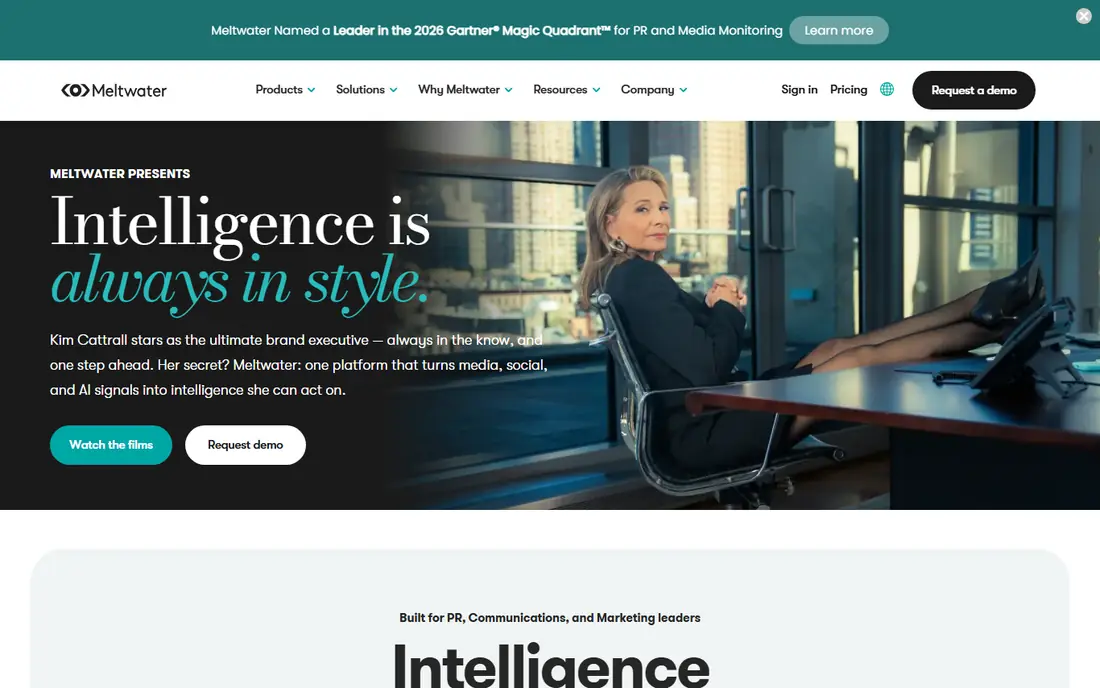
Meltwater is the most direct alternative for PR and communications teams that need to track coverage in licensed outlets, not just the open web. It combines news monitoring, social listening and analytics, so a team can find a story, measure its reach and report on it without exporting to a second tool. That breadth is why many teams compare it directly with a traditional news database.
The drawback is cost and opacity. Pricing is quote-based, and add-ons for extra sources or analytics can push the total well above the base quote. Small teams should ask exactly which licensed sources are included before signing, since coverage varies by plan. For a PR team that needs proof of coverage in major business outlets, Meltwater is still a strong first call.
- Licensed news access including paywalled business press in some plans
- Media monitoring and analytics in one platform
- Alerts and reporting for PR teams
- Quote-only pricing
- Add-ons can raise the total cost sharply
LexisNexis offers one of the deepest archives for news, legal material and company information, which makes it a natural fit for researchers who need older stories and primary sources. Search filters allow narrow work by date, outlet, region and topic, and the legal content adds value for compliance and due diligence work that a pure news tool cannot match.
Casual users may find the system heavy, since it is built for professional research rather than quick headline scanning. Pricing is also quote-based and varies by content set and user count, so budget planning needs a sales conversation. For a research team that needs depth and citation-ready sources, LexisNexis remains a benchmark.
- Deep news, legal and company archives
- Strong search filters
- Trusted by research and legal teams
- Quote-only pricing
- Interface can feel dense for casual news readers
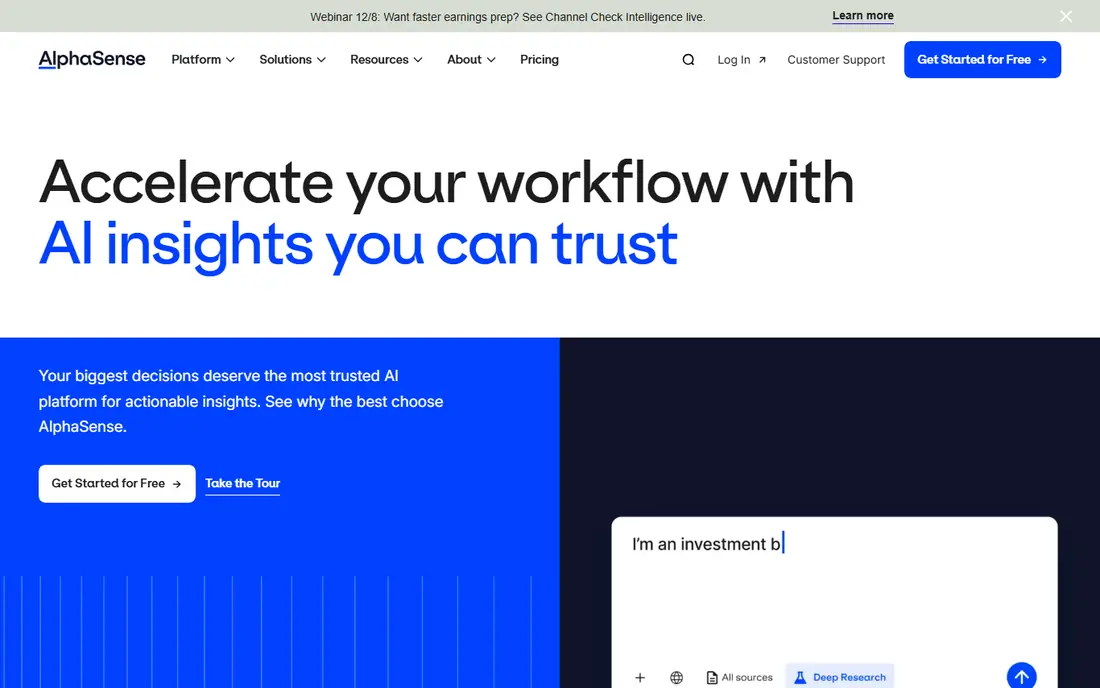
AlphaSense suits analysts and strategy teams that spend hours reading filings, earnings calls and broker reports. Its AI search finds answers inside documents, not just headlines, and it can surface tables and key passages quickly. That saves time when a team needs to compare companies or track a sector across many sources.
It is less useful for a PR team that only wants to track brand mentions in local press, since its strength is financial and company documents. Pricing is quote-based, and access depends on the content sets chosen. For investment, consulting and corporate strategy work, AlphaSense is one of the strongest modern alternatives.
- AI search across filings, transcripts, analyst reports and news
- Smart summaries and table extraction
- Collaboration tools for teams
- Quote-only pricing
- Focus is market research, not general consumer news
S&P Capital IQ is built for financial analysis, with company financials, forecasts, credit ratings and valuation data in one platform. Analysts can screen companies, build models in Excel and compare peers without gathering data from many sites. That depth makes it a core tool for banks, private equity and corporate development teams.
News coverage is secondary here, so it does not replace a media database for PR monitoring. Pricing is enterprise-level and quote-based, which puts it out of reach for small teams. If your main need is company numbers rather than news stories, Capital IQ is a better fit than a general news archive.
- Extensive company financials, valuations and credit data
- Excel tools for modelling
- Broad public and private company coverage
- High enterprise cost
- Limited value for pure news monitoring
FactSet gives institutional teams market data, company fundamentals, estimates and portfolio tools in a single workflow. It is designed for professionals who need reliable, comparable data across markets, and its screening and analytics help teams move from a broad universe to a shortlist quickly. Integration with Excel and other tools supports modelling work.
The cost and complexity are real barriers for smaller organisations, and FactSet is not a news archive in the traditional sense. Teams that need both news and market data often pair it with a media monitoring tool. For pure financial research at scale, FactSet earns its place.
- Broad market, company and portfolio data
- Strong analytics and screening
- Widely used in institutional research
- Enterprise pricing
- Learning curve for new analysts
ProQuest is a strong alternative for academic and library-based research, with newspaper archives, journals, dissertations and historical collections. Students and researchers can search across many sources at once and use citation tools to build a bibliography, which suits long-form research better than a quick news scan.
Individual access is limited, since most users reach ProQuest through a university or library subscription. That model also means pricing is not published for a single user. If you have library access, ProQuest may already cover much of what you need from a news archive, especially for historical material.
- Large newspaper, journal and dissertation archives
- Strong for universities and libraries
- Citation tools
- Institutional pricing
- Access usually runs through a library, not a direct consumer plan
EBSCO provides research databases that libraries, schools and companies use for news, journals and reference material. The breadth is a strength, since one subscription can cover business, health, education and general news, depending on the databases chosen. Search tools are built for research, with filters for date, source type and subject.
As with ProQuest, access usually comes through an institution, and the exact databases in a package vary, so two EBSCO customers may not have the same content. Check the database list before assuming a specific newspaper is included. For institutional research, EBSCO is a dependable and widely available option.
- Wide range of research databases
- Strong journal and newspaper coverage
- Used by libraries worldwide
- Institutional model
- Database mix varies by subscription
NewsBank stands out for local news, with archives from many US newspapers that larger global databases may cover only lightly. That makes it valuable for regional research, local history, genealogy and tracking coverage in smaller markets. Libraries often offer it, so many users can access it without a direct subscription.
Global business coverage is thinner than at LexisNexis or Meltwater, so it is not the best sole replacement for international company research. Used alongside a broader tool, NewsBank fills the local gap well. If your work centres on US local coverage, it deserves priority.
- Strong local newspaper archives
- Useful for regional research and genealogy
- Library access common
- Less global business depth than larger databases
- Institutional pricing
Brandwatch is an enterprise brand monitoring platform that tracks social media, news and other online sources at scale, with AI analytics to spot trends and sentiment. Large PR and marketing teams use it to manage multi-brand portfolios and produce detailed reports for leadership. The source breadth is a clear strength for online-first monitoring.
The price puts it out of reach for many small teams, with recent listings pointing to about 1,000 dollars per month as a starting point and higher totals for enterprise use. It is also more than a small team needs for simple mention alerts. For a large brand with dedicated analysts, Brandwatch is a powerful alternative.
- Very broad online and social source coverage
- AI analytics and reporting
- Strong for large brand teams
- Enterprise pricing starting around 1,000 dollars per month in recent listings
- Learning curve for small teams
Mention is a simpler, faster option for teams that want alerts when their brand, product or topic appears online. It covers social media and open-web news with a clean dashboard, and setup takes far less time than an enterprise platform. Small marketing teams and agencies often prefer it for day-to-day monitoring.
The limit is depth. Mention does not offer the licensed archive or historical newspaper coverage of a traditional database, so it cannot replace deep research. Pair it with a library database if you need both alerts and archives. For alert speed and simplicity, Mention is a good value.
- Real-time alerts across social and light news
- Clean interface
- Easier setup than enterprise platforms
- News depth is limited to open web sources
- Licensed archive coverage is not the focus
Google News is the free starting point, and it is useful for staying current on open-web stories, setting alerts and following topics. It costs nothing, covers a wide range of outlets and works well for casual tracking and early awareness of breaking stories. Many teams use it alongside a paid tool for that reason.
It does not replace a licensed database, since it lacks deep archives, paywalled content and professional search controls. You also cannot rely on it for systematic research or compliance work. As a free complement, though, Google News is hard to fault, and it helps small teams spot stories before paying for deeper access.
- Free
- Broad open-web coverage
- Alerts and topic tracking without a subscription
- No licensed archive depth
- No advanced research filters or export tools for professional use
How we picked these
We compared official product pages, pricing pages and public reviews for news, company and market research tools, and we kept only tools live in October 2026. We grouped tools by use case, since no single product covers licensed news, financial data and library archives equally well, and we noted where pricing is quote-based rather than published. Prices that could not be verified on a vendor page are shown as See website.
How to choose by research need
Start by naming the job: PR monitoring, financial analysis, academic research or local news tracking. PR teams should shortlist Meltwater and Brandwatch first, then check licensed source lists. Financial teams should shortlist AlphaSense, Capital IQ and FactSet, and test search inside filings rather than headline results.
Archive depth versus alerts
Archive depth matters when you need older stories, legal sources or historical newspapers, which favours LexisNexis, ProQuest, EBSCO and NewsBank. Alert speed matters when you need to react to a story today, which favours Mention, Brandwatch and Google News. Many teams need both, so a free alert tool plus a library archive can be cheaper than one enterprise platform.
Frequently asked questions
What are the best alternatives to factiva for PR teams?
Meltwater is the closest PR-focused replacement, with licensed news, monitoring and analytics, while Brandwatch suits larger teams that need broad social and online coverage. Mention is a lighter, lower-cost option for simple alerts.
Is there a free alternative to Factiva?
Google News is free and useful for open-web tracking and alerts, but it lacks licensed archives and professional research tools. Library access to ProQuest, EBSCO or NewsBank can also be free for eligible users through their institution.
Which alternative is best for financial research?
AlphaSense suits document and filing search, while S&P Capital IQ and FactSet suit company financials, valuations and market data. The right pick depends on whether you need text search or structured numbers more.
Do these tools publish pricing?
Most enterprise tools in this list use quote-based pricing, so you need a sales conversation for an exact figure. Brandwatch pricing in recent listings starts around 1,000 dollars per month, while Google News is free.
Can I use more than one alternative?
Yes, and many teams do. A common setup pairs a monitoring tool for alerts with a library database for archives, which often costs less than a single enterprise platform that tries to cover both jobs.
Sources
See where you really rank - block by block
ProMapRanker scans Google Maps across a grid of your service area. Simple monthly plans from $19, white-label on every plan.
Start freeKeep reading
 zscaler alternatives
Best Zscaler Alternatives in 2026
Looking for zscaler alternatives? We compare 9 SASE and zero trust platforms on architecture, data protection, pricing, and fit for your network and team.
Read → zapier alternatives free
Best Zapier Alternatives Free in 2026
Nine automation tools for zapier alternatives free in 2026, all with genuinely free tiers, plus free plan limits, starting prices and upgrade paths explained.
Read → which platform is best for online reputation
Which Platform Is Best for Online Reputation in 2026
Wondering which platform is best for online reputation? We compare 8 review, listing, and response tools for small and multi-location businesses and agencies.
Read →