 ProMapRanker
Best Etsy Alternatives in 2026

Key takeaways
- Shopify is the strongest long-term alternative for sellers who want their own brand, customer list, and sales channels.
- Big Cartel and Squarespace offer simpler, lower-cost starts for small catalogues and design-led shops.
- Amazon Handmade and eBay bring built-in buyers, but per-sale fees are higher and branding control is lower.
- WooCommerce suits WordPress users who want full control and no platform transaction fee, if they can manage hosting.
- Most sellers do best with one own store plus one marketplace, rather than trying to run every channel at once.
Quick comparison
| Pick | Great for | Pricing starts at | Free tier | |
|---|---|---|---|---|
 Shopify | Long-term brand growth | $39 per month | No | Visit |
 Big Cartel | Small artist shops | Free | Yes | Visit |
 Squarespace | Design-led brand stores | $16 per month | No | Visit |
 Wix | Beginner-friendly store building | $17 per month | No | Visit |
 WooCommerce | WordPress store control | Free | Yes | Visit |
 Amazon Handmade | Marketplace reach at scale | Free | Yes | Visit |
 eBay | Vintage and one-off items | Free | Yes | Visit |
 Bonanza | Low-fee marketplace selling | Free | Yes | Visit |
 Sellfy | Creator and digital storefronts | $22 per month | No | Visit |
The best Etsy alternatives
Etsy gives sellers built-in search traffic, but fees, limited branding, and competition push many makers toward a mix of own stores and other marketplaces.

Shopify is the clearest step beyond a marketplace for sellers who want to own their brand. You control the design, the domain, the email list, and the checkout, and you can sell through social channels, in person, and on other marketplaces from the same catalogue. Its app store covers print on demand, digital products, subscriptions, and fulfilment, which helps a shop grow without rebuilding the store. The main trade-off is traffic. Shopify does not bring buyers to you, so marketing, search, and social work become your job. The monthly plan also adds up before sales grow, though a lower Starter plan exists for simple selling. For sellers ready to build a brand rather than only list products, Shopify is the most scalable alternative here.
- Full store control and customer data
- Huge app and sales channel range
- Strong payments and shipping tools
- Monthly cost plus payment fees
- No built-in marketplace traffic, so you must drive visits

Big Cartel was built for artists and small makers, and its simplicity is the point. The free plan covers up to five products, and paid plans stay low-cost for larger small catalogues, with no Big Cartel commission on sales beyond payment processing. Setup takes minutes, and the storefront stays focused on the work rather than on upsells and widgets. That simplicity limits growth. Theme options, marketing tools, and integrations are thinner than on Shopify or Squarespace, and larger stores will outgrow it. Big Cartel fits a maker with a small, curated range who wants a clean branded shop without a monthly bill, and who can drive traffic from social media or an existing audience.
- Free plan for up to five products
- No platform commission
- Simple setup for artists
- Limited features and themes
- Not suited to large catalogues or complex stores
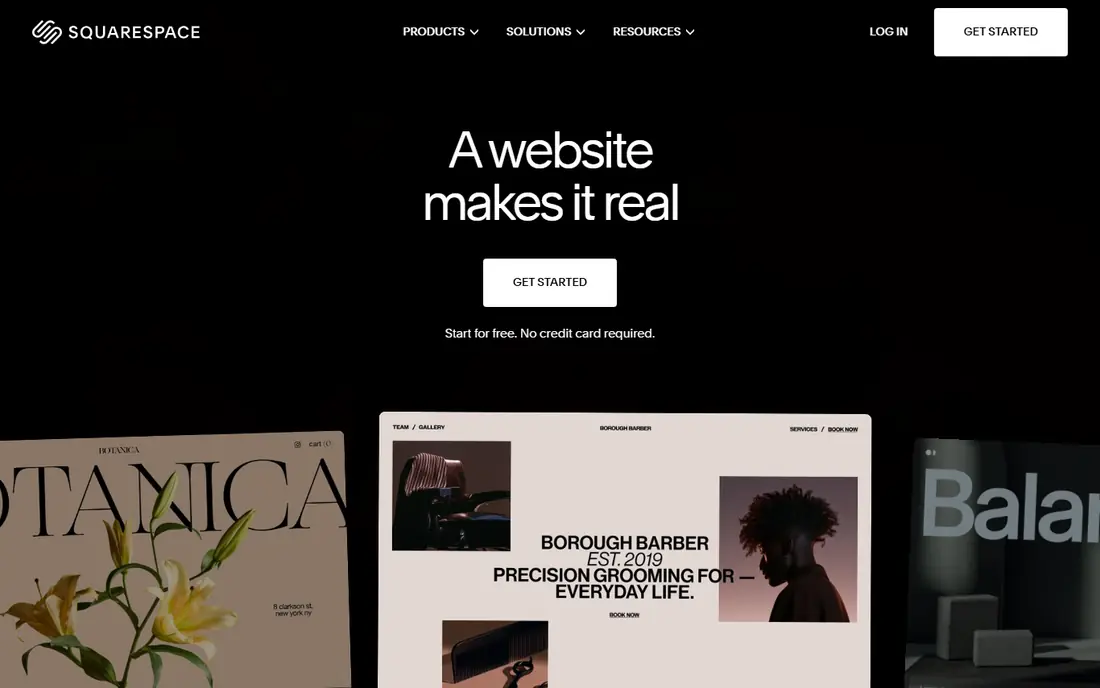
Squarespace suits makers whose products sell on look and story, such as jewellery, prints, ceramics, and home goods. Its templates are consistently polished, and commerce tools cover products, variants, discounts, and digital downloads without needing many add-ons. Blogging and email tools in the same account also help sellers build an audience around a shop. Squarespace is less flexible than Shopify for complex commerce, and its app range is smaller. Sellers should also check transaction fees on their chosen plan, since lower plans can add a per-sale charge on top of payment fees. For a design-led shop with a modest catalogue, Squarespace offers a strong balance of beauty and ease.
- Polished templates and strong visual design
- Commerce, blogging, and email in one place
- Easy to manage
- Fewer apps than Shopify
- Transaction fees on lower commerce plans
- Less suited to very large stores
Wix gives beginners a flexible way to build a website and a store in one place, with drag-and-drop editing and a large template library. Sellers can add a blog, bookings, galleries, and email marketing without learning code, and commerce plans cover products, payments, and shipping basics. That breadth makes Wix useful for makers who also need a portfolio or a service page. The flexibility can also slow sellers down, since there are many settings and apps to sort through. Commerce features are solid for small to mid-size shops, but very large or complex stores may prefer Shopify or WooCommerce. Wix fits sellers who want control over design, a low learning curve, and a single account for site and store.
- Flexible drag-and-drop builder
- Many templates and apps
- Good for sellers who want a website plus a store
- Can feel cluttered with too many options
- Migrating away later can be awkward
- Commerce depth varies by plan
WooCommerce turns a WordPress site into a full online store, and it is the most flexible option in this list for sellers who already use WordPress. The plugin itself is free, there is no WooCommerce transaction fee beyond payment processing, and you own the site, the data, and the design completely. Extensions cover subscriptions, bookings, memberships, and almost every shipping or payment need. That control comes with responsibility. You arrange hosting, handle updates and backups, and troubleshoot plugin conflicts, or pay someone to do so. For a seller comfortable with WordPress, or willing to learn, WooCommerce offers the lowest long-term platform cost and the most freedom. For a seller who wants a managed store, Shopify or Squarespace will feel easier.
- Free plugin with no platform transaction fee
- Full design and data control
- Huge WordPress extension range
- You pay for hosting and manage updates
- Setup takes more time and technical confidence
Amazon Handmade gives makers access to the largest online shopping audience in this list, with buyer trust and Prime fulfilment options that small shops cannot match alone. There is no monthly subscription fee for Handmade after approval in the model described on Amazon pages, which lowers the barrier to listing, though referral fees apply to each sale. The referral fee, around 15 percent, is higher than most own-store costs, and Amazon controls the customer experience, reviews, and search placement. Approval also requires proof that products meet handmade rules, and the storefront feels like Amazon, not like your brand. Handmade fits makers with products that suit mass-market search and who can accept higher fees in exchange for reach.
- Access to Amazon search traffic and buyer trust
- No monthly fee after approval for many sellers
- Fulfilment options
- Referral fee around 15 percent
- Strict handmade rules and approval
- Limited brand control
eBay is not a handmade-only marketplace, but it is a strong alternative for sellers with vintage, collectible, refurbished, or one-off items that do not fit a handmade catalogue. Buyers search eBay for specific items, and auction formats can work well for rare pieces. Listing is free for many sellers up to a monthly allowance, with final value fees charged when an item sells. Branding is limited, and price competition can be fierce, especially for common products. eBay also suits sellers who want to clear varied stock quickly, rather than build a curated handmade brand. For vintage and one-off sellers, it remains one of the most practical second channels alongside an own store.
- Huge buyer base for vintage and collectibles
- Auction and fixed-price formats
- Strong for one-off inventory
- Final value fees on sales
- Less suited to handmade branding
- Competition on price is intense
Bonanza is a smaller marketplace that appeals to sellers who want marketplace exposure without high fees. Listing is free, and transaction fees are lower than on Amazon Handmade and many large marketplaces, which helps margins on lower-priced crafts and collectibles. Import tools also make it easier to copy listings from another marketplace, which saves time for sellers testing a new channel. The clear limit is traffic. Bonanza does not bring the buyer volume of Amazon or eBay, so sellers still need to drive visits, often through search and social links. It works best as a low-cost extra channel, not as a sole replacement for Etsy. For sellers with existing listings and a small budget, Bonanza is a low-risk way to add reach.
- Free to list
- Lower transaction fees than large marketplaces
- Easy import from other marketplaces
- Smaller buyer traffic than Amazon or eBay
- Fewer brand and marketing tools than own stores
Sellfy suits creators who sell a mix of physical goods, digital downloads, and subscriptions from one simple storefront. There is no Sellfy commission on sales beyond payment processing, and built-in tools cover discounts, upsells, and email marketing. That simplicity helps creators who want to sell from social profiles without managing a complex store. Sellfy is less suited to large physical stores that need advanced inventory, fulfilment, or many integrations. Its monthly cost also starts from day one, so sellers need some sales or audience to justify it. For a creator with digital products or a focused physical range, Sellfy offers a clean, low-friction alternative to both Etsy and larger commerce platforms.
- Simple storefront for physical and digital products
- No Sellfy commission on sales
- Built-in marketing tools
- Smaller app ecosystem than Shopify
- Less suited to very large physical catalogues
- Monthly cost from the start
How we picked these
We compared official feature pages, pricing pages, app store listings, privacy policies, and public reviews for platforms that were actively available to sellers in October 2026. We looked at monthly cost, per-sale fees, built-in traffic, branding control, and suitability for handmade, vintage, digital, and physical products. We also favoured a mix of own stores and marketplaces, since most sellers need both reach and control, not one or the other. We did not claim hands-on testing, and we treated fee examples as guides rather than fixed totals, since fees vary by category, plan, and payment method. When a platform did not publish a simple starting price, we used its listed free tier or entry plan, and readers should confirm current fees on the platform pricing page before listing.
How to choose between an own store and a marketplace
The core choice is traffic versus control. Marketplaces bring buyers who are already searching, but they charge per sale, limit branding, and own the customer relationship. Own stores give you branding, data, and margin, but you must bring the buyers yourself through search, social, email, and repeat customers. Many successful sellers run both, using a marketplace for discovery and an own store for repeat sales.
Start with your product type and audience
Handmade and design-led products suit Squarespace, Big Cartel, Shopify, and Amazon Handmade, depending on whether you want control or reach. Vintage and one-off items suit eBay and Bonanza. Digital products suit Sellfy and WooCommerce, where delivery and licensing are easier to manage. Match the platform to how buyers already search for your kind of product.
Add up monthly cost plus per-sale fees
Compare the monthly plan, payment processing, platform commission, and any listing or transaction fees for a typical month of sales. A free marketplace with a 15 percent fee can cost more than a $39 store with no commission once sales grow. Run the numbers at your current volume and at double that volume, since the cheaper option often changes as you scale.
Plan how buyers will find you
Before you switch, list where your next 100 buyers will come from, such as search, social, email, or marketplace search. If you cannot name those sources, keep a marketplace channel while you build an own store, rather than closing Etsy on day one. A gradual move, with links and email capture on every order, protects sales while your brand grows.
Frequently asked questions
What are the best alternatives to Etsy for sellers?
Shopify is the best long-term alternative for brand control, while Big Cartel suits small budgets and Amazon Handmade suits maximum reach. Squarespace and Wix suit design-led own stores, WooCommerce suits WordPress users, and eBay suits vintage sellers. The best choice depends on product type, budget, and whether you need built-in traffic or full control.
Are there free alternatives to Etsy?
Yes. Big Cartel offers a free plan for up to five products, WooCommerce offers a free plugin, and Amazon Handmade, eBay, and Bonanza offer free listing routes, though per-sale fees still apply. Free tiers usually limit products, features, or traffic, so check what is included before you rely on a free plan for a full shop.
Is Shopify better than Etsy for handmade sellers?
Shopify gives more control over branding, customer data, and fees, but it gives no built-in traffic, so sellers must drive their own visits. Etsy gives discovery and trust, but charges listing, transaction, and payment fees and limits branding. Many sellers keep Etsy for discovery and add Shopify for repeat sales, rather than choosing only one.
Which Etsy alternative has the lowest fees?
Big Cartel has the lowest platform cost for small shops, with a free tier and no platform commission, though payment fees still apply. WooCommerce also has no platform transaction fee, but hosting costs apply. Among marketplaces, Bonanza tends to charge lower transaction fees than Amazon Handmade, though its traffic is smaller.
Can I sell on Etsy and another platform at the same time?
Yes, most sellers do, and there is no rule in this list that stops you from listing on multiple channels. Keep inventory in sync, use the same product details where possible, and avoid overselling a one-off item. Running an own store alongside a marketplace also lets you capture email addresses and repeat buyers outside marketplace rules.
What is the best Etsy alternative for digital products?
Sellfy is a simple choice for digital downloads and subscriptions, with no Sellfy commission and built-in delivery. WooCommerce also works well for digital products on WordPress, with full control over licensing and delivery. Shopify can handle digital products through apps, but sellers should check app costs for delivery and file protection.
Sources
See where you really rank - block by block
ProMapRanker scans Google Maps across a grid of your service area. Simple monthly plans from $19, white-label on every plan.
Start freeKeep reading
 zendesk alternatives
Best Zendesk Alternatives in 2026
Compare the best Zendesk alternatives in 2026, from budget help desks to AI-first support tools, with current pricing, free plans, and honest trade-offs.
Read → wordpress alternatives
Best WordPress Alternatives in 2026
Looking for the best WordPress alternatives? We compare 8 free and paid options for blogs, business sites, stores, and developer-led projects in 2026.
Read → which real estate company has the best training
Best Real Estate Company Training in 2026
Compare which real estate company has the best training, from Keller Williams and eXp to Compass and Coldwell Banker, by program, mentor, and fit in 2026.
Read →