 ProMapRanker
Ecwid Alternatives in 2026

Key takeaways
- Shopify is our pick for most small businesses, because it combines hosted simplicity with the largest app range in this list.
- WooCommerce suits WordPress users who want full control, while BigCommerce suits growing stores that want no platform transaction fees.
- Squarespace and Wix suit design-led small stores, and Square Online suits local sellers already using Square payments.
- Transaction fees matter as much as subscription price, so compare platform fees plus payment processing for your real sales volume.
- The named product in this topic is not listed here, because this article covers alternatives only.
Quick comparison
| Pick | Great for | Pricing starts at | Free tier | |
|---|---|---|---|---|
 Shopify | Most small businesses | $39 per month | Free trial | Visit |
 WooCommerce | WordPress users | Free | Yes | Visit |
 BigCommerce | Growing stores, B2B | $39 per month | Free trial | Visit |
 Squarespace | Design-led brands | See website | Free trial | Visit |
 Wix | Design-first small stores | $29 per month | Yes | Visit |
 Square Online | Local Square sellers | Free | Yes | Visit |
 Shift4Shop | US sellers, no platform fees | See website | Yes | Visit |
 Sellfy | Creators selling digital products | $29 per month | Free trial | Visit |
 PrestaShop | Open source control | Free | Yes | Visit |
The best ecwid alternatives
We compared official feature pages, pricing pages, and public documentation for ecommerce platforms that can replace the named product. Each platform below is an alternative, and the named product itself is not listed as a product in this article.

Shopify remains the default choice for most new stores because it removes hosting, security, and checkout setup from your job. At $39 per month for Basic on monthly billing, or $29 per month billed annually in recent comparisons, you get a full store, secure checkout, and access to thousands of apps. For a small business that wants to launch fast and grow without moving platforms, that simplicity is valuable.
The cost to watch is not just the subscription. Using a third-party payment provider adds a platform fee, while Shopify Payments removes that fee, so your payment choice affects total cost. Paid apps can also add up, so start with the core store and add apps only when a real need appears. For most stores, Shopify still earns the top place.
- Hosted checkout and hosting included
- Largest app ecosystem in this list
- Unlimited products on paid plans
- Platform fee on third-party payment providers
- Paid apps can raise monthly cost
- Less code control than open source
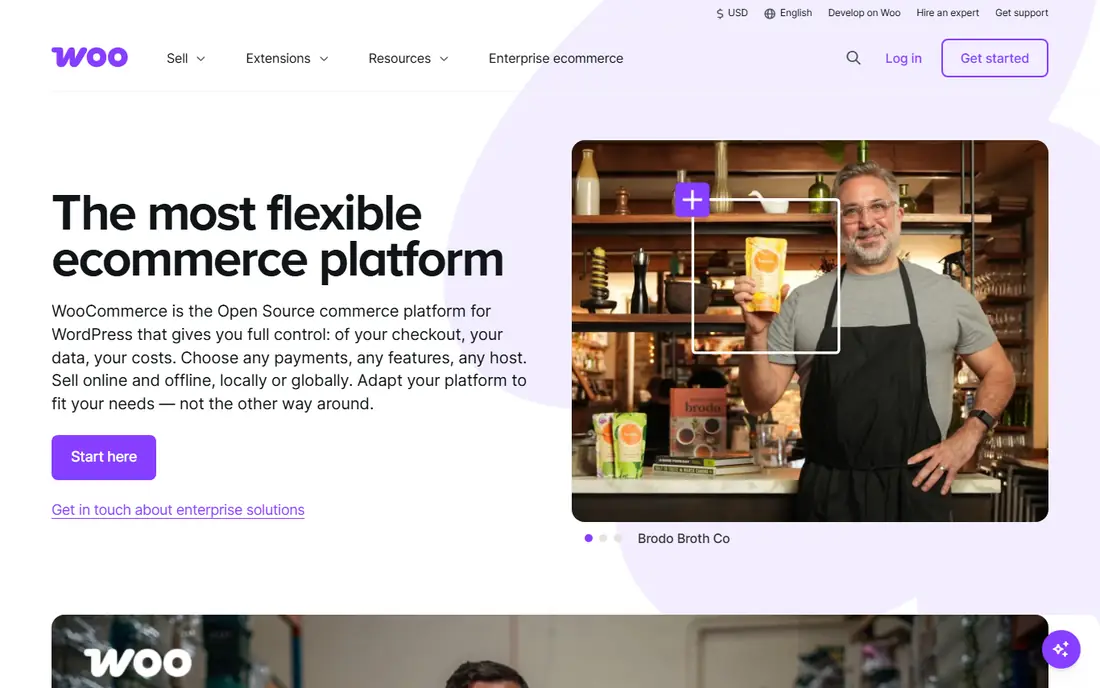
WooCommerce suits WordPress users who already run a site and want a store inside it. The core plugin is free, there is no platform transaction fee, and you control the code, hosting, and design. For content-led stores, blogs with a shop, and businesses that already use WordPress, that control is a strong advantage.
The trade is responsibility. Hosting costs, security, updates, and backups fall to you or your host, and a pile of paid plugins can raise the real cost. If you do not already use WordPress, Shopify or BigCommerce will be faster. If you do, WooCommerce gives you the most control at the lowest platform cost.
- Free open source plugin
- Full control over code and hosting
- No platform transaction fee
- Hosting, security, and updates are your job
- Plugin costs can add up
- Needs WordPress skill for best results

BigCommerce fits growing stores and B2B sellers that want strong built-in features without paying a platform fee on every sale. At $39 per month for Standard on monthly billing, or $29 per month billed annually in recent comparisons, you get multi-channel selling, B2B tools on higher plans, and fewer required apps than some rivals. For a store that expects to scale, that built-in depth matters.
The limit to check is the sales threshold, because plans cover up to a yearly sales level and then upgrade automatically. If your sales grow fast, budget for the next tier. For a mid-size store that wants no transaction fees and solid B2B tools, BigCommerce is a strong alternative.
- No platform transaction fees
- Strong B2B and multi-channel features
- Built-in features reduce app needs
- Sales limits can trigger plan upgrades
- Learning curve for new users
- App range is smaller than Shopify
Squarespace suits creators, boutiques, and design-led brands that want a beautiful site and a store in one place. Its templates are a clear strength, and the website, blog, and store share one editor, which keeps a small brand site simple. For a store where the brand look matters as much as the product, Squarespace is a natural fit.
The limits are scale and apps. Its app range is smaller than Shopify, transaction fees apply on lower plans, and complex B2B catalogs will feel constrained. For a small design-led store, those limits rarely bind. For a large catalog with complex rules, Shopify or BigCommerce will serve you better.
- Beautiful templates for brands and creators
- Website and store in one system
- Good blogging and portfolio tools
- Smaller app range than Shopify
- Transaction fees on lower plans
- Less suited to complex B2B catalogs
Wix suits small businesses that want to design a site freely and add a store without learning a complex platform. At $29 per month for Core on annual billing in recent comparisons, you get a store with payments, plus the full Wix website builder. For a small store with a strong visual identity, that design freedom is appealing.
The free plan does not sell online, so the real entry price is the paid ecommerce plan. Large catalogs and complex B2B needs will also feel constrained compared with Shopify or BigCommerce. For a small, design-led store, Wix is a good value alternative.
- Freeform design editor
- Website and store in one builder
- No platform transaction fee in recent comparisons
- Free plan does not include ecommerce
- Less suited to large catalogs
- App costs can add up
Square Online is the natural choice for local sellers already using Square for in-person payments. The free plan lets you start selling online with Square payments, and inventory can sync with your point of sale. For a cafe, boutique, or service business adding online orders, that connection saves manual work.
For a large online-only store, Square Online offers less depth than Shopify or BigCommerce, and design options are more limited. If your main sales channel is already Square, though, the free start and the point-of-sale link make it a practical alternative.
- Free plan to start selling online
- Native Square payments and point of sale
- Simple setup for local sellers
- Less depth than Shopify for large stores
- Design flexibility is more limited
- Paid features need higher plans
Shift4Shop, formerly 3dcart, suits US sellers who use Shift4 payments and want to avoid a monthly platform fee. The free plan for qualifying US merchants includes enterprise-level features that other platforms charge for, which makes it a distinctive value case. For a US store that already plans to use Shift4, the saving is real.
Outside the US, or for sellers who do not want Shift4 payments, the case weakens, and the app range is smaller than Shopify. Check the current terms for the free plan before you rely on it, because payment and eligibility terms matter. For qualifying US sellers, it is worth a shortlist place.
- Free plan for US merchants using Shift4 payments
- Enterprise features on the free tier in some cases
- No platform monthly fee on that plan
- Free plan tied to Shift4 payments
- Less suited outside the US
- Smaller app range than Shopify
Sellfy fits creators selling digital products, subscriptions, and print-on-demand goods without building a full store system. Setup is fast, marketing tools are built in, and the store focuses on the product and the checkout rather than on complex catalog rules. For a creator with a small product range, that focus saves time.
Physical stores with large catalogs, variants, and shipping rules will outgrow Sellfy quickly, and lower plans have yearly sales limits. If you sell digital products to an audience you already reach, Sellfy is a clean alternative. If you sell many physical products, choose Shopify or BigCommerce.
- Simple store for digital and print-on-demand products
- Built-in marketing tools
- Low setup time for creators
- Sales limits on lower plans
- Less suited to large physical catalogs
- Smaller ecosystem than Shopify
PrestaShop is an open source alternative for merchants who want full control and strong multilingual support, especially in Europe. The core software is free, you choose your hosting, and you can shape the store to fit complex catalogs. For a team with technical skill, that control is a real advantage over a hosted platform.
As with WooCommerce, hosting, security, updates, and module costs fall to you, and the total cost depends on the modules you add. If you want a hosted store with no maintenance, Shopify or BigCommerce will be easier. If you want open source control and have the skill to run it, PrestaShop is a credible choice.
- Free open source platform
- Strong European and multilingual support
- Full control over hosting and code
- Hosting and maintenance are your job
- Module costs can add up
- Needs technical skill for best results
How we picked these
We compared official feature pages, pricing pages, and public documentation, and we favored platforms that are available in October 2026 and that let a small business sell online, whether hosted or open source. We included hosted, open source, creator, and local-seller options because stores switch for different reasons, including control, design, and payment fit. Where a price could not be verified, we wrote "See website" rather than guessing.
How to compare total cost
Add the subscription, payment processing, platform transaction fees, app or module costs, and hosting where it applies, then compare that total for your expected monthly sales. A free platform with high processing fees can cost more than a paid platform with no platform fee, depending on volume. Trial with a few real products, test checkout on mobile, and check shipping, tax, and discount rules before you migrate a live catalog.
Migration notes
Export products, customers, and orders before you move, and keep the old store live until the new store has processed test orders correctly. Redirect old product URLs where you can, because broken links lose search traffic. Plan the move for a quiet sales period, and test payments, shipping, and email notifications before you switch traffic.
Frequently asked questions
What is the best Ecwid alternative?
Shopify is best for most small businesses, WooCommerce for WordPress users, and BigCommerce for growing stores that want no platform transaction fees. Squarespace and Wix suit design-led stores, Square Online suits local Square sellers, and Sellfy suits digital creators. The right choice depends on your site, your catalog, and your payment setup.
Are there free Ecwid alternatives?
Yes. WooCommerce and PrestaShop offer free open source software, though hosting costs extra, and Square Online offers a free plan to start selling. Shift4Shop offers a free plan for qualifying US merchants using Shift4 payments. Free does not mean zero cost, because hosting, processing, and apps still apply.
Which alternative is best for WordPress users?
WooCommerce, because it is built for WordPress and turns an existing site into a store without a migration. It offers full control and no platform transaction fee, but hosting and maintenance are your responsibility. If you do not use WordPress, a hosted platform such as Shopify will be faster to launch.
Do these platforms charge transaction fees?
Some do, and some do not. Shopify charges a platform fee when you use a third-party payment provider, while BigCommerce and Wix add no platform fee in recent comparisons. Squarespace charges a fee on lower plans. Always add payment processing fees on top, because those apply on every platform.
How hard is it to migrate from one platform to another?
It depends on catalog size and custom features. Product, customer, and order data can usually be exported, but design, apps, and custom rules need rebuilding. Keep the old store live during the move, redirect product URLs, and test checkout, shipping, and tax before you switch traffic.
Sources
See where you really rank - block by block
ProMapRanker scans Google Maps across a grid of your service area. Simple monthly plans from $19, white-label on every plan.
Start freeKeep reading
 zscaler alternatives
Best Zscaler Alternatives in 2026
Looking for zscaler alternatives? We compare 9 SASE and zero trust platforms on architecture, data protection, pricing, and fit for your network and team.
Read → zapier alternatives free
Best Zapier Alternatives Free in 2026
Nine automation tools for zapier alternatives free in 2026, all with genuinely free tiers, plus free plan limits, starting prices and upgrade paths explained.
Read → which platform is best for online reputation
Which Platform Is Best for Online Reputation in 2026
Wondering which platform is best for online reputation? We compare 8 review, listing, and response tools for small and multi-location businesses and agencies.
Read →